















পূর্ণাঙ্গ ৩১টি দফা ব্যাখ্যাসহ একটি গবেষণাধর্মী প্রতিবেদন
রাষ্ট্রকাঠামো মেরামতের ৩১ দফা: গণতন্ত্র, সুশাসন ও অর্থনৈতিক মুক্তির রূপরেখা।।
তারেক রহমানের ঘোষিত ২৭ দফা থেকে যুগপৎ আন্দোলনের শরিকদের মতামতে ৩১ দফা—কী আছে এই রাষ্ট্র সংস্কার পরিকল্পনায়?
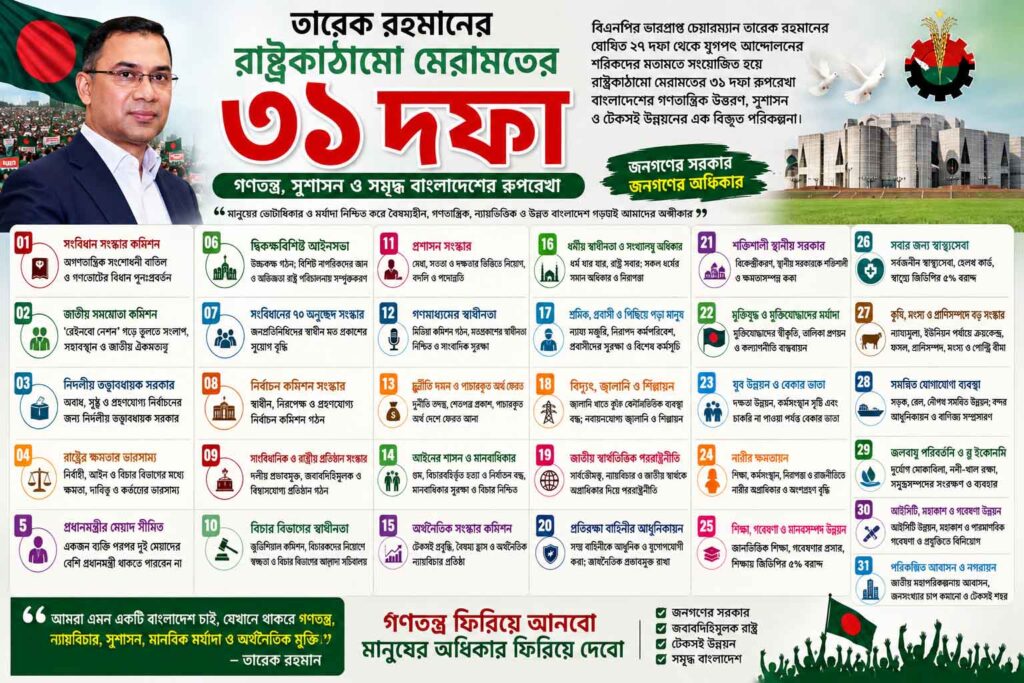
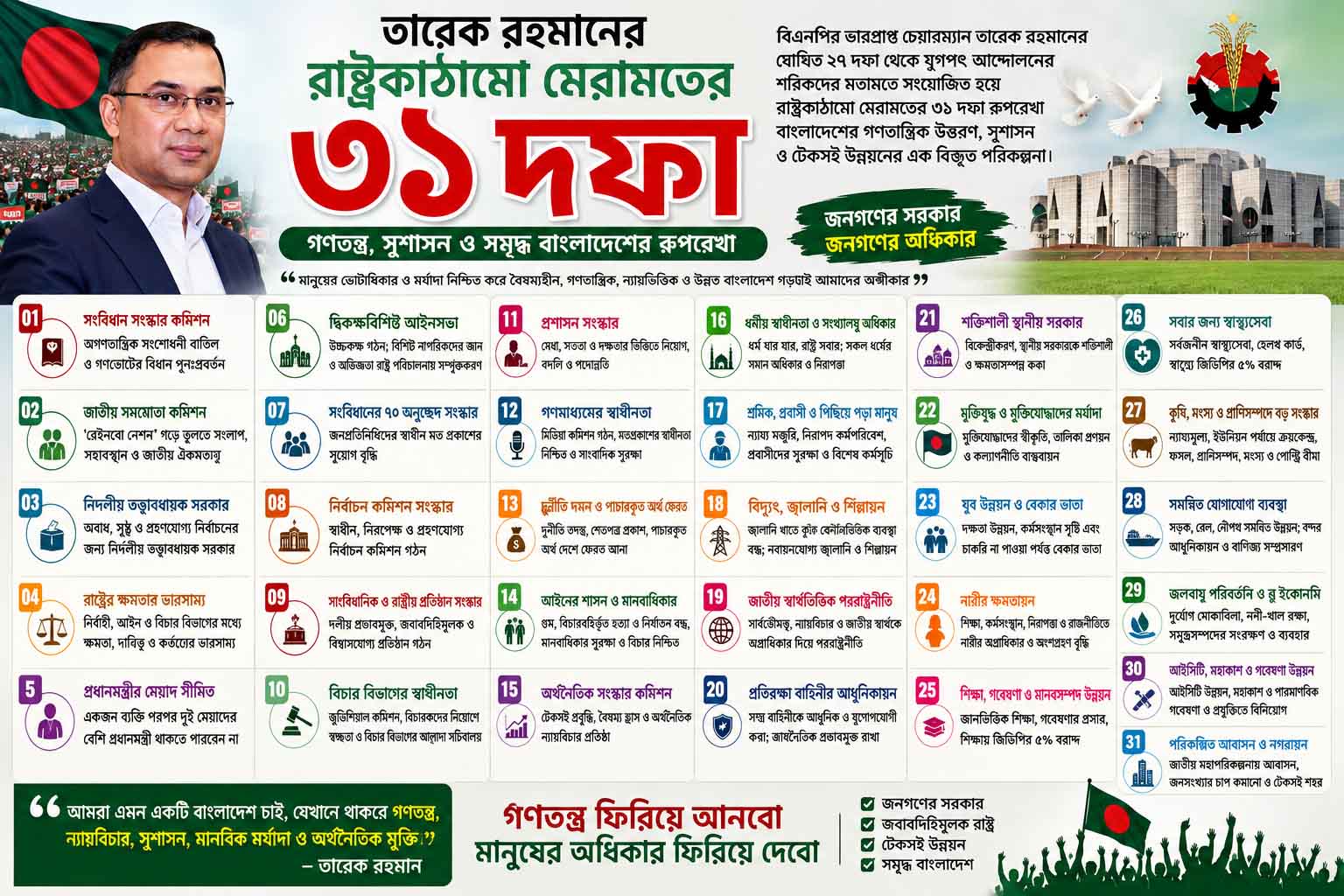
বাংলাদেশের রাষ্ট্রব্যবস্থায় গণতান্ত্রিক সংস্কার, ক্ষমতার ভারসাম্য, জবাবদিহি, বিচার বিভাগের স্বাধীনতা, দুর্নীতি দমন, অর্থনৈতিক ন্যায়বিচার, কৃষি, শিক্ষা, স্বাস্থ্য, পরিবেশ ও স্থানীয় সরকারসহ প্রায় সব গুরুত্বপূর্ণ খাতকে অন্তর্ভুক্ত করে ‘রাষ্ট্র কাঠামো মেরামতের রূপরেখা—৩১ দফা’ প্রস্তাব করে বাংলাদেশ জাতীয়তাবাদী দল (বিএনপি)।
৩১ দফাটি হঠাৎ তৈরি হয়নি। বিএনপির ভাষ্য অনুযায়ী, শহীদ রাষ্ট্রপতি জিয়াউর রহমানের ১৯ দফা, বেগম খালেদা জিয়ার ‘ভিশন ২০৩০’ এবং তারেক রহমানের ২৭ দফার ধারাবাহিকতায় যুগপৎ আন্দোলনের শরিক দলগুলোর সঙ্গে আলোচনার পর এটি ৩১ দফায় সম্প্রসারিত হয়। ২০২৩ সালের ১৩ জুলাই বিএনপি মহাসচিব মির্জা ফখরুল ইসলাম আলমগীর আনুষ্ঠানিকভাবে রূপরেখাটি উপস্থাপন করেন।
এটি মূলত বিএনপি ও তার রাজনৈতিক মিত্রদের রাজনৈতিক ও নীতিগত প্রস্তাব—রাষ্ট্রের বর্তমান আইন বা সংবিধানের বিবরণ নয়। ফলে নিচের আলোচনায় কোথায় মূল প্রস্তাব, আর কোথায় তার সম্ভাব্য তাৎপর্যের বিশ্লেষণ—দুটিকে আলাদা করে দেখা জরুরি।
১. সংবিধান সংস্কার কমিশন
৩১ দফার প্রথমেই ‘সংবিধান সংস্কার কমিশন’ গঠনের প্রস্তাব রয়েছে। কমিশনের মাধ্যমে বিতর্কিত ও অগণতান্ত্রিক বলে বিবেচিত সাংবিধানিক সংশোধনী ও পরিবর্তন পর্যালোচনা করে প্রয়োজনীয় সংশোধন বা বাতিল এবং সংবিধানে গণভোটের বিধান পুনঃপ্রবর্তনের কথা বলা হয়েছে।
তাৎপর্য: রাষ্ট্র সংস্কারের অন্য অনেক প্রস্তাব—ক্ষমতার ভারসাম্য, সংসদের উচ্চকক্ষ, নির্বাচনকালীন ব্যবস্থা কিংবা ৭০ অনুচ্ছেদের সংস্কার—বাস্তবায়নে সাংবিধানিক পরিবর্তনের প্রয়োজন হতে পারে। তাই ৩১ দফায় সংবিধান সংস্কারকে শুরুতেই রাখা হয়েছে।
২. ‘রেইনবো নেশন’ ও জাতীয় সমঝোতা কমিশন
প্রতিহিংসা ও বিভাজনের রাজনীতির পরিবর্তে বিভিন্ন মত ও পথের সমন্বয়ে অন্তর্ভুক্তিমূলক ও সাম্যভিত্তিক ‘Rainbow Nation’ গড়ার প্রস্তাব করা হয়েছে। এজন্য সংলাপ ও পারস্পরিক বোঝাপড়ার ভিত্তিতে নতুন সামাজিক চুক্তি এবং National Reconciliation Commission গঠনের কথা রয়েছে।
অর্থাৎ রাজনৈতিক প্রতিপক্ষকে নির্মূল করার সংস্কৃতির বদলে সহাবস্থান ও জাতীয় ঐকমত্যকে প্রাতিষ্ঠানিক রূপ দেওয়ার ধারণা এখানে সামনে আনা হয়েছে।
৩. নির্বাচনকালীন নির্দলীয় তত্ত্বাবধায়ক সরকার
অবাধ ও গ্রহণযোগ্য নির্বাচনের জন্য নির্বাচনকালীন দলনিরপেক্ষ তত্ত্বাবধায়ক সরকার ব্যবস্থা প্রবর্তনের প্রস্তাব ৩১ দফার অন্যতম গুরুত্বপূর্ণ রাজনৈতিক অঙ্গীকার।
এটির লক্ষ্য নির্বাচন পরিচালনাকারী সরকারের নিরপেক্ষতা নিয়ে রাজনৈতিক বিরোধ কমিয়ে ভোটাধিকার ও নির্বাচনী প্রক্রিয়ার ওপর আস্থা তৈরি করা।
৪. রাষ্ট্রীয় ক্ষমতার ভারসাম্য
প্রধানমন্ত্রী ও মন্ত্রিসভার নির্বাহী ক্ষমতায় ভারসাম্য আনার পাশাপাশি নির্বাহী, আইন ও বিচার বিভাগের ক্ষমতা, দায়িত্ব ও কর্তব্য পুনর্বিন্যাসের প্রস্তাব রয়েছে।
মূল লক্ষ্য—রাষ্ট্রে কার্যকর checks and balances প্রতিষ্ঠা করা, যাতে ক্ষমতা কোনো একটি প্রতিষ্ঠান বা ব্যক্তির হাতে অতিমাত্রায় কেন্দ্রীভূত না হয়।
৫. প্রধানমন্ত্রীর মেয়াদ সীমিতকরণ
৩১ দফার মূল প্রস্তাবে একজন ব্যক্তি পরপর দুই মেয়াদের বেশি প্রধানমন্ত্রী থাকতে পারবেন না বলা হয়েছিল।
এখানে একটি সময়গত বিষয় গুরুত্বপূর্ণ: ২০২৩ সালের ৩১ দফার ভাষ্য এবং পরবর্তী সংস্কার/নির্বাচনী প্রস্তাবের ভাষা সব ক্ষেত্রে অভিন্ন নয়। তাই ৩১ দফা নিয়ে আলোচনা করার সময় মূল ২০২৩ দলিল ও পরবর্তী হালনাগাদ রাজনৈতিক অবস্থান আলাদা করে উল্লেখ করা উচিত।
৬. দ্বিকক্ষবিশিষ্ট আইনসভা
বর্তমান সংসদের পাশাপাশি আইনসভার উচ্চকক্ষ প্রতিষ্ঠার প্রস্তাব রয়েছে। মূল রূপরেখায় বিশিষ্ট নাগরিক, শিক্ষাবিদ, পেশাজীবী, রাষ্ট্রবিজ্ঞানী, সমাজবিজ্ঞানী ও প্রশাসনিক অভিজ্ঞতাসম্পন্ন ব্যক্তিদের জ্ঞান ও অভিজ্ঞতা রাষ্ট্র পরিচালনায় কাজে লাগানোর কথা বলা হয়।
এর মাধ্যমে আইন প্রণয়ন ও নীতি পর্যালোচনায় আরও একটি স্তর যুক্ত করার ধারণা সামনে আসে।
৭. সংবিধানের ৭০ অনুচ্ছেদ সংস্কার
সংসদ সদস্যদের স্বাধীন মত প্রকাশের সুযোগ বাড়াতে সংবিধানের ৭০ অনুচ্ছেদ সংশোধনের বিষয়টি পরীক্ষা করার প্রস্তাব রয়েছে।
তবে অনাস্থা প্রস্তাব, অর্থবিল, সংবিধান সংশোধনী এবং জাতীয় নিরাপত্তাসংক্রান্ত বিষয়ে দলীয় অবস্থানের বাইরে ভোট দেওয়ার স্বাধীনতা না রাখার কথা মূল রূপরেখায় বলা হয়েছে।
এর উদ্দেশ্য সংসদ সদস্যদের আইন ও নীতি নিয়ে স্বাধীনভাবে কথা বলার সুযোগ বাড়িয়ে সংসদকে অধিক কার্যকর করা।
৮. নির্বাচন কমিশন ও নির্বাচনী ব্যবস্থার সংস্কার
স্বাধীন, দক্ষ, নিরপেক্ষ ও গ্রহণযোগ্য ব্যক্তিদের নিয়ে কার্যকর নির্বাচন কমিশন গঠনের জন্য প্রধান নির্বাচন কমিশনার ও অন্যান্য নির্বাচন কমিশনার নিয়োগ আইন, ২০২২ সংশোধনের প্রস্তাব করা হয়েছে।
একই সঙ্গে RPO, নির্বাচনী সীমানা নির্ধারণ এবং রাজনৈতিক দলের নিবন্ধনসংক্রান্ত আইন সংস্কার, জাতীয় নির্বাচনে EVM-এর পরিবর্তে কাগজের ব্যালট এবং স্থানীয় সরকার নির্বাচনে দলীয় প্রতীক বাতিলের কথা বলা হয়।
৯. সাংবিধানিক ও রাষ্ট্রীয় প্রতিষ্ঠান পুনর্গঠন
সাংবিধানিক, বিধিবদ্ধ ও রাষ্ট্রীয় প্রতিষ্ঠানগুলোকে দলীয় প্রভাবমুক্ত করে স্বচ্ছতা, জবাবদিহি ও বিশ্বাসযোগ্যতা ফিরিয়ে আনার প্রস্তাব রয়েছে।
গুরুত্বপূর্ণ সাংবিধানিক ও রাষ্ট্রীয় পদে নিয়োগের ক্ষেত্রে সংসদীয় কমিটির শুনানি ও যাচাইয়ের ব্যবস্থাও প্রস্তাব করা হয়েছে।
১০. বিচার বিভাগের কার্যকর স্বাধীনতা
মাসদার হোসেন মামলার রায়ের আলোকে বিচার বিভাগের স্বাধীনতা নিশ্চিত, Judicial Commission গঠন, অধস্তন আদালতের নিয়ন্ত্রণ ও শৃঙ্খলা সুপ্রিম কোর্টের অধীনে দেওয়া এবং বিচার বিভাগের জন্য পৃথক সচিবালয় প্রতিষ্ঠার কথা বলা হয়েছে।
উচ্চ আদালতের বিচারক নিয়োগের জন্য নির্দিষ্ট যোগ্যতা ও মানদণ্ড নির্ধারণে আইন প্রণয়নের প্রস্তাবও রয়েছে।
১১. প্রশাসন সংস্কার
যোগ্য ও অভিজ্ঞ ব্যক্তিদের নিয়ে Administrative Reforms Commission গঠনের প্রস্তাব করা হয়েছে।
বেসামরিক ও সামরিক প্রশাসনে নিয়োগ, বদলি ও পদোন্নতিতে মেধা, সততা, সৃজনশীলতা, দক্ষতা, অভিজ্ঞতা ও প্রশিক্ষণকে মানদণ্ড হিসেবে প্রতিষ্ঠা এবং জনবান্ধব প্রশাসন ও পুলিশ ব্যবস্থা গড়ে তোলাই এর লক্ষ্য।
১২. গণমাধ্যমের স্বাধীনতা
গণমাধ্যমের স্বাধীনতা ও সামগ্রিক সংস্কারের জন্য সাবেক বিচারপতি, সাংবাদিক ও গ্রহণযোগ্য ব্যক্তিদের সমন্বয়ে Media Commission গঠনের কথা রয়েছে।
স্বাধীন সাংবাদিকতার পরিবেশ নিশ্চিত করার পাশাপাশি মতপ্রকাশ ও মৌলিক অধিকারে বাধা সৃষ্টি করে—এমন আইন বাতিল বা সংশোধনের অঙ্গীকার করা হয়। সাংবাদিক হত্যা ও নির্যাতনের বিচার নিশ্চিত করার কথাও রয়েছে।
১৩. দুর্নীতির বিরুদ্ধে ব্যবস্থা ও পাচার হওয়া অর্থ ফেরত
দুর্নীতির সঙ্গে আপস না করার ঘোষণা দিয়ে বিগত সময়ের দুর্নীতি ও অর্থপাচার অনুসন্ধান করে শ্বেতপত্র প্রকাশ, দায়ীদের আইনের আওতায় আনা এবং বিদেশে পাচার হওয়া অর্থ ফেরত আনার প্রশাসনিক ও আইনি উদ্যোগের কথা বলা হয়েছে।
দুর্নীতি দমন কমিশনের সংস্কার এবং সংবিধানে থাকা ন্যায়পাল (Ombudsman) ব্যবস্থা কার্যকরের প্রস্তাবও রয়েছে।
১৪. আইনের শাসন ও মানবাধিকার
গুম, বিচারবহির্ভূত হত্যা, নির্যাতনসহ গুরুতর মানবাধিকার লঙ্ঘনের সংস্কৃতি বন্ধ করে আইনের শাসন ও মানবিক মর্যাদা প্রতিষ্ঠার অঙ্গীকার রয়েছে।
জাতীয় মানবাধিকার কমিশনে নিয়োগের সুনির্দিষ্ট মানদণ্ড এবং গুরুতর মানবাধিকার লঙ্ঘনে প্রত্যক্ষ ও পরোক্ষভাবে দায়ীদের বিচারের কথাও বলা হয়েছে।
১৫. অর্থনৈতিক সংস্কার কমিশন
অর্থনীতিবিদ, গবেষক, ব্যাংকার, করপোরেট ও প্রশাসনিক অভিজ্ঞ ব্যক্তিদের নিয়ে Economic Reforms Commission গঠনের প্রস্তাব রয়েছে।
প্রবৃদ্ধির সুফলের ন্যায়সংগত বণ্টন, ধনী-দরিদ্র বৈষম্য হ্রাস এবং অর্থনৈতিক ন্যায়বিচার প্রতিষ্ঠাই এর ঘোষিত উদ্দেশ্য।
১৬. ধর্মীয় স্বাধীনতা ও ক্ষুদ্র জাতিগোষ্ঠীর অধিকার
‘ধর্ম যার যার, রাষ্ট্র সবার’ নীতির ভিত্তিতে প্রত্যেকের ধর্ম পালনের পূর্ণ অধিকার নিশ্চিত করার কথা বলা হয়েছে।
দল-মত, জাতি, ধর্ম-বর্ণ নির্বিশেষে পাহাড় ও সমতলের ক্ষুদ্র-বৃহৎ জাতিগোষ্ঠীর সামাজিক, রাজনৈতিক, সাংস্কৃতিক, অর্থনৈতিক ও ধর্মীয় অধিকার এবং জীবন-সম্পদের নিরাপত্তা নিশ্চিত করার অঙ্গীকার রয়েছে।
১৭. শ্রমিক, প্রবাসী ও পিছিয়ে পড়া জনগোষ্ঠী
মূল্যস্ফীতির সঙ্গে সামঞ্জস্য রেখে ন্যায্য মজুরি, শিশুশ্রম বন্ধ, নিরাপদ কর্মপরিবেশ এবং গণতান্ত্রিক ট্রেড ইউনিয়নের অধিকার নিশ্চিত করার কথা রয়েছে।
বন্ধ পাটকল, বস্ত্র ও চিনিকলসহ শিল্পপ্রতিষ্ঠান চালুর উদ্যোগ; প্রবাসীদের মর্যাদা, কর্মনিরাপত্তা, বিমানবন্দরে হয়রানিমুক্ত সেবা ও ভোটাধিকার; এবং চা-বাগান, বস্তি, চর, হাওর ও উপকূলের পিছিয়ে পড়া মানুষের জন্য বিশেষ কর্মসূচির প্রস্তাবও রয়েছে।
১৮. বিদ্যুৎ, জ্বালানি, খনিজ ও শিল্পায়ন
বিদ্যুৎ-জ্বালানি খাতের তথাকথিত কালো আইন বাতিল, কুইক রেন্টালভিত্তিক ব্যবস্থার দুর্নীতি বন্ধ এবং নবায়নযোগ্য ও মিশ্র জ্বালানিভিত্তিক বিদ্যুৎ উৎপাদন বাড়ানোর প্রস্তাব রয়েছে।
গ্যাস ও খনিজ অনুসন্ধান, আমদানিনির্ভরতা কমানো, দেশি-বিদেশি বিনিয়োগ আকর্ষণ এবং প্রবাসী বাংলাদেশিদের বিনিয়োগে উৎসাহ দেওয়ার কথাও বলা হয়েছে।
১৯. জাতীয় স্বার্থভিত্তিক পররাষ্ট্রনীতি
পররাষ্ট্রনীতিতে জাতীয় স্বার্থ, সার্বভৌমত্ব ও জাতীয় নিরাপত্তাকে সর্বোচ্চ অগ্রাধিকার দেওয়ার ঘোষণা রয়েছে।
দ্বিপক্ষীয় ও বহুপক্ষীয় সমস্যা সমতা, ন্যায়বিচার ও আন্তর্জাতিক আইন অনুসারে সমাধান এবং বাংলাদেশের ভূখণ্ডে সন্ত্রাস, উগ্রবাদ ও জঙ্গিবাদ সহ্য না করার কথা বলা হয়েছে।
২০. প্রতিরক্ষা বাহিনীর আধুনিকায়ন
দেশের সার্বভৌমত্ব রক্ষায় প্রতিরক্ষা বাহিনীকে আধুনিক ও যুগোপযোগীভাবে সুসংগঠিত করার এবং বাহিনীকে রাজনৈতিক বিতর্কের ঊর্ধ্বে রেখে স্বতন্ত্র মর্যাদা বজায় রাখার প্রস্তাব রয়েছে।
২১. শক্তিশালী স্থানীয় সরকার
ক্ষমতার ব্যাপক বিকেন্দ্রীকরণের মাধ্যমে স্থানীয় সরকার প্রতিষ্ঠানগুলোকে আরও স্বাধীন, শক্তিশালী ও ক্ষমতাসম্পন্ন করার পরিকল্পনা রয়েছে।
স্বাস্থ্য, শিক্ষা ও স্থানীয় উন্নয়নসহ জনসেবায় স্থানীয় সরকারের ভূমিকা বাড়ানো এবং প্রশাসন কিংবা অন্য জনপ্রতিনিধির অযাচিত হস্তক্ষেপ থেকে প্রতিষ্ঠানগুলোকে মুক্ত রাখার প্রস্তাব দেওয়া হয়েছে।
২২. মুক্তিযুদ্ধ ও মুক্তিযোদ্ধাদের রাষ্ট্রীয় স্বীকৃতি
১৯৭১ সালের মুক্তিযুদ্ধে ব্যক্তিগত অবদানের যথাযথ রাষ্ট্রীয় স্বীকৃতি, শহীদদের তালিকা তৈরি, শহীদ মুক্তিযোদ্ধা পরিবারের জন্য কল্যাণনীতি এবং যাচাই-বাছাইয়ের মাধ্যমে মুক্তিযোদ্ধাদের নির্ভুল তালিকা তৈরির কথা বলা হয়েছে।
২৩. যুব উন্নয়ন, দক্ষতা ও বেকার ভাতা
তরুণদের চিন্তা, আকাঙ্ক্ষা ও ভবিষ্যৎ চাহিদার সঙ্গে সামঞ্জস্য রেখে আধুনিক যুব উন্নয়ন নীতি প্রণয়নের কথা রয়েছে।
শিক্ষিত বেকার তরুণকে চাকরি পাওয়া পর্যন্ত অথবা সর্বোচ্চ এক বছর—যেটি আগে ঘটে—বেকার ভাতা দেওয়ার প্রস্তাব রয়েছে। পাশাপাশি দক্ষতা বৃদ্ধি, কর্মসংস্থান সৃষ্টি এবং সরকারি চাকরিতে প্রবেশের বয়সসীমা আন্তর্জাতিক মান বিবেচনায় পুনর্বিবেচনার কথা বলা হয়েছে।
২৪. নারীর ক্ষমতায়ন
রাষ্ট্র ও সমাজ গঠনে নারীর কার্যকর অংশগ্রহণ বাড়াতে বিশেষ কর্মসূচি, নারী ও শিশুর জীবনমান উন্নয়ন, জাতীয় সংসদ নির্বাচনে দলীয় মনোনয়নে নারীদের অগ্রাধিকার এবং স্থানীয় সরকারে নারীর প্রতিনিধিত্ব বৃদ্ধির প্রস্তাব রয়েছে।
২৫. শিক্ষা, গবেষণা ও মানবসম্পদ
প্রাথমিক ও মাধ্যমিক পর্যায়ে প্রয়োজনভিত্তিক এবং উচ্চশিক্ষায় জ্ঞানভিত্তিক শিক্ষাকে অগ্রাধিকার দেওয়ার কথা বলা হয়েছে। গবেষণায় বিশেষ গুরুত্ব, মাতৃভাষায় শিক্ষার প্রসার এবং শিক্ষা প্রতিষ্ঠানে নিয়মিত ছাত্র সংসদ নির্বাচনের প্রস্তাব রয়েছে।
মূল ৩১ দফায় শিক্ষা খাতে জিডিপির ৫ শতাংশ বরাদ্দের লক্ষ্য এবং শিক্ষা, শিল্প, বিজ্ঞান ও প্রযুক্তিসহ বিভিন্ন ক্ষেত্রে Research & Development (R&D)-কে অগ্রাধিকার দেওয়ার কথাও রয়েছে।
২৬. সবার জন্য স্বাস্থ্যসেবা
‘Health for All’ এবং চিকিৎসার অভাবে যেন কারও মৃত্যু না হয়—এই ধারণায় যুক্তরাজ্যের NHS-এর আদলে Universal Health Coverage চালুর প্রস্তাব দেওয়া হয়েছে।
প্রত্যেক নাগরিকের জন্য Health Card এবং স্বাস্থ্য খাতে জিডিপির ৫ শতাংশ বরাদ্দের লক্ষ্যও মূল ৩১ দফায় অন্তর্ভুক্ত। পাশাপাশি অতিদরিদ্র মানুষের সামাজিক নিরাপত্তা সম্প্রসারণের কথা বলা হয়েছে।
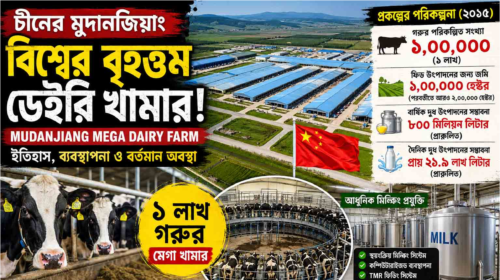
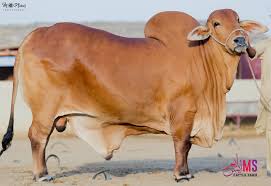
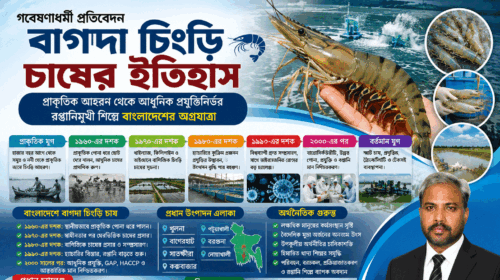
২৭. কৃষি, মৎস্য ও প্রাণিসম্পদে বড় সংস্কার
কৃষিপণ্যের ন্যায্যমূল্য নিশ্চিত করা এবং পর্যায়ক্রমে প্রতিটি ইউনিয়নে সরকারি কৃষিপণ্য ক্রয়কেন্দ্র স্থাপনের প্রস্তাব রয়েছে।
আরও গুরুত্বপূর্ণ হলো—৩১ দফায় সরাসরি ফসল বীমা, প্রাণিসম্পদ বীমা, মৎস্য বীমা ও পোল্ট্রি বীমা চালুর কথা বলা হয়েছে; প্রয়োজনে এসব ক্ষেত্রে ভর্তুকি সহায়তার প্রস্তাব রয়েছে। কৃষিজমির অকৃষি ব্যবহার নিরুৎসাহিত করার কথাও বলা হয়েছে।
একই সঙ্গে কৃষি, মৎস্য ও প্রাণিসম্পদ খাতে গবেষণা ও উন্নয়নের কৌশলগত কর্মপরিকল্পনা এবং রপ্তানিমুখী কৃষিপ্রক্রিয়াজাত শিল্পে প্রণোদনার প্রস্তাব রয়েছে।
কৃষির জন্য ২৭ নম্বর দফাটি কেন গুরুত্বপূর্ণ?
বাংলাদেশের কৃষক প্রায়ই উৎপাদন খরচ, বাজারমূল্যের ওঠানামা, প্রাকৃতিক দুর্যোগ এবং রোগবালাইয়ের ঝুঁকি একাই বহন করেন। ফসল, মাছ, গবাদিপশু ও পোল্ট্রিতে কার্যকর বীমা বাস্তবায়িত হলে উৎপাদকের ঝুঁকি ব্যবস্থাপনায় একটি প্রাতিষ্ঠানিক কাঠামো তৈরি হতে পারে। তবে এর সাফল্য নির্ভর করবে প্রিমিয়াম, ভর্তুকি, ক্ষতি নিরূপণ, দাবি নিষ্পত্তি এবং প্রকৃত কৃষক শনাক্তকরণের কার্যকর ব্যবস্থার ওপর।
২৮. সমন্বিত যোগাযোগ ব্যবস্থা
সড়ক, রেল ও নৌপথকে সমন্বয় করে একটি আধুনিক multi-modal communication system গড়ে তোলার পরিকল্পনা রয়েছে।
সমুদ্র ও নদীবন্দর আধুনিকায়নের মাধ্যমে আঞ্চলিক ও আন্তর্জাতিক বাণিজ্য সম্প্রসারণের কথাও বলা হয়েছে।
২৯. জলবায়ু পরিবর্তন, নদী ও ব্লু ইকোনমি
জলবায়ু পরিবর্তনের ক্ষতি মোকাবিলায় টেকসই কৌশল, বন্যা, জলোচ্ছ্বাস, ঘূর্ণিঝড় ও ভূমিকম্প মোকাবিলায় আধুনিক সক্ষমতা এবং নদী ও জলাশয়ের দূষণ প্রতিরোধের প্রস্তাব রয়েছে।
বন্যা ও খরা মোকাবিলায় নদী-খাল খনন ও পুনঃখনন এবং বৈজ্ঞানিক জরিপের ভিত্তিতে সমুদ্রসম্পদের সংরক্ষণ ও অর্থনৈতিক ব্যবহারের মাধ্যমে Blue Economy বিকাশের কথাও রয়েছে।
৩০. আইসিটি, মহাকাশ ও পারমাণবিক গবেষণা
তথ্য ও যোগাযোগ প্রযুক্তিকে বিশ্বমানের পর্যায়ে উন্নীত করা এবং সব খাতে ICT ব্যবহারে অগ্রাধিকার দেওয়ার প্রস্তাব রয়েছে।
মহাকাশ গবেষণা ও পরমাণু শক্তিসংশ্লিষ্ট প্রতিষ্ঠানের প্রাতিষ্ঠানিক ও ব্যবহারিক সক্ষমতা বাড়ানোর কথাও বলা হয়েছে।
৩১. পরিকল্পিত আবাসন ও নগরায়ণ
শেষ দফায় জাতীয় মহাপরিকল্পনার মাধ্যমে পরিকল্পিত আবাসন ও নগরায়ণ বাস্তবায়নের কথা বলা হয়েছে।
শহর ও গ্রামে কৃষিজমি নষ্ট না করে আবাসন, বড় শহরের ওপর জনসংখ্যার চাপ কমানো এবং পর্যায়ক্রমে দেশের দরিদ্র জনগোষ্ঠীর আবাসন নিশ্চিত করার লক্ষ্য রয়েছে।
৩১ দফার মূল দর্শন কী?
৩১টি প্রস্তাবকে সামগ্রিকভাবে বিশ্লেষণ করলে কয়েকটি প্রধান স্তম্ভ স্পষ্ট হয়—গণতান্ত্রিক প্রতিষ্ঠান পুনর্গঠন, ক্ষমতার ভারসাম্য ও বিকেন্দ্রীকরণ, বিচার ও গণমাধ্যমের স্বাধীনতা, দুর্নীতি ও মানবাধিকার লঙ্ঘনের বিরুদ্ধে জবাবদিহি, অর্থনৈতিক ও সামাজিক ন্যায়বিচার এবং শিক্ষা-স্বাস্থ্য-কৃষি-প্রযুক্তি-পরিবেশে দীর্ঘমেয়াদি সংস্কার।
বিশেষভাবে উল্লেখযোগ্য হলো, এটি শুধু সাংবিধানিক সংস্কারে সীমাবদ্ধ নয়। ইউনিয়ন পর্যায়ে কৃষিপণ্য ক্রয়কেন্দ্র থেকে কৃষি-মৎস্য-পোল্ট্রি বীমা, বেকার ভাতা, হেলথ কার্ড, শিক্ষা ও স্বাস্থ্য খাতে জিডিপির ৫ শতাংশ করে বরাদ্দের লক্ষ্য, নারীর ক্ষমতায়ন, স্থানীয় সরকার শক্তিশালীকরণ, ব্লু ইকোনমি এবং পরিকল্পিত নগরায়ণ—সামাজিক ও অর্থনৈতিক নীতিও এর বড় অংশ।
বাস্তবায়নের বড় চ্যালেঞ্জ
৩১ দফার অনেক প্রস্তাবই ব্যাপক কাঠামোগত পরিবর্তনের দাবি রাখে। কিছু ক্ষেত্রে সংবিধান সংশোধন, কিছু ক্ষেত্রে নতুন আইন, আবার অনেক ক্ষেত্রে বড় ধরনের অর্থায়ন ও প্রশাসনিক সক্ষমতা প্রয়োজন হবে। যেমন দ্বিকক্ষবিশিষ্ট সংসদ, ক্ষমতার ভারসাম্য, নির্বাচনকালীন সরকার বা ৭০ অনুচ্ছেদের পরিবর্তন সাংবিধানিক ও রাজনৈতিক ঐকমত্যের সঙ্গে সম্পর্কিত। অন্যদিকে শিক্ষা ও স্বাস্থ্য খাতে পৃথকভাবে জিডিপির ৫ শতাংশ বরাদ্দ, সর্বজনীন স্বাস্থ্যসেবা, বেকার ভাতা কিংবা ব্যাপক কৃষি বীমা বাস্তবায়নে অর্থনৈতিক সক্ষমতা ও সুস্পষ্ট বাস্তবায়ন কাঠামো গুরুত্বপূর্ণ।
আরেকটি বিষয় হলো, ২০২৩ সালের মূল ৩১ দফার পর বাংলাদেশের রাজনৈতিক ও সাংবিধানিক সংস্কার আলোচনা অনেক দূর এগিয়েছে এবং বিএনপিও পরবর্তী সময়ে বিভিন্ন বিষয়ে আরও বিস্তারিত বা হালনাগাদ অবস্থান দিয়েছে। দলটি ২০২৫ সালেও বলেছিল, ৩১ দফা তাদের সংস্কার ভাবনার একটি মৌলিক ভিত্তি।
উপসংহার
তারেক রহমানের প্রথমে ঘোষিত ২৭ দফার সম্প্রসারিত রূপ হিসেবে বিএনপি ও যুগপৎ আন্দোলনের শরিকদের আলোচনায় তৈরি রাষ্ট্রকাঠামো মেরামতের ৩১ দফা বাংলাদেশের রাষ্ট্র সংস্কার নিয়ে একটি বিস্তৃত রাজনৈতিক রূপরেখা। এর পরিধি সংবিধান ও নির্বাচন থেকে শুরু করে বিচারব্যবস্থা, প্রশাসন, গণমাধ্যম, অর্থনীতি, মানবাধিকার, কৃষি, শ্রম, শিক্ষা, স্বাস্থ্য, নারী-যুব উন্নয়ন, স্থানীয় সরকার, প্রযুক্তি, পরিবেশ ও আবাসন পর্যন্ত বিস্তৃত। বিএনপির নিজস্ব বর্ণনায় এর লক্ষ্য শুধু সরকার পরিবর্তন নয়, রাষ্ট্রব্যবস্থায় গুণগত পরিবর্তন আনা।
তবে যেকোনো রাজনৈতিক সংস্কার কর্মসূচির মতো ৩১ দফার প্রকৃত মূল্যায়ন নির্ভর করবে কোন প্রস্তাব কীভাবে আইনে রূপ নেয়, বাস্তবায়নের অর্থায়ন কোথা থেকে আসে, প্রতিষ্ঠানগুলো কতটা স্বাধীন হয় এবং রাজনৈতিক দলগুলো ক্ষমতায় গিয়ে নিজেদের ওপরও একই জবাবদিহির নীতি প্রয়োগ করে কি না—তার ওপর।
তথ্যসূত্র: এই প্রতিবেদনের ৩১ দফার মূল বিষয়বস্তু বিএনপির প্রকাশিত মূল ‘Outline of the Structural Reforms of the State’, ১৩ জুলাই ২০২৩-এর আনুষ্ঠানিক ঘোষণা এবং পরবর্তী সময়ে দলটির প্রকাশিত বক্তব্যের সঙ্গে মিলিয়ে উপস্থাপন করা হয়েছে।
Tarique Rahman’s 31-Point Outline for Structural Reform of the State
A Roadmap for Democracy, Good Governance and Economic Freedom
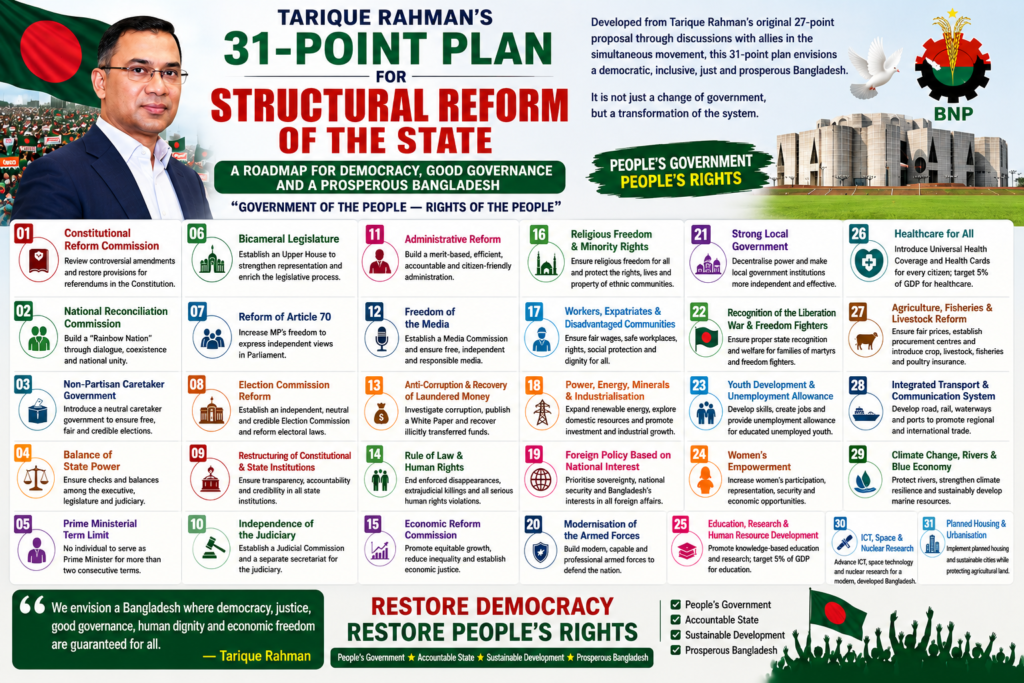
The Bangladesh Nationalist Party (BNP) proposed the “31-Point Outline for Structural Reform of the State”, covering almost every major area of governance, including democratic reform, checks and balances, accountability, judicial independence, anti-corruption measures, economic justice, agriculture, education, healthcare, the environment and local government.
According to the BNP, the 31-point programme evolved from President Ziaur Rahman’s 19-point programme, Begum Khaleda Zia’s “Vision 2030,” and Tarique Rahman’s earlier 27-point proposal. Following consultations with parties participating in the simultaneous movement, it was expanded into the 31-point framework. BNP Secretary General Mirza Fakhrul Islam Alamgir formally presented it on 13 July 2023.
It should be understood primarily as a political and policy proposal of the BNP and its political allies, rather than a description of Bangladesh’s existing constitutional or legal framework.
1. Constitutional Reform Commission
The first point proposes establishing a Constitutional Reform Commission to review constitutional amendments and changes considered controversial or undemocratic, recommend necessary amendments or repeals, and restore provisions for referendums in the Constitution.
Significance: Many other proposals in the 31-point programme—including checks and balances, an upper house of Parliament, an election-time government system and reform of Article 70—could require constitutional amendments.
2. “Rainbow Nation” and National Reconciliation Commission
The programme proposes building an inclusive and equitable “Rainbow Nation” by replacing politics of vengeance and division with political coexistence.
It calls for a new social contract based on dialogue and mutual understanding and proposes establishing a National Reconciliation Commission to institutionalise national reconciliation and consensus.
3. Non-Partisan Caretaker Government During Elections
One of the major political proposals is the introduction of a non-partisan caretaker government system during national elections to facilitate free, fair and credible elections.
The stated objective is to reduce political disputes over the neutrality of the government conducting elections and strengthen public confidence in voting and the electoral process.
4. Balance of State Power
The programme proposes balancing the executive authority of the Prime Minister and Cabinet while redistributing the powers, responsibilities and functions of the executive, legislature and judiciary.
The objective is to establish effective checks and balances so that excessive state power does not become concentrated in a single person or institution.
5. Term Limit for the Prime Minister
The original 31-point proposal stated that no individual should serve as Prime Minister for more than two consecutive terms.
It is important, however, to distinguish between the language of the original 2023 document and subsequent political and electoral reform proposals, which may not be identical in every respect.
6. Bicameral Legislature
The programme proposes creating an upper house of the legislature alongside the existing Parliament.
The original framework envisioned drawing on the knowledge and experience of distinguished citizens, academics, professionals, political scientists, sociologists and people with administrative expertise in the governance process.
The proposal would effectively introduce an additional institutional layer for reviewing legislation and public policy.
7. Reform of Article 70 of the Constitution
The programme proposes examining reforms to Article 70 of the Constitution to increase MPs’ freedom to express independent views.
However, the original proposal would continue restrictions on voting against party positions in matters such as no-confidence motions, money bills, constitutional amendments and national security.
8. Reform of the Election Commission and Electoral System
The programme proposes amending the Chief Election Commissioner and Other Election Commissioners Appointment Act, 2022 to establish an Election Commission composed of independent, competent, impartial and credible individuals.
It also proposes reforms to the RPO, electoral boundary laws and political party registration rules, the use of paper ballots instead of EVMs in national elections, and abolition of party symbols in local government elections.
9. Restructuring Constitutional and State Institutions
The proposal seeks to free constitutional, statutory and state institutions from partisan influence and restore transparency, accountability and credibility.
It also proposes parliamentary committee hearings and scrutiny for appointments to important constitutional and state positions.
10. Effective Independence of the Judiciary
The programme proposes ensuring judicial independence in accordance with the Masdar Hossain case judgment, establishing a Judicial Commission, placing the control and discipline of subordinate courts under the Supreme Court and creating a separate secretariat for the judiciary.
It also proposes legislation establishing specific qualifications and standards for appointing judges to the higher judiciary.
11. Administrative Reform
An Administrative Reforms Commission composed of qualified and experienced individuals is proposed.
Merit, integrity, creativity, competence, experience and training would serve as criteria for recruitment, transfer and promotion in the civil and military administration, with the broader objective of creating citizen-friendly administration and policing.
12. Freedom of the Media
The programme proposes establishing a Media Commission consisting of former judges, journalists and other credible individuals to promote media freedom and comprehensive reform.
It also pledges to repeal or amend laws that obstruct freedom of expression and fundamental rights and calls for justice in cases involving the killing and persecution of journalists.
13. Anti-Corruption Measures and Recovery of Laundered Money
The programme proposes investigating corruption and money laundering, publishing a White Paper, bringing those responsible under the law and taking administrative and legal steps to recover money transferred abroad illegally.
It also proposes reforming the Anti-Corruption Commission and activating the constitutional institution of the Ombudsman.
14. Rule of Law and Human Rights
The programme pledges to end enforced disappearances, extrajudicial killings, torture and other serious human rights violations and establish the rule of law and respect for human dignity.
It also calls for clear appointment criteria for the National Human Rights Commission and accountability for those directly or indirectly responsible for serious human rights violations.
15. Economic Reform Commission
An Economic Reforms Commission comprising economists, researchers, bankers and people with corporate and administrative expertise is proposed.
Its stated objectives include equitable distribution of the benefits of economic growth, reducing inequality between rich and poor and establishing economic justice.
16. Religious Freedom and Rights of Ethnic Communities
Based on the principle “Religion belongs to the individual, the state belongs to everyone,” the programme pledges to ensure every citizen’s right to practise their religion.
It also proposes protecting the social, political, cultural, economic and religious rights, as well as the lives and property, of ethnic communities in both the hills and plains.
17. Workers, Expatriates and Disadvantaged Communities
The programme calls for fair wages adjusted to inflation, elimination of child labour, safe working conditions and democratic trade union rights.
It also proposes initiatives to reopen closed jute, textile and sugar mills; protect the dignity, employment security and voting rights of expatriate Bangladeshis; provide harassment-free airport services; and introduce special programmes for disadvantaged communities in tea gardens, slums, chars, haor regions and coastal areas.
18. Power, Energy, Minerals and Industrialisation
The programme proposes repealing what it describes as “black laws” in the power and energy sector, ending corruption associated with quick-rental arrangements and increasing renewable and diversified energy-based electricity generation.
It also proposes expanded exploration of gas and mineral resources, reducing import dependence and encouraging domestic, foreign and expatriate investment.
19. Foreign Policy Based on National Interest
The programme places national interest, sovereignty and national security at the centre of foreign policy.
It proposes resolving bilateral and multilateral disputes on the principles of equality, justice and international law and pledges zero tolerance for terrorism, extremism and militancy on Bangladeshi territory.
20. Modernisation of the Armed Forces
The proposal calls for a modern and contemporary defence force capable of protecting national sovereignty while maintaining the armed forces’ distinct institutional dignity above political controversy.
21. Strong Local Government
Through extensive decentralisation, the programme proposes making local government institutions more independent, powerful and effective.
Their role in healthcare, education, local development and public services would be expanded while limiting undue interference from the administration or other elected representatives.
22. State Recognition of the Liberation War and Freedom Fighters
The programme proposes proper state recognition of individual contributions to the 1971 Liberation War, preparation of an accurate list of martyrs, welfare policies for families of martyred freedom fighters and verification of an accurate list of freedom fighters.
23. Youth Development, Skills and Unemployment Allowance
A modern Youth Development Policy reflecting the aspirations and future needs of young people is proposed.
The programme also proposes an unemployment allowance for educated unemployed youth until they secure employment or for a maximum of one year, whichever comes first. Skills development, job creation and reconsideration of the age limit for entering government service in light of international standards are also included.
24. Women’s Empowerment
Special programmes are proposed to increase women’s effective participation in state and society, improve the quality of life of women and children, prioritise women in parliamentary nominations and increase women’s representation in local government.
25. Education, Research and Human Resource Development
The programme emphasises needs-based primary and secondary education and knowledge-based higher education, greater attention to research, expansion of education in the mother tongue and regular student union elections in educational institutions.
The original 31-point framework also sets a target of allocating 5% of GDP to education and prioritising Research & Development (R&D) in education, industry, science and technology.
26. Healthcare for All
Under the principle of “Health for All,” the programme proposes Universal Health Coverage inspired by the UK’s NHS model, with the goal that no one should die because they cannot obtain treatment.
It proposes a Health Card for every citizen and sets a target of allocating 5% of GDP to healthcare, alongside expanded social protection for the extremely poor.
27. Major Reforms in Agriculture, Fisheries and Livestock
The programme proposes ensuring fair prices for agricultural products and gradually establishing government agricultural procurement centres in every union.
Significantly, it explicitly proposes introducing crop insurance, livestock insurance, fisheries insurance and poultry insurance, with subsidies where necessary. It also seeks to discourage the conversion of agricultural land to non-agricultural uses.
The framework additionally proposes a strategic research and development action plan for agriculture, fisheries and livestock and incentives for export-oriented agro-processing industries.
Why is Point 27 particularly important for agriculture? Farmers in Bangladesh often bear the risks of production costs, market-price fluctuations, natural disasters and disease largely on their own. Effective crop, fisheries, livestock and poultry insurance could establish an institutional mechanism for managing those risks. Its effectiveness, however, would depend on premium structures, subsidies, loss assessment, claim settlement and accurate identification of genuine farmers.
28. Integrated Transport and Communication System
The programme proposes developing a modern multi-modal communication system integrating road, rail and waterways.
Modernisation of seaports and river ports is also proposed to facilitate regional and international trade.
29. Climate Change, Rivers and the Blue Economy
The programme proposes sustainable strategies to address climate change, strengthen modern capacity to deal with floods, storm surges, cyclones and earthquakes, and prevent pollution of rivers and other water bodies.
It also calls for excavation and re-excavation of rivers and canals to address floods and droughts and for developing the Blue Economy through scientific assessment, conservation and economic utilisation of marine resources.
30. ICT, Space and Nuclear Research
The programme proposes bringing information and communication technology up to world-class standards and prioritising the use of ICT across all sectors.
It also calls for strengthening the institutional and practical capabilities of organisations involved in space research and nuclear energy.
31. Planned Housing and Urbanisation
The final point proposes implementing planned housing and urbanisation through a national master plan.
Its objectives include developing housing without unnecessarily destroying agricultural land in urban and rural areas, reducing population pressure on major cities and gradually ensuring housing for the country’s poor.
The Core Philosophy of the 31-Point Programme
Taken together, the 31 proposals rest on several broad pillars: rebuilding democratic institutions; establishing checks and balances and decentralisation; ensuring judicial and media independence; strengthening accountability for corruption and human rights violations; promoting economic and social justice; and pursuing long-term reforms in education, healthcare, agriculture, technology and the environment.
Notably, the programme goes beyond constitutional reform. It includes government agricultural procurement centres at union level, agricultural and poultry insurance, unemployment allowances, health cards, targets of allocating 5% of GDP each to education and healthcare, women’s empowerment, stronger local government, the Blue Economy and planned urbanisation.
Major Challenges to Implementation
Many of the 31 proposals would require substantial structural changes. Some would require constitutional amendments, others new legislation, while several would demand significant public financing and administrative capacity.
A bicameral legislature, redistribution of state power, an election-time caretaker government and changes to Article 70 would require substantial constitutional and political consensus. Meanwhile, allocating 5% of GDP each to education and healthcare, introducing universal healthcare, unemployment allowances and comprehensive agricultural insurance would require clear financing and implementation frameworks.
Conclusion
The 31-Point Outline for Structural Reform of the State, developed from Tarique Rahman’s original 27-point proposal through discussions between the BNP and its partners in the simultaneous movement, represents a broad political framework for reforming the Bangladeshi state.
Its scope extends from the Constitution, elections, judiciary and administration to media, economy, human rights, agriculture, labour, education, healthcare, women and youth, local government, technology, environment and housing. According to the BNP’s own framing, its objective is not merely a change of government but a qualitative transformation of the system of governance.
Ultimately, however, the programme would have to be assessed by how its proposals are translated into law, how implementation is financed, how independently reformed institutions actually function, and whether political parties apply the same standards of accountability to themselves when in power.