















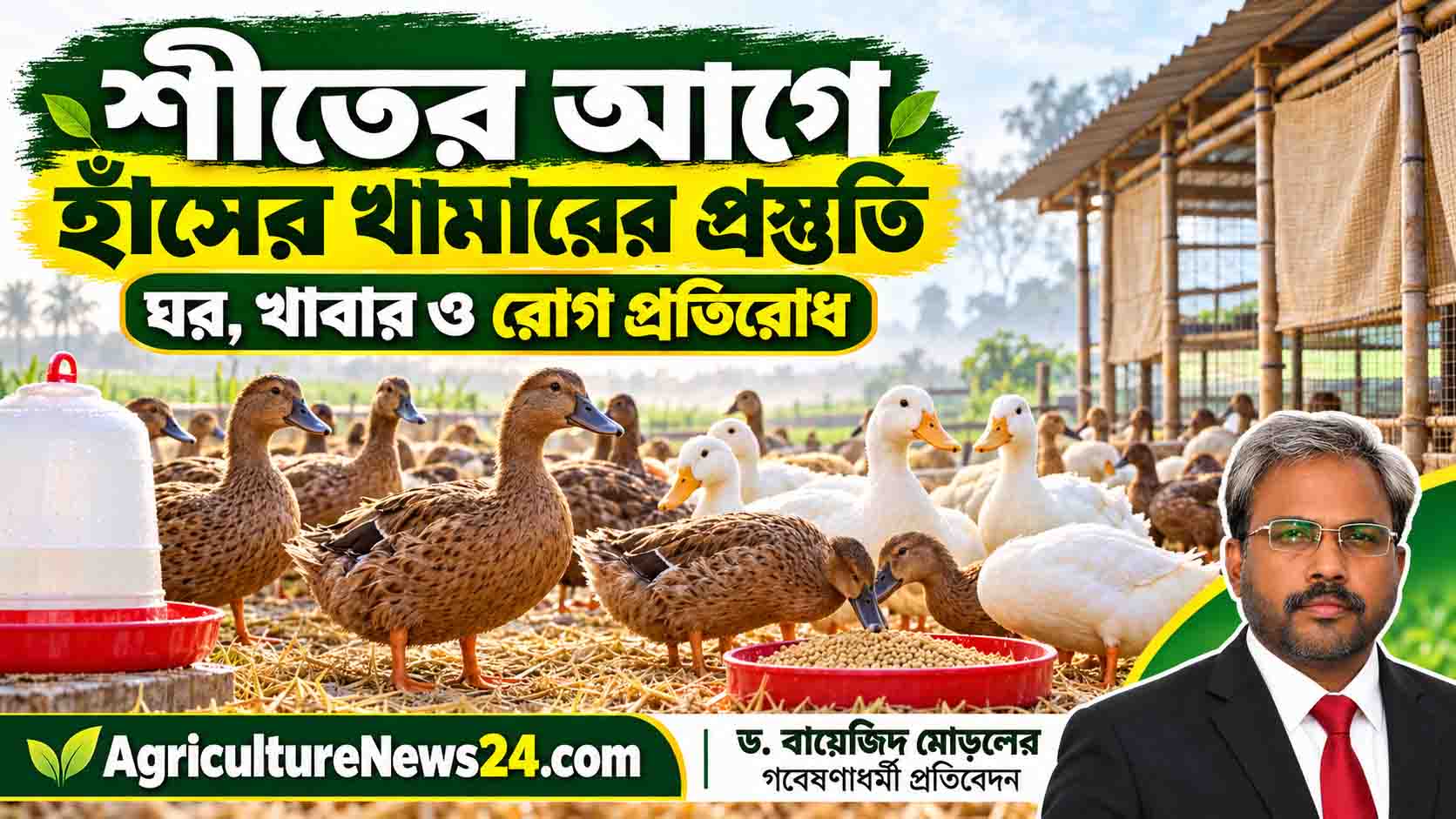
শীতের আগে হাঁসের খামারের প্রস্তুতি: ঘর, খাবার ও রোগ প্রতিরোধ
ড. বায়েজিদ মোড়লের গবেষণাধর্মী প্রতিবেদন
সম্পাদক, AgricultureNews24.com
হাঁস পানিতে বিচরণ করে বলে অনেকের ধারণা, ঠান্ডা বা ভেজা পরিবেশে তাদের কোনো সমস্যা হয় না। এই ধারণা থেকে শীতের প্রস্তুতিতে অবহেলা দেখা দিতে পারে। অথচ হাঁসের সুস্থতা ও উৎপাদন ধরে রাখতে প্রয়োজন শুকনো বিশ্রামের জায়গা, পর্যাপ্ত পুষ্টি, নিরাপদ পানীয় জল এবং রোগের সংক্রমণ ঠেকানোর ব্যবস্থা। ছোট বাচ্চার ক্ষেত্রে উষ্ণ পরিবেশের প্রয়োজন আরও বেশি। কর্নেল বিশ্ববিদ্যালয়ের হাঁস গবেষণা কেন্দ্রও হাঁসের মৌলিক পরিচর্যায় এসব বিষয়ের ওপর গুরুত্ব দিয়েছে।
বাংলাদেশে হাঁস পালনের ধরন এক রকম নয়। কেউ বাড়ির পাশে অল্প হাঁস পালন করেন, কেউ পুকুর ও ধানখেতনির্ভর পাল চালান, আবার কেউ বাণিজ্যিকভাবে ডিম বা মাংস উৎপাদন করেন। তাই শীতের প্রস্তুতিও খামারের বয়সভিত্তিক গঠন, খাদ্যের উৎস, ঘরের অবস্থা এবং স্থানীয় রোগের ঝুঁকি অনুযায়ী নিতে হবে।
প্রকাশিত পালন নির্দেশনা ও প্রাণিস্বাস্থ্যবিষয়ক তথ্য পর্যালোচনায় স্পষ্ট হয়—শীতের প্রস্তুতির কেন্দ্রবিন্দু হলো ঘর শুকনো রাখা, পুষ্টির ঘাটতি ঠেকানো এবং অসুস্থতা দ্রুত শনাক্ত করা।
ঘর প্রস্তুত করুন: ঠান্ডা বাতাস আটকান, বাতাস চলাচল রাখুন
শীত ঠেকাতে হাঁসের ঘর চারদিক থেকে সম্পূর্ণ বন্ধ করে দেওয়া ঠিক নয়। এতে ঘরের আর্দ্রতা ও দূষিত বাতাস বের হওয়ার সুযোগ কমে যায়। হাঁসের আবাসনে তাজা বাতাসের প্রয়োজন রয়েছে; পাশাপাশি ছোট বাচ্চাকে ঠান্ডা বাতাস থেকে সুরক্ষা দিতে হয়।
শীতের আগে ছাদের ফুটো, দেয়ালের ফাঁক, দরজা এবং পানি নিষ্কাশনের ব্যবস্থা পরীক্ষা করা উচিত। বৃষ্টির পানি ঢোকে এমন জায়গা মেরামত করতে হবে। ঘরের যে পাশ দিয়ে সরাসরি ঠান্ডা বাতাস আসে, সেখানে প্রয়োজন অনুযায়ী পর্দা দেওয়া যায়। তবে ওপরের দিকে বাতাস বের হওয়ার ব্যবস্থা রাখতে হবে।
পর্দা স্থায়ীভাবে বন্ধ রাখার পরিবর্তে আবহাওয়া অনুযায়ী ব্যবহার করা ভালো। দিনের বেলায় ঘরের অবস্থা দেখে পর্দা খুলে বাতাস চলাচলের সুযোগ দিতে হবে। রাতে হাঁসের বিশ্রামের জায়গায় সরাসরি বাতাস লাগছে কি না, সেটিও দেখতে হবে।
ঘর পরিদর্শনের সময় খামারি কয়েকটি বিষয় সহজেই যাচাই করতে পারেন—ছাদ থেকে পানি পড়ছে কি না, মেঝেতে পানি জমছে কি না, বিছানা ভিজে আছে কি না এবং হাঁস স্বাভাবিকভাবে ছড়িয়ে বিশ্রাম নিতে পারছে কি না। এসব পর্যবেক্ষণ লিখে রাখলে মেরামতের অগ্রাধিকার নির্ধারণ সহজ হয়।
শুকনো বিছানা: প্রতিদিনের কাজের সবচেয়ে জরুরি অংশ
হাঁস পানিতে থাকলেও বিশ্রামের জন্য পরিষ্কার ও শুকনো আশ্রয় প্রয়োজন। সেখানে তারা পালক পরিচর্যা করতে পারে এবং শরীরের উষ্ণতা ধরে রাখতে পারে। ফলে ঘরের বিছানা শুকনো রাখা শীতের প্রস্তুতির একটি মৌলিক শর্ত।
পানির পাত্রের চারপাশে বিছানা দ্রুত ভিজে যেতে পারে। তাই পুরো ঘরের বিছানা বদলানোর অপেক্ষা না করে ভেজা অংশ প্রতিদিন সরিয়ে শুকনো উপকরণ দিতে হবে। পাত্রের অবস্থান ও পানি পড়ার কারণও ঠিক করতে হবে। শুধু নতুন বিছানা ঢেলে দিলে নিচের ভেজাভাব থেকেই যেতে পারে।
বিছানার উপকরণ পরিষ্কার, শুকনো এবং ছত্রাকমুক্ত হতে হবে। স্যাঁতসেঁতে খড় বা খাদ্যে জন্মানো ছত্রাকের বীজ শ্বাসের সঙ্গে প্রবেশ করে হাঁসের অসুস্থতা ঘটাতে পারে।
হাঁসের সংখ্যা বাড়লে পানির ব্যবহার, বিষ্ঠা এবং বিছানার ওপর চাপও বাড়ে। তাই ঘরের ধারণক্ষমতা বিবেচনা না করে পাল বড় করা উচিত নয়। ঘর, খাবার ও পানির পাত্রে দুর্বল হাঁসগুলো পর্যাপ্ত সুযোগ পাচ্ছে কি না, সেটিও নজরে রাখতে হবে।
বাচ্চা হাঁসের জন্য আলাদা উষ্ণ পরিবেশ
পূর্ণবয়স্ক হাঁস ও সদ্য ফোটা বাচ্চার পরিচর্যা এক নয়। ছোট বাচ্চা ঠান্ডায় বেশি সংবেদনশীল। বাংলাদেশে সমন্বিত মাছ ও হাঁস পালন বিষয়ে FAO-এর নির্দেশনায় প্রথম সপ্তাহে বাচ্চার পরিবেশ প্রায় ৩০–৩২ ডিগ্রি সেলসিয়াস রাখার কথা বলা হয়েছে। এটি নির্দেশক মাত্রা; তাপের উৎস, ঘরের অবস্থা এবং বাচ্চার আচরণ দেখে ব্যবস্থা সমন্বয় করতে হবে।
বাচ্চা আনার আগেই উষ্ণ রাখার জায়গা প্রস্তুত করতে হবে। তাপের উৎস, নিরাপদ বিদ্যুৎ সংযোগ, শুকনো বিছানা, খাবার ও পানির পাত্র বসিয়ে ব্যবস্থা পরীক্ষা করা উচিত। বিদ্যুৎ চলে গেলে কীভাবে উষ্ণতা বজায় রাখা হবে, তার পরিকল্পনাও প্রয়োজন।
বাচ্চার পানির পাত্র এমন হতে হবে যাতে সহজে পানি পান করতে পারে, কিন্তু পুরো শরীর ভিজিয়ে ফেলতে না পারে। ঠান্ডা বা প্রতিকূল আবহাওয়ায় ছোট বাচ্চাকে বাইরে কিংবা পানিতে ছাড়ার বিষয়ে বিশেষ সতর্কতা দরকার। শুধু বয়স দেখে সিদ্ধান্ত না নিয়ে আবহাওয়া, বাচ্চার অবস্থা এবং পরিচর্যার সুযোগ বিবেচনা করতে হবে।
খাবারে প্রস্তুতি: আগে দেখুন পুষ্টির ঘাটতি হচ্ছে কি না
মুক্তভাবে চরানো হাঁসের খাদ্যপ্রাপ্তি প্রতিদিন সমান নাও হতে পারে। মাঠ, জলাশয় বা অন্য প্রাকৃতিক উৎস থেকে কতটা খাবার পাচ্ছে, তা যাচাই না করে সম্পূরক খাবার কমিয়ে দেওয়া ঝুঁকিপূর্ণ।
কর্নেল বিশ্ববিদ্যালয়ের নির্দেশনা অনুযায়ী, হাঁসের খাবারে রক্ষণাবেক্ষণ, বৃদ্ধি ও প্রজননের জন্য প্রয়োজনীয় সব পুষ্টি থাকতে হবে। শুধু প্রাকৃতিক খাবারের ওপর নির্ভর করলে উৎপাদন সীমিত হতে পারে; পালের আকার বাড়লে সম্পূরক খাবারের প্রয়োজনও বাড়ে।
শীতের প্রস্তুতির সময় তাই তিনটি প্রশ্ন গুরুত্বপূর্ণ: হাঁস কত খাবার খাচ্ছে, শরীরের অবস্থা কেমন এবং ডিম বা ওজনের পরিবর্তন হচ্ছে কি না। এসব তথ্যের ভিত্তিতে বয়স ও উৎপাদনপর্যায় উপযোগী সুষম খাদ্য দিতে হবে।
শুধু ধান, ভাত বা কুঁড়া বাড়িয়ে সুষম খাদ্যের বিকল্প তৈরি করা যায় না। বাচ্চা, বাড়ন্ত হাঁস ও ডিমপাড়া হাঁসের জন্য একই খাদ্যব্যবস্থা ধরে নেওয়াও ঠিক নয়। হাঁসের উপযোগী খাদ্য পাওয়া না গেলে বিকল্প পোল্ট্রি খাদ্যের পুষ্টিমান ও উপযোগিতা বিশেষজ্ঞের সঙ্গে যাচাই করা উচিত।
খাদ্যের মজুত নিরাপদ রাখুন
শীতের আগে খাদ্য মজুত করার পরিকল্পনা থাকতে পারে। কিন্তু মজুতের জায়গা ভেজা হলে বা খাদ্যে আর্দ্রতা বেশি থাকলে ছত্রাক জন্মানোর ঝুঁকি থাকে। কিছু ছত্রাকের বিষ হাঁসের জন্য বিশেষভাবে ক্ষতিকর।
খাদ্যের বস্তা শুকনো স্থানে রাখতে হবে। ছাদের পানি, দেয়ালের স্যাঁতসেঁতে ভাব এবং ইঁদুরের প্রবেশের সুযোগ পরীক্ষা করা প্রয়োজন। পুরোনো খাদ্য আগে ব্যবহার এবং নতুন খাদ্যের তারিখ লিখে রাখা মজুত ব্যবস্থাপনা সহজ করে।
খাদ্যে অস্বাভাবিক গন্ধ, দলা বা ছত্রাক দেখা গেলে তা হাঁসকে দেওয়া উচিত নয়। আবার বাইরে থেকে স্বাভাবিক দেখালেই খাদ্য সম্পূর্ণ নিরাপদ—এমন নিশ্চয়তাও নেই। সন্দেহ হলে সরবরাহকারী ও প্রাণিসম্পদ কর্মকর্তার সঙ্গে আলোচনা করে পরীক্ষার ব্যবস্থা করতে হবে।
পানীয় জল ও সাঁতারের পানি আলাদা বিবেচনা করুন
হাঁসের জন্য পরিষ্কার পানীয় জল অপরিহার্য। স্বাভাবিক বৃদ্ধি ও প্রজননের জন্য সাঁতারের পানি অপরিহার্য নয় বলে কর্নেল বিশ্ববিদ্যালয়ের নির্দেশনায় উল্লেখ রয়েছে। ফলে পানীয় জলের নিরাপত্তাকে সর্বোচ্চ গুরুত্ব দিতে হবে।
খাবার দেওয়ার সময় পর্যাপ্ত পানির ব্যবস্থা থাকতে হবে। পাত্র নিয়মিত পরিষ্কার করা এবং ময়লা পানি বদলানো দরকার। ঘর শুকনো রাখতে পানির পাত্রের চারপাশে নিষ্কাশনের ব্যবস্থা করুন; পানি কমিয়ে সমস্যার সমাধান করার চেষ্টা করবেন না।
যে জলাশয়ে হাঁস নামে, সেখানে বন্য পাখির উপস্থিতি, দূষণ এবং আশপাশে অসুস্থ পাখির খবর বিবেচনা করতে হবে। পানীয় জল ও খাবার যেন বন্য পাখির বিষ্ঠা দিয়ে দূষিত না হয়, সেই ব্যবস্থা বিশেষ গুরুত্বপূর্ণ।
রোগ প্রতিরোধ: টিকার সঙ্গে পরিচ্ছন্নতা ও প্রবেশ নিয়ন্ত্রণ
রোগ প্রতিরোধের প্রস্তুতি শুধু টিকা দেওয়ার মধ্যে সীমাবদ্ধ নয়। নতুন হাঁস, মানুষ, খাঁচা, যানবাহন ও ব্যবহৃত সরঞ্জামের মাধ্যমে সংক্রমণ খামারে আসতে পারে। নির্ভরযোগ্য উৎস থেকে হাঁস সংগ্রহ, নতুন হাঁস আলাদা রেখে পর্যবেক্ষণ এবং সরঞ্জাম পরিষ্কার রাখার ওপর কর্নেল বিশ্ববিদ্যালয় গুরুত্ব দিয়েছে।
খামারের জন্য আলাদা জুতা রাখুন। অন্য খামার থেকে আসা খাঁচা বা সরঞ্জাম পরিষ্কার ও জীবাণুমুক্ত না করে ব্যবহার করবেন না। অসুস্থ হাঁসের জন্য আলাদা জায়গা, পাত্র এবং পরিচর্যার ব্যবস্থা রাখুন।
বন্য পাখির সঙ্গে সরাসরি যোগাযোগ এবং একই খাদ্য-পানির উৎস ব্যবহার এড়িয়ে চলা এভিয়ান ইনফ্লুয়েঞ্জা প্রতিরোধের গুরুত্বপূর্ণ অংশ। WOAH খামারে প্রবেশ নিয়ন্ত্রণ, পরিচ্ছন্নতা এবং সন্দেহজনক অসুস্থতা দ্রুত জানানোর পরামর্শ দিয়েছে।
টিকার ইতিহাস যাচাই করুন শীত নামার আগেই
খামারের হাঁস আগে কোন টিকা পেয়েছে, কবে পেয়েছে এবং পরবর্তী টিকা কখন প্রয়োজন—এই তথ্য লিখিতভাবে রাখা উচিত। বাংলাদেশে উপজেলা প্রাণিসম্পদ দপ্তরের মাধ্যমে হাঁস-মুরগির টিকাদান সেবা পাওয়া যায়; তবে স্থানীয়ভাবে টিকার প্রাপ্যতা নিশ্চিত করে নিতে হবে।
ডাক প্লেগসহ খামারের জন্য প্রাসঙ্গিক রোগের টিকা পরিকল্পনা চিকিৎসকের সঙ্গে তৈরি করতে হবে। হাঁসের বয়স, আগের টিকা, এলাকার রোগের ইতিহাস এবং ব্যবহৃত টিকার নির্দেশনা অনুযায়ী সময়সূচি নির্ধারিত হবে। সব টিকার জন্য একই বয়স, মাত্রা বা পুনঃপ্রয়োগের নিয়ম ধরে নেওয়া ঠিক নয়।
টিকা রোগ প্রতিরোধের একটি উপায়। ঘর, পুষ্টি ও সংক্রমণ নিয়ন্ত্রণের ব্যবস্থা একসঙ্গে কার্যকর থাকলেই সুরক্ষা ভালো হয়।
কোন লক্ষণ দেখলে দ্রুত ব্যবস্থা নিতে হবে
ডাক প্লেগ একটি মারাত্মক সংক্রামক রোগ। নিস্তেজ হয়ে যাওয়া এবং পানির মতো বা রক্তমিশ্রিত পাতলা পায়খানা এর লক্ষণ হতে পারে। তবে এসব লক্ষণ দেখেই রোগ নিশ্চিত করা যায় না।
ছোট বাচ্চার দ্রুত অসুস্থতা ও মৃত্যুর ক্ষেত্রে ডাক ভাইরাল হেপাটাইটিসও বিবেচনায় আসে। রোগ নির্ণয়ের জন্য পরীক্ষার প্রয়োজন হতে পারে; আক্রান্ত হাঁসের জন্য এই ভাইরাসের নির্দিষ্ট চিকিৎসা নেই।
হঠাৎ মৃত্যু, শ্বাসকষ্ট, ঘাড় বেঁকে যাওয়া, চলাফেরায় অসংগতি বা ডিম উৎপাদন অস্বাভাবিক কমে গেলে দ্রুত প্রাণিসম্পদ দপ্তরে জানাতে হবে। এগুলো এভিয়ান ইনফ্লুয়েঞ্জাসহ বিভিন্ন সমস্যার সংকেত হতে পারে।
এ অবস্থায় অসুস্থ হাঁস আলাদা করুন, খামারের হাঁস ও সরঞ্জামের চলাচল সীমিত করুন এবং চিকিৎসকের নির্দেশনা নিন। রোগ নিশ্চিত না করে ওষুধ বদলাতে থাকলে সঠিক ব্যবস্থা নিতে দেরি হতে পারে। অ্যান্টিবায়োটিকের প্রয়োজন হলে চিকিৎসককে ডিম বা মাংস বিক্রির আগে প্রত্যাহারকাল সম্পর্কেও জিজ্ঞাসা করতে হবে।
ডিম কমলে পুরো খামারের অবস্থা দেখুন
ডিম উৎপাদন কমার কারণ অনুসন্ধানে খাদ্য, পানীয় জল, আলো, বয়স এবং স্বাস্থ্য একসঙ্গে বিবেচনা করতে হবে। ডিমপাড়া হাঁসের পরিচর্যায় পর্যাপ্ত আলোর গুরুত্বও কর্নেল বিশ্ববিদ্যালয়ের নির্দেশনায় রয়েছে।
খামারের আলো ব্যবস্থাপনা থাকলে বাতি, সংযোগ ও চালু থাকার সময় পরীক্ষা করুন। একই সঙ্গে দৈনিক ডিম, খাদ্য ব্যবহার এবং অসুস্থতার হিসাব মিলিয়ে দেখুন। শুধু একটি পরিবর্তন দেখে সিদ্ধান্ত নেওয়ার পরিবর্তে কয়েক দিনের তথ্য চিকিৎসক বা খামার ব্যবস্থাপনা বিশেষজ্ঞকে দেখানো বেশি কার্যকর।
শীতের প্রস্তুতির কাজের ছক
নিচের ছকটি খামারের কাজ গুছিয়ে নেওয়ার প্রস্তাবিত পরিকল্পনা; স্থানীয় আবহাওয়া ও খামারের অবস্থা অনুযায়ী সময় এগিয়ে আনতে হবে।
| সময় | প্রস্তুতির কাজ |
|---|---|
| শীতের কয়েক সপ্তাহ আগে | ঘর, ছাদ, পর্দা ও পানি নিষ্কাশন পরীক্ষা; টিকার ইতিহাস যাচাই |
| পরবর্তী ধাপ | শুকনো বিছানা সংগ্রহ; খাদ্যগুদাম ও পানির পাত্র ঠিক করা |
| বাচ্চা আনার আগে | উষ্ণ রাখার ব্যবস্থা পরীক্ষা; বিদ্যুৎ বিভ্রাটের বিকল্প প্রস্তুত |
| শীত চলাকালে প্রতিদিন | ভেজা বিছানা সরানো; খাদ্য, পানি, ডিম, অসুস্থতা ও মৃত্যুর হিসাব রাখা |
| অস্বাভাবিক লক্ষণ দেখা দিলে | অসুস্থ হাঁস আলাদা করা এবং দ্রুত প্রাণিসম্পদ দপ্তরে যোগাযোগ |
প্রস্তুতির খরচ কীভাবে বিচার করবেন
ঘর মেরামত, বিছানা, নিরাপদ পানি এবং বাচ্চার উষ্ণতার ব্যবস্থা করতে খরচ হবে। তবে খামারভেদে দাম আলাদা হওয়ায় একটি নির্দিষ্ট অঙ্ক সবার জন্য প্রযোজ্য নয়। স্থানীয় বাজারদর নিয়ে কাজভিত্তিক বাজেট তৈরি করা উচিত।
প্রথম অগ্রাধিকার দিন সরাসরি প্রয়োজনীয় কাজে—পানি ঢোকা বন্ধ করা, শুকনো বিশ্রামের জায়গা তৈরি, বাচ্চার উষ্ণতা নিশ্চিত করা এবং খাদ্যের মান রক্ষা। এরপর দৈনিক হিসাব দেখে অতিরিক্ত ব্যবস্থার প্রয়োজন নির্ধারণ করুন।
হাঁসের খামারে শীতের প্রস্তুতি বড় পরিবর্তনের নাম নয়। অনেক ক্ষেত্রে ছাদের একটি ফুটো বন্ধ করা, পানির পাত্রের জায়গা ঠিক করা, ভেজা বিছানা প্রতিদিন সরানো এবং অসুস্থ হাঁস দ্রুত শনাক্ত করার মতো নিয়মিত কাজই ব্যবস্থাপনার ভিত্তি তৈরি করে। শীত নামার আগে এই কাজগুলো গুছিয়ে নিলে খামারির হাতে সমস্যা মোকাবিলার সময় ও সুযোগ বাড়ে।
তথ্যসূত্র: FAO-এর হাঁস পালন ও সমন্বিত মাছ–হাঁস চাষ নির্দেশনা; কর্নেল বিশ্ববিদ্যালয়ের হাঁস গবেষণা কেন্দ্রের পরিচর্যা, পুষ্টি ও স্বাস্থ্য নির্দেশনা; WOAH-এর এভিয়ান ইনফ্লুয়েঞ্জা প্রতিরোধ নির্দেশনা; MSD Veterinary Manual-এর হাঁসের রোগবিষয়ক তথ্য; বাংলাদেশের উপজেলা প্রাণিসম্পদ দপ্তরের টিকাদান সেবার তথ্য।
Preparing Duck Farms for Winter: Housing, Feed and Disease Prevention
A research-based report by Dr. Bayezid Moral
Editor, AgricultureNews24.com
Because ducks spend time in water, many people assume that cold or wet conditions do not cause them any problems. This belief can lead farmers to overlook winter preparations. However, maintaining duck health and productivity requires a dry resting area, adequate nutrition, safe drinking water and measures to prevent infection. Young ducklings need particular attention to warmth. Cornell University’s Duck Research Laboratory highlights these requirements in its guidance on basic duck care.
Duck farming systems vary across Bangladesh. Some households keep a few ducks near their homes, some manage flocks that forage in ponds and rice fields, while others produce eggs or meat commercially. Winter preparations should therefore reflect the flock’s age groups, feed sources, housing conditions and local disease risks.
A review of published husbandry guidance and animal health information identifies three central priorities: keeping housing dry, preventing nutritional deficiencies and detecting illness early.
Prepare the Housing: Block Cold Drafts and Maintain Ventilation
Duck houses should not be completely sealed to keep out the cold. This limits the escape of moisture and polluted air. Ducks need fresh air, while young ducklings also need protection from cold drafts.
Before winter, inspect roof leaks, gaps in walls, doors and drainage systems. Repair any areas where rainwater enters. Curtains can be installed where cold wind blows directly into the house, but openings near the top should allow air to escape.
Adjust curtains according to the weather instead of keeping them permanently closed. During the day, open them as conditions allow to improve ventilation. At night, check whether cold drafts are reaching the ducks’ resting area.
During inspections, farmers can check whether water is dripping from the roof, pooling on the floor or soaking the bedding, and whether ducks have enough room to spread out and rest normally. Recording these observations helps prioritise repairs.
Dry Bedding: An Essential Daily Task
Although ducks spend time in water, they need a clean, dry shelter for resting. This allows them to maintain their feathers and retain body warmth. Keeping bedding dry is therefore a basic part of winter preparation.
Bedding around drinking containers can become wet quickly. Remove wet patches daily and replace them with dry material rather than waiting to change the bedding throughout the house. Correct the position of the containers and the cause of water spillage. Simply adding fresh bedding may leave damp material underneath.
Bedding must be clean, dry and free from mould. Ducks can become ill after inhaling fungal spores from damp straw or feed.
As flock size increases, water use, droppings and pressure on bedding also increase. Farmers should consider housing capacity before expanding their flocks. They should also check whether weaker ducks have sufficient access to resting areas, feed and water.
Provide a Separate Warm Environment for Ducklings
Adult ducks and newly hatched ducklings require different care. Young ducklings are more sensitive to cold. FAO guidance on integrated fish and duck farming in Bangladesh recommends maintaining an environment of approximately 30–32°C during the first week. This is a guide: heating should be adjusted according to the heat source, housing conditions and duckling behaviour.
Prepare the brooding area before bringing in ducklings. Install and test the heat source, safe electrical connections, dry bedding, feeders and drinking containers. A backup plan is also needed to maintain warmth during power outages.
Drinking containers should allow ducklings to drink easily without soaking their entire bodies. Particular care is needed when allowing young ducklings outdoors or into water during cold or unfavourable weather. Decisions should consider weather conditions, duckling health and available supervision, rather than age alone.
Prepare the Feeding Plan: Check for Nutritional Shortfalls
Free-ranging ducks may not obtain the same amount of food every day. Reducing supplementary feed without assessing how much they obtain from fields, water bodies or other natural sources can be risky.
Cornell University’s guidance states that ducks need all the nutrients required for maintenance, growth and reproduction. Relying entirely on natural food may limit productivity, and supplementary feeding becomes increasingly important as flock size grows.
Three questions are particularly useful when preparing for winter: How much feed are the ducks consuming? What is their body condition? Are egg production or body weight changing? Use this information to provide a balanced diet appropriate to their age and production stage.
Increasing paddy, cooked rice or bran alone does not replace a balanced diet. Ducklings, growing ducks and laying ducks should not automatically receive the same feeding programme. If suitable duck feed is unavailable, consult a specialist about the nutritional value and suitability of alternative poultry feeds.
Store Feed Safely
Farmers may plan to stock up on feed before winter. However, damp storage areas or excessive moisture in feed can encourage mould growth. Some fungal toxins are particularly harmful to ducks.
Keep feed bags in a dry place. Check for roof leaks, damp walls and possible rodent entry. Use older feed first and record the dates of new deliveries to make stock management easier.
Do not feed material with an unusual smell, clumps or visible mould. Feed that looks normal is not necessarily completely safe, either. If contamination is suspected, discuss testing with the supplier and livestock officials.
Consider Drinking Water and Swimming Water Separately
Clean drinking water is essential for ducks. Cornell University’s guidance notes that swimming water is not essential for normal growth and reproduction. Safe drinking water should therefore receive the highest priority.
Provide sufficient drinking water whenever feed is offered. Clean containers regularly and replace dirty water. Improve drainage around drinking containers to keep the house dry; do not try to solve wet bedding problems by restricting water.
For ponds and other water bodies used by ducks, consider the presence of wild birds, pollution and reports of sick birds nearby. Protecting drinking water and feed from contamination by wild bird droppings is particularly important.
Disease Prevention: Combine Vaccination with Hygiene and Access Control
Disease prevention involves more than vaccination. Infection can enter a farm through newly introduced ducks, people, crates, vehicles and used equipment. Cornell University recommends obtaining ducks from reliable sources, keeping new arrivals separate for observation and maintaining clean equipment.
Keep footwear specifically for farm use. Clean and disinfect crates or equipment arriving from other farms before using them. Provide a separate area, containers and care arrangements for sick ducks.
Preventing direct contact with wild birds and avoiding shared feed and water sources are important measures against avian influenza. The World Organisation for Animal Health (WOAH) recommends controlling farm access, maintaining cleanliness and promptly reporting suspected illness.
Review Vaccination Records Before Winter
Keep written records of which vaccines the ducks have received, when they were administered and when further vaccination is due. Poultry vaccination services are available through Upazila Livestock Offices in Bangladesh, but local vaccine availability should be confirmed in advance.
Develop a vaccination plan with a veterinarian for duck plague and other diseases relevant to the farm. The schedule should reflect the ducks’ ages, previous vaccinations, local disease history and the instructions for each vaccine. The same age, dose or booster schedule should not be assumed for all vaccines.
Vaccination is one part of prevention. Protection is stronger when housing, nutrition and infection-control measures work together.
Recognise Signs That Require Prompt Action
Duck plague is a serious contagious disease. Signs may include lethargy and watery or bloody diarrhoea. However, these signs alone cannot confirm the diagnosis.
Duck viral hepatitis is another consideration when young ducklings become ill and die rapidly. Laboratory testing may be needed for diagnosis, and there is no specific treatment for infected ducks.
Sudden deaths, breathing difficulties, twisted necks, poor coordination or an unusual decline in egg production should be reported promptly to the livestock authorities. These may indicate avian influenza or other health problems.
Separate sick ducks, restrict the movement of birds and equipment, and seek veterinary guidance. Repeatedly changing medicines without establishing the cause can delay appropriate action. If antibiotics are required, ask the veterinarian about the withdrawal period before selling eggs or meat.
When Egg Production Falls, Assess the Whole Farm
Investigating a decline in egg production requires considering feed, drinking water, lighting, age and health together. Cornell University also identifies adequate light stimulation as an important requirement for laying ducks.
If the farm uses a lighting programme, check the lamps, electrical connections and operating hours. Compare daily egg counts with feed consumption and illness records. Providing several days of records to a veterinarian or farm management specialist is more useful than making a decision based on a single change.
A Practical Winter Preparation Schedule
The following table offers a suggested plan for organising farm work. Bring tasks forward when local weather or farm conditions require it.
| Timing | Preparation tasks |
|---|---|
| Several weeks before winter | Inspect housing, roofs, curtains and drainage; review vaccination records |
| Next stage | Obtain dry bedding; improve feed storage and drinking containers |
| Before bringing in ducklings | Test the brooding system and prepare a backup for power outages |
| Every day during winter | Remove wet bedding; record feed and water use, egg production, illness and deaths |
| When unusual signs appear | Separate sick ducks and promptly contact the livestock authorities |
Assessing Preparation Costs
Housing repairs, bedding, safe water and heating for ducklings all involve costs. However, a single budget will not suit every farm because prices and requirements vary. Prepare a task-based budget using local market prices.
Prioritise essential work: stopping water from entering the house, providing dry resting areas, ensuring warmth for ducklings and protecting feed quality. Then use daily records to determine whether further measures are needed.
Winter preparation often consists of routine improvements: repairing a roof leak, repositioning drinking containers, removing wet bedding daily and detecting sick ducks early. Completing these tasks before winter gives farmers more time and opportunity to respond when problems arise.
References: FAO guidance on duck keeping and integrated fish–duck farming; Cornell University Duck Research Laboratory guidance on basic care, nutrition and health; WOAH guidance on avian influenza prevention; MSD Veterinary Manual information on duck diseases; and poultry vaccination service information from Upazila Livestock Offices in Bangladesh.