















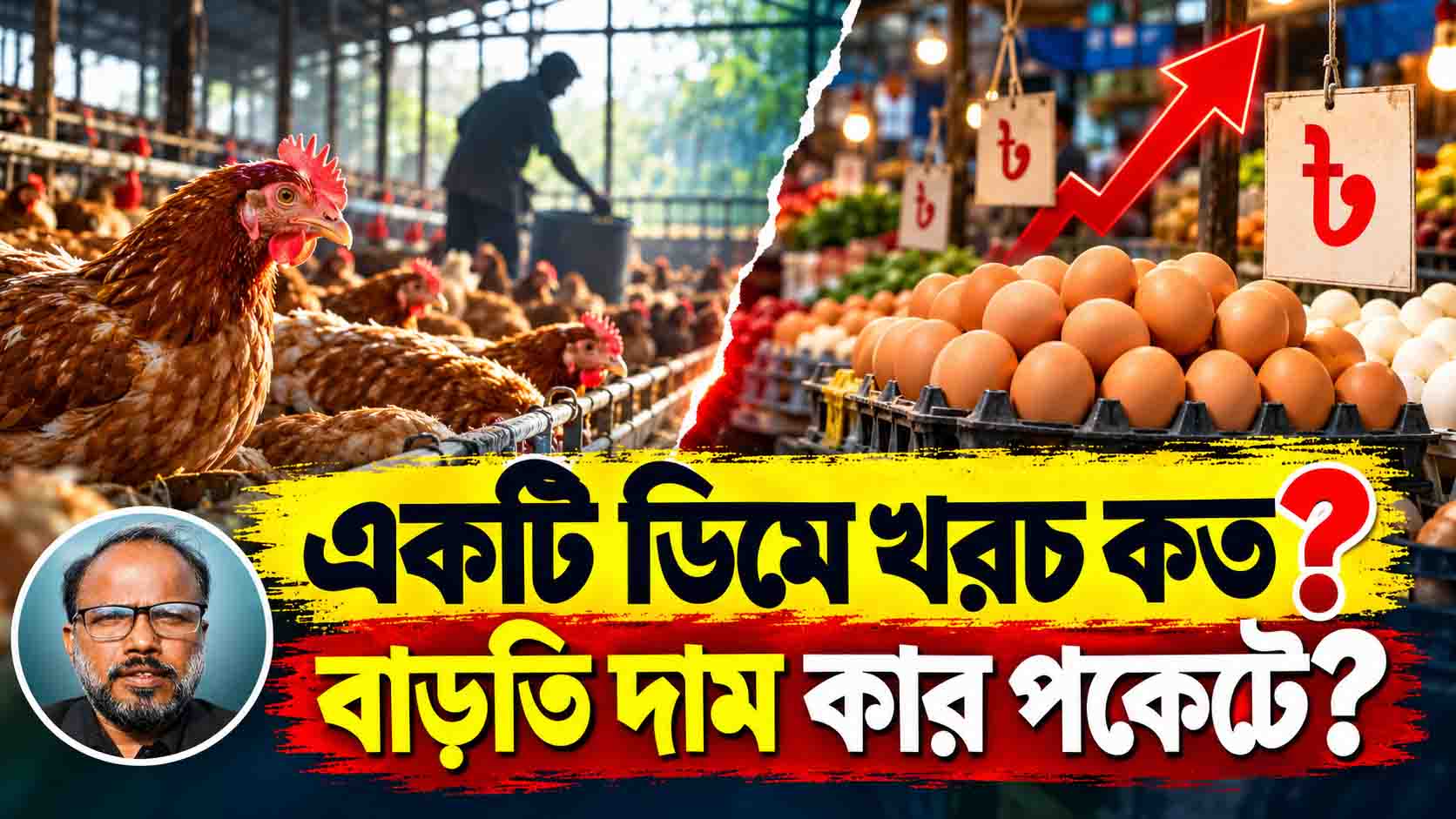
একটি ডিম উৎপাদনে খরচ কত, খামারি পান কত—বাড়তি দাম যাচ্ছে কার পকেটে?
ড. বায়েজিদ মোড়লের গবেষণাধর্মী প্রতিবেদন
সম্পাদক-AgricultureNews24.com

একটি ডিম খামার থেকে বের হওয়ার পর ক্রেতার হাতে পৌঁছাতে কত হাত ঘোরে? আর প্রতিটি ধাপে কত টাকা যোগ হয়? প্রশ্নটি এখন আরও জরুরি। কারণ ডিমের দাম বাড়লে ক্রেতা বাড়তি টাকা দেন, কিন্তু সেই বাড়তি টাকার কতটুকু খামারি পান, তা বাজারের দামের তালিকা দেখে বোঝা যায় না।
২৭ সেপ্টেম্বর বাণিজ্য মন্ত্রণালয়ের এক সভায় ব্যবসায়ীদের দেওয়া তথ্য অনুযায়ী, বর্তমানে প্রতি ডিম উৎপাদনে খরচ প্রায় ১১ টাকা এবং সেপ্টেম্বরে উৎপাদক পর্যায়ে গড় বিক্রয়মূল্য ছিল প্রায় ১১ টাকা ৩০ পয়সা। একই সময়ে রাজধানীর বাজারে ডিম বিক্রি হয়েছে ডজনে ১৫৫–১৬০ টাকায়, অর্থাৎ প্রতি ডিম প্রায় ১২ টাকা ৯২ পয়সা থেকে ১৩ টাকা ৩৩ পয়সা। এগুলো ব্যবসায়ীদের দেওয়া গড় তথ্য ও রাজধানীর বাজারদর; কোনো নির্দিষ্ট খামার থেকে নির্দিষ্ট দোকান পর্যন্ত একই চালানের হিসাব নয়।
| হিসাবের ধাপ | প্রতি ডিম |
|---|---|
| উৎপাদন খরচ, ব্যবসায়ীদের দেওয়া তথ্য অনুযায়ী | প্রায় ১১ টাকা |
| সেপ্টেম্বরে উৎপাদক পর্যায়ের গড় বিক্রয়মূল্য | প্রায় ১১ টাকা ৩০ পয়সা |
| রাজধানীতে ডজনে ১৫৫–১৬০ টাকার সমতুল্য খুচরা মূল্য | প্রায় ১২ টাকা ৯২ পয়সা–১৩ টাকা ৩৩ পয়সা |
| উৎপাদক ও খুচরা মূল্যের হিসাবগত ব্যবধান | প্রায় ১ টাকা ৬২ পয়সা–২ টাকা ৩ পয়সা |
এই হিসাব ধরে খামারির সম্ভাব্য উদ্বৃত্ত ডিমপ্রতি প্রায় ৩০ পয়সা। সেটিও সব খামারির প্রকৃত লাভ নয়। খরচ গণনায় নিজস্ব শ্রম, ঋণের সুদ, ঘরের অবচয় কিংবা উৎপাদন কমে যাওয়ার দিনের ব্যয় পুরোপুরি ধরা হয়েছে কি না, তা খামারভেদে যাচাই করতে হবে। একইভাবে উৎপাদক ও খুচরা দামের মাঝের প্রায় দুই টাকা পুরোটাই মধ্যস্বত্বভোগীর মুনাফা বলা যাবে না; এর মধ্য থেকে পরিবহন, ভাঙা ডিমের ক্ষতি, আড়ত ও দোকান পরিচালনার খরচও মেটানো হয়।
কয়েক মাসেই বদলে গেছে খামারির চিত্র
জুলাইয়ে বাংলাদেশ পোলট্রি ইন্ডাস্ট্রিজ অ্যাসোসিয়েশন দাবি করেছিল, প্রতি ডিম উৎপাদনে খরচ হচ্ছে ১০ টাকা, অথচ খামারি বিক্রি করছেন ৬ টাকায়। সংগঠনটির হিসাবে তখন ডিমপ্রতি লোকসান ছিল ৪ টাকা। সেপ্টেম্বরের সভায় ব্যবসায়ীদের দেওয়া হিসাবে খরচ ও বিক্রয়মূল্য দুটোই বেড়েছে। তাই জুলাইয়ের ছয় টাকার খামারি দরকে সেপ্টেম্বরের ১৫৫–১৬০ টাকার খুচরা দামের সঙ্গে মিলিয়ে বর্তমান বাজারের মুনাফা হিসাব করা ভুল হবে।
তবে জুলাইয়ের অভিজ্ঞতা একটি বড় ঝুঁকি দেখায়: বাজারে ডিমের দাম কমে গেলে সেই চাপ দ্রুত খামারির ওপর পড়ে। উৎপাদন খরচের নিচে বিক্রি দীর্ঘদিন চললে ছোট খামারের পক্ষে মুরগির খাদ্য, শ্রমিকের বেতন ও ঋণের কিস্তি চালানো কঠিন হয়ে যায়। পরে সরবরাহ কমে দাম বাড়লেও ক্ষতিগ্রস্ত খামারি সেই বাড়তি দামের সুফল পাবেন—এমন নিশ্চয়তা নেই।
উৎপাদন খরচে কী কী থাকে?
একটি ডিমের খরচ কেবল মুরগির এক দিনের খাবারের দাম নয়। ডিম দেওয়া শুরু করার আগ পর্যন্ত বাচ্চা বা পুলেট বড় করার ব্যয়ও উৎপাদনকালের ডিমের ওপর ভাগ করে হিসাব করতে হয়। এরপর আসে খাদ্য, টিকা ও চিকিৎসা, শ্রম, বিদ্যুৎ, পানি, খাঁচা বা ঘরের রক্ষণাবেক্ষণ, ঋণের সুদ এবং মুরগি ও স্থাপনার অবচয়।
খাদ্যের দাম এখানে বিশেষভাবে গুরুত্বপূর্ণ। জুলাইয়ের সংবাদ সম্মেলনে খামারিদের সংগঠন দাবি করেছিল, তাদের মোট ব্যয়ের ৭০–৮০ শতাংশ খাদ্যের পেছনে যায়। সেপ্টেম্বরে বাণিজ্য মন্ত্রণালয়ের সভায় ব্যবসায়ীরা ভুট্টা ও সয়াবিনসহ খাদ্যের উপকরণের মূল্যবৃদ্ধিকে উৎপাদন খরচ বাড়ার কারণ হিসেবে তুলে ধরেন। এগুলো খাতসংশ্লিষ্টদের দাবি; নিরপেক্ষ খামারভিত্তিক হিসাব প্রকাশিত হলে প্রকৃত ব্যয়ের পার্থক্য আরও পরিষ্কার হবে।
ধরা যাক, দুটি খামার একই দামে খাদ্য কিনছে। একটির মুরগি নিয়মিত ডিম দিচ্ছে, অন্যটির উৎপাদন রোগ, গরম বা ব্যবস্থাপনার সমস্যায় কমেছে। দ্বিতীয় খামারটির মোট খরচ কাছাকাছি থাকলেও বিক্রিযোগ্য ডিম কম হবে। ফলে তার প্রতি ডিমের খরচ বেশি পড়বে। এ কারণেই একটি জাতীয় গড় দিয়ে সব খামারির লাভ বা লোকসান বোঝানো যায় না।
খামার থেকে দোকান: দামের ফারাক কোথায় তৈরি হয়?
সাধারণভাবে ডিম খামারি থেকে সংগ্রাহক বা পাইকারের কাছে, সেখান থেকে আড়ত হয়ে খুচরা দোকানে যায়। সব ডিম অবশ্য একই পথে চলে না। বড় ক্রেতা সরাসরি খামার বা প্রতিষ্ঠানের কাছ থেকেও কিনতে পারেন। প্রতিটি হাতবদলে ডিম সংগ্রহ, বাছাই, পরিবহন ও বিক্রির খরচ যোগ হয়।
সেপ্টেম্বরের সভায় ব্যবসায়ীরা বলেছেন, উৎপাদক থেকে খুচরা পর্যায় পর্যন্ত সাধারণত দেড় থেকে দুই টাকা মূল্য সংযোজন হয়। একই সভায় বাণিজ্যমন্ত্রী এই ব্যবধানের কোন ধাপে অস্বাভাবিক ব্যয় বা অতিরিক্ত মুনাফা যোগ হচ্ছে, তা যাচাই করার কথা বলেছেন। অর্থাৎ বাড়তি টাকা ঠিক কার পকেটে যাচ্ছে, তার ধাপভিত্তিক প্রমাণ এখনো প্রকাশিত হয়নি।
এই প্রশ্নের উত্তর পেতে একই দিনে এবং সম্ভব হলে একই চালানের চারটি দাম মিলিয়ে দেখতে হবে: খামারি কত পেলেন, সংগ্রাহক কত দামে বিক্রি করলেন, আড়ত থেকে কত দামে বের হলো এবং দোকানে ক্রেতা কত দিলেন। প্রতিটি ধাপের পরিবহন, ভাঙা ডিম, শ্রম ও অন্যান্য খরচ বাদ দেওয়ার পরেই কার প্রকৃত মুনাফা কত, তা বলা সম্ভব।
দাম বাড়লে খামারি কি লাভবান হন?
সব সময় নয়। সেপ্টেম্বরে দেওয়া গড় হিসাবে খামারি উৎপাদন খরচের সামান্য বেশি পেয়েছেন বলে মনে হচ্ছে। কিন্তু একজন খামারি খাদ্য বাকিতে বেশি দামে কিনলে, তাঁর মুরগির ডিম দেওয়ার হার কমলে কিংবা আগের লোকসানের ঋণ শোধ করতে হলে, ওই ৩০ পয়সার ব্যবধান দিয়ে তাঁর ব্যবসা টেকসই হবে না।
অন্যদিকে কোনো অঞ্চলে খামারি যদি ১১ টাকা ৩০ পয়সার চেয়েও কম পান, অথচ সেই অঞ্চলের ক্রেতা রাজধানীর সমান বা বেশি দামে ডিম কেনেন, সেখানে দামের ব্যবধান নতুন করে তদন্তের দাবি রাখে। আবার দূরের বাজারে পরিবহন ব্যয় ও ক্ষতিও বেশি হতে পারে। দামের ফারাক সন্দেহের কারণ হতে পারে, কিন্তু একা কারসাজির প্রমাণ নয়।
ক্রেতার চাপও বাস্তব
ডিম কম আয়ের পরিবারের সহজলভ্য প্রাণিজ আমিষের একটি উৎস। ডজনে দাম ৫–১০ টাকা বাড়লে নিয়মিত ডিম কেনা পরিবারের মাসিক ব্যয়ও বাড়ে। তাই খামারির ন্যায্য দাম নিশ্চিত করতে গিয়ে ক্রেতার ওপর অযৌক্তিক চাপ পড়ছে কি না, সেটিও দেখা জরুরি।
সমাধানের শুরু হতে পারে নিয়মিত, নির্ভরযোগ্য তথ্য প্রকাশ দিয়ে। প্রতিদিন প্রধান উৎপাদন এলাকা ও ভোক্তা বাজারের খামার, আড়ত ও খুচরা দর একসঙ্গে প্রকাশ করলে হঠাৎ কোন ধাপে দাম লাফাচ্ছে, তা ধরা সহজ হবে। পাশাপাশি বিভিন্ন আকারের খামারের প্রকৃত উৎপাদন খরচ হিসাব করতে হবে; খাদ্যের দাম বা ডিম উৎপাদনের হার বদলালে সেই হিসাবও হালনাগাদ করতে হবে। সেপ্টেম্বরে অনুষ্ঠিত সভাতেও দৈনিক উৎপাদন, সরবরাহ ও বাজারদরের তথ্য প্রকাশের সুপারিশ এসেছে।
শেষ প্রশ্নটি তাই সরল: ক্রেতা যে দাম দিচ্ছেন, তা থেকে খামারি উৎপাদন চালিয়ে যাওয়ার মতো আয় পাচ্ছেন কি? আর মাঝের প্রতিটি ধাপে খরচ বাদ দিয়ে কত মুনাফা থাকছে? সেপ্টেম্বরের তথ্য দামের ব্যবধান দেখায়, কিন্তু কোনো নির্দিষ্ট পক্ষকে বাড়তি মুনাফার দায়ী প্রমাণ করে না। সেই প্রমাণ পেতে খামারের হিসাব, লেনদেনের রসিদ ও একই চালানের ধাপভিত্তিক দাম প্রকাশ করতে হবে।
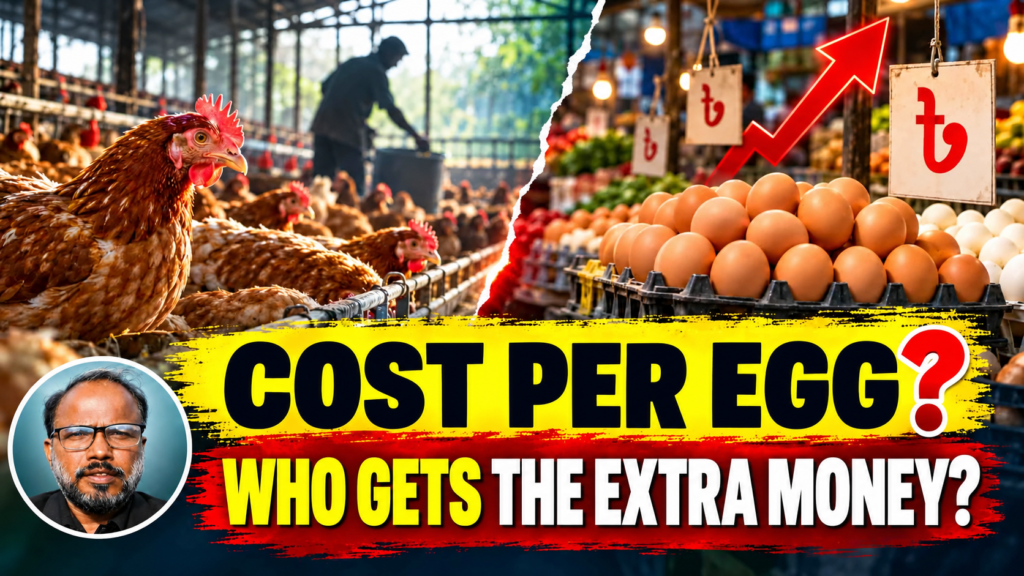
How Much Does It Cost to Produce an Egg, How Much Does the Farmer Receive—and Who Gets the Extra Money?
An investigative report by Dr. Bayezid Moral
How many hands does an egg pass through between the farm and the consumer? How much is added to its price at each stage? These questions matter when egg prices rise. Consumers pay more, but a retail price alone does not show how much of that increase reaches the farmer.
At a Ministry of Commerce meeting on 27 September, industry representatives said that producing an egg currently costs about Tk 11, while the average producer-level selling price in September was about Tk 11.30. Around the same time, eggs were selling in Dhaka for Tk 155–160 per dozen, equivalent to approximately Tk 12.92–13.33 per egg. The production cost and producer price are figures supplied by industry representatives; the retail figure is a Dhaka market price. They do not trace the same consignment from a particular farm to a particular shop.
| Stage | Approximate price per egg |
|---|---|
| Production cost, according to industry representatives | Tk 11.00 |
| Average producer-level selling price in September | Tk 11.30 |
| Retail price equivalent to Tk 155–160 per dozen in Dhaka | Tk 12.92–13.33 |
| Calculated difference between producer and retail prices | Tk 1.62–2.03 |
On these figures, the farmer’s potential surplus is about Tk 0.30 per egg. That is not necessarily the farmer’s actual profit. Whether the stated production cost fully includes the farmer’s own labour, loan interest, depreciation of buildings and equipment, and the cost of days when production falls must be checked farm by farm.
Nor can the roughly Tk 2 difference between producer and retail prices be described entirely as middlemen’s profit. Transport, broken eggs, labour, and the costs of running wholesale markets and shops must also be paid from that amount.
The picture for farmers has changed within months
In July, the Bangladesh Poultry Industries Association claimed that an egg cost Tk 10 to produce but sold for Tk 6 at farm level—a loss of Tk 4 per egg by its calculation. Both the reported cost and producer price were higher in the figures presented at the September meeting. It would therefore be misleading to compare July’s Tk 6 farm price with September’s Tk 155–160 retail price per dozen and call the difference a current profit margin.
July’s experience nevertheless exposes a serious risk. When egg prices fall, farmers may have to sell below their production cost. If that continues, smaller farms can struggle to pay for feed, workers and loan instalments. Even if prices rise later, a farmer who has already accumulated losses is not guaranteed to benefit.
What goes into the cost of producing an egg?
An egg’s production cost is more than the feed a hen eats on the day it lays. The expense of raising a chick or pullet until it begins laying must be spread across the eggs it produces. Feed, vaccines and treatment, labour, electricity, water, maintenance, loan interest, and depreciation of birds, housing and equipment must also be considered.
Feed is especially important. At its July press conference, the farmers’ association claimed that feed accounted for 70–80% of its members’ costs. At the September meeting, industry representatives pointed to rising prices of feed ingredients, including maize and soybean, as a reason for higher production costs. These are industry claims; independently verified accounts from farms of different sizes would provide a clearer picture. [Sources:
Consider two farms buying feed at the same price. If hens at one farm lay regularly while disease, heat or management problems reduce output at the other, the second farm has fewer saleable eggs over which to spread its costs. Its cost per egg will be higher. One average figure cannot establish whether every farmer is making a profit or a loss.
Where does the price difference arise between farm and shop?
Eggs commonly move from farmers to collectors or wholesalers, then through wholesale markets to retailers. Some larger buyers purchase directly, so every egg does not follow the same route. Collection, grading, transport and selling costs may be added along the way.
At the September meeting, industry representatives said that the price generally increases by Tk 1.50–2.00 per egg between producer and retailer. The commerce minister also called for an examination of where unusual costs or excessive profits might be entering the supply chain. A published breakdown showing precisely who receives how much at each stage is still needed.
To answer the question in this report’s headline, investigators should compare four prices on the same day—ideally for the same consignment: what the farmer received, what the collector charged, the price at which the eggs left the wholesale market, and what the consumer paid. Actual profit at each stage can be calculated only after deducting transport, breakage, labour and other costs.
Do farmers benefit when prices rise?
Not always. The September averages suggest that producers received slightly more than the reported production cost. But a farmer buying feed on credit at a higher price, getting fewer eggs from the flock, or repaying debts from earlier losses may not have a sustainable business on a margin of about Tk 0.30 per egg.
If farmers in a region receive less than Tk 11.30 while its consumers pay as much as, or more than, consumers in Dhaka, the local price difference deserves closer examination. Transport and losses may also be higher on longer routes. A price gap is a reason to investigate; by itself, it does not prove manipulation.
Consumers face pressure too
Eggs are an accessible source of animal protein for lower-income households. An increase of Tk 5–10 per dozen adds to the monthly cost for families that buy them regularly. A fair return for farmers and an affordable price for consumers therefore both matter.
A practical starting point is to publish reliable prices regularly. Showing farm, wholesale and retail prices together each day in major producing areas and consumer markets would make sudden jumps easier to identify. Production costs should also be calculated for farms of different sizes and updated when feed prices or laying rates change. Participants at the September meeting likewise recommended publishing daily production, supply and market-price data.
The central questions remain: Does the price paid by consumers give farmers enough to keep producing? And how much profit remains at each stage after genuine costs are deducted? September’s figures show a gap between producer and retail prices, but they do not prove that any particular group is taking excessive profit. Farm accounts, transaction receipts and prices tracked along the same consignment are needed to establish where the money goes.
Sources
- bdnews24.com (27 September 2026). “Government to Review Egg Production Costs and Profit Margins.” Reports figures presented at a Ministry of Commerce meeting on production costs, producer prices, retail prices and the supply chain.
- Prothom Alo (11 July 2026). “Farmers Claim a Loss of Tk 4 per Egg.” Reports the Bangladesh Poultry Industries Association’s claims about production costs, farm prices and feed expenses.