















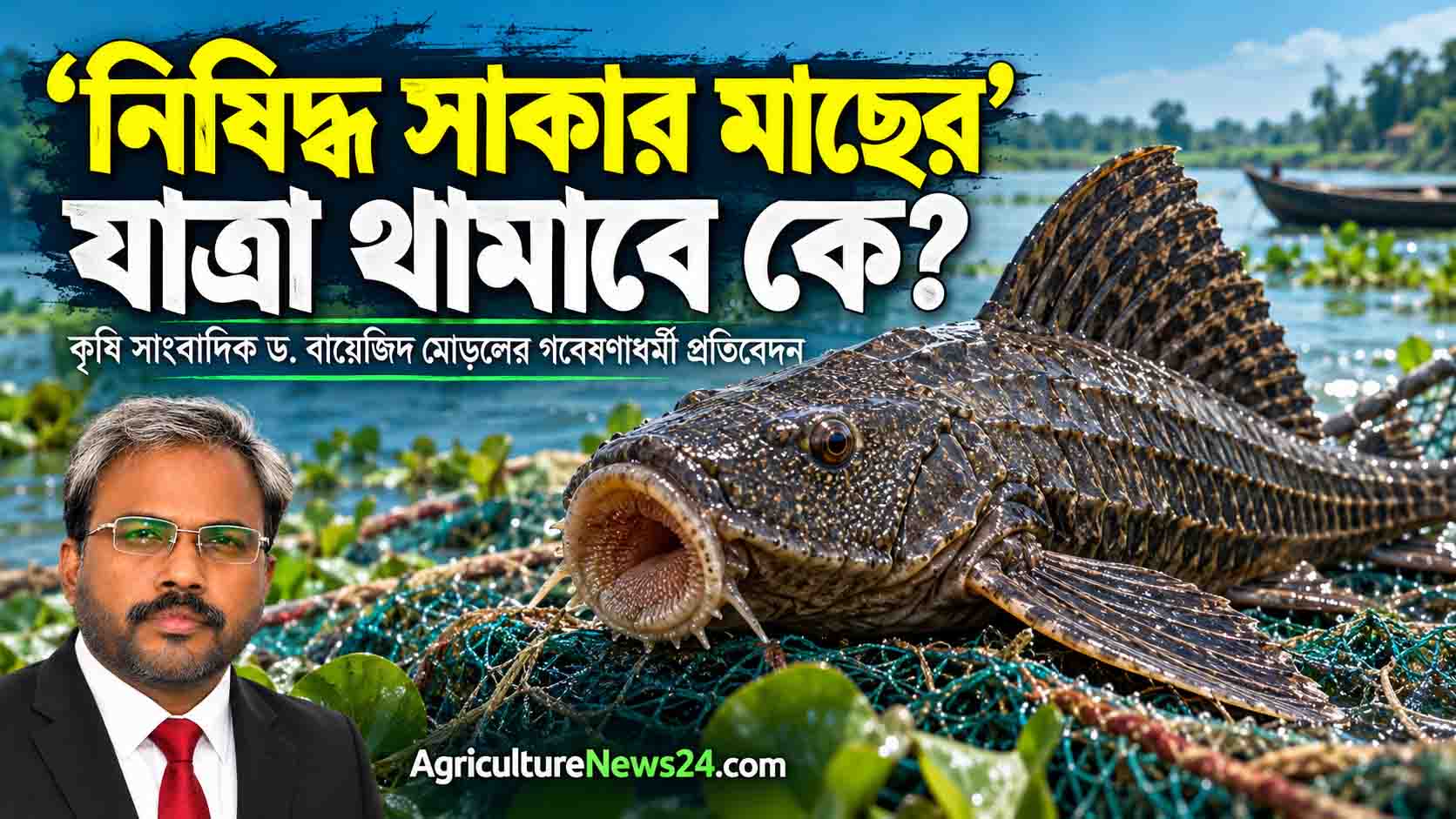
নিষিদ্ধ সাকার মাছের চলমান যাত্রা থামাবে কে?
কোথাও ব্যাগভর্তি মাছ বিক্রির ভিডিও, কোথাও রান্নার আয়োজন; নদী ও জলাশয়ে আগ্রাসী এই মাছ নিয়ন্ত্রণে জরুরি সমন্বিত উদ্যোগ।।



নিষিদ্ধ সাকার মাছের চলমান যাত্রা থামাবে কে?
কৃষি সাংবাদিক ড. বায়েজিদ মোড়লের গবেষণাধর্মী প্রতিবেদন।।
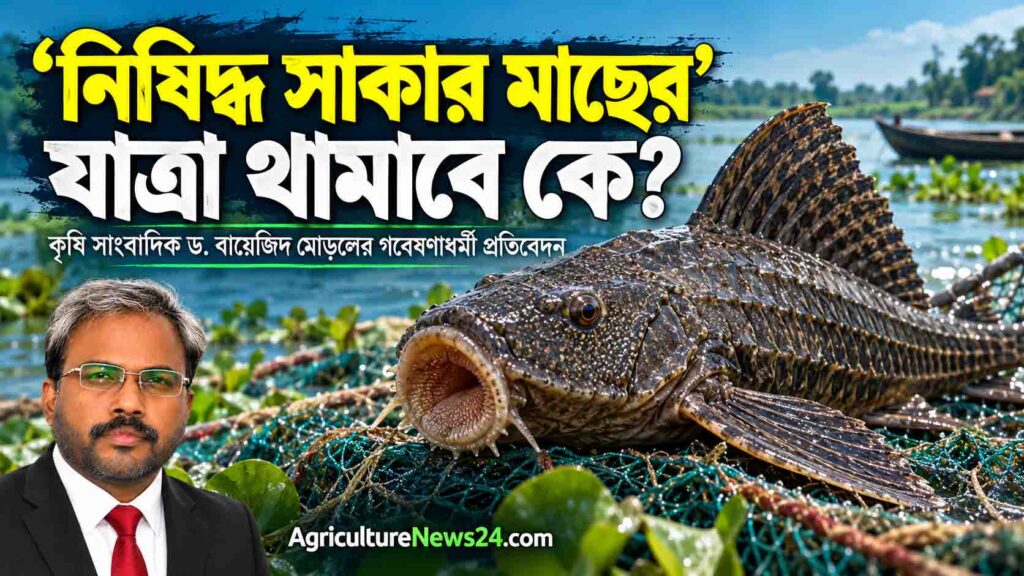
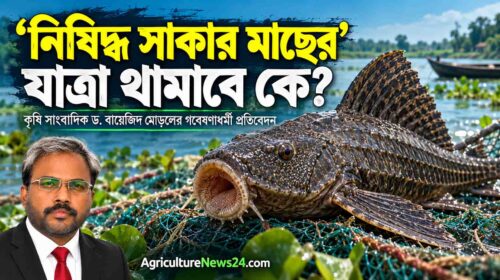
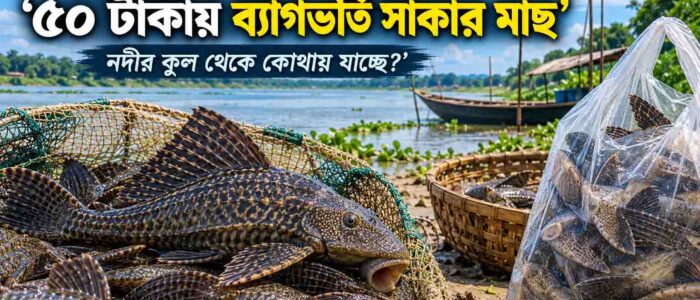
জেলে নদীতে জাল ফেলছেন দেশি মাছ ধরার আশায়। কিন্তু জাল তুলে দেখছেন, তার বড় একটি অংশজুড়ে সাকার মাছ। শক্ত বর্মের মতো শরীর, ধারালো পাখনা ও কাঁটাযুক্ত এই মাছ জাল থেকে ছাড়ানোও সহজ নয়। কোথাও জাল ক্ষতিগ্রস্ত হচ্ছে, কোথাও জেলের হাতে লাগছে আঘাত।
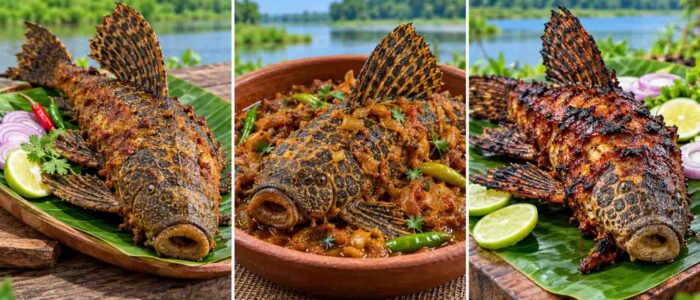
অন্যদিকে সামাজিক যোগাযোগমাধ্যমে দেখা যাচ্ছে ভিন্ন চিত্র। সাকার মাছ বিক্রি হচ্ছে, ক্রেতারা ব্যাগভর্তি করে নিয়ে যাচ্ছেন। কেউ ভাজছেন, কেউ ভুনা করছেন, কেউ আবার বারবিকিউ করে খাওয়ার ভিডিও প্রকাশ করছেন।
এখানেই প্রশ্ন—যে মাছের আমদানি, চাষ, পরিবহন ও বিক্রি সরকার নিষিদ্ধ করেছে, সেই মাছ কীভাবে বাজারে এবং মানুষের খাবারের পাতে পৌঁছাচ্ছে? আর প্রতিদিন জেলেদের জালে ধরা পড়া সাকার মাছের বাকিগুলো কোথায় যাচ্ছে?
বাংলাদেশের নদী, খাল, বিল ও হাওরে সাকার মাছের বিস্তার এখন আর শুধু একটি অচেনা মাছ নিয়ে কৌতূহলের বিষয় নয়। এটি জলজ জীববৈচিত্র্য, জেলেদের জীবিকা, আইন প্রয়োগ এবং খাদ্যনিরাপত্তার প্রশ্ন। এখন প্রয়োজন তথ্যভিত্তিক জনসচেতনতা ও সরকারের নেতৃত্বে কার্যকর নিয়ন্ত্রণ কর্মসূচি।
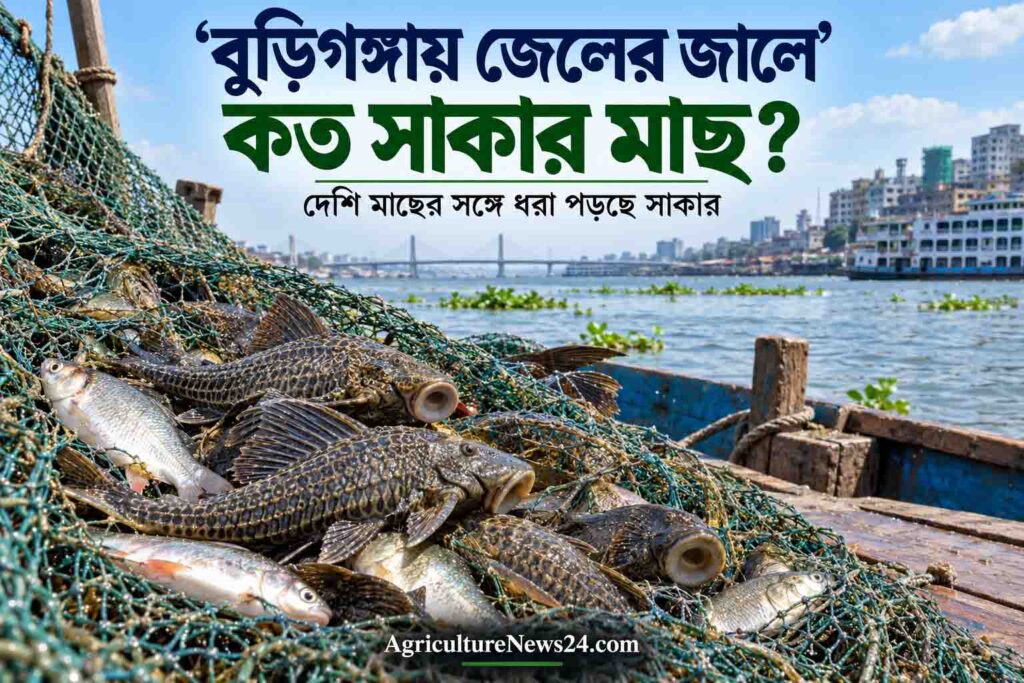
জেলেদের জালে কোথায় কোথায় সাকার মাছ ধরা পড়ছে?
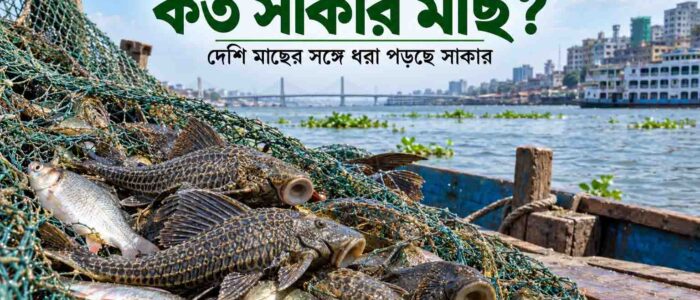
সাকার মাছের উপস্থিতি নিয়ে সবচেয়ে বেশি আলোচিত জলাশয়গুলোর একটি ঢাকার বুড়িগঙ্গা। সেখানে জেলেদের জালে দেশি মাছের পাশাপাশি উল্লেখযোগ্য পরিমাণে সাকার মাছ ধরা পড়ার খবর বিভিন্ন সংবাদমাধ্যমে প্রকাশিত হয়েছে।
শুধু বুড়িগঙ্গাতেই নয়, তুরাগসহ বিভিন্ন নদী ও জলাশয়েও মাছটির উপস্থিতির খবর পাওয়া যাচ্ছে। হাকালুকি হাওর, হবিগঞ্জের শায়েস্তাগঞ্জের একটি বিল, রাজশাহীর দুর্গাপুরের বিল এবং মেহেরপুরের কয়েকটি বিলেও সাকার মাছ পাওয়ার সংবাদ আগের প্রতিবেদনে সংকলিত হয়েছে। তবে একটি জলাশয়ে মাছ পাওয়া গেছে মানেই সেখানে কী পরিমাণে ছড়িয়েছে, তা বলা যায় না। এজন্য নিয়মিত জরিপ প্রয়োজন।
বুড়িগঙ্গার ৪৫ জন জেলের সাক্ষাৎকারভিত্তিক একটি গবেষণার বিবরণ তুলে ধরে দ্য বিজনেস স্ট্যান্ডার্ড জানিয়েছে, বর্ষার বাইরের সময়ে তাঁদের আহরিত মাছের বড় অংশই সাকার বলে জেলেরা ধারণা দিয়েছেন। এটি ওই গবেষণায় অংশ নেওয়া জেলেদের অভিজ্ঞতা; সারা দেশের চিত্র নয়।
এখন সরকারের কাছে জনস্বার্থের দাবি হলো—জেলা ও জলাশয়ভিত্তিক সমীক্ষা করে জানানো হোক, কোথায় সাকার মাছ আছে, কোথায় বেশি পাওয়া যাচ্ছে এবং কোন এলাকায় দেশি মাছ ও জেলেদের জীবিকার ওপর কী প্রভাব পড়ছে।
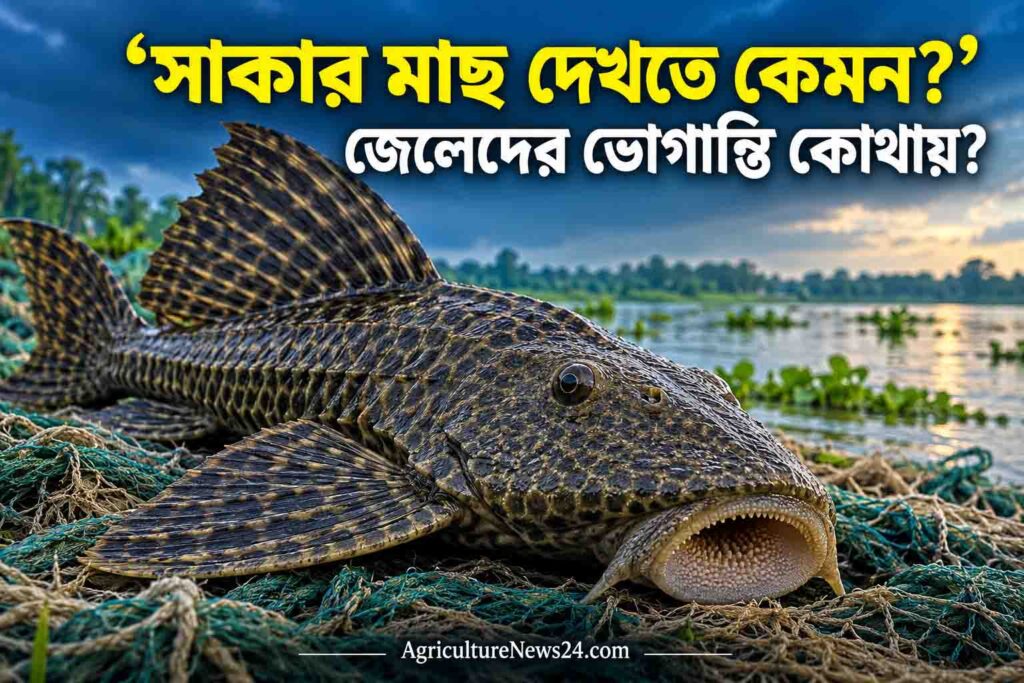
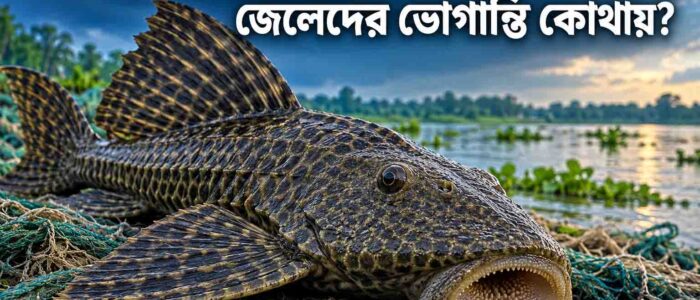
সাকার দেখতে কেমন? জেলেদের ভোগান্তি কোথায়?
সাকার মাছের শরীর সাধারণ মাছের মতো নরম আঁশে ঢাকা নয়; এর গায়ে শক্ত অস্থিময় পাতের মতো আবরণ থাকে। মাথা তুলনামূলক বড়, মুখ নিচের দিকে এবং পাখনায় শক্ত কাঁটা রয়েছে। মুখে ছোট ছোট দাঁতও থাকে।
এই গঠন মাছটিকে সহজে চেনার সুযোগ দেয়। তবে জাল থেকে খালি হাতে ছাড়াতে গেলে কাঁটা ও শক্ত পাখনায় আঘাত লাগতে পারে। জেলেদের জাল ছিঁড়ে যাওয়া বা ক্ষতিগ্রস্ত হওয়ার কথাও সংবাদ প্রতিবেদনে এসেছে। ফলে মাছ ধরার পর সেটি আলাদা করা জেলেদের জন্য বাড়তি কাজ ও খরচের কারণ হয়ে দাঁড়াতে পারে।
কিছু মাছের গায়ে বা পেটে দুর্গন্ধ পাওয়া যেতে পারে। তবে শুধু দুর্গন্ধ, চেহারা বা শক্ত চামড়া দেখে কোনো মাছের ভেতরে বিষাক্ত পদার্থ আছে কি না নিশ্চিত হওয়া যায় না। মাছের অবস্থা, জলাশয়ের দূষণ এবং সংরক্ষণসহ বিভিন্ন কারণ যাচাই করা প্রয়োজন।
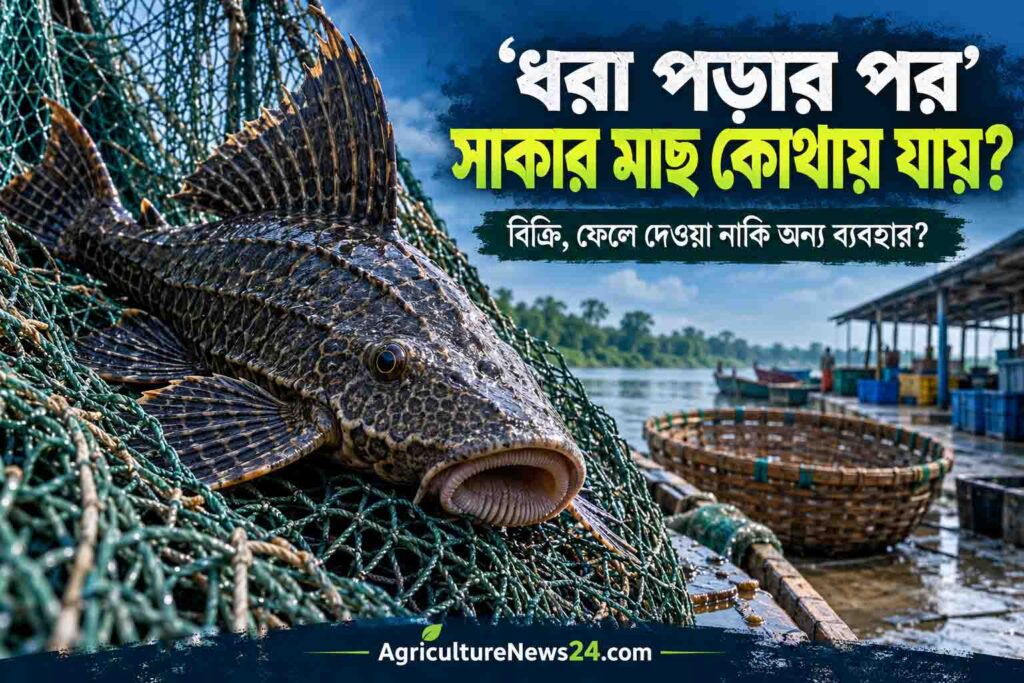
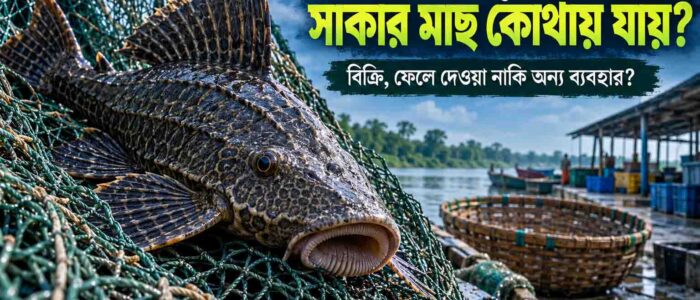
ধরা পড়ার পর সাকার মাছগুলো কোথায় যায়?
এটাই এই অনুসন্ধানের সবচেয়ে গুরুত্বপূর্ণ প্রশ্নগুলোর একটি।
সামাজিক যোগাযোগমাধ্যম ও সংবাদ প্রতিবেদনে সাকার মাছ বিক্রির ঘটনা দেখা যায়। আবার কিছু ক্ষেত্রে জেলেরা মাছটি অবাঞ্ছিত হিসেবে বিবেচনা করেন। কিন্তু সারাদেশে জালে ধরা সাকার মাছের কত অংশ বিক্রি হচ্ছে, কত অংশ ফেলে দেওয়া হচ্ছে, কত অংশ অন্য কোথাও ব্যবহৃত হচ্ছে—এমন নির্ভরযোগ্য জাতীয় হিসাব এই প্রতিবেদনের জন্য পাওয়া যায়নি।
শুঁটকি বা মাছ ও পোল্ট্রির খাদ্যে ব্যবহারের কথাও সামাজিক মাধ্যমে আলোচনায় আসে। কিন্তু কোনো নির্দিষ্ট প্রতিষ্ঠান বা সরবরাহ শৃঙ্খলে এমন ব্যবহার হচ্ছে বলে দাবি করতে হলে মাছের উৎস, ক্রেতা, পরিবহন, প্রক্রিয়াজাতকরণ এবং পরীক্ষার ফলসহ প্রমাণ প্রয়োজন।
মৎস্য অধিদপ্তরের উচিত জেলেদের কাছ থেকে তথ্য সংগ্রহ করে এই প্রশ্নগুলোর উত্তর খোঁজা:
- কোন জলাশয়ে কখন কত সাকার মাছ ধরা পড়ছে?
- মাছগুলো কে সংগ্রহ করছে এবং কোথায় নিয়ে যাচ্ছে?
- বিক্রি বা অন্য কোনো ব্যবহারের প্রমাণ আছে কি?
- জেলেদের কাছে নিরাপদে মাছটি কর্তৃপক্ষের কাছে দেওয়ার ব্যবস্থা আছে কি?
ধরা মাছ কোথায় যাচ্ছে—সেই পথ জানা ছাড়া কার্যকর নিয়ন্ত্রণ পরিকল্পনাও অসম্পূর্ণ থেকে যাবে।
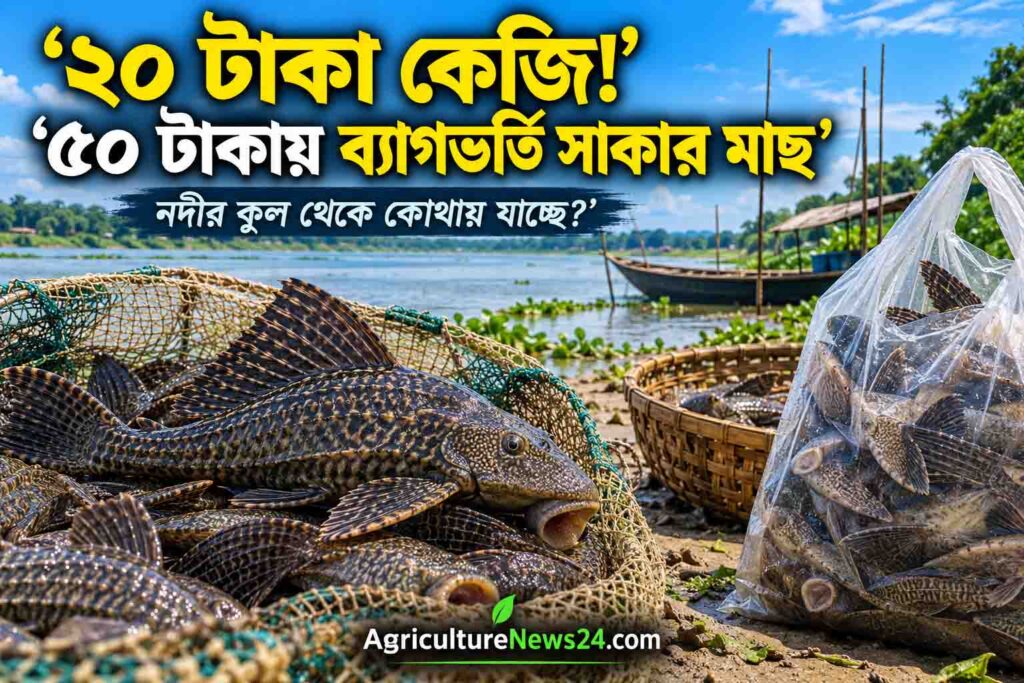
২০ টাকা কেজি, ৫০ টাকায় ব্যাগভর্তি—কী বলছে ভিডিও?
ইউটিউব ও ফেসবুকে ছড়িয়ে পড়া বিভিন্ন ভিডিওতে কম দামে সাকার মাছ বিক্রির দাবি দেখা যাচ্ছে। কোনো ভিডিওতে কেজি ২০ টাকার কথা বলা হচ্ছে; কোথাও ৫০ বা ১০০ টাকায় ব্যাগভর্তি মাছ দেওয়ার দৃশ্য বা দাবি রয়েছে।
ফেসবুকে পাওয়া একটি ভিডিওর শিরোনামেও বুড়িগঙ্গার সাকার মাছ ৫০ টাকায় ব্যাগভর্তি দেওয়ার দাবি রয়েছে। তবে ভিডিওর শিরোনাম থেকেই লেনদেনের সময়, স্থান, মাছের ওজন কিংবা বিক্রির প্রকৃত মূল্য স্বাধীনভাবে নিশ্চিত করা যায় না। ফলে এসব দামকে সারাদেশের বাজারদর হিসেবে উপস্থাপন করা ঠিক হবে না।
তবুও ভিডিওগুলো একটি গুরুত্বপূর্ণ প্রশ্ন সামনে আনে: নিষিদ্ধ মাছ বিক্রির এমন দৃশ্য বা দাবি দেখা গেলে স্থানীয় প্রশাসন ও মৎস্য বিভাগ কীভাবে তা যাচাই করছে?
দাম কম হওয়ায় অনেক ক্রেতা আকৃষ্ট হতে পারেন। বিশেষ করে বাজারে মাছের দাম বেশি থাকলে কম আয়ের মানুষের কাছে কম দামের মাছ স্বাভাবিকভাবেই আকর্ষণীয় হতে পারে। তাই ক্রেতাকে দোষারোপের পাশাপাশি সচেতনতা, সাশ্রয়ী নিরাপদ খাবারের সুযোগ এবং নিষিদ্ধ মাছ বাজারে পৌঁছানো বন্ধ করার দায়িত্বও রাষ্ট্রকে নিতে হবে।

ভাজা, ভুনা বা বারবিকিউ: রান্না করলেই কি নিরাপদ?
সামাজিক যোগাযোগমাধ্যমে সাকার মাছ রান্নার ভিডিওতে আকর্ষণীয় উপস্থাপনা দেখা যায়। কিন্তু একটি ভিডিওতে মাছ রান্না বা খাওয়ার দৃশ্য থাকলেই সেটি নিরাপদ খাবার—এমন সিদ্ধান্তে পৌঁছানো যায় না।
মাছটি কোন জলাশয়ের, সেই জলাশয়ে শিল্পবর্জ্য বা অন্য দূষণ আছে কি না, মাছটি কীভাবে সংরক্ষণ করা হয়েছে এবং তার দেহে কোনো ক্ষতিকর দূষক আছে কি না—এসব প্রশ্নের উত্তর দরকার।
বিশেষ করে দূষিত জলাশয় থেকে সংগ্রহ করা মাছের ক্ষেত্রে ভারী ধাতু ও অন্যান্য দূষক পরীক্ষার বিষয়টি গুরুত্বপূর্ণ। ভাজা, সেদ্ধ বা বারবিকিউ করলেই সব রাসায়নিক দূষক বা ভারী ধাতু দূর হয় না। অন্যদিকে, পরীক্ষা ছাড়া সব সাকার মাছই বিষাক্ত—এমন দাবিও করা যায় না।
জনস্বাস্থ্যের স্বার্থে খাদ্যনিরাপত্তা কর্তৃপক্ষ ও সংশ্লিষ্ট গবেষণা প্রতিষ্ঠানগুলোর উচিত বিভিন্ন জলাশয় থেকে নমুনা সংগ্রহ করে পরীক্ষার ফল জনসমক্ষে প্রকাশ করা। সেই সঙ্গে নিষেধাজ্ঞা এবং অনিশ্চিত উৎসের মাছ খাওয়ার ঝুঁকি সম্পর্কে সহজ ভাষায় মানুষকে জানানো প্রয়োজন।

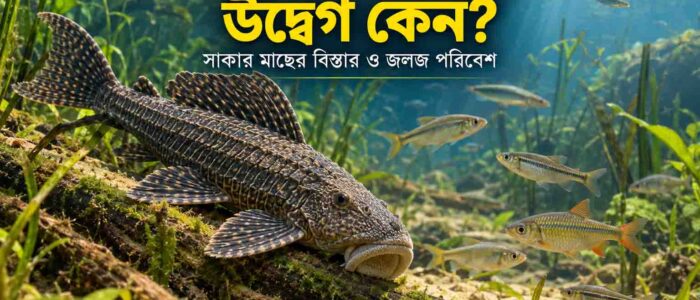
দেশি মাছের জন্য উদ্বেগ কেন?
সাকার মাছ বাংলাদেশের দেশি প্রজাতি নয়। নতুন পরিবেশে ছড়িয়ে পড়ে স্থানীয় জলজ প্রাণীর আবাস ও খাদ্যের ওপর চাপ সৃষ্টি করার আশঙ্কা থাকায় এটিকে আগ্রাসী বিদেশি মাছ হিসেবে বিবেচনা করা হয়।
তবে একটি বিষয়ে সতর্ক থাকা দরকার: কোনো জলাশয়ে দেশি মাছ কমে যাওয়ার পেছনে শুধু সাকার মাছকেই দায়ী করা যায় না। দূষণ, জলাশয় ভরাট, প্রজননক্ষেত্র নষ্ট, পানিপ্রবাহের পরিবর্তন এবং অতিরিক্ত আহরণও ভূমিকা রাখতে পারে। প্রতিটি এলাকায় কারণ ও প্রভাব আলাদাভাবে গবেষণা করতে হবে।
তার মানে এই নয় যে ব্যবস্থা নিতে গবেষণার জন্য অনির্দিষ্টকাল অপেক্ষা করতে হবে। যেখানে সাকার মাছের উপস্থিতি শনাক্ত হয়েছে, সেখানে পর্যবেক্ষণের পাশাপাশি দেশি মাছের ক্ষতি কমিয়ে বিজ্ঞানসম্মত নিয়ন্ত্রণ শুরু করা জরুরি।
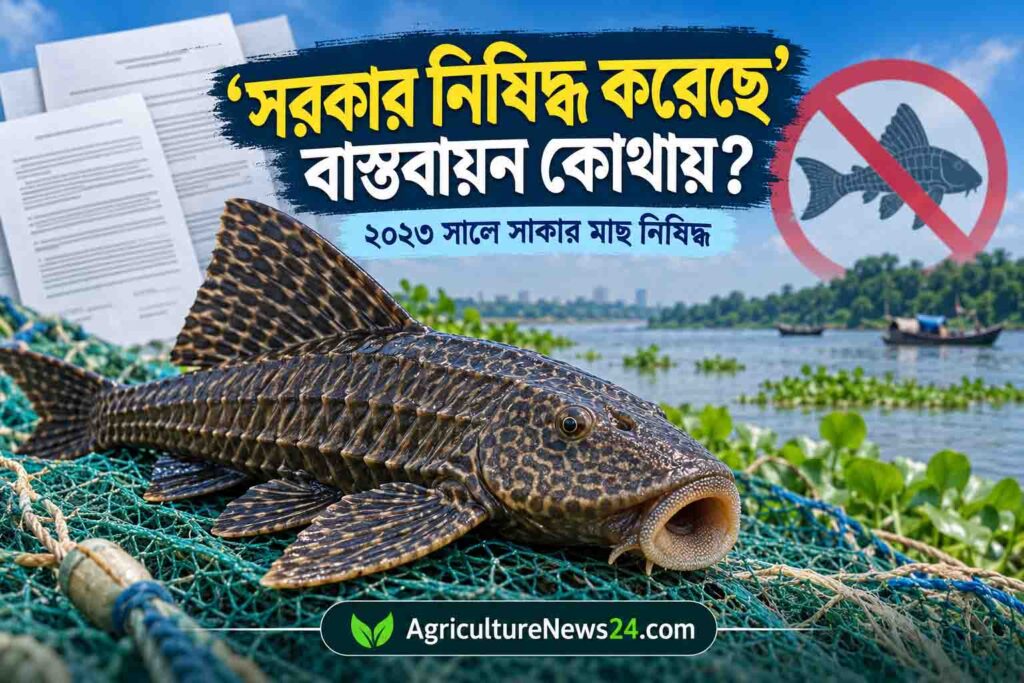
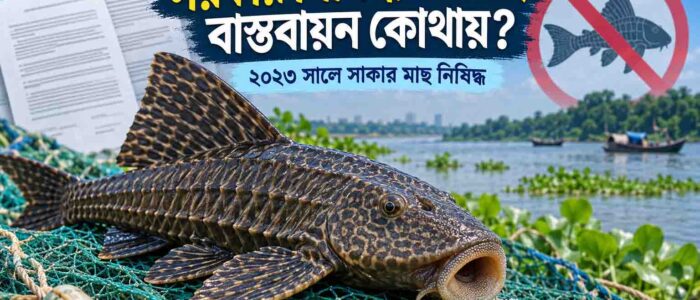
সরকার নিষিদ্ধ করেছে—বাস্তবায়ন কোথায়?
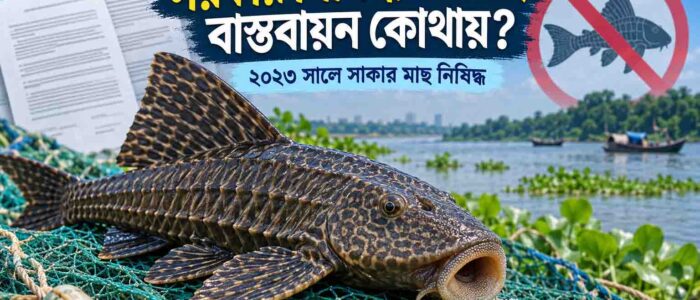
সরকার ২০২৩ সালে সাকার মাছ নিষিদ্ধ করে চূড়ান্ত প্রজ্ঞাপন জারি করে। সরকারি গেজেটের ভাষায় সাকারমাউথ ক্যাটফিশ গোষ্ঠীর মাছ আমদানি, প্রজনন, চাষ, পরিবহন, বিক্রয়, গ্রহণ, বিপণন, মজুত এবং রাখা নিষিদ্ধ।
অথচ নিষেধাজ্ঞার পরও বিক্রি এবং সামাজিক যোগাযোগমাধ্যমে বিক্রির দাবি দেখা যাওয়ায় আইন প্রয়োগের কার্যকারিতা নিয়ে প্রশ্ন ওঠে।
নিষেধাজ্ঞা বাস্তবায়নের জন্য প্রয়োজন বাজার তদারকি, অনলাইন ও মাঠপর্যায়ের অভিযোগ যাচাই, সংশ্লিষ্টদের সচেতন করা এবং আইন অনুযায়ী ব্যবস্থা নেওয়া। একই সঙ্গে একটি বাস্তব সমস্যার সমাধান জরুরি: অনিচ্ছাকৃতভাবে জালে সাকার মাছ উঠলে জেলে সেটি কী করবেন?
শুধু নিষেধাজ্ঞার কথা বললে হবে না; জেলেদের জন্য স্পষ্ট, সহজ ও আইনসম্মত ব্যবস্থাও তৈরি করতে হবে।

সাকার নিয়ন্ত্রণে জেলেদের পাশে দাঁড়াতে হবে
জেলে সাকার মাছের বিস্তার ঘটিয়েছেন—এমন ধারণা থেকে তাঁদের একতরফাভাবে দায়ী করা অন্যায়। বরং অনেক ক্ষেত্রেই তাঁরাই জালের ক্ষতি, সময়ের অপচয় ও আয় কমে যাওয়ার ঝুঁকির মুখে রয়েছেন।
তাঁদের অভিজ্ঞতাকে কাজে লাগিয়েই নিয়ন্ত্রণ কর্মসূচি তৈরি করা সম্ভব। এজন্য প্রয়োজন:
প্রথমত, তথ্য নথিভুক্ত করা। জেলে কোথায়, কখন, আনুমানিক কত সাকার মাছ পেয়েছেন—স্থানীয় মৎস্য অফিসের সহায়তায় তা নথিভুক্ত করতে হবে।
দ্বিতীয়ত, নিরাপদ সংগ্রহব্যবস্থা। ধরা পড়া মাছ কোথায় জমা দেওয়া যাবে এবং কীভাবে ব্যবস্থাপনা হবে, সে বিষয়ে সরকারকে স্থানীয় নির্দেশনা দিতে হবে। জীবিত মাছ অন্য জলাশয়ে ছেড়ে দিলে বিস্তার আরও বাড়তে পারে।
তৃতীয়ত, জেলেদের সহায়তা। মাছ আলাদা করতে বাড়তি শ্রম, জাল মেরামত ও নিরাপদ সরঞ্জামের খরচ বিবেচনায় নিয়ে প্রণোদনা বা সহায়তার ব্যবস্থা করা যেতে পারে।
চতুর্থত, আইনসম্মত নিষ্পত্তি। সরকারি তত্ত্বাবধানে সংগৃহীত মাছ মানবিক ও পরিবেশসম্মত উপায়ে নিষ্পত্তির ব্যবস্থা নিতে হবে। কোথায় ও কী পদ্ধতিতে তা করা যাবে, তা বিশেষজ্ঞ ও স্থানীয় কর্তৃপক্ষ নির্ধারণ করবে। প্রণোদনা দিতে হলে বিদ্যমান নিষেধাজ্ঞার সঙ্গে সামঞ্জস্য রেখে প্রয়োজনীয় আইনগত ব্যবস্থা এবং জালিয়াতি ঠেকানোর নজরদারিও নিশ্চিত করতে হবে।
পঞ্চমত, দেশি মাছ রক্ষা। সাকার ধরতে গিয়ে দেশি মাছের পোনা, ডিম, অন্য জলজ প্রাণী বা পুরো জলাশয় ধ্বংস করা যাবে না। বিষ প্রয়োগ বা নির্বিচার নিধন নতুন বিপর্যয় তৈরি করতে পারে।
মাছ ও পোল্ট্রির খাদ্যে ব্যবহার: সিদ্ধান্তের আগে পরীক্ষা ও আইন
ধরা পড়া সাকার মাছ দিয়ে মাছ বা পোল্ট্রির খাদ্য তৈরির সম্ভাবনা নিয়ে আলোচনা হতে পারে। কিন্তু আলোচনা আর নিরাপদ ও বৈধ ব্যবহার এক বিষয় নয়।
দূষিত উৎসের মাছ শুকিয়ে বা গুঁড়া করে খাদ্যে দিলে দূষক খাদ্যশৃঙ্খলে প্রবেশের আশঙ্কা আছে কি না, তা গবেষণা ছাড়া বলা যাবে না। আবার এ মাছের বাজার তৈরি হলে কেউ কেউ ইচ্ছাকৃতভাবে সংগ্রহ, মজুত বা চাষে উৎসাহিত হতে পারেন—যা নিয়ন্ত্রণের উদ্দেশ্যকে দুর্বল করতে পারে।
তাই এ বিষয়ে কোনো উদ্যোগের আগে বিদ্যমান আইন, দূষক পরীক্ষা, উৎস শনাক্তকরণ এবং পরিবেশগত প্রভাব বিবেচনা করে সংশ্লিষ্ট কর্তৃপক্ষের সিদ্ধান্ত প্রয়োজন।
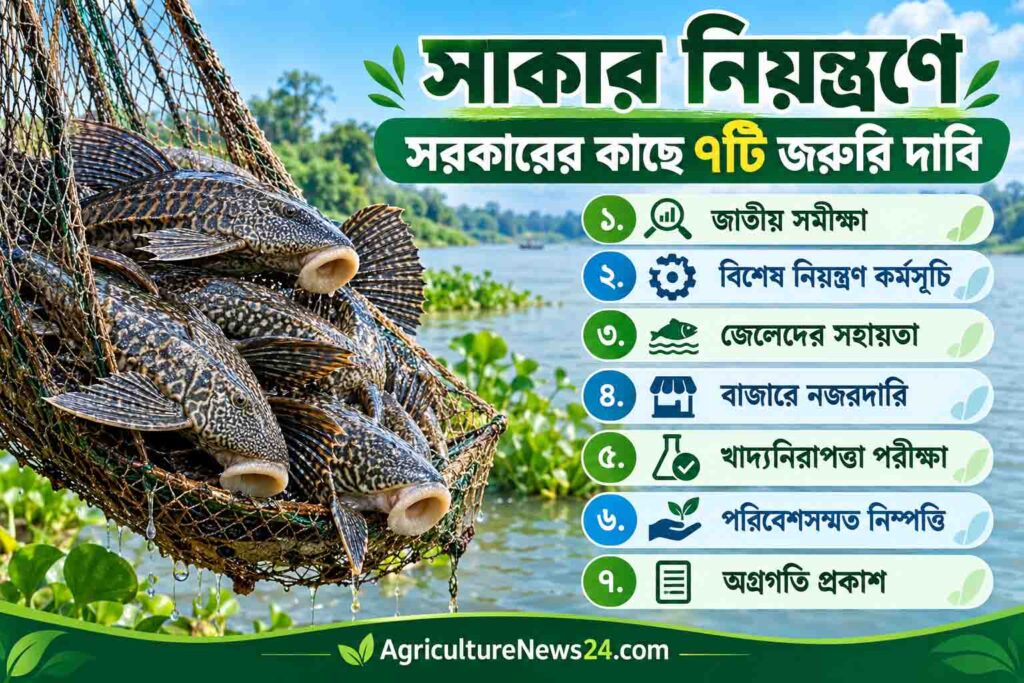
সরকারের কাছে সাতটি জরুরি দাবি
১. জাতীয় সমীক্ষা ও মানচিত্র: কোন জেলা ও জলাশয়ে সাকার মাছ পাওয়া যাচ্ছে, তার হালনাগাদ তথ্য প্রকাশ করা।
২. বিশেষ নিয়ন্ত্রণ কর্মসূচি: ঝুঁকিপূর্ণ জলাশয় চিহ্নিত করে স্থানীয় জেলে ও বিশেষজ্ঞদের অংশগ্রহণে পরিকল্পিত অপসারণ শুরু করা।
৩. জেলেদের জন্য নির্দেশনা ও সহায়তা: মাছ শনাক্তকরণ, নিরাপদে হাতল করা, কর্তৃপক্ষকে জানানো ও জমা দেওয়ার ব্যবস্থা করা।
৪. বাজারে নজরদারি: নিষিদ্ধ মাছের বিক্রি ও সরবরাহের অভিযোগ যাচাই করে আইন অনুযায়ী ব্যবস্থা নেওয়া।
৫. খাদ্যনিরাপত্তা পরীক্ষা: বিভিন্ন উৎসের নমুনায় প্রাসঙ্গিক দূষক পরীক্ষা করে ফলাফল প্রকাশ করা।
৬. পরিবেশসম্মত নিষ্পত্তি: সংগৃহীত মাছের জন্য স্থানীয়ভাবে উপযোগী ও অনুমোদিত ব্যবস্থাপনা নিশ্চিত করা।
৭. নিয়মিত অগ্রগতি প্রকাশ: কত এলাকায় জরিপ হয়েছে, কত মাছ অপসারণ করা হয়েছে এবং দেশি মাছের অবস্থার কী পরিবর্তন হয়েছে—সেসব তথ্য জনগণকে জানানো।
এখনই দরকার সামাজিক সচেতনতা
সাকার মাছের বিরুদ্ধে কার্যকর আন্দোলনের শক্তি হবে সঠিক তথ্য, জেলেদের অংশগ্রহণ এবং সরকারের জবাবদিহি। মানুষকে সচেতন করতে হবে কেন এই মাছ নিষিদ্ধ, কেন জীবিত অবস্থায় অন্য জলাশয়ে ছাড়া উচিত নয় এবং কেন অজানা উৎসের মাছের নিরাপত্তা নিশ্চিত করা জরুরি।
ইউটিউব ও ফেসবুকের কনটেন্ট নির্মাতারাও এখানে ভূমিকা রাখতে পারেন। সাকার মাছ ধরার বা রান্নার দৃশ্যের সঙ্গে নিষেধাজ্ঞা, জলাশয়ের উৎস এবং খাদ্যনিরাপত্তার প্রশ্ন তুলে ধরলে দর্শক আরও দায়িত্বশীল সিদ্ধান্ত নিতে পারবেন।
সাকার মাছ নিয়ন্ত্রণে সরকারকে এখন মাঠে নামতে হবে—পরিকল্পনা, গবেষণা, জেলেদের সহায়তা এবং আইন প্রয়োগ একসঙ্গে নিয়ে। আমাদের দাবি: দেশি মাছ বাঁচাতে বিজ্ঞানসম্মত সাকার নিয়ন্ত্রণে জাতীয় কর্মসূচি চাই।
তথ্যসূত্র: মৎস্য ও প্রাণিসম্পদ মন্ত্রণালয়ের সাকার মাছ নিষিদ্ধসংক্রান্ত গেজেট; মৎস্য অধিদপ্তর; বাংলাদেশ সংবাদ সংস্থা (বাসস); দ্য বিজনেস স্ট্যান্ডার্ড এবং সাকার মাছ নিয়ে প্রকাশিত গবেষণা ও সংবাদ প্রতিবেদন।

আগামী পর্বে
সাকার মাছ দিয়ে মাছ ও পোল্ট্রির খাদ্য—সম্ভাবনা, নাকি খাদ্যশৃঙ্খলে নতুন ঝুঁকি?
জেলেদের জালে ধরা সাকার মাছ শুকিয়ে বা গুঁড়া করে খাদ্য তৈরির আলোচনা শোনা যায়। কিন্তু দূষিত জলাশয়ের মাছ এভাবে ব্যবহার কতটা নিরাপদ? শুকানো বা প্রক্রিয়াজাত করার পর ভারী ধাতু ও অন্যান্য দূষকের কী হয়? বিদ্যমান আইনই বা কী বলে? আগামী পর্বে গবেষণা, খাদ্যনিরাপত্তা ও আইনি দিক পর্যালোচনার মাধ্যমে এসব প্রশ্নের উত্তর খুঁজবে AgricultureNews24.com।
From Fishing Nets to Dinner Plates: Who Will Stop the Journey of the Banned Sucker Fish?
Videos show bags of the fish being sold and meals being prepared, raising urgent questions about how to control its spread in rivers and wetlands
An investigative report by agricultural journalist Dr Bayezid Moral
A fisherman casts his net into the river hoping to catch native fish. But when he pulls it out, he finds that a large part of the catch consists of sucker fish. With its hard, armour-like body and spiny fins, the fish is not easy to remove from a net. In some cases, nets are damaged; in others, fishermen injure their hands while handling the catch.
Meanwhile, a different picture is emerging on social media. Videos show sucker fish being sold and buyers taking them away in bags. Some people fry the fish, others prepare it as bhuna, while some post videos of it being barbecued and eaten.
This raises a question: How is a fish whose import, cultivation, transport and sale have been banned by the government reaching markets and dinner plates? And what happens to the rest of the sucker fish caught in fishermen’s nets?
The spread of sucker fish in Bangladesh’s rivers, canals, beels and haors is no longer simply a matter of curiosity about an unfamiliar fish. It raises questions about aquatic biodiversity, fishermen’s livelihoods, law enforcement and food safety. What is now needed is evidence-based public awareness and an effective government-led control programme.
Where Are Fishermen Catching Sucker Fish?
Dhaka’s Buriganga River is one of the most frequently discussed water bodies when it comes to the presence of sucker fish. Various media reports have described significant numbers being caught in fishermen’s nets alongside native fish.
Reports of the fish have also come from the Turag and other rivers and wetlands. Earlier coverage has documented reports from Hakaluki Haor, a local beel in Shayestaganj in Habiganj, wetlands in Durgapur in Rajshahi, and several beels in Meherpur. However, finding the fish in a water body does not establish how widely it has spread there. Regular surveys are needed to answer that question.
Referring to a study based on interviews with 45 Buriganga fishermen, The Business Standard reported that the fishermen estimated sucker fish made up a large share of their catch outside the rainy season. This reflects the experience of those who took part in that study; it is not a picture of the entire country.
In the public interest, the government should conduct district- and water-body-level surveys to identify where sucker fish are present, where they are most abundant, and what impact they may be having on native fish and fishermen’s livelihoods.
What Does Sucker Fish Look Like, and How Does It Affect Fishermen?
Unlike many familiar fish, sucker fish are covered in hard, bony plates. They have a relatively large head, a downward-facing mouth, stiff spines on their fins and small teeth.
These features help people identify the fish. But its spines and stiff fins can injure fishermen who try to remove it from nets with bare hands. News reports have also described nets being torn or damaged. Sorting the fish from a catch can therefore mean additional work and expense.
Some fish may have an unpleasant smell on their bodies or in their stomachs. However, smell, appearance or hard skin alone cannot establish whether a fish contains toxic substances. Its condition, the pollution level of the water body and how the fish has been stored all need to be considered.
Where Do Sucker Fish Go After They Are Caught?
This is one of the most important questions in this investigation.
Social media and news reports show instances of sucker fish being sold. In other cases, fishermen regard the fish as an unwanted catch. But no reliable national figures were found for this report showing how much of the sucker fish caught across the country is sold, discarded or used for other purposes.
Social media discussions have also raised the possibility of using the fish as dried fish or in fish and poultry feed. But a claim that a particular business or supply chain is doing so requires evidence—including the source of the fish, the buyer, transport, processing and relevant test results.
The Department of Fisheries should collect information from fishermen and seek answers to the following questions:
- In which water bodies are sucker fish being caught, when, and in what quantities?
- Who collects them, and where are they taken?
- Is there evidence of sale or other use?
- Is there a safe system through which fishermen can hand the fish over to the authorities?
Without tracing where the catch goes, an effective control plan will remain incomplete.
Tk 20 per Kilogram and a Bagful for Tk 50: What Do the Videos Show?
Videos circulating on YouTube and Facebook include claims that sucker fish are being sold cheaply. Some mention a price of Tk 20 per kilogram; others show or claim that a bagful is being sold for Tk 50 or Tk 100.
The title of one Facebook video also claims that a bagful of sucker fish from the Buriganga was sold for Tk 50. However, a video title alone cannot independently establish the time and location of the transaction, the weight of the fish or the actual price paid. These figures should therefore not be presented as nationwide market prices.
Nevertheless, the videos raise an important question: When such scenes or claims of a banned fish being sold appear online, how are local administrations and fisheries officials checking them?
Low prices may attract buyers, particularly when other fish are expensive. Alongside raising awareness, the state has a responsibility to help ensure access to affordable, safe food and prevent the banned fish from reaching markets.
Fried, Bhuna or Barbecued: Does Cooking Make It Safe?
Social media videos present sucker fish dishes in appealing ways. But a video showing a fish being cooked or eaten does not establish that it is safe.
Questions remain about where the fish came from, whether the water body contains industrial waste or other pollution, how the fish was stored and whether it contains harmful contaminants.
Testing for heavy metals and other contaminants is particularly important when fish are collected from polluted water bodies. Frying, boiling or barbecuing does not necessarily remove all chemical contaminants or heavy metals. Equally, it cannot be claimed without testing that every sucker fish is toxic.
In the interest of public health, food-safety authorities and research institutions should collect samples from different water bodies and publish their findings. People should also receive clear information about the ban and the risks of eating fish from uncertain sources.
Why Is There Concern for Native Fish?
Sucker fish are not native to Bangladesh. They are regarded as invasive alien fish because of concerns that their spread in a new environment may place pressure on the habitats and food resources of local aquatic species.
However, sucker fish cannot be held solely responsible whenever native fish decline. Pollution, the filling of wetlands, destruction of breeding grounds, changes in water flow and excessive fishing can also contribute. Causes and impacts need to be investigated separately in each area.
That does not mean action must wait indefinitely. Where sucker fish have been identified, monitoring and science-based control should begin while minimising harm to native fish.
The Government Has Banned Sucker Fish—Where Is Enforcement?
In 2023, the government issued a final notification banning sucker fish. The government gazette prohibits the import, breeding, cultivation, transport, sale, receipt, marketing, stocking and possession of fish in the suckermouth catfish group.
Yet reports of sales and claims of sales on social media after the ban raise questions about enforcement.
Implementing the ban requires market monitoring, verification of online and field-level complaints, awareness among those concerned and action under the law. At the same time, one practical problem must be addressed: What should a fisherman do when sucker fish are caught unintentionally in a net?
A ban alone is not enough. Fishermen also need a clear, straightforward and lawful way to deal with the catch.
Fishermen Need Support to Control Sucker Fish
It would be unfair to hold fishermen solely responsible for the spread of sucker fish. In many cases, they face damaged nets, wasted time and the risk of reduced income.
Their experience can help shape a control programme. The following steps are needed:
First, record the information. With help from local fisheries offices, fishermen’s reports should document where and when sucker fish are caught and the approximate quantity.
Second, establish a safe collection system. The government should provide local guidance on where caught fish can be handed over and how they will be managed. Releasing live fish into another water body may spread them further.
Third, support fishermen. Assistance or incentives could account for the extra labour of sorting the fish, repairing nets and obtaining protective equipment.
Fourth, arrange lawful disposal. Fish collected under government supervision should be disposed of humanely and in an environmentally appropriate manner. Experts and local authorities should determine suitable locations and methods. Any incentive programme must be consistent with existing restrictions and include oversight to prevent fraud.
Fifth, protect native fish. Efforts to catch sucker fish must not destroy native fish fry, eggs, other aquatic life or entire water bodies. Poisoning or indiscriminate killing could create a new environmental crisis.
Fish and Poultry Feed: Testing and the Law Must Come Before Decisions
The potential use of caught sucker fish in fish or poultry feed may be discussed. But discussion does not establish that such use is safe or lawful.
Research is needed to determine whether drying or grinding fish from contaminated sources could introduce contaminants into the food chain. Creating a market for the fish could also encourage deliberate collection, stocking or cultivation, potentially undermining control efforts.
Before any such initiative is considered, the relevant authorities must assess the existing law, contaminant testing, traceability and environmental impacts.
Seven Urgent Demands for the Government
- National survey and mapping: Publish updated information identifying the districts and water bodies where sucker fish are found.
- A special control programme: Identify high-risk water bodies and begin planned removal with the participation of local fishermen and experts.
- Guidance and support for fishermen: Provide ways to identify and safely handle the fish, notify authorities and hand over the catch.
- Market monitoring: Investigate allegations of the sale and supply of the banned fish and take action under the law.
- Food-safety testing: Test samples from different sources for relevant contaminants and publish the results.
- Environmentally sound disposal: Ensure locally appropriate and approved management of collected fish.
- Regular progress reports: Tell the public how many areas have been surveyed, how many fish have been removed and what changes have been observed in native fish populations.
Public Awareness Is Needed Now
An effective movement to control sucker fish must be built on accurate information, fishermen’s participation and government accountability. People need to understand why the fish is banned, why live fish should not be released into other water bodies and why the safety of fish from unknown sources matters.
YouTube and Facebook content creators can also play a role. When showing sucker fish being caught or cooked, they can inform viewers about the ban, identify the source of the fish and raise the relevant food-safety questions.
The government must act now to control sucker fish through coordinated planning, research, support for fishermen and enforcement. Our demand is clear: a national, science-based sucker fish control programme to help protect Bangladesh’s native fish.