
















ফিডের খরচ ও অপচয় কমিয়ে খামারির লাভ বাড়ানোর আহ্বান; FIAB-USSEC সেমিনারে উঠে এলো নিরাপদ, সাশ্রয়ী ও টেকসই উৎপাদনের রূপরেখা ।।
নিরাপদ প্রোটিন উৎপাদনে ‘প্রিসিশন নিউট্রিশন’ ও আধুনিক প্রযুক্তির ওপর জোর।।




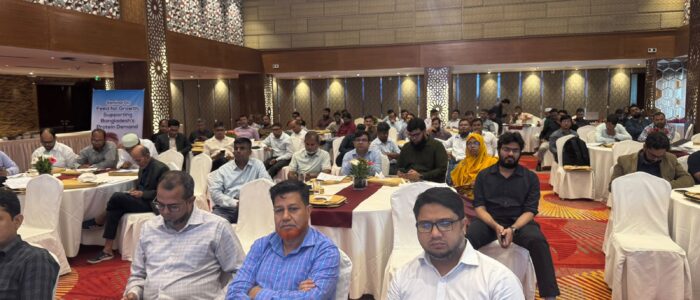
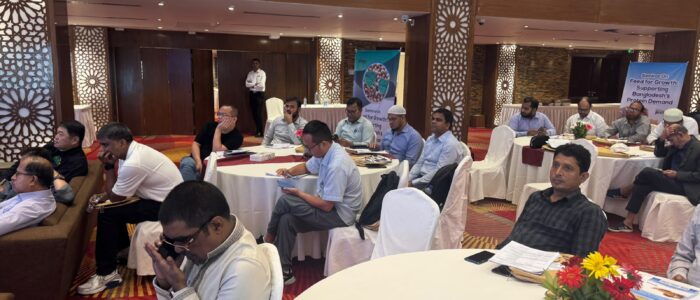
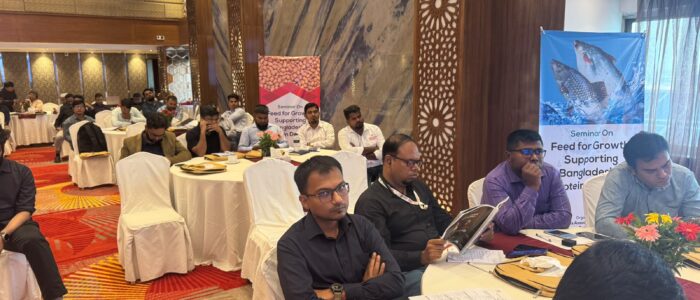
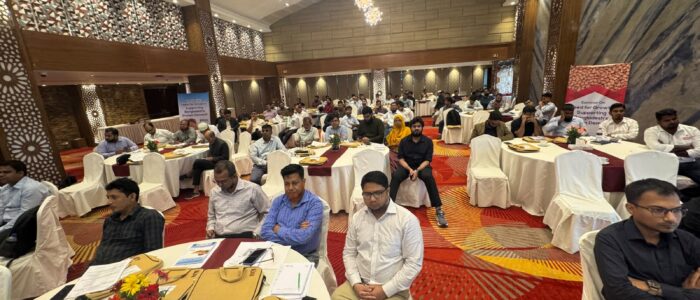





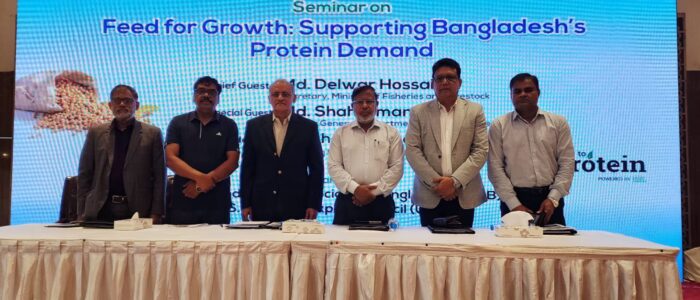
ঢাকা, ১৯ সেপ্টেম্বর ২০২৬: বাংলাদেশের মানুষের জন্য নিরাপদ ও সাশ্রয়ী প্রাণিজ প্রোটিন নিশ্চিত করতে শুধু বেশি ফিড উৎপাদন করলেই হবে না—গবাদিপ্রাণি, পোল্ট্রি ও মাছের বয়স, জাত, উৎপাদনপর্যায় এবং প্রকৃত পুষ্টিচাহিদা অনুযায়ী প্রতিটি পুষ্টি উপাদান সঠিক মাত্রায় দিতে হবে। অপ্রয়োজনীয়ভাবে বেশি ক্রুড প্রোটিন ব্যবহার না করে অ্যামাইনো অ্যাসিডের ভারসাম্য, কাঁচামালের পুষ্টিমান, হজমযোগ্যতা, এনজাইম, আধুনিক ফর্মুলেশন ও তথ্যভিত্তিক ব্যবস্থাপনার সমন্বয় ঘটাতে পারলেই কম খরচে বেশি উৎপাদন সম্ভব। একই সঙ্গে উন্নত হবে ফিড কনভার্সন রেশিও (FCR), কমবে নাইট্রোজেন নিঃসরণ ও পরিবেশের ওপর চাপ।

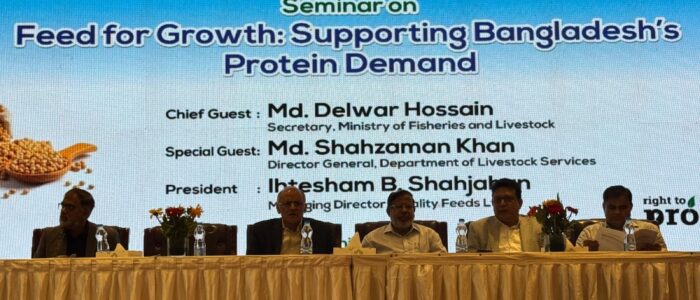
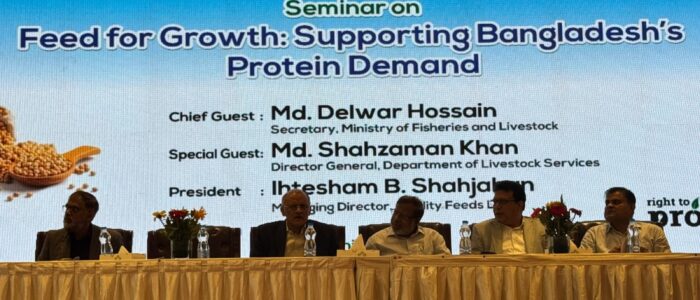
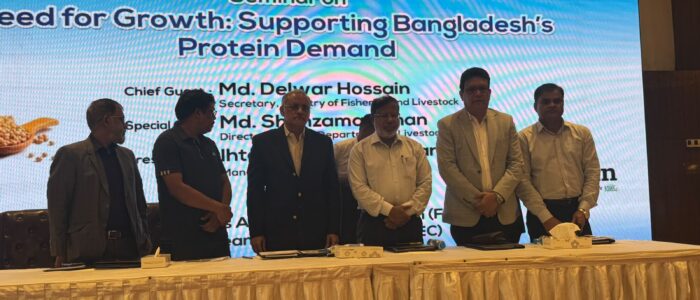
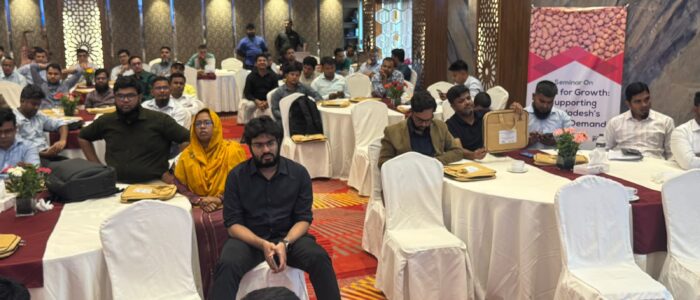
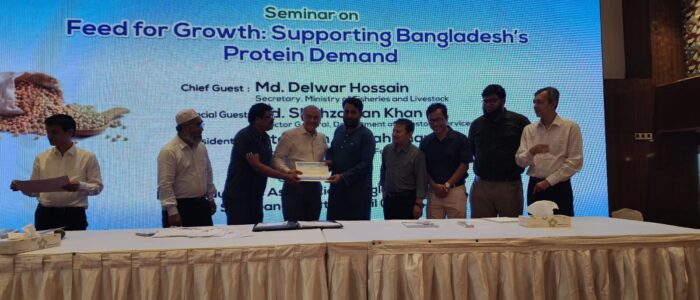
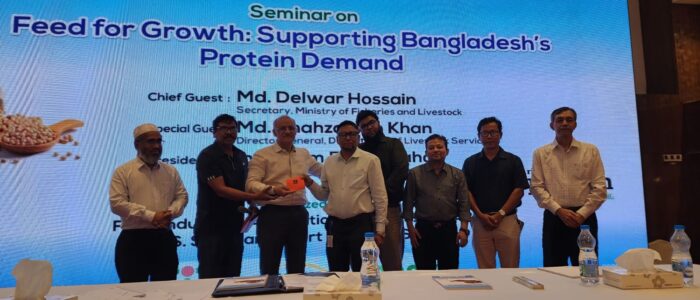
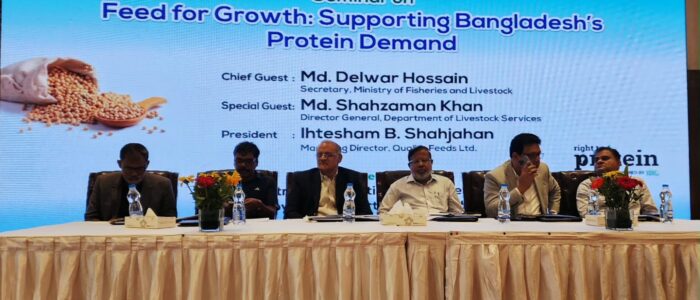
শনিবার রাজধানীর ঢাকা রিজেন্সি হোটেল অ্যান্ড রিসোর্টে অনুষ্ঠিত দিনব্যাপী “Feed for Growth: Supporting Bangladesh’s Protein Demand” শীর্ষক জাতীয় সেমিনারের আলোচনা, কারিগরি উপস্থাপনা এবং অংশগ্রহণকারীদের কথোপকথনে এই বার্তাই সবচেয়ে জোরালোভাবে উঠে এসেছে। ফিড ইন্ডাস্ট্রিজ অ্যাসোসিয়েশন বাংলাদেশ (FIAB) ও ইউ.এস. সয়াবিন এক্সপোর্ট কাউন্সিল (USSEC) যৌথভাবে, শিল্পসংশ্লিষ্ট অংশীদারদের সহযোগিতায়, সেমিনারটির আয়োজন করে।
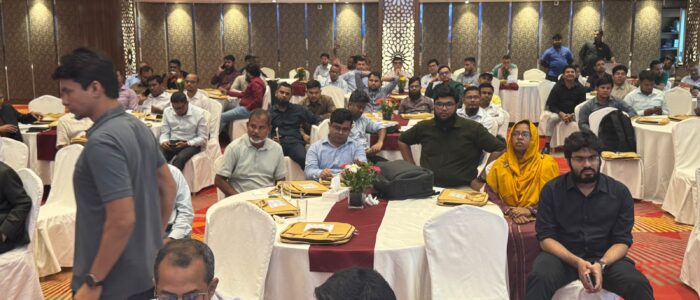
সকাল থেকেই অনুষ্ঠানস্থলে দেশের ফিড, পোল্ট্রি, লাইভস্টক ও অ্যাকুয়াকালচার খাতের উদ্যোক্তা, পুষ্টিবিদ, গবেষক, শিক্ষক, সরকারি কর্মকর্তা এবং নীতিনির্ধারকদের উপস্থিতি ছিল চোখে পড়ার মতো। উদ্বোধনী বক্তব্যের পর একের পর এক কারিগরি অধিবেশনে যখন ক্রুড প্রোটিন থেকে ‘প্রিসিশন প্রোটিন’, মৌসুমভিত্তিক ফর্মুলেশন, সয়াবিন মিলের পুষ্টিমানের তারতম্য, নিরাপদ ব্রয়লার ফিড এবং আধুনিক অ্যাকুয়াকালচার প্রযুক্তি নিয়ে তথ্য-উপাত্ত উপস্থাপিত হচ্ছিল, তখন আলোচনার কেন্দ্রবিন্দুতে বারবার ফিরে এসেছে একটি প্রশ্ন—ফিডের প্রতিটি কেজি থেকে খামারি কীভাবে সর্বোচ্চ উৎপাদন ও অর্থনৈতিক সুফল পাবেন?
মানসম্মত ফিডই নিরাপদ প্রোটিনের প্রথম শর্ত
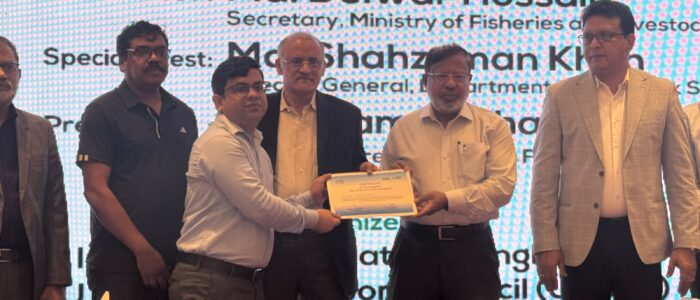
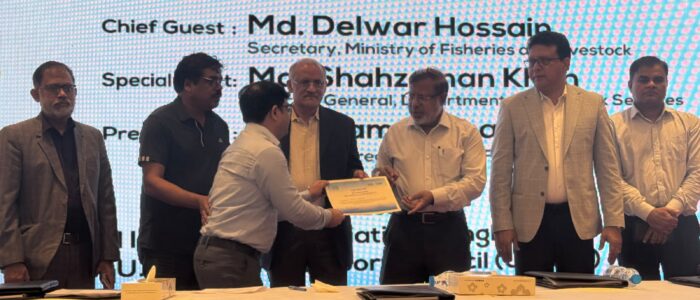
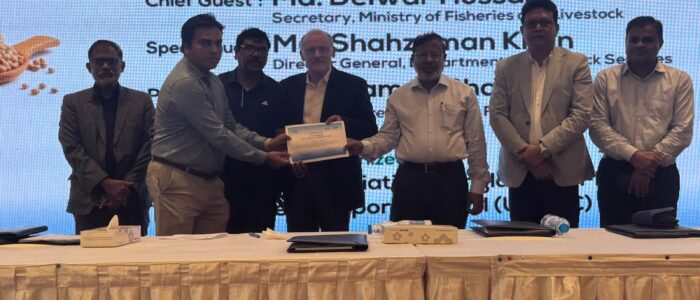
প্রধান অতিথির বক্তব্যে মৎস্য ও প্রাণিসম্পদ মন্ত্রণালয়ের সচিব মোঃ দেলোয়ার হোসেন বলেন, একটি সুস্থ, কর্মক্ষম ও মেধাভিত্তিক জাতি গঠনে প্রাণিজ প্রোটিনের ভূমিকা অপরিসীম; আর নিরাপদ ও মানসম্মত মাছ, মাংস, দুধ ও ডিম উৎপাদনের ভিত্তি হচ্ছে নিরাপদ ও মানসম্মত ফিড। উৎপাদন বাড়ানোর পাশাপাশি সাধারণ মানুষের ক্রয়ক্ষমতার মধ্যে প্রোটিন পৌঁছে দিতে হলে ফিডের খরচ নিয়ন্ত্রণ এবং উৎপাদনদক্ষতা বাড়ানো জরুরি। সে কারণে সনাতন ধারণার পরিবর্তে বিজ্ঞানসম্মত ‘প্রিসিশন নিউট্রিশন’, উন্নত প্রযুক্তি এবং দক্ষ খামার ব্যবস্থাপনার দিকে অগ্রসর হতে হবে।
তাঁর বক্তব্যে সরকারের সামগ্রিক ভাবনাও স্পষ্ট হয়ে ওঠে। মৎস্য ও প্রাণিসম্পদ খাতে উৎপাদন বৃদ্ধির পরবর্তী ধাপ হিসেবে সরকার এখন নিরাপদ খাদ্য, মান নিয়ন্ত্রণ, রোগ প্রতিরোধ, অ্যান্টিমাইক্রোবিয়াল রেজিস্ট্যান্স মোকাবিলা, অপ্রয়োজনীয় অ্যান্টিবায়োটিক ব্যবহার হ্রাস, ভালো উৎপাদন অনুশীলন, কাঁচামাল ও প্রস্তুত ফিডের পরীক্ষাগারভিত্তিক যাচাই এবং বাজার তদারকিকে গুরুত্ব দিচ্ছে। পাশাপাশি দেশীয় কাঁচামালের কার্যকর ব্যবহার, আমদানিনির্ভরতা ও উৎপাদন খরচ কমানো, ছোট ও মাঝারি খামারিকে প্রযুক্তি ও প্রশিক্ষণের আওতায় আনা এবং পরিবেশবান্ধব উৎপাদনব্যবস্থা গড়ে তোলাও গুরুত্বপূর্ণ।
তিনি বলেন, সরকার একা এই রূপান্তর ঘটাতে পারবে না। সরকারি প্রতিষ্ঠান, বিশ্ববিদ্যালয়, গবেষণা সংস্থা, ফিড প্রস্তুতকারী, কাঁচামাল সরবরাহকারী, খামারি ও আন্তর্জাতিক জ্ঞান-সহযোগীদের মধ্যে কার্যকর সমন্বয় দরকার। আজকের মতো আয়োজন গবেষণার ফলাফলকে শিল্পের বাস্তব প্রয়োগের সঙ্গে যুক্ত করার সুযোগ তৈরি করে।
উৎপাদন খরচের ৭০-৭৫ শতাংশ ফিডে
বিশেষ অতিথি প্রাণিসম্পদ অধিদপ্তরের মহাপরিচালক মোঃ শাহজামান খান বলেন, পোল্ট্রি ও লাইভস্টক খাতে মোট উৎপাদন ব্যয়ের প্রায় ৭০ থেকে ৭৫ শতাংশই ফিডের পেছনে যায়। ফলে ফিডের দাম, মান, হজমযোগ্যতা এবং FCR-এর সামান্য পরিবর্তনও খামারির লাভ-লোকসানে বড় প্রভাব ফেলে। বিজ্ঞানসম্মত ফিড ব্যবস্থাপনা ও সঠিক ফর্মুলেশনের মাধ্যমে FCR উন্নত করতে পারলে একই পরিমাণ উৎপাদনের জন্য কম ফিড লাগবে এবং খামারি সরাসরি উপকৃত হবেন।
তিনি জানান, প্রাণিসম্পদ অধিদপ্তর ফিডের গুণগত মান নিশ্চিত করা, লাইসেন্স ও নিবন্ধনব্যবস্থা কার্যকর রাখা, নমুনা সংগ্রহ ও পরীক্ষার মাধ্যমে বাজার তদারকি এবং ক্ষতিকর ও অননুমোদিত অ্যান্টিবায়োটিকের ব্যবহার রোধ করে নিরাপদ প্রাণিজ প্রোটিন উৎপাদনে কাজ করছে। নিরাপদ ফিড নিশ্চিত করার বিষয়টি কেবল শিল্পের ব্যবসায়িক প্রশ্ন নয়; এটি জনস্বাস্থ্য, খামারের রোগব্যবস্থাপনা, ভোক্তার আস্থা এবং দেশের খাদ্য ও পুষ্টিনিরাপত্তার সঙ্গে সরাসরি যুক্ত।
তাঁর বক্তব্যের আলোকে স্পষ্ট হয়, সরকারের লক্ষ্য কেবল উৎপাদনের পরিমাণ বাড়ানো নয়—ফিডের কাঁচামাল থেকে খামার এবং খামার থেকে ভোক্তা পর্যন্ত একটি জবাবদিহিমূলক ব্যবস্থা গড়ে তোলা। নিয়মিত মান পরীক্ষা, সঠিক লেবেলিং, ট্রেসেবিলিটি, জৈবনিরাপত্তা, রোগ নজরদারি, টিকা, দায়িত্বশীল ওষুধ ব্যবহার এবং দক্ষ জনবল তৈরিকে একই নীতিকাঠামোর অংশ হিসেবে দেখতে হবে। তিনি শিল্পপ্রতিষ্ঠানগুলোকে মানের ক্ষেত্রে আপস না করা এবং গবেষণা ও কারিগরি সক্ষমতায় বিনিয়োগ বাড়ানোর আহ্বান জানান।
‘ক্রুড প্রোটিন বেশি’ মানেই সব সময় ভালো ফিড নয়
সেমিনারের স্বাগত বক্তব্যে FIAB-এর সাধারণ সম্পাদক মোঃ আনোয়ারুল হক বলেন, বিশ্ববাজারে কাঁচামালের মূল্য, সরবরাহ ও মানের পরিবর্তনের মধ্যে বাংলাদেশের ফিডশিল্পকে আরও প্রযুক্তিনির্ভর ও দক্ষ হতে হবে। প্রিসিশন ফর্মুলেশন এবং উন্নত কাঁচামালের যৌক্তিক ব্যবহার নিয়ে শিল্প, গবেষক ও সরকারের মধ্যে কার্যকর আলোচনা তৈরিই এই আয়োজনের লক্ষ্য।
দিনের কারিগরি আলোচনায় সবচেয়ে গুরুত্বপূর্ণ বিষয়গুলোর একটি ছিল—শুধু ফিডের মোট ক্রুড প্রোটিনের শতাংশ দেখে তার প্রকৃত পুষ্টিমান নির্ধারণ করা যায় না। প্রাণীর শরীর আসলে প্রোটিনকে সরাসরি ব্যবহার করে না; হজমের পর পাওয়া অ্যামাইনো অ্যাসিড ব্যবহার করে বৃদ্ধি, পেশি, ডিম, দুধ ও অন্যান্য জৈবিক কাজ সম্পন্ন করে। অতএব, বয়স ও উৎপাদনপর্যায় অনুযায়ী হজমযোগ্য অ্যামাইনো অ্যাসিডের সঠিক ভারসাম্যই মূল বিষয়। প্রয়োজনের অতিরিক্ত প্রোটিন দিলে খরচ বাড়ে, নাইট্রোজেন বর্জ্য বেড়ে পরিবেশে চাপ পড়ে; আবার ঘাটতি হলে বৃদ্ধি ও উৎপাদন কমে যায়।
উপস্থাপিত নথিতে ‘crude protein to precision protein’ ধারণার মাধ্যমে ভুট্টা-সয়াবিনভিত্তিক প্রচলিত ফর্মুলেশন থেকে আরও নিখুঁত পুষ্টিব্যবস্থায় যাওয়ার প্রয়োজন তুলে ধরা হয়। এতে কাঁচামালের পুষ্টিমানের পরিবর্তনশীলতা, অ্যামাইনো অ্যাসিডের হজমযোগ্যতা, প্রাণীর প্রয়োজন, এনজাইমের কার্যকারিতা এবং উৎপাদনের লক্ষ্য—সবকিছুকে একসঙ্গে বিবেচনায় নেওয়ার কথা বলা হয়।
সয়াবিন মিলের মানে পার্থক্য, শুধু প্রোটিনের হার যথেষ্ট নয়
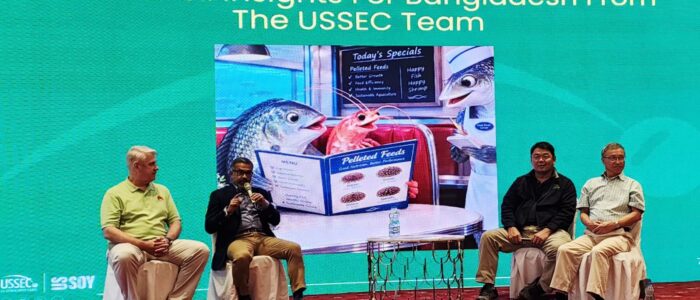
সেমিনারে USSEC-এর বাংলাদেশ মার্কেট লিড খাবিবুর রহমান, ইস্ট এশিয়া অ্যাকুয়াকালচার লিড লুকাস মানোমাইটিস, ঝু এনহুয়া (জো) এবং সিয়াং পিন ল্যান শান সয়াবিন, আধুনিক ফিড প্রযুক্তি ও অ্যাকুয়াকালচার উদ্ভাবনের বিভিন্ন দিক তুলে ধরেন। আলোচনায় বলা হয়, একই ঘোষিত প্রোটিনমাত্রার দুটি সয়াবিন মিলের ব্যবহারিক মূল্য এক নাও হতে পারে। উৎপত্তিস্থল, প্রক্রিয়াজাতকরণ, তাপ প্রয়োগ, অ্যামাইনো অ্যাসিডের প্রাপ্যতা, অ্যান্টি-নিউট্রিশনাল ফ্যাক্টর এবং ব্যাচভেদে পুষ্টিমানের পরিবর্তন—সবকিছু মিলিয়ে কাঁচামালের প্রকৃত মূল্য নির্ধারিত হয়।
একটি উপস্থাপনায় সয়াবিন মিলের পুষ্টিমানের তারতম্যের প্রমাণ হিসেবে মেটাবলাইজেবল এনার্জি, অ্যামাইনো অ্যাসিডের হজমযোগ্যতা, পেপসিন ডাইজেস্টিবিলিটি, রিঅ্যাকটিভ লাইসিন, প্রোটিন ডিসপারসিবিলিটি ইনডেক্স এবং আর্দ্রতার মতো সূচক বিবেচনার কথা উঠে আসে। অর্থাৎ, কেবল টনপ্রতি কম দর দেখে কাঁচামাল কেনা অনেক সময় প্রকৃত অর্থে সাশ্রয়ী নাও হতে পারে; খামারে প্রাণীর কর্মক্ষমতা ও প্রতি কেজি উৎপাদনের খরচই হওয়া উচিত চূড়ান্ত মাপকাঠি।
USSEC সম্পর্কে আলোচনায় জানানো হয়, এটি যুক্তরাষ্ট্রের সয়াবিন শিল্পের আন্তর্জাতিক বাজার উন্নয়ন ও কারিগরি সহযোগিতামূলক প্রতিষ্ঠান। বিভিন্ন দেশে খাদ্য ও ফিডশিল্পে সয়াবিনের কার্যকর ব্যবহার, পুষ্টিগত মূল্যায়ন, টেকসই সরবরাহ এবং খাতভিত্তিক প্রশিক্ষণ ও জ্ঞানবিনিময়ে প্রতিষ্ঠানটি কাজ করে। বাংলাদেশের প্রেক্ষাপটে তাদের সম্পৃক্ততা শুধু কাঁচামালের বাজারে সীমাবদ্ধ না রেখে ফিড ফর্মুলেশন, অ্যাকুয়াকালচার পুষ্টি, গুণগত মূল্যায়ন ও উৎপাদনদক্ষতার কারিগরি জ্ঞান ভাগাভাগির সঙ্গে যুক্ত করার বিষয়টি আলোচনায় গুরুত্ব পায়।
তিন কারিগরি অধিবেশনে যে বিষয়গুলো উঠে এলো
বাংলাদেশ কৃষি বিশ্ববিদ্যালয়ের পশুপুষ্টি বিভাগের প্রধান ও সহযোগী অধ্যাপক মোঃ শফিকুর রহমান শিশির ‘Feed for Growth: From Crude Protein to Precision Protein’ বিষয়ে প্রবন্ধ উপস্থাপন করেন। তাঁর উপস্থাপনায় বাংলাদেশের প্রাণিজ প্রোটিনের চাহিদা, প্রোটিন কনভার্সন চেইন, প্রচলিত প্রোটিন ধারণার সীমাবদ্ধতা এবং নিখুঁত অ্যামাইনো অ্যাসিডভিত্তিক পুষ্টিব্যবস্থার প্রয়োজন বিশ্লেষণ করা হয়। বার্তাটি ছিল পরিষ্কার—খাদ্যে বেশি প্রোটিন ঢেলে দেওয়া নয়, প্রাণীর প্রয়োজনমতো সঠিক প্রোটিন পৌঁছে দেওয়াই দক্ষতার পরিচয়।
এগ্রো সল্যুশনের অ্যাকুয়াটিক এনিম্যাল নিউট্রিশন অ্যান্ড কোয়ালিটি অ্যাস্যুরেন্স কনসালটেন্ট অং তুন আয়ে ‘Precision Feed Formulation for Growth: Building a Resilient Protein Supply in Bangladesh’ বিষয়ে আলোচনা করেন। মাছ ও চিংড়ির প্রজাতি, বয়স, পানির পরিবেশ, খাদ্যগ্রহণের ধরন, কাঁচামালের হজমযোগ্যতা এবং উৎপাদন লক্ষ্যের সঙ্গে সামঞ্জস্য রেখে ফর্মুলেশন তৈরির গুরুত্ব তিনি তুলে ধরেন। অ্যাকুয়াকালচারে ভালো ফিড শুধু দ্রুত বৃদ্ধিই নিশ্চিত করে না; পানিতে অপচয় ও জৈব দূষণ কমিয়ে জলাশয়ের স্বাস্থ্য রক্ষাতেও ভূমিকা রাখে।
বাংলা-ইউকে এগ্রো প্রোডাক্টস লিমিটেডের সিইও মোঃ জাহিদুল ইসলাম ‘Cost-Effective, Sustainable & Safe Broiler Feed Production’ বিষয়ে কারিগরি প্রবন্ধ উপস্থাপন করেন। তাঁর উপস্থাপনায় বাংলাদেশের ফিডশিল্পের বর্তমান বাস্তবতা, নিরাপদ ও টেকসই ব্রয়লার মাংস উৎপাদন, মৌসুমভিত্তিক ফর্মুলেশনের মাধ্যমে খরচ সাশ্রয়, বিকল্প পুষ্টিকৌশল এবং অ্যান্টিবায়োটিকের ওপর নির্ভরতা কমানোর বিষয় উঠে আসে। উপস্থাপিত বার্তা অনুযায়ী, পুষ্টির ঘাটতি, কাঁচামালের মানের অস্থিরতা, রোগচাপ ও দুর্বল ব্যবস্থাপনা মোকাবিলায় শুধু একটি উপাদান বদলালেই হবে না; ফিড, খামার ব্যবস্থাপনা, জৈবনিরাপত্তা ও স্বাস্থ্যসেবাকে সমন্বিতভাবে দেখতে হবে।
FIAB: শিল্প ও সরকারের মধ্যে সেতুবন্ধন
ফিড ইন্ডাস্ট্রিজ অ্যাসোসিয়েশন বাংলাদেশ দেশের ফিড প্রস্তুতকারী ও সংশ্লিষ্ট শিল্পপ্রতিষ্ঠানগুলোর প্রতিনিধিত্বকারী সংগঠন। মানসম্মত ফিড উৎপাদন, শিল্পের স্বার্থ ও নীতিগত সমস্যা সরকারের কাছে তুলে ধরা, কাঁচামাল ও আমদানি-সরবরাহসংক্রান্ত প্রতিবন্ধকতা নিয়ে কাজ, সদস্যদের কারিগরি সক্ষমতা বৃদ্ধি এবং নিরাপদ পোল্ট্রি, প্রাণিসম্পদ ও মৎস্য উৎপাদনের সহায়ক পরিবেশ গড়ে তোলার ক্ষেত্রে সংগঠনটির গুরুত্বপূর্ণ ভূমিকা রয়েছে।
বর্তমান বাস্তবতায় FIAB-এর দায়িত্ব আরও বেড়েছে। কারণ ফিডের দাম বাড়লে খামারের উৎপাদন খরচ বাড়ে; আবার দাম কমানোর চাপে মান নষ্ট হলে ক্ষতিগ্রস্ত হন খামারি ও ভোক্তা—দুই পক্ষই। তাই শিল্পের প্রতিযোগিতা, মান নিয়ন্ত্রণ, যৌক্তিক মূল্য, কাঁচামালের নিরাপত্তা এবং সরকারি তদারকির মধ্যে ভারসাম্য তৈরিতে সংগঠনটির কার্যকর ভূমিকা জরুরি।
খামারির লাভে প্রযুক্তির ফল পৌঁছানোই আসল পরীক্ষা
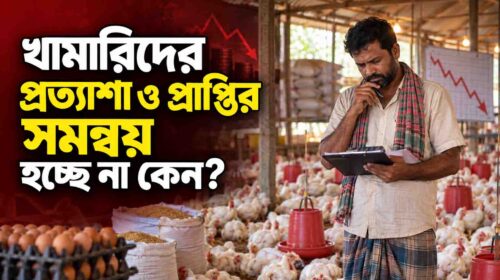
খোলামেলা আলোচনায় অংশগ্রহণকারীরা কাঁচামালের দামের অস্থিরতা, বৈদেশিক মুদ্রার চাপ, পরীক্ষাগারের সক্ষমতা, পুষ্টিমানের ব্যাচভিত্তিক পরিবর্তন, দক্ষ পুষ্টিবিদের ঘাটতি, ক্ষুদ্র খামারির প্রযুক্তিপ্রাপ্তি এবং উৎপাদিত পণ্যের ন্যায্যমূল্য নিয়ে মতামত দেন। আলোচনার সারকথা—কারখানায় নিখুঁত ফর্মুলেশন তৈরি হলেও খামারে যদি নিম্নমানের বাচ্চা বা পোনা, রোগ, দুর্বল জৈবনিরাপত্তা, অনুপযুক্ত পানি, ভুল ফিডিং কিংবা বাজারদরের ধস থাকে, তাহলে শুধু ফিড দিয়ে প্রত্যাশিত ফল পাওয়া যাবে না। পুরো উৎপাদনশৃঙ্খলকে একসঙ্গে দক্ষ করতে হবে।
সেমিনারে সভাপতিত্ব করেন কোয়ালিটি ফিডস লিমিটেডের ব্যবস্থাপনা পরিচালক এহতেশাম বি. শাহজাহান। সমাপনী বক্তব্য দেন এসিআই গোদরেজ এগ্রোভেট প্রাইভেট লিমিটেডের অ্যাসোসিয়েট ভাইস প্রেসিডেন্ট মোহাম্মদ নজরুল ইসলাম। তিনি দিনের আলোচনা ও কারিগরি সুপারিশগুলো বাস্তব উৎপাদনে কাজে লাগানোর ওপর গুরুত্ব দেন।
দিনশেষে সেমিনারকক্ষ থেকে যে উপলব্ধি নিয়ে অংশগ্রহণকারীরা বের হয়েছেন, তা হলো—বাংলাদেশের প্রোটিননিরাপত্তার লড়াই আসলে ফিডের বস্তা দিয়ে শুরু হলেও সেখানে শেষ নয়। সঠিক পুষ্টি, মানসম্মত কাঁচামাল, পরীক্ষাগার, দক্ষ ফর্মুলেটর, দায়িত্বশীল ওষুধ ব্যবহার, ভালো খামার ব্যবস্থাপনা, ট্রেসেবিলিটি, বাজারশৃঙ্খলা এবং কার্যকর সরকারি নজরদারি—সবকিছুর সমন্বয়েই নিরাপদ ও সাশ্রয়ী মাছ, মাংস, দুধ ও ডিম নিশ্চিত করা সম্ভব। গবেষণার তথ্য যদি কারখানার ফর্মুলায় এবং সেই প্রযুক্তির সুফল যদি খামারির লাভে রূপ নেয়, তবেই ‘Feed for Growth’ আয়োজনের প্রকৃত সার্থকতা মিলবে।
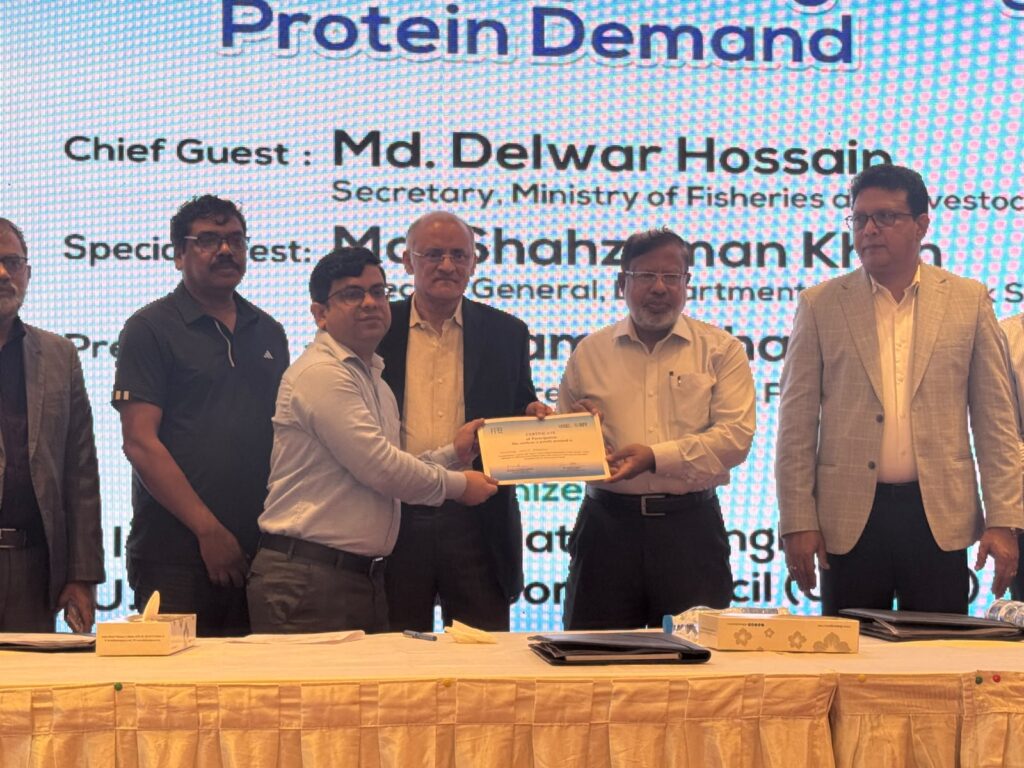
Call to Increase Farmers’ Profits by Reducing Feed Costs and Waste; FIAB–USSEC Seminar Outlines a Roadmap for Safe, Affordable and Sustainable Production
Emphasis on ‘Precision Nutrition’ and Modern Technology for Safe Protein Production
Dhaka, 19 September 2026: Ensuring safe and affordable animal protein for the people of Bangladesh requires more than simply producing greater quantities of feed. Every nutrient must be supplied at the right level according to the age, breed, production stage and actual nutritional requirements of livestock, poultry and fish. Greater output at lower cost can be achieved by avoiding unnecessarily high levels of crude protein and instead combining balanced amino acids, ingredient quality, digestibility, enzymes, modern formulation and data-driven management. This approach can also improve the feed conversion ratio (FCR), reduce nitrogen emissions and ease pressure on the environment.
This was the strongest message to emerge from the discussions, technical presentations and participant exchanges at the day-long national seminar titled “Feed for Growth: Supporting Bangladesh’s Protein Demand,” held on Saturday at Dhaka Regency Hotel & Resort in the capital. The seminar was jointly organised by the Feed Industries Association Bangladesh (FIAB) and the U.S. Soybean Export Council (USSEC), with support from industry stakeholders.
From the morning onward, the event drew a notable gathering of entrepreneurs, nutritionists, researchers, academics, government officials and policymakers from the country’s feed, poultry, livestock and aquaculture sectors. Following the opening remarks, successive technical sessions presented data on the shift from crude protein to “precision protein,” seasonal formulation, variations in soybean-meal quality, safe broiler feed and modern aquaculture technology. Throughout the discussions, one question repeatedly returned to the centre: how can farmers obtain the maximum production and economic return from every kilogram of feed?
Quality Feed Is the First Requirement for Safe Protein
Speaking as the chief guest, Md Delwar Hossain, Secretary of the Ministry of Fisheries and Livestock, said animal protein plays an immense role in building a healthy, productive and knowledge-based nation, while safe and high-quality feed is the foundation of safe, quality fish, meat, milk and egg production. Alongside increasing output, feed costs must be controlled and production efficiency improved if protein is to remain within the purchasing power of ordinary people. The sector must therefore move beyond conventional approaches and embrace science-based precision nutrition, advanced technology and efficient farm management.
His remarks also reflected the government’s broader policy direction. As the next stage of growth in fisheries and livestock production, the government is placing importance on food safety, quality control, disease prevention, antimicrobial-resistance mitigation, reduced unnecessary use of antibiotics, good production practices, laboratory-based testing of ingredients and finished feed, and stronger market surveillance. Other priorities include the effective use of domestic ingredients, reducing import dependence and production costs, bringing small and medium-sized farmers under technology and training programmes, and developing environmentally responsible production systems.
He said the government alone could not deliver this transformation. Effective coordination is needed among public institutions, universities, research organisations, feed manufacturers, ingredient suppliers, farmers and international knowledge partners. Events such as this create opportunities to connect research findings with practical industrial application.
Feed Accounts for 70–75 Percent of Production Costs
Special guest Md Shahjahan Khan, Director General of the Department of Livestock Services, said feed accounts for approximately 70–75 percent of total production costs in the poultry and livestock sectors. Consequently, even a small change in feed price, quality, digestibility or FCR can have a major effect on a farmer’s profit or loss. Improving FCR through scientific feed management and accurate formulation would reduce the amount of feed required for the same level of output, directly benefiting farmers.
He said the Department of Livestock Services was working to ensure feed quality, maintain effective licensing and registration systems, strengthen market surveillance through sampling and testing, prevent the use of harmful and unauthorised antibiotics, and support the production of safe animal protein. Ensuring safe feed is not merely a commercial concern for the industry; it is directly connected to public health, disease management on farms, consumer confidence, and national food and nutrition security.
His remarks made clear that the government’s objective is not limited to increasing production volumes. It also seeks to establish an accountable system extending from feed ingredients to farms and from farms to consumers. Regular quality testing, accurate labelling, traceability, biosecurity, disease surveillance, vaccination, responsible medicine use and skilled workforce development must be treated as parts of the same policy framework. He urged industry operators not to compromise on quality and to increase investment in research and technical capability.
‘More Crude Protein’ Does Not Always Mean Better Feed
In his welcome address, FIAB Secretary General Md Anwarul Haque said Bangladesh’s feed industry must become more technology-driven and efficient amid fluctuations in the price, supply and quality of ingredients in the global market. The event was intended to promote effective discussion among industry, researchers and government on precision formulation and the rational use of improved ingredients.
One of the most important themes of the day’s technical discussions was that a feed’s true nutritional value cannot be determined solely by its total crude-protein percentage. An animal’s body does not use protein directly; rather, it uses the amino acids released through digestion to support growth, muscle development, egg and milk production, and other biological functions. The key issue, therefore, is the correct balance of digestible amino acids according to age and production stage. Excess protein raises costs and increases nitrogen waste, adding pressure on the environment; a deficiency, on the other hand, reduces growth and production.
The documents presented highlighted the concept of moving “from crude protein to precision protein,” underscoring the need to progress beyond conventional maize–soybean-based formulation toward a more exact nutritional system. Such a system must simultaneously consider variability in ingredient quality, amino-acid digestibility, animal requirements, enzyme effectiveness and production goals.
Soybean-Meal Quality Varies; Protein Percentage Alone Is Not Enough
At the seminar, USSEC Bangladesh Market Lead Khabibur Rahman, East Asia Aquaculture Lead Lukas Manomaitis, Zhu Enhua (Joe) and Xiang Pin Lan Shan discussed different aspects of soybeans, modern feed technology and aquaculture innovation. Speakers noted that two soybean meals carrying the same declared protein level may not deliver the same practical value. Their true value depends on origin, processing, heat treatment, amino-acid availability, anti-nutritional factors and batch-to-batch variation in nutritional quality.
One presentation cited indicators such as metabolisable energy, amino-acid digestibility, pepsin digestibility, reactive lysine, protein dispersibility index and moisture as evidence of variation in soybean-meal quality. In other words, purchasing ingredients only on the basis of a lower per-tonne price may not be genuinely economical. Animal performance on the farm and the cost per kilogram of output should be the ultimate measures.
The discussion described USSEC as an organisation that supports international market development and technical cooperation for the United States soybean industry. It works in different countries to promote the effective use of soybeans in food and feed, nutritional evaluation, sustainable supply, sector-specific training and knowledge exchange. In Bangladesh, participants stressed that its engagement should not be limited to the ingredient market, but should also encompass the sharing of technical knowledge on feed formulation, aquaculture nutrition, quality evaluation and production efficiency.
Key Issues Raised in Three Technical Sessions
Md Shafiqur Rahman Shishir, Head and Associate Professor of the Department of Animal Nutrition at Bangladesh Agricultural University, presented a paper titled “Feed for Growth: From Crude Protein to Precision Protein.” His presentation analysed Bangladesh’s demand for animal protein, the protein-conversion chain, the limitations of conventional concepts of protein and the need for precise amino-acid-based nutrition. The message was clear: efficiency does not mean simply adding more protein to feed; it means delivering the right protein according to the animal’s requirements.
Aung Tun Aye, Aquatic Animal Nutrition and Quality Assurance Consultant at Agro Solution, discussed “Precision Feed Formulation for Growth: Building a Resilient Protein Supply in Bangladesh.” He emphasised the importance of formulating feed in line with the species and age of fish and shrimp, the aquatic environment, feeding behaviour, ingredient digestibility and production objectives. In aquaculture, good feed does more than ensure rapid growth; it also helps protect the health of water bodies by reducing feed waste and organic pollution.
Md Zahidul Islam, Chief Executive Officer of Bangla-UK Agro Products Limited, presented a technical paper on “Cost-Effective, Sustainable & Safe Broiler Feed Production.” His presentation addressed the current realities of Bangladesh’s feed industry, safe and sustainable broiler-meat production, cost savings through seasonal formulation, alternative nutritional strategies and reduced dependence on antibiotics. According to the presentation, changing a single ingredient will not be enough to address nutritional deficiencies, unstable ingredient quality, disease pressure and weak management. Feed, farm management, biosecurity and animal health services must be approached in an integrated manner.
FIAB: A Bridge Between Industry and Government
The Feed Industries Association Bangladesh represents the country’s feed manufacturers and related industrial enterprises. The organisation plays an important role in promoting quality feed production, presenting the industry’s interests and policy concerns to the government, addressing barriers involving ingredients, imports and supply, strengthening members’ technical capacity, and creating an enabling environment for safe poultry, livestock and fisheries production.
In the present context, FIAB’s responsibilities have increased further. When feed prices rise, farm production costs increase; but when pressure to reduce prices leads to lower quality, both farmers and consumers suffer. The organisation therefore has a crucial role in balancing industry competition, quality control, reasonable pricing, ingredient safety and government oversight.
The Real Test Is Whether the Benefits of Technology Reach Farmers
During the open discussion, participants shared views on volatile ingredient prices, foreign-currency pressure, laboratory capacity, batch-to-batch variation in nutritional value, shortages of skilled nutritionists, small farmers’ access to technology and fair prices for farm products. The central conclusion was that even if a factory develops a precise formulation, feed alone cannot deliver the expected results when farms face poor-quality chicks or fingerlings, disease, weak biosecurity, unsuitable water, incorrect feeding practices or a collapse in market prices. Efficiency must be improved across the entire production chain.
The seminar was chaired by Ehtesham B. Shahjahan, Managing Director of Quality Feeds Limited. Mohammad Nazrul Islam, Associate Vice President of ACI Godrej Agrovet Private Limited, delivered the closing remarks, stressing the importance of applying the day’s discussions and technical recommendations to real-world production.
By the end of the day, participants left the seminar with a clear understanding: Bangladesh’s struggle for protein security may begin with a bag of feed, but it does not end there. Safe and affordable fish, meat, milk and eggs can be ensured only through the combined application of accurate nutrition, quality ingredients, laboratory capacity, skilled formulators, responsible medicine use, sound farm management, traceability, market discipline and effective government oversight. The true success of the “Feed for Growth” initiative will be realised only when research findings are translated into factory formulations and the benefits of that technology are ultimately reflected in farmers’ profits.