















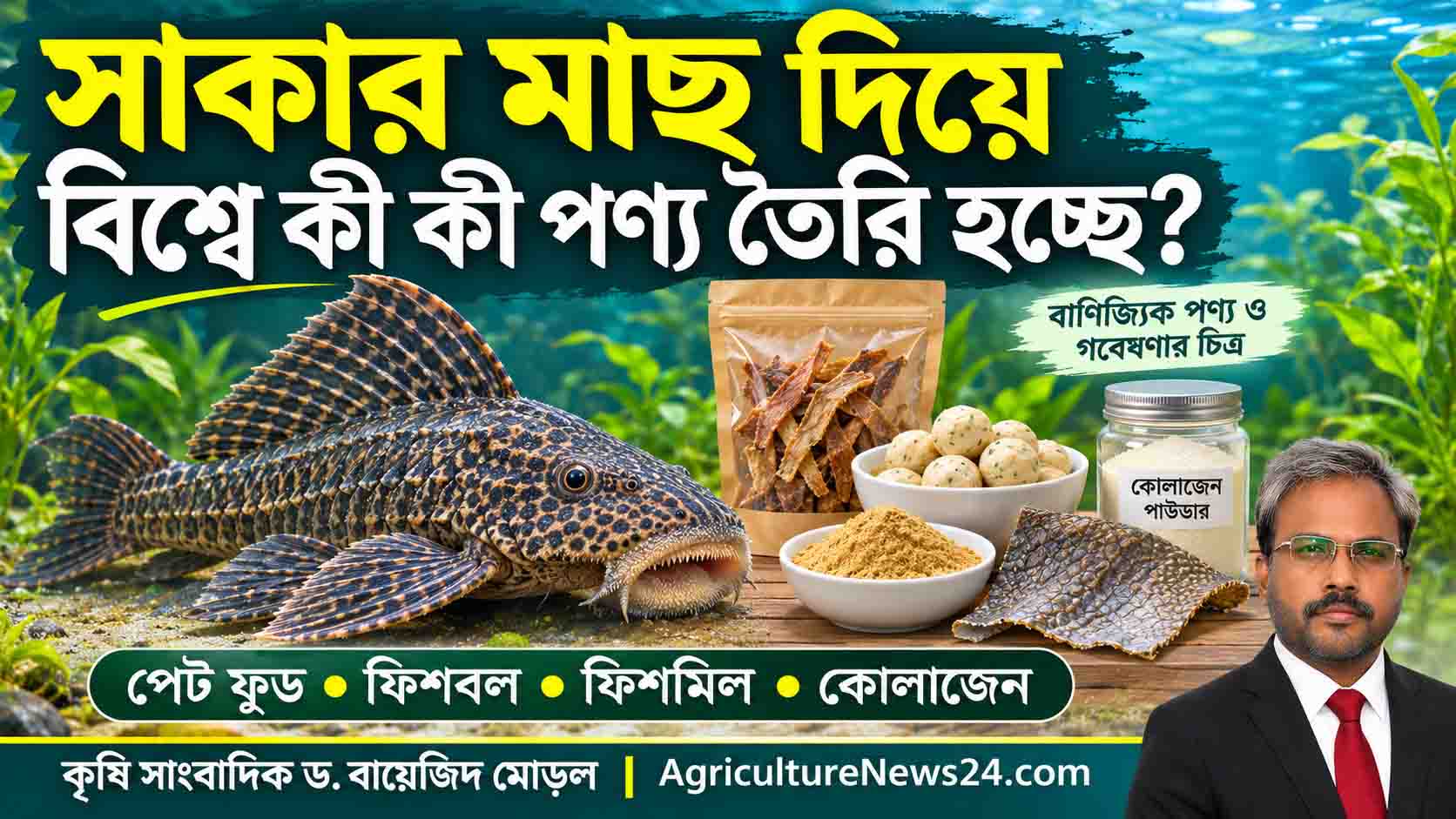
সাকার মাছ দিয়ে কোন দেশে কী হচ্ছে?
বিদেশে কিছু পণ্য বাণিজ্যিকভাবে বিক্রি হচ্ছে, অনেক উদ্যোগ এখনো গবেষণায়—বাংলাদেশে প্রয়োগের আগে প্রয়োজন নিরাপত্তা যাচাই ও আইনগত অনুমোদন।।
ড. বায়েজিদ মোড়ল | সম্পাদক, AgricultureNews24.com
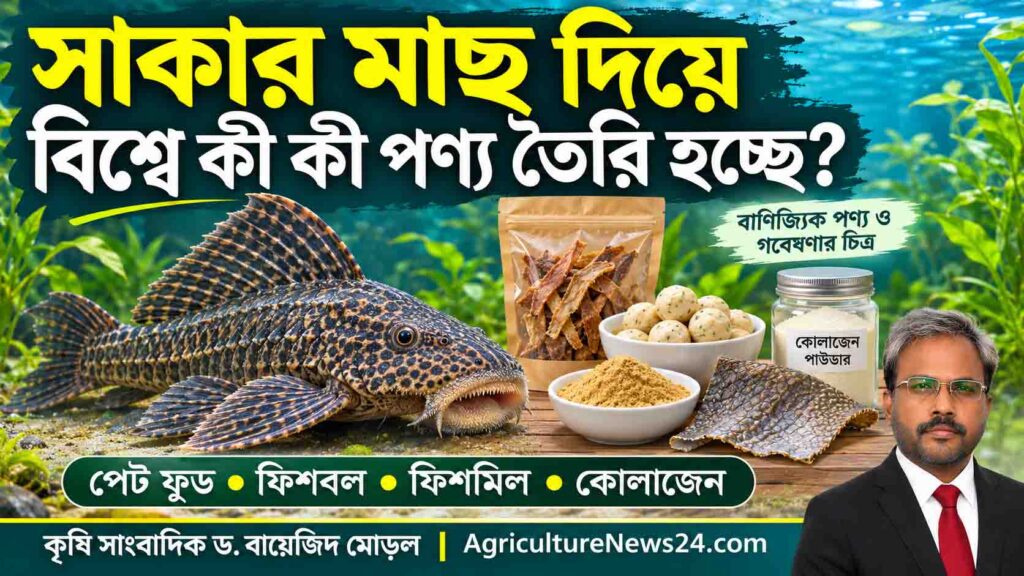
দেশের নদী, খাল ও জলাশয়ে ছড়িয়ে পড়া সাকার মাছ জীববৈচিত্র্য রক্ষায় উদ্বেগের কারণ। তবে এই অবাঞ্ছিত মাছ সরিয়ে তার কোনো অর্থনৈতিক ব্যবহার করা যায় কি না, তা নিয়ে বিশ্বের বিভিন্ন দেশে কাজ হচ্ছে। কোথাও সাকারজাতীয় মাছ দিয়ে কুকুর-বিড়ালের খাবার বাজারজাত হচ্ছে, কোথাও তৈরি হয়েছে পরীক্ষামূলক ফিশবল, শুকনা খাবার, মাছের গুঁড়া, চামড়া কিংবা কোলাজেন।
প্রকাশিত গবেষণা, সরকারি তথ্য ও উৎপাদনকারী প্রতিষ্ঠানের বিবরণে মেক্সিকো–যুক্তরাষ্ট্র, ইন্দোনেশিয়া, ফিলিপাইন এবং ভারতের উল্লেখযোগ্য উদাহরণ পাওয়া যায়। তবে কোনো পণ্য পরীক্ষাগারে তৈরি হওয়া, স্থানীয়ভাবে ব্যবহৃত হওয়া এবং নিয়মিত বাণিজ্যিকভাবে বিক্রি হওয়া—তিনটি আলাদা অবস্থা।
এখানে পরিচয়ের বিষয়টিও জরুরি। বাংলাদেশে সাকার নামে পরিচিত মাছ সাধারণত Pterygoplichthys গণের। বিদেশে “জ্যানিটর ফিশ”, “সেইলফিন ক্যাটফিশ”, “প্লেকো” বা “ডেভিল ফিশ” নামেও কাছাকাছি ধরনের মাছ পরিচিত। সব ক্ষেত্রে একই প্রজাতি ব্যবহৃত হচ্ছে ধরে নেওয়া ঠিক হবে না।
এক নজরে দেশ ও পণ্য
| দেশ বা সংযোগ | কী পণ্য তৈরি বা পরীক্ষা হয়েছে | প্রমাণিত অবস্থা |
|---|---|---|
| মেক্সিকো–যুক্তরাষ্ট্র | শুকনা ফিশ স্ট্রিপস ও পেট ফুড টপার | বাণিজ্যিক পণ্যের তালিকা আছে |
| মেক্সিকো | কুমিরের খাবারের পেলেট | গবেষণামূলক উদ্যোগ |
| ইন্দোনেশিয়া | ফিশবল, ডাম্পলিং, ফিশ কেক, ক্র্যাকার | স্থানীয় ব্যবহার ও গবেষণায় উল্লেখ |
| ইন্দোনেশিয়া | ফিশ ফ্লস, মাছের গুঁড়াযুক্ত স্টিকস, ফিশমিল | পরীক্ষামূলক উৎপাদন ও গবেষণা |
| ফিলিপাইন | মাছের চামড়া; কাঁকড়ার খাদ্য ও মাছের তেলের সম্ভাবনা | চামড়ার নমুনা তৈরি; অন্যগুলো গবেষণা উদ্যোগ |
| ভারত | কোলাজেন ও কোলাজেনযুক্ত পনির | পরীক্ষাগারভিত্তিক গবেষণা |
মেক্সিকোর মাছ, যুক্তরাষ্ট্রের বাজার: কুকুর-বিড়ালের ট্রিটস
সাকারজাতীয় মাছের বাণিজ্যিক ব্যবহারের একটি স্পষ্ট উদাহরণ Pezzy Pets। প্রতিষ্ঠানটির তথ্যমতে, দক্ষিণ মেক্সিকোর ক্ষুদ্র জেলেদের কাছ থেকে সংগৃহীত বুনো “মেক্সিকান ডেভিল ফিশ” দিয়ে তারা শুকনা Devil Fish Strips তৈরি করে। কুকুর ও বিড়ালকে পুরস্কার বা অতিরিক্ত খাবার হিসেবে দেওয়ার জন্য পণ্যটি বাজারজাত করা হয়। প্রতিষ্ঠানের উপাদান তালিকায় মাছটির পরিচয় দেওয়া হয়েছে Hypostomus plecostomus হিসেবে—যা বাংলাদেশের আলোচিত Pterygoplichthys গণের সঙ্গে এক নয়।
একই প্রতিষ্ঠানের Pet Food Topper হলো শুকনা মাছের ফিলে থেকে তৈরি গুঁড়া। এটি কুকুর-বিড়ালের মূল খাবারের ওপর ছিটিয়ে দেওয়ার জন্য বিক্রি হয়। প্রতিষ্ঠানের বিবরণ অনুযায়ী, মেক্সিকোয় সংগৃহীত মাছ প্রক্রিয়াজাত করার পর পণ্য যুক্তরাষ্ট্রের ক্যালিফোর্নিয়ায় পরীক্ষা ও প্যাকেটজাত করা হয়। ফলে এখানে মেক্সিকো কাঁচামালের উৎস এবং যুক্তরাষ্ট্র বাজারজাতকরণের একটি কেন্দ্র।
মেক্সিকোয় Pterygoplichthys মাছ দিয়ে বন্দী অবস্থায় পালন করা মেক্সিকান কুমিরের বাচ্চার জন্য পেলেট খাদ্য তৈরির গবেষণারও উল্লেখ পাওয়া যায়। তবে গবেষণা-সারসংক্ষেপের এই তথ্যকে ব্যাপক বাণিজ্যিক উৎপাদনের প্রমাণ বলা যাবে না।
ইন্দোনেশিয়া: ফিশবল থেকে শুকনা ফিশ ফ্লস
ইন্দোনেশিয়ায় সাকার মাছ “ইকান সাপু-সাপু” নামে পরিচিত। দেশটির আল-আজহার বিশ্ববিদ্যালয়ের গবেষণা-সংগ্রহে থাকা একটি প্রতিবেদনে বলা হয়েছে, সিলিওয়াং নদীর আশপাশের কিছু জনগোষ্ঠী Pterygoplichthys pardalis দিয়ে ডাম্পলিং, মাছের বল, ফিশ কেক ও ক্র্যাকার তৈরি করে। এটি স্থানীয় ব্যবহারের তথ্য; সারা দেশের অনুমোদিত শিল্প উৎপাদনের প্রমাণ নয়।
হাসানুদ্দিন বিশ্ববিদ্যালয়ের গবেষকেরা একই প্রজাতির মাছের মাংস ও ট্যাপিওকার আটা দিয়ে ফিশবল তৈরি করে তার গুণাগুণ পরীক্ষা করেছেন। আবার মাছের গুঁড়া যোগ করে মচমচে স্টিকসজাতীয় খাবার তৈরির গবেষণাও হয়েছে। এসব কাজ মূলত উপাদানের অনুপাত, রাসায়নিক বৈশিষ্ট্য ও ভোক্তার গ্রহণযোগ্যতা মূল্যায়ন করেছে।
আরেকটি উল্লেখযোগ্য পণ্য ‘আবোন’ বা ফিশ ফ্লস—মাছের মাংস ঝুরা করে মসলাযুক্ত শুকনা খাবার। ২০২৩ সালে প্রকাশিত গবেষণায় দক্ষিণ সুলাওয়েসির টেম্পে হ্রদের সাকার মাছ দিয়ে এই পণ্য তৈরি করা হয়। পরীক্ষিত নমুনায় পারদ, সিসা ও ক্যাডমিয়ামসহ নির্দিষ্ট মানদণ্ড পরীক্ষা করা হয়েছিল; গবেষকেরা সেগুলো সংশ্লিষ্ট সর্বোচ্চ সীমার নিচে পেয়েছেন। এই ফল শুধু পরীক্ষিত উৎস ও নমুনার ক্ষেত্রে প্রযোজ্য, অন্য জলাশয়ের মাছের নিরাপত্তার নিশ্চয়তা নয়।
ইন্দোনেশিয়ায় মাছের খাদ্যের কাঁচামাল
মানুষের খাবারের পাশাপাশি সাকার মাছ দিয়ে ফিশমিল বা মাছের গুঁড়া তৈরির গবেষণা হয়েছে। ২০২৬ সালে প্রকাশিত একটি গবেষণায় Pterygoplichthys pardalis থেকে তৈরি ফিশমিল তেলাপিয়ার খাদ্যে প্রচলিত ফিশমিলের বিকল্প হিসেবে পরীক্ষা করা হয়।
নির্দিষ্ট পরীক্ষার শর্তে প্রচলিত ফিশমিলের ৫০ ও ৭৫ শতাংশ প্রতিস্থাপন করা খাদ্যে মাছের বৃদ্ধি নিয়ন্ত্রণ দলের সঙ্গে তুলনীয় ছিল। তবে এই ফলকে যেকোনো জলাশয়ের সাকার মাছ দিয়ে যেকোনো খামারের খাদ্য তৈরির অনুমোদন হিসেবে দেখা যাবে না। গবেষণাটি একটি নির্দিষ্ট খাদ্য-ফর্মুলা ও পরীক্ষাকালের ফল তুলে ধরেছে।
ফিলিপাইন: চামড়ার নমুনা ও কাঁকড়ার খাদ্য নিয়ে উদ্যোগ
ফিলিপাইনে “জ্যানিটর ফিশ” দিয়ে ফিশ লেদার বা মাছের চামড়া তৈরির গবেষণা হয়েছে। ২০২০ সালের একটি গবেষণায় Pterygoplichthys disjunctivus-এর চামড়া আলাদা করে প্রক্রিয়াজাত নমুনা তৈরি করা হয় এবং তার ব্যবহারযোগ্যতা পরীক্ষা করা হয়। তবে এ তথ্যের ভিত্তিতে দেশটিতে সাকার মাছের চামড়ার ব্যাগ, জুতা বা মানিব্যাগ ব্যাপকভাবে উৎপাদিত হচ্ছে বলা যাবে না।
ফিলিপাইনের ব্যুরো অব ফিশারিজ অ্যান্ড অ্যাকুয়াটিক রিসোর্সেস—বিএফএআর—সাকার মাছকে কাঁকড়ার খাদ্যের বিকল্প হিসেবে পরীক্ষার উদ্যোগের কথাও জানিয়েছিল। পাশাপাশি কাগায়ান স্টেট ইউনিভার্সিটির সঙ্গে মাছের তেল ও অন্যান্য ব্যবহারযোগ্য উপাদান নিয়ে গবেষণার উল্লেখ রয়েছে। এগুলো সম্ভাবনা যাচাইয়ের উদ্যোগ; প্রতিষ্ঠিত বাণিজ্যিক পণ্য হিসেবে উপস্থাপন করা সঠিক হবে না।
ভারত: চামড়া থেকে কোলাজেন, পরীক্ষামূলক পনির
ভারতের ভিগনানস ইউনিভার্সিটি ও আচার্য নাগার্জুনা ইউনিভার্সিটির গবেষকেরা Pterygoplichthys pardalis-এর চামড়া থেকে টাইপ–১ কোলাজেন পৃথক করেছেন। ২০১৯ সালে প্রকাশিত গবেষণায় এই কোলাজেন তাজা পনিরে যোগ করে একটি পরীক্ষামূলক খাদ্যও তৈরি করা হয়।
কোলাজেন খাদ্য ও অন্যান্য শিল্পের গুরুত্বপূর্ণ উপাদান হলেও গবেষণাটি থেকে সাকার মাছের কোলাজেন দিয়ে ভারতে নিয়মিত প্রসাধনী, ক্যাপসুল বা ওষুধ উৎপাদিত হচ্ছে—এমন সিদ্ধান্ত নেওয়া যাবে না। এখানে প্রমাণিত বিষয় হলো কোলাজেন নিষ্কাশন ও একটি খাদ্যে পরীক্ষামূলক প্রয়োগ।
বাংলাদেশে কী শিক্ষা নেওয়া যায়?
বিদেশের উদাহরণ দেখায়, অপসারিত সাকার মাছের ব্যবহার নিয়ে গবেষণার সুযোগ আছে। কিন্তু বিদেশে পণ্য তৈরি হচ্ছে বলেই বাংলাদেশের জলাশয়ের সাকার মাছ নিরাপদ বা তার বাণিজ্য অনুমোদিত—এমন নয়।
বাংলাদেশে ২০২৩ সালের জানুয়ারিতে জারি করা নিষেধাজ্ঞায় সাকার মাছের আমদানি, চাষ, পরিবহন, বিক্রয়, সরবরাহ ও সংরক্ষণ নিষিদ্ধ করার কথা জানানো হয়। তাই বিদেশের উদ্যোগ অনুসরণ করে এখানে পণ্য উৎপাদনের প্রস্তাব উঠলে প্রথমেই সংশ্লিষ্ট কর্তৃপক্ষের কাছে আইনগত অবস্থান ও প্রয়োজনীয় অনুমোদন স্পষ্ট করতে হবে।
খাদ্যনিরাপত্তার প্রশ্নটিও মৌলিক। মাছের উৎস, ব্যবহৃত দেহাংশ এবং চূড়ান্ত পণ্যের পরীক্ষার ফল ছাড়া নিরাপত্তার সিদ্ধান্ত দেওয়া যায় না। মার্কিন খাদ্য ও ওষুধ প্রশাসন—এফডিএ—জানিয়েছে, মাছের টিস্যুতে থাকা পারদ পরিষ্কার বা রান্না করে কমানো যায় না। ফলে শুধু সিদ্ধ বা শুকিয়ে ফেলাকে দূষণমুক্ত করার নিশ্চয়তা হিসেবে ধরা যাবে না।
বাংলাদেশের জন্য সম্ভাব্য গবেষণার লক্ষ্য হওয়া উচিত জলাশয় থেকে ক্ষতিকর মাছ অপসারণের নিরাপদ উপায় খোঁজা। কোনো পণ্যের চাহিদা তৈরি হলে তা যেন নতুন করে সাকার মাছের চাষ, প্রজনন বা অন্য জলাশয়ে ছড়িয়ে দেওয়ার প্রণোদনা না হয়—গবেষণা ও নীতিনির্ধারণে এই বিষয়টিও বিবেচনায় রাখা প্রয়োজন।
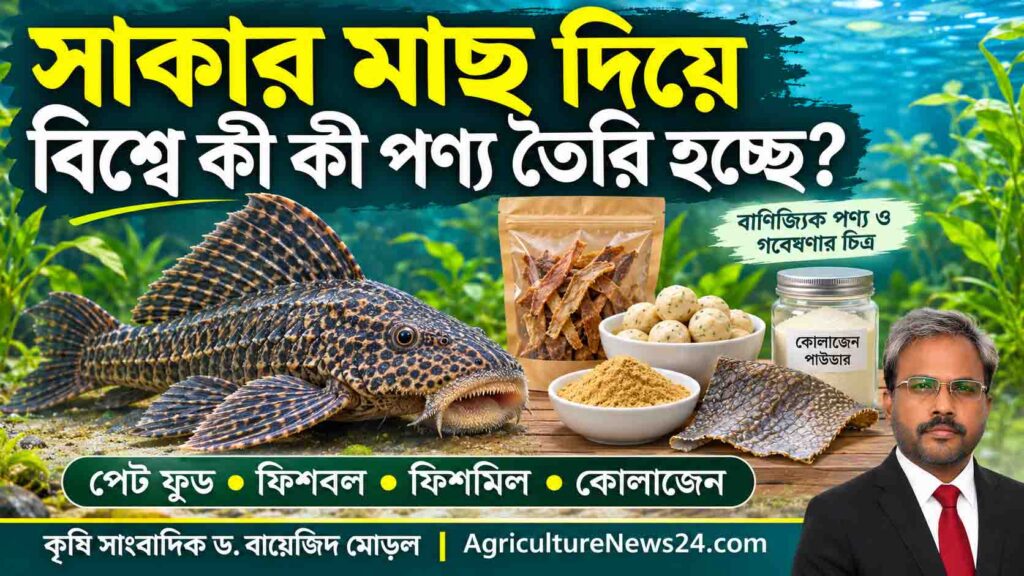
Pet Food, Fishballs, Leather and Collagen from Sucker Fish: What Is Happening in Different Countries?
Some products are commercially available, while many initiatives remain at the research stage—application in Bangladesh requires safety assessment and legal authorization
Dr. Bayezid Moral | Editor, AgricultureNews24.com
The spread of sucker fish through Bangladesh’s rivers, canals and other water bodies has raised concerns about biodiversity. Meanwhile, several countries are exploring whether these unwanted fish can be removed and put to economic use. Sucker-type fish are being marketed as treats for dogs and cats, while experimental products include fishballs, dried foods, fishmeal, leather and collagen.
Published studies, government information and manufacturers’ descriptions provide notable examples from Mexico and the United States, Indonesia, the Philippines and India. However, developing a product in a laboratory, using it locally and selling it commercially on a regular basis are three different stages.
Species identification is also important. Fish commonly known as sucker fish in Bangladesh generally belong to the genus Pterygoplichthys. Elsewhere, related fish are known as “janitor fish,” “sailfin catfish,” “pleco” or “devil fish.” These names should not be taken to mean that the same species is used in every case.
Countries and Products at a Glance
| Country or Connection | Products Developed or Tested | Documented Status |
|---|---|---|
| Mexico–United States | Dried fish strips and pet food topper | Commercial product listings available |
| Mexico | Feed pellets for crocodiles | Research initiative |
| Indonesia | Fishballs, dumplings, fish cakes and crackers | Local use and research reports |
| Indonesia | Fish floss, fishmeal-enriched snack sticks and fishmeal | Experimental production and research |
| Philippines | Fish leather; potential crab feed and fish oil | Leather samples developed; other uses under investigation |
| India | Collagen and collagen-enriched fresh cheese | Laboratory research |
Fish from Mexico, a Market in the United States: Treats for Dogs and Cats
One clear example of the commercial use of sucker-type fish is Pezzy Pets. According to the company, it produces dried Devil Fish Strips using wild Mexican devil fish sourced from small-scale fishers in southern Mexico. The product is marketed as a treat or supplementary snack for dogs and cats. Its ingredient list identifies the fish as Hypostomus plecostomus, which belongs to a different genus from the Pterygoplichthys commonly discussed in Bangladesh.
The company’s Pet Food Topper is a powder made from dried fish fillets. It is sold for sprinkling over dogs’ and cats’ regular food. According to the company’s description, fish sourced and processed in Mexico are subsequently inspected and packaged in California. Mexico therefore serves as a source of raw material, while the United States is a marketing and distribution centre.
Research in Mexico has also explored producing feed pellets from Pterygoplichthys for captive hatchling Mexican crocodiles. However, the information available in the research abstract should not be presented as evidence of large-scale commercial production.
Indonesia: From Fishballs to Dried Fish Floss
In Indonesia, sucker fish are commonly known as “ikan sapu-sapu.” A report available in the research repository of Universitas Al Azhar Indonesia states that some communities around the Ciliwung River use Pterygoplichthys pardalis to make dumplings, fishballs, fish cakes and crackers. This documents local use; it does not establish nationwide, officially approved industrial production.
Researchers at Hasanuddin University have prepared fishballs using meat from the same species and tapioca flour, then assessed their characteristics. Research has also examined crispy snack sticks enriched with sucker fish meal. These studies primarily evaluated ingredient proportions, chemical characteristics and consumer acceptance.
Another notable product is “abon,” or fish floss—a seasoned, dried product made from shredded fish meat. A study published in 2023 prepared this product using sucker fish from Lake Tempe in South Sulawesi. Researchers tested specified quality parameters, including mercury, lead and cadmium, and found the measured levels below the applicable maximum limits. These findings apply to the tested sources and samples; they do not guarantee the safety of fish from other water bodies.
Indonesia: An Ingredient for Aquaculture Feed
Alongside food products for people, research has investigated producing fishmeal from sucker fish. A study published in 2026 tested fishmeal made from Pterygoplichthys pardalis as a replacement for conventional fishmeal in Nile tilapia diets.
Under the specific experimental conditions, diets replacing 50 and 75 percent of conventional fishmeal produced growth comparable to the control group. However, these results should not be interpreted as authorization to make feed for any farm using sucker fish from any water body. The study reports findings from particular feed formulations and a defined experimental period.
The Philippines: Fish Leather Samples and Crab Feed Research
Researchers in the Philippines have investigated making fish leather from janitor fish. In a study published in 2020, the skin of Pterygoplichthys disjunctivus was separated and processed into leather samples, which were then assessed for their potential use. This evidence does not establish that bags, shoes or wallets made from sucker fish leather are being manufactured widely in the country.
The Philippines’ Bureau of Fisheries and Aquatic Resources—BFAR—also announced an initiative to test janitor fish as an alternative feed for mud crabs. Research involving Cagayan State University has additionally explored the possibility of extracting fish oil and other useful components. These are feasibility investigations and should not be presented as established commercial products.
India: Collagen from Skin and Experimental Fresh Cheese
Researchers at Vignan’s University and Acharya Nagarjuna University in India extracted type I collagen from the skin of Pterygoplichthys pardalis. In a study published in 2019, they also incorporated this collagen into fresh cheese to develop an experimental food product.
Although collagen is an important ingredient in food and other industries, this study does not demonstrate that cosmetics, capsules or medicines made from sucker fish collagen are routinely manufactured in India. What it establishes is collagen extraction and its experimental incorporation into a food product.
What Can Bangladesh Learn?
International examples indicate opportunities to research possible uses for sucker fish removed from water bodies. However, the existence of products abroad does not mean that sucker fish from Bangladesh’s waters are safe or that their commercial use is legally permitted.
Bangladesh’s prohibition announced in January 2023 covered the import, farming, transport, sale, supply and storage of sucker fish. Any proposal to produce products locally by following overseas examples must therefore first clarify the legal position and obtain any necessary authorization from the relevant authorities.
Food safety is equally fundamental. Safety cannot be determined without assessing the fish’s source, the body parts used and the final product. The United States Food and Drug Administration—FDA—states that mercury present in fish tissue cannot be reduced through cleaning or cooking. Boiling or drying alone should therefore not be treated as a guarantee that contamination has been eliminated.
For Bangladesh, research should focus on identifying safe ways to remove harmful invasive fish from water bodies. Research and policy must also consider whether creating demand for these products could encourage deliberate farming, breeding or introduction into additional water bodies.