















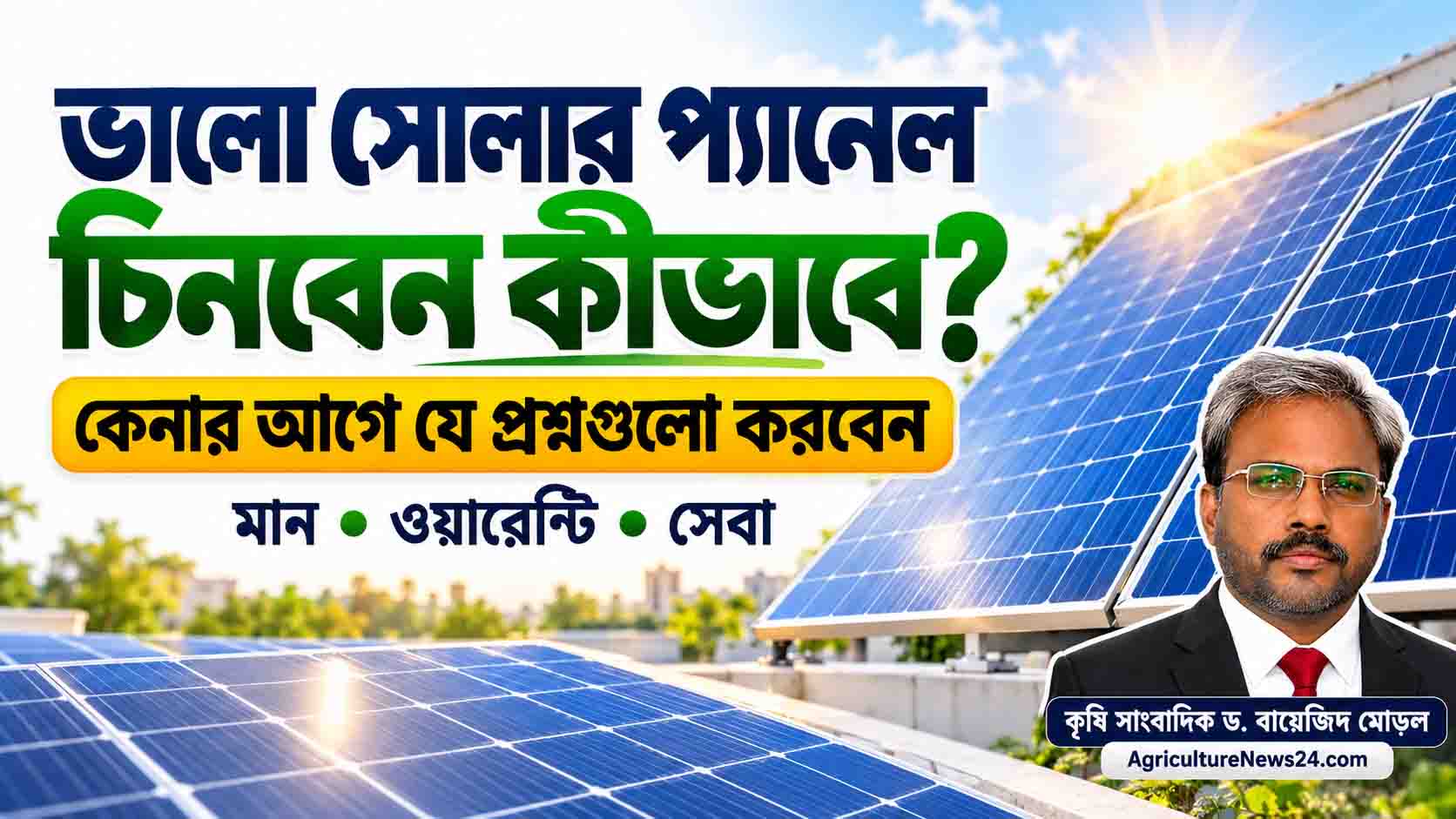
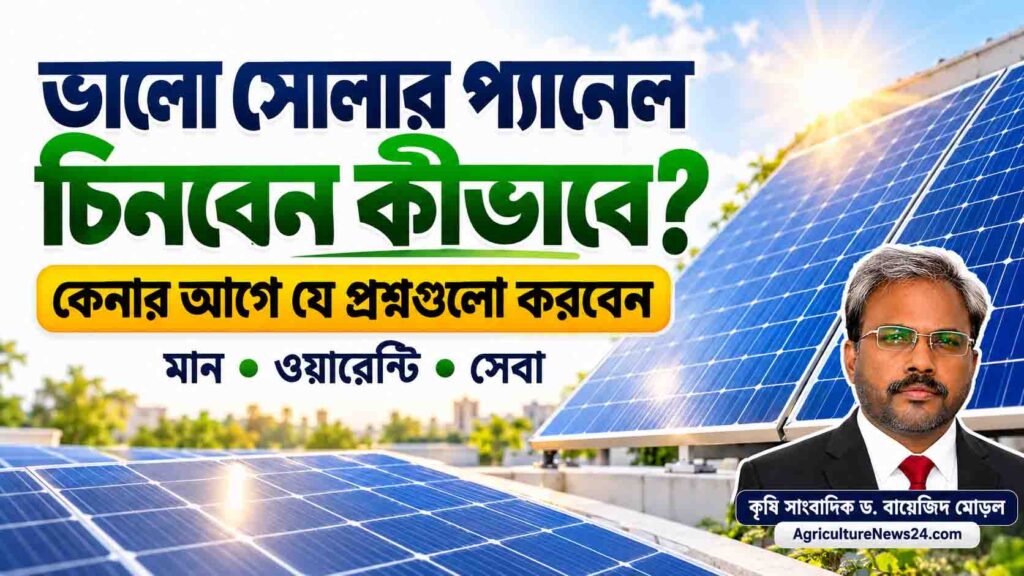
ভালো সোলার প্যানেল চিনবেন কীভাবে—কেনার আগে যে প্রশ্নগুলো করবেন
চকচকে প্যানেল, বেশি ওয়াট আর দীর্ঘ ওয়ারেন্টির বিজ্ঞাপন দেখেই সিদ্ধান্ত নয়; বিনিয়োগের আগে যাচাই করুন আসল পরিচয়, পরীক্ষার সনদ ও সেবার নিশ্চয়তা
কৃষি সাংবাদিক ড. বায়েজিদ মোড়লের গবেষণাধর্মী প্রতিবেদন
ছাদে সোলার প্যানেল বসাবেন। উদ্দেশ্য বিদ্যুৎ বিল কমানো, দিনের কাজ নিশ্চিন্তে চালানো এবং দীর্ঘ মেয়াদে খরচ সাশ্রয় করা। বাজারে খোঁজ নিতে গিয়ে দেখলেন, এক বিক্রেতা বলছেন তাঁর প্যানেল সবচেয়ে ভালো। আরেকজন বলছেন, কম দামে একই ক্ষমতার প্যানেল দেবেন। কেউ আবার ২৫ থেকে ৩০ বছরের ওয়ারেন্টির কথা শুনিয়ে নিশ্চিন্ত থাকতে বলছেন।
কিন্তু এত আশ্বাসের মধ্যে ক্রেতা বুঝবেন কীভাবে—কোন প্যানেলটি তাঁর জন্য ভালো?
উত্তরটি শুধু ব্র্যান্ডের নাম কিংবা প্যানেলের গায়ে লেখা ওয়াটের মধ্যে নেই। ভালো সোলার প্যানেল কিনতে হলে পণ্যের পরিচয়, বাস্তব কর্মক্ষমতা, ওয়ারেন্টির শর্ত এবং বিক্রেতার দায়িত্ব—এই চারটি বিষয় একসঙ্গে যাচাই করতে হবে।
বাড়ি, দোকান, পোল্ট্রি খামার, ডেইরি খামার কিংবা সেচব্যবস্থা—সব জায়গায় একই ধরনের সমাধান প্রয়োজন হয় না। তাই কেনার আগে প্রথম প্রশ্ন হওয়া উচিত: আমার প্রয়োজন কী, আর প্রস্তাবিত ব্যবস্থা সেই প্রয়োজন কতটা পূরণ করবে?
বেশি ওয়াট লেখা থাকলেই কি প্যানেল বেশি ভালো?
দুটি প্যানেলের একটিতে লেখা ৫৫০ ওয়াট, অন্যটিতে ৬০০ ওয়াট। স্বাভাবিকভাবে মনে হতে পারে, দ্বিতীয়টি ভালো। কিন্তু বড় প্যানেলে বেশি ওয়াট পাওয়া যেতে পারে, কারণ সেটি বেশি জায়গা দখল করছে।
তাই ওয়াটের পাশাপাশি প্যানেলের দৈর্ঘ্য, প্রস্থ এবং দক্ষতা দেখতে হবে। জায়গা সীমিত হলে একই আয়তনে বেশি বিদ্যুৎ উৎপাদন করতে পারে—এমন প্যানেল সুবিধাজনক হতে পারে।
আরও একটি বিষয় মনে রাখা প্রয়োজন: প্যানেলের ঘোষিত ওয়াট পরীক্ষাগারের নির্ধারিত পরিবেশে মাপা হয়। পরীক্ষায় প্রতি বর্গমিটারে ১,০০০ ওয়াট আলোর তীব্রতা এবং সৌরকোষের তাপমাত্রা ২৫ ডিগ্রি সেলসিয়াসের মতো নির্দিষ্ট শর্ত ব্যবহার করা হয়। ছাদের বাস্তব পরিবেশে আলো, তাপমাত্রা ও অন্যান্য পরিস্থিতি বদলায়। ফলে ৬০০ ওয়াটের প্যানেল সারাদিন একটানা ৬০০ ওয়াট দেবে—এমন ধারণা ভুল।
বিক্রেতাকে তাই জিজ্ঞাসা করুন:
“প্যানেলের ওয়াট কত—সেটি জানলাম। আমার ছাদে বসালে মাসে কত ইউনিট বিদ্যুৎ পাওয়া যেতে পারে, আর সেই হিসাবের ভিত্তি কী?”
প্যানেলের পরিচয় যাচাই করুন, শুধু স্টিকার নয়
কেনার আগে প্যানেলের পেছনের লেবেল দেখুন। প্রস্তুতকারকের নাম, সুনির্দিষ্ট মডেল, ঘোষিত ক্ষমতা, বৈদ্যুতিক তথ্য এবং সিরিয়াল নম্বর পরীক্ষা করুন।
এরপর প্রস্তুতকারকের আনুষ্ঠানিক ওয়েবসাইটের তথ্যপত্রের সঙ্গে মিলিয়ে নিন। বিক্রেতার দেওয়া তথ্য আর প্রস্তুতকারকের তথ্য এক কি না, সেটি গুরুত্বপূর্ণ।
চালানেও শুধু ‘সোলার প্যানেল’ লিখে রাখলে চলবে না। ব্র্যান্ড, মডেল, ওয়াট, সংখ্যা এবং সম্ভব হলে সিরিয়াল নম্বর যুক্ত করতে বলুন। এতে পরে ভিন্ন পণ্য সরবরাহ বা ওয়ারেন্টি নিয়ে বিরোধ হলে প্রমাণ দেখানো সহজ হয়।
সিরিয়াল নম্বর যাচাইয়ের ব্যবস্থা থাকলে প্রস্তুতকারক বা অনুমোদিত পরিবেশকের মাধ্যমে যাচাই করুন। কিউআর কোড থাকলেই পণ্য আসল—এমন সিদ্ধান্ত নেবেন না। কোডটি কোথায় নিয়ে যাচ্ছে এবং তথ্যটি কার দেওয়া, সেটিও দেখুন।
পরীক্ষার সনদ আছে কি—আর সেটি কোন মডেলের?
সোলার প্যানেলের মান ও নিরাপত্তা যাচাইয়ে আন্তর্জাতিক পরীক্ষার মানদণ্ড গুরুত্বপূর্ণ। এর মধ্যে আইইসি ৬১২১৫ প্যানেলের নকশা ও দীর্ঘমেয়াদি পরিবেশগত সহনশীলতার যোগ্যতা যাচাইয়ের সঙ্গে সম্পর্কিত। আইইসি ৬১৭৩০ প্যানেলের নিরাপত্তাসংক্রান্ত নির্মাণ ও পরীক্ষার বিষয়গুলো অন্তর্ভুক্ত করে।
তবে শুধু বিজ্ঞাপনে ‘আইইসি সার্টিফায়েড’ লেখা দেখেই সন্তুষ্ট হবেন না। প্রশ্ন করুন:
- সনদটি কোন প্রতিষ্ঠান দিয়েছে?
- সনদে যে মডেলের নাম আছে, আমাকে সেই মডেলই দেওয়া হচ্ছে কি?
- সনদ নম্বর ও প্রযোজ্য মানদণ্ডের সংস্করণ কী?
- সনদদাতা প্রতিষ্ঠানের মাধ্যমে এটি যাচাই করা যাবে কি?
সনদ একটি গুরুত্বপূর্ণ প্রমাণ। তবে এটি নির্দিষ্ট ছাদে নির্দিষ্ট পরিমাণ বিদ্যুৎ উৎপাদনের নিশ্চয়তা নয়।
বাইরে দেখে কী বোঝা যায়?
প্যানেল হাতে পাওয়ার পর কাচে ফাটল, অস্বাভাবিক দাগ, ফ্রেম বাঁকা হওয়া, পেছনের আবরণ ক্ষতিগ্রস্ত হওয়া বা সংযোগ বাক্স ঢিলা থাকা—এসব আছে কি না দেখুন। পরিবহনের ক্ষতিও পরীক্ষা করুন।
কিন্তু বাহ্যিক পরীক্ষা দিয়ে সব ত্রুটি ধরা যায় না। সৌরকোষের সূক্ষ্ম ফাটল কিংবা ভেতরের সংযোগের সমস্যা খালি চোখে বোঝা কঠিন হতে পারে। বড় প্রকল্পে সরবরাহকারীকে কারখানার ক্ষমতা পরীক্ষার প্রতিবেদন বা ‘ফ্ল্যাশ টেস্ট রিপোর্ট’ দিতে বলুন। প্রয়োজন অনুযায়ী যোগ্য প্রকৌশলীর মাধ্যমে অতিরিক্ত মান পরীক্ষা করানো যেতে পারে।
দেখতে সুন্দর হওয়া ভালো লক্ষণ হতে পারে; ভালো মানের চূড়ান্ত প্রমাণ নয়।
গরমে প্যানেল কতটা ক্ষমতা হারায়?
বাংলাদেশে ছাদের প্যানেল দীর্ঘ সময় গরম পরিবেশে কাজ করে। তাই প্যানেলের তথ্যপত্রে ‘ক্ষমতার তাপমাত্রা সহগ’ কত, সেটি দেখা প্রয়োজন। এই সংখ্যা বোঝায়, সৌরকোষের তাপমাত্রা বাড়লে ক্ষমতা কী হারে কমতে পারে।
বিষয়টি একটি কাল্পনিক উদাহরণে বোঝা যায়। কোনো প্যানেলের ক্ষমতার তাপমাত্রা সহগ যদি প্রতি ডিগ্রিতে ঋণাত্মক ০.৩০ শতাংশ হয়, তাহলে পরীক্ষার ভিত্তি তাপমাত্রার তুলনায় সৌরকোষ ২০ ডিগ্রি বেশি গরম হলে শুধু তাপমাত্রার প্রভাবে ক্ষমতা আনুমানিক ৬ শতাংশ কমতে পারে। এটি বোঝানোর হিসাব; বাস্তব উৎপাদনে আলোসহ আরও অনেক বিষয় কাজ করে।
একই ধরনের প্যানেল তুলনা করার সময় তাপমাত্রাজনিত ক্ষতি কম এমন মডেল সুবিধা দিতে পারে। তবে শুধু এই একটি সংখ্যা দেখে সিদ্ধান্ত নেওয়া ঠিক হবে না। বিক্রেতাকে বলুন: “এই প্যানেলের তাপমাত্রা সহগ কত, আর গরম পরিবেশ ধরে উৎপাদনের হিসাব করেছেন কি?”
৩০ বছরের ওয়ারেন্টি শুনে যে ভুলটি হয়
‘৩০ বছরের ওয়ারেন্টি’ শুনে অনেক ক্রেতা ধরে নেন, এই সময়ে কোনো সমস্যা হলেই বিনা খরচে নতুন প্যানেল পাওয়া যাবে। বাস্তবে ওয়ারেন্টির ধরন ও শর্ত আলাদা।
পণ্যের ওয়ারেন্টি উৎপাদন বা পণ্যের ত্রুটির বিষয়টি দেখায়। কর্মক্ষমতার ওয়ারেন্টি নির্দিষ্ট সময় শেষে প্যানেল কতটা ক্ষমতা ধরে রাখবে, তার শর্ত জানায়। আবার স্থাপনের ওয়ারেন্টি কাজের ত্রুটি—যেমন ছাদে ভুলভাবে বসানোর কারণে পানি ঢোকা—এর দায়িত্ব নির্ধারণ করে।
কেনার আগে লিখিতভাবে জানুন:
- পণ্যের ওয়ারেন্টি কত বছর?
- কর্মক্ষমতার ওয়ারেন্টি কত বছর এবং ক্ষমতা কমার অনুমোদিত হার কত?
- দাবি গ্রহণ করবে প্রস্তুতকারক, আমদানিকারক, নাকি বিক্রেতা?
- প্যানেল খুলে নেওয়া, পরিবহন ও পুনঃস্থাপনের খরচ কে দেবে?
- কোন ধরনের ক্ষতি ওয়ারেন্টির বাইরে?
- বিক্রেতা ব্যবসা বন্ধ করলে কোথায় যোগাযোগ করবেন?
ওয়ারেন্টির মেয়াদের সঙ্গে সেটি পাওয়ার বাস্তব পথও যাচাই করুন।
‘টিয়ার–১’ বললেই কি নিশ্চিন্ত হওয়া যায়?
বাজারে ‘টিয়ার–১’ কথাটি প্রায়ই মানের নিশ্চয়তা হিসেবে ব্যবহার করা হয়। BloombergNEF-এর এই শ্রেণিবিন্যাস মূলত প্রকল্প ও অর্থায়নের তথ্যভিত্তিক প্রস্তুতকারক মূল্যায়নের সঙ্গে সম্পর্কিত। ফলে শুধু ‘টিয়ার–১’ দাবিকে একটি নির্দিষ্ট প্যানেলের মান পরীক্ষার বিকল্প হিসেবে ধরা ঠিক হবে না।
ব্র্যান্ডের পরিচয় গুরুত্বপূর্ণ। পাশাপাশি নির্দিষ্ট মডেলের তথ্যপত্র, পরীক্ষার সনদ, আসল পণ্য সরবরাহ এবং স্থানীয় সেবার ব্যবস্থা যাচাই করতে হবে। একইভাবে ‘এ-গ্রেড’, ‘প্রিমিয়াম’ কিংবা ‘সেরা প্রযুক্তি’—এসব দাবির লিখিত ব্যাখ্যা ও প্রমাণ চাইতে দ্বিধা করবেন না।
দুই পাশ দিয়ে বিদ্যুৎ উৎপাদনের প্যানেল কি সবার জন্য লাভজনক?
দুই পাশ থেকে আলো গ্রহণ করতে পারে এমন প্যানেলকে দ্বিমুখী বা বাইফেসিয়াল প্যানেল বলা হয়। তবে পেছনের দিক থেকে কতটা বাড়তি বিদ্যুৎ পাওয়া যাবে, তা স্থাপনের উচ্চতা, নিচের পৃষ্ঠ থেকে আলো প্রতিফলন, ছায়া এবং নকশার ওপর নির্ভর করে।
ছাদের খুব কাছে বসিয়ে পেছনে আলো পৌঁছানোর সুযোগ কম থাকলে প্রত্যাশিত বাড়তি সুবিধা নাও পাওয়া যেতে পারে।
তাই প্রশ্ন করুন: “আমার ছাদে পেছনের দিক থেকে বাড়তি উৎপাদন কত ধরেছেন, এবং কেন?”
কোনো নির্দিষ্ট শতাংশ বাড়তি উৎপাদনের দাবি শুনলে তার হিসাব চাইুন।
ভালো প্যানেলও ভুল ছাদে কম বিদ্যুৎ দিতে পারে
পাশের ভবন, গাছ, পানির ট্যাংক কিংবা অন্য কোনো স্থাপনার ছায়া প্যানেলের উৎপাদন কমাতে পারে। ছাদের দিক, আলো পাওয়ার সময় ও ছায়া বিবেচনা করে স্থানভিত্তিক উৎপাদনের হিসাব করা প্রয়োজন। সরকারি ভোক্তা নির্দেশিকাগুলোও ছায়া যাচাই এবং নিজস্ব স্থানের জন্য বিশেষজ্ঞের হিসাব নেওয়ার ওপর গুরুত্ব দেয়।
বাড়ি বা খামারে স্থাপনের আগে ছাদের অবস্থাও যাচাই করুন। পুরোনো টিন, দুর্বল কাঠামো কিংবা অনিরাপদ মাউন্টিংয়ের ওপর বড় বিনিয়োগ ঝুঁকিপূর্ণ হতে পারে। পোল্ট্রি বা ডেইরি খামারের ক্ষেত্রে ধুলা, আর্দ্রতা, পরিষ্কারের সুযোগ এবং নিচে কাজ চলার বিষয়ও নকশায় বিবেচনা করা দরকার। শুধু খালি ছাদ দেখেই প্যানেল বসানোর সিদ্ধান্ত যথেষ্ট নয়।
বিদ্যুৎ চলে গেলে সোলারও বন্ধ হবে কি?
ক্রেতার একটি গুরুত্বপূর্ণ প্রশ্ন হলো: “লোডশেডিং হলে এই ব্যবস্থা দিয়ে কোন কোন যন্ত্র চালাতে পারব?”
সাধারণ গ্রিডসংযুক্ত সোলার ব্যবস্থা নিরাপত্তার কারণে বিদ্যুৎ বিভ্রাটে বন্ধ হয়ে যায়। ব্যাকআপ চাইলে সেই উপযোগী ইনভার্টার, প্রয়োজনীয় নিয়ন্ত্রণব্যবস্থা এবং সাধারণত ব্যাটারিসহ আলাদা নকশা প্রয়োজন। খামারে ফ্যান, পানির পাম্প, দুধ শীতল রাখার যন্ত্র বা অন্য জরুরি সরঞ্জামের প্রয়োজন থাকলে বিক্রেতাকে তার তালিকা দিন। কোন যন্ত্র একসঙ্গে চলবে এবং কতক্ষণ চলবে—লিখিতভাবে জানতে চান।
প্যানেলের ক্ষমতা আর পুরো ব্যবস্থার ব্যাকআপ ক্ষমতা এক জিনিস নয়।
শুধু প্যানেলের দাম তুলনা করলে হিসাব অসম্পূর্ণ থাকে
কম দামের প্রস্তাবে কী কী আছে, সেটি দেখুন। প্যানেলের পাশাপাশি ইনভার্টার, মাউন্টিং কাঠামো, তার, সংযোগ, আর্থিং, বৈদ্যুতিক সুরক্ষা, স্থাপন ও পর্যবেক্ষণব্যবস্থা—সব মিলিয়ে পুরো ব্যবস্থা তৈরি হয়।
একটি প্রস্তাবে এসব অন্তর্ভুক্ত থাকতে পারে; অন্যটিতে আলাদা খরচ হতে পারে। তাই সমান পরিধির অন্তত তিনটি লিখিত প্রস্তাব তুলনা করা ভালো। যে বিক্রেতা ছাদ না দেখে, বিদ্যুতের ব্যবহার না বুঝে এবং কোনো হিসাব না দিয়ে নিশ্চিত সাশ্রয়ের কথা বলেন, তাঁর কাছে আরও বিস্তারিত ব্যাখ্যা চাইুন।
কেনার আগে এই প্রশ্নগুলো সঙ্গে রাখুন
| প্রশ্ন | কী জানতে পারবেন |
|---|---|
| ব্র্যান্ড, মডেল ও সিরিয়াল নম্বর কী? | পণ্যের সঠিক পরিচয় |
| প্রস্তুতকারকের আসল তথ্যপত্র কোথায়? | ক্ষমতা, মাপ ও বৈদ্যুতিক বৈশিষ্ট্য |
| পরীক্ষার সনদ কি এই মডেলের? | দাবির সঙ্গে পণ্যের মিল |
| পণ্য নতুন, নাকি ব্যবহৃত বা পুনঃসংস্কার করা? | পণ্যের অবস্থা |
| আমার ছাদে মাসভিত্তিক উৎপাদনের হিসাব কত? | বাস্তব প্রত্যাশা |
| ছায়া ও গরমের প্রভাব হিসাব করা হয়েছে কি? | হিসাবের বিশ্বাসযোগ্যতা |
| পণ্য ও কর্মক্ষমতার ওয়ারেন্টি আলাদা কত বছর? | ওয়ারেন্টির প্রকৃত পরিধি |
| সমস্যায় স্থানীয়ভাবে দায়িত্ব নেবে কে? | সেবা পাওয়ার পথ |
| লোডশেডিংয়ে কোন যন্ত্র কতক্ষণ চলবে? | ব্যাকআপের সামর্থ্য |
| মোট দামে কী কী অন্তর্ভুক্ত? | বাড়তি খরচের সম্ভাবনা |
| স্থাপনের কাজের লিখিত ওয়ারেন্টি আছে কি? | কাজের ত্রুটির দায়িত্ব |
| স্থাপনের পরে উৎপাদন কীভাবে দেখব? | ফলাফল পর্যবেক্ষণের সুযোগ |
টাকা দেওয়ার আগে কাগজগুলো নিন
চূড়ান্ত চুক্তিতে প্যানেল ও ইনভার্টারের মডেল, পরিমাণ, মোট দাম, কাজের সময়সীমা, অর্থ পরিশোধের ধাপ এবং সেবার শর্ত উল্লেখ করুন। সঙ্গে রাখুন তথ্যপত্র, প্রযোজ্য পরীক্ষার সনদ, ওয়ারেন্টি এবং উৎপাদনের হিসাব।
স্থাপনের পরে যে পণ্য এসেছে তা চুক্তির সঙ্গে মিলিয়ে নিন। কাজ শেষ হওয়ার পর পরীক্ষার ফল, পরিচালনার নির্দেশনা এবং জরুরি যোগাযোগের তথ্য সংগ্রহ করুন। সোলার প্যানেল কেনা বহু বছরের একটি বিনিয়োগ। আজকের কম দাম যেন আগামী দিনের কম উৎপাদন কিংবা সেবা না পাওয়ার কারণ হয়ে না দাঁড়ায়।
তাই বিক্রেতাকে প্রশ্ন করুন, উত্তর মিলিয়ে দেখুন, তারপর সিদ্ধান্ত নিন। ভালো বিক্রেতার অন্যতম পরিচয় হলো—তিনি পণ্য বিক্রির পাশাপাশি তার সীমাবদ্ধতা, শর্ত ও দায়িত্বও পরিষ্কার করে বোঝান।
How to Choose a Good Solar Panel—Questions to Ask Before Buying
A sleek appearance, a high wattage rating and a long warranty are only the beginning. Check the panel’s identity, test certificates and after-sales support before investing.
A research-based report by agricultural journalist Dr. Bayezid Moral
You want to install solar panels on your roof to reduce electricity bills, keep daytime operations running and save money over the years. But once you start looking, every seller seems to have a different promise.
One says their panels are the best. Another offers the same wattage at a lower price. A third promises a 25- or 30-year warranty and tells you there is nothing to worry about.
How do you decide which panel is genuinely suitable for you?
The answer goes beyond the brand name or the wattage printed on the label. Before buying a solar panel, check four things together: the product’s identity, its expected performance, the warranty conditions and the seller’s responsibility.
A home, shop, poultry farm, dairy farm and irrigation system have different energy needs. Your first question should therefore be: What do I need, and how well will the proposed system meet that need?
Does Higher Wattage Always Mean a Better Panel?
Suppose one panel is rated at 550 watts and another at 600 watts. It is tempting to assume that the second is better. However, the higher-rated panel may simply be larger and occupy more roof space.
Compare the panel’s dimensions and efficiency alongside its wattage. If roof space is limited, a panel that produces more power within the same area may be useful.
Remember that a panel’s rated power is measured under standard laboratory conditions. These include an irradiance of 1,000 watts per square metre and a solar cell temperature of 25°C. On a rooftop, sunlight, temperature and other conditions change throughout the day. A 600-watt panel will therefore not continuously produce 600 watts.
Ask the seller:
“I understand the rated wattage. How many units of electricity could this system generate each month on my roof, and what assumptions support that estimate?”
Verify the Panel’s Identity, Not Just Its Sticker
Before buying, inspect the label on the back of the panel. Check the manufacturer’s name, exact model, rated power, electrical specifications and serial number.
Then compare these details with the datasheet published on the manufacturer’s official website. The seller’s claims should match the manufacturer’s information.
The invoice should identify the brand, model, wattage and quantity, with serial numbers included where possible. A vague description such as “solar panels” may make it harder to resolve a product substitution or warranty dispute.
If the manufacturer provides serial-number verification, use it or contact an authorised distributor.
A QR code alone does not prove authenticity. Check where it leads and who provides the information.
Is There a Test Certificate—and Does It Cover This Model?
International testing standards help assess solar panel reliability and safety.
IEC 61215 covers design qualification and testing related to a panel’s ability to withstand prolonged environmental exposure. IEC 61730 covers safety-related construction requirements and testing.
Do not rely only on an advertisement saying “IEC certified.” Ask:
- Which organisation issued the certificate?
- Does the certificate cover the exact model being supplied?
- What are the certificate number and applicable standard editions?
- Can the certificate be verified with the issuing organisation?
Certification is valuable evidence. However, it does not guarantee a particular amount of electricity generation on your roof.
What Can a Visual Inspection Tell You?
When the panels arrive, look for cracked glass, unusual marks, bent frames, damage to the rear surface or loose junction boxes. Check for damage caused during transport.
However, a visual inspection cannot reveal every defect. Tiny cracks in solar cells or internal connection problems may be difficult to detect with the naked eye.
For larger projects, request factory power-test records, often called flash-test reports. A qualified engineer can advise whether additional testing is appropriate.
A good appearance is useful, but it is not conclusive evidence of quality.
How Much Power Does the Panel Lose in Hot Weather?
Solar panels on rooftops in Bangladesh operate in hot conditions for long periods. Check the “power temperature coefficient” in the datasheet. It indicates how the panel’s power output changes as solar cell temperature rises.
Consider a hypothetical example. If a panel has a power temperature coefficient of −0.30% per degree Celsius, a cell temperature 20°C above the reference temperature could reduce power by approximately 6% due to temperature alone.
This is an illustrative calculation. Actual output also depends on sunlight and other operating conditions.
When comparing otherwise similar panels, a smaller temperature-related power loss may be advantageous. However, this figure should not be the only basis for choosing a panel.
Ask:
“What is this panel’s power temperature coefficient, and does your generation estimate account for hot operating conditions?”
The Common Misunderstanding About a 30-Year Warranty
A “30-year warranty” may sound as though any problem will result in a free replacement throughout that period. In reality, different warranties cover different issues.
A product warranty covers qualifying product or manufacturing defects. A performance warranty specifies how much power capacity the panel should retain over time. A workmanship warranty addresses installation defects, such as roof leaks caused by improper installation.
Before buying, obtain written answers to these questions:
- How long is the product warranty?
- How long is the performance warranty, and what degradation is permitted?
- Who handles claims—the manufacturer, importer or seller?
- Who pays for removal, transport and reinstallation?
- Which types of damage are excluded?
- Who can you contact if the seller closes the business?
Check both the length of the warranty and the practical process for using it.
Does “Tier 1” Mean You Can Buy Without Further Checks?
Sellers often present “Tier 1” as a guarantee of panel quality. BloombergNEF’s classification evaluates manufacturers using project and financing data. It should therefore not replace checks on the quality and specifications of an individual panel model.
The manufacturer’s reputation matters. So do the exact model’s datasheet, test certificates, authenticity and local service arrangements.
Similarly, ask for evidence behind terms such as “A-grade,” “premium” or “best technology.” A sales label should have a clear, verifiable meaning.
Are Bifacial Panels Suitable for Everyone?
Bifacial panels can receive light from both the front and rear sides. However, additional rear-side generation depends on mounting height, reflected light from the surface below, shading and system design.
If panels are installed very close to a roof, with little light reaching the rear surface, the additional benefit may be limited.
Ask:
“How much additional rear-side generation have you assumed for my roof, and why?”
If the seller promises a specific percentage increase, request the calculation supporting it.
Even a Good Panel Can Perform Poorly on the Wrong Roof
Nearby buildings, trees, water tanks and other structures can cast shadows that reduce generation. Roof orientation, sunlight exposure and shading should be considered in a site-specific estimate. Government consumer guidance also stresses shading assessment and professional estimates for the actual installation site.
The condition of the roof also matters. Old roofing sheets, weak structures or unsuitable mounting arrangements can create problems.
For poultry and dairy farms, the design should also consider dust, moisture, access for cleaning and the work taking place below the panels.
An empty roof alone is not enough reason to proceed. It needs to be suitable for the proposed installation.
Will the Solar System Work During a Power Cut?
One of the most important questions is:
“During load shedding, which appliances will this system operate, and for how long?”
An ordinary grid-connected solar system shuts down during a power outage for safety. Backup operation requires a suitable inverter, appropriate controls and generally a battery-based design.
If your farm depends on fans, water pumps, milk-cooling equipment or other essential machinery, give the seller a list of those loads. Obtain written details of which appliances can run simultaneously and for how long.
The rated capacity of the panels and the backup capability of the complete system are different things.
Comparing Panel Prices Alone Can Be Misleading
Check exactly what each quotation includes.
A complete installation involves panels, an inverter, mounting structures, cables, connectors, earthing, electrical protection, installation work and, where included, monitoring equipment.
One quotation may include all these items, while another may charge separately. Compare at least three written quotations covering the same scope.
If a seller promises guaranteed savings without inspecting your roof or reviewing your electricity use, ask for a detailed explanation and supporting calculations.
Questions to Take With You Before Buying
| Question | What it helps you check |
|---|---|
| What are the brand, model and serial numbers? | The product’s exact identity |
| Where is the manufacturer’s official datasheet? | Rated power, dimensions and electrical specifications |
| Does the test certificate cover this model? | Whether certification matches the supplied product |
| Is the panel new, used or refurbished? | The product’s condition |
| What is the estimated monthly generation on my roof? | Realistic expectations |
| Have shading and heat been included in the estimate? | The credibility of the calculation |
| How long are the product and performance warranties? | The actual warranty coverage |
| Who provides local after-sales support? | The route to service |
| Which appliances will work during an outage, and for how long? | Backup capability |
| What does the total price include? | Potential additional costs |
| Is there a written workmanship warranty? | Responsibility for installation defects |
| How will I monitor generation after installation? | The ability to check results |
Get the Documents Before Paying
The final agreement should identify the panel and inverter models, quantities, total price, completion schedule, payment stages and service conditions.
Keep copies of the datasheets, applicable test certificates, warranties and generation estimates.
After delivery, confirm that the equipment matches the agreement. Once installation is complete, collect the commissioning results, operating instructions and emergency contact details.
Buying solar panels is a long-term investment. A low purchase price should not become years of disappointing generation or unavailable support.
Ask questions, verify the answers and then decide. A reliable seller explains the product’s capabilities, limitations, conditions and responsibilities clearly.