















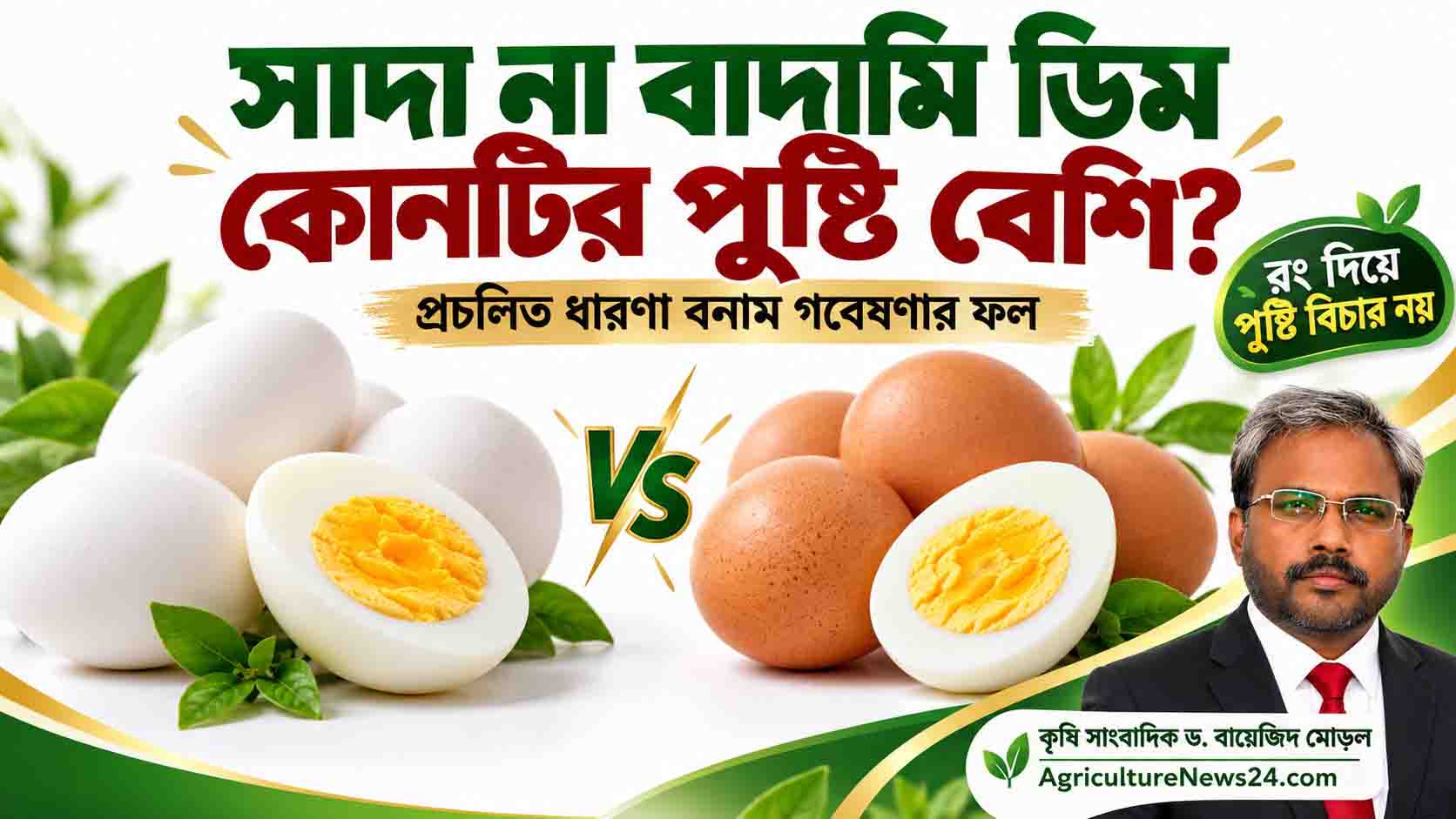
সাদা না বাদামি ডিম—কোনটির পুষ্টি বেশি?
খোসার রং দেখে পুষ্টি বিচার করা কতটা যৌক্তিক—প্রচলিত ধারণা ও গবেষণার আলোকে ।।
কৃষি সাংবাদিক ড. বায়েজিদ মোড়লের গবেষণাধর্মী প্রতিবেদন।।

ডিম কিনতে গিয়ে অনেকেই বাদামি ডিম বেছে নেন। তাঁদের ধারণা, বাদামি ডিমে পুষ্টি বেশি, স্বাস্থ্যের জন্য ভালো এবং সাদা ডিমের তুলনায় বেশি শক্তি দেয়। আবার কেউ মনে করেন, সাদা ডিম মানেই খামারের, বাদামি ডিম মানেই দেশি। কিন্তু বিজ্ঞানের ব্যাখ্যা কী?
শুধু খোসার রঙের কারণে বাদামি ডিমকে সাদা ডিমের চেয়ে বেশি পুষ্টিকর বলা যায় না। যুক্তরাষ্ট্রের কৃষি বিভাগের খাদ্যনিরাপত্তা সংস্থা USDA–FSIS জানিয়েছে, সাদা ও বাদামি খোসার ডিমের পুষ্টিমানে উল্লেখযোগ্য পার্থক্য নেই। ফলে পুষ্টির জন্য কেবল বাদামি রং দেখে বাড়তি টাকা খরচ করার প্রয়োজন নেই।
ডিমের রং মূলত মুরগির জাত ও বংশগত বৈশিষ্ট্যের সঙ্গে সম্পর্কিত। কোনো জাতের মুরগি সাদা, কোনো জাতের মুরগি বাদামি খোসার ডিম দেয়। অন্য কিছু জাত নীল বা সবুজাভ ডিমও দেয়। তাই খোসার রং দেখে মুরগি দেশি কি না, কী খাবার খেয়েছে কিংবা কোন ব্যবস্থায় পালন করা হয়েছে—এসব নিশ্চিত হওয়া যায় না।
তবে এখানে একটি সূক্ষ্ম বিষয় আছে। “রং দিয়ে পুষ্টি বিচার করা যায় না”—এর অর্থ সব ডিমের প্রতিটি পুষ্টি উপাদান একেবারে সমান নয়। নির্দিষ্ট জাত, খাদ্য ও উৎপাদন পরিস্থিতিতে কিছু পার্থক্য পাওয়া যেতে পারে।
২০১৩ সালে Poultry Science সাময়িকীতে প্রকাশিত নর্থ ক্যারোলাইনা স্টেট ইউনিভার্সিটির গবেষক Kenneth E. Anderson-এর গবেষণায় চারটি বাণিজ্যিক মুরগির লাইনের ডিম তুলনা করা হয়। ওই পরীক্ষায় সাদা ডিমে ভিটামিন ‘এ’ বেশি এবং বাদামি ডিমে ভিটামিন ‘ই’ বেশি পাওয়া যায়। সাদা ডিমে কুসুমের অনুপাত বেশি ছিল; বাদামি ডিমে সাদা অংশের অনুপাত বেশি ছিল। গবেষণাটি মুরগির বংশগত লাইন ও পালক বদলের প্রভাবও বিবেচনা করেছে।
এই ফল থেকে সব বাদামি ডিমে ভিটামিন ‘ই’ বেশি বা সব সাদা ডিমে ভিটামিন ‘এ’ বেশি—এমন সিদ্ধান্ত নেওয়া ঠিক হবে না। পরীক্ষাটি নির্দিষ্ট মুরগির লাইন ও নির্দিষ্ট পরিস্থিতির। এর যথাযথ ব্যাখ্যা হলো, ডিমের গঠন ও পুষ্টিতে পার্থক্য হতে পারে; কিন্তু খোসার রং নিজে কোনো ডিমকে সামগ্রিকভাবে শ্রেষ্ঠ প্রমাণ করে না।
মুরগির খাদ্যও গুরুত্বপূর্ণ। মুরগির জাত, বয়স ও খাদ্যের প্রভাব নিয়ে পরীক্ষায় ডিমের গঠন এবং কুসুমের ফ্যাটি অ্যাসিডের পরিবর্তন পরীক্ষা করা হয়েছে। তাই কোনো ডিমে বিশেষ পুষ্টি বেশি থাকার দাবি যাচাই করতে খাদ্য ও পরীক্ষার তথ্য প্রয়োজন—রং যথেষ্ট নয়।
আকারের বিষয়টিও মনে রাখতে হবে। একটি বড় ডিমে খাওয়ার উপযোগী অংশ বেশি থাকায় ছোট ডিমের তুলনায় মোট পুষ্টি বেশি থাকতে পারে। তাই একটি বড় বাদামি ডিমের সঙ্গে একটি ছোট সাদা ডিম তুলনা করে রঙের কারণে পার্থক্য হয়েছে বলা বিভ্রান্তিকর। যথাযথ তুলনার জন্য সমান ওজনের খাওয়ার উপযোগী অংশ বিবেচনা করা দরকার।
প্রচলিত কয়েকটি ধারণাকে গবেষণার আলোকে এভাবে দেখা যায়:
| প্রচলিত ধারণা | তথ্যের আলোকে ব্যাখ্যা |
|---|---|
| বাদামি ডিম সব সময় বেশি পুষ্টিকর | খোসার রং দিয়ে এমন সিদ্ধান্ত নেওয়া যায় না |
| সাদা ডিমে পুষ্টি কম | এ ধারণার বৈজ্ঞানিক ভিত্তি নেই |
| বাদামি ডিম মানেই দেশি | বাণিজ্যিক মুরগিও বাদামি ডিম দেয় |
| গবেষণায় পার্থক্য পাওয়া মানেই এক রং শ্রেষ্ঠ | নির্দিষ্ট জাত ও পরিস্থিতির ফল সব ডিমের ক্ষেত্রে প্রযোজ্য নয় |
ক্রেতার জন্য ব্যবহারিক পরামর্শ হলো, ডিমের রঙের পাশাপাশি আকার, খোসার অবস্থা, সংরক্ষণ ও নির্ভরযোগ্য উৎসকে গুরুত্ব দেওয়া। USDA–FSIS-এর নির্দেশনায় ফাটা ডিম এড়িয়ে চলা, ঠান্ডায় সংরক্ষণ এবং সাদা অংশ ও কুসুম ভালোভাবে জমাট হওয়া পর্যন্ত রান্নার ওপর গুরুত্ব দেওয়া হয়েছে। সাদা বা বাদামি—কোনো রংই নিজে খাদ্যনিরাপত্তার নিশ্চয়তা দেয় না।

White or Brown Eggs—Which Are More Nutritious?
Common beliefs and research findings explained in simple language
A research-based report by agricultural journalist Dr. Bayezid Moral
Many consumers choose brown eggs when shopping. They believe brown eggs contain more nutrients, are healthier and provide more energy than white eggs. Some also assume that white eggs come from commercial farms, while brown eggs come from indigenous chickens. But what does science say?
Brown eggs cannot be considered more nutritious simply because of their shell colour. According to the United States Department of Agriculture’s Food Safety and Inspection Service (USDA–FSIS), nutrient levels do not differ significantly between white- and brown-shelled eggs. Therefore, paying extra solely for a brown shell does not necessarily provide a nutritional benefit.
Eggshell colour is mainly related to the chicken’s breed and genetic characteristics. Some breeds lay white eggs, while others lay brown eggs. Certain breeds even produce blue or greenish eggs. Shell colour alone cannot reliably tell us whether a chicken is indigenous, what it was fed or how it was raised.
There is, however, an important distinction. Saying that shell colour does not determine nutritional value does not mean that every egg contains exactly the same amount of every nutrient. Differences can occur between particular breeds, diets and production conditions.
A study by Kenneth E. Anderson of North Carolina State University, published in Poultry Science in 2013, compared eggs from four commercial chicken strains. In that experiment, white eggs contained more vitamin A, while brown eggs contained more vitamin E. White eggs also had a higher proportion of yolk, whereas brown eggs had a higher proportion of egg white. The study considered the effects of chicken strain and moulting—the process of replacing feathers—as well.
These findings do not mean that every brown egg contains more vitamin E or that every white egg contains more vitamin A. The experiment involved specific chicken strains under particular conditions. The appropriate interpretation is that egg composition can vary, but shell colour alone does not establish that one type is nutritionally superior overall.
The chicken’s diet also matters. Research examining breed, age and diet has investigated changes in egg composition and the fatty acids deposited in the yolk. Claims that an egg contains higher levels of a particular nutrient should therefore be supported by feeding information and laboratory testing. Shell colour is insufficient evidence.
Egg size should also be considered. A larger egg may provide more total nutrients than a smaller egg because it contains more edible material. Comparing a large brown egg with a small white egg and attributing the difference to colour would be misleading. A fair comparison should consider equal weights of the edible portion.
Common beliefs can be assessed against the evidence as follows:
| Common belief | Evidence-based explanation |
|---|---|
| Brown eggs are always more nutritious | Shell colour alone cannot support this conclusion |
| White eggs contain fewer nutrients | This general claim has no scientific basis |
| Brown eggs always come from indigenous chickens | Commercial chickens also lay brown eggs |
| A difference found in one study proves one colour is superior | Findings from particular strains and conditions cannot be applied to all eggs |
For consumers, practical considerations include egg size, shell condition, storage and a reliable source. USDA–FSIS guidance recommends avoiding cracked eggs, keeping eggs refrigerated and cooking them until both the white and yolk are firm. Neither a white nor a brown shell guarantees food safety.
তথ্যসূত্র: USDA–FSIS; Anderson, K. E. (২০১৩), Poultry Science, 92(12): 3259–3265; University of Kentucky, Poultry Extension।