
















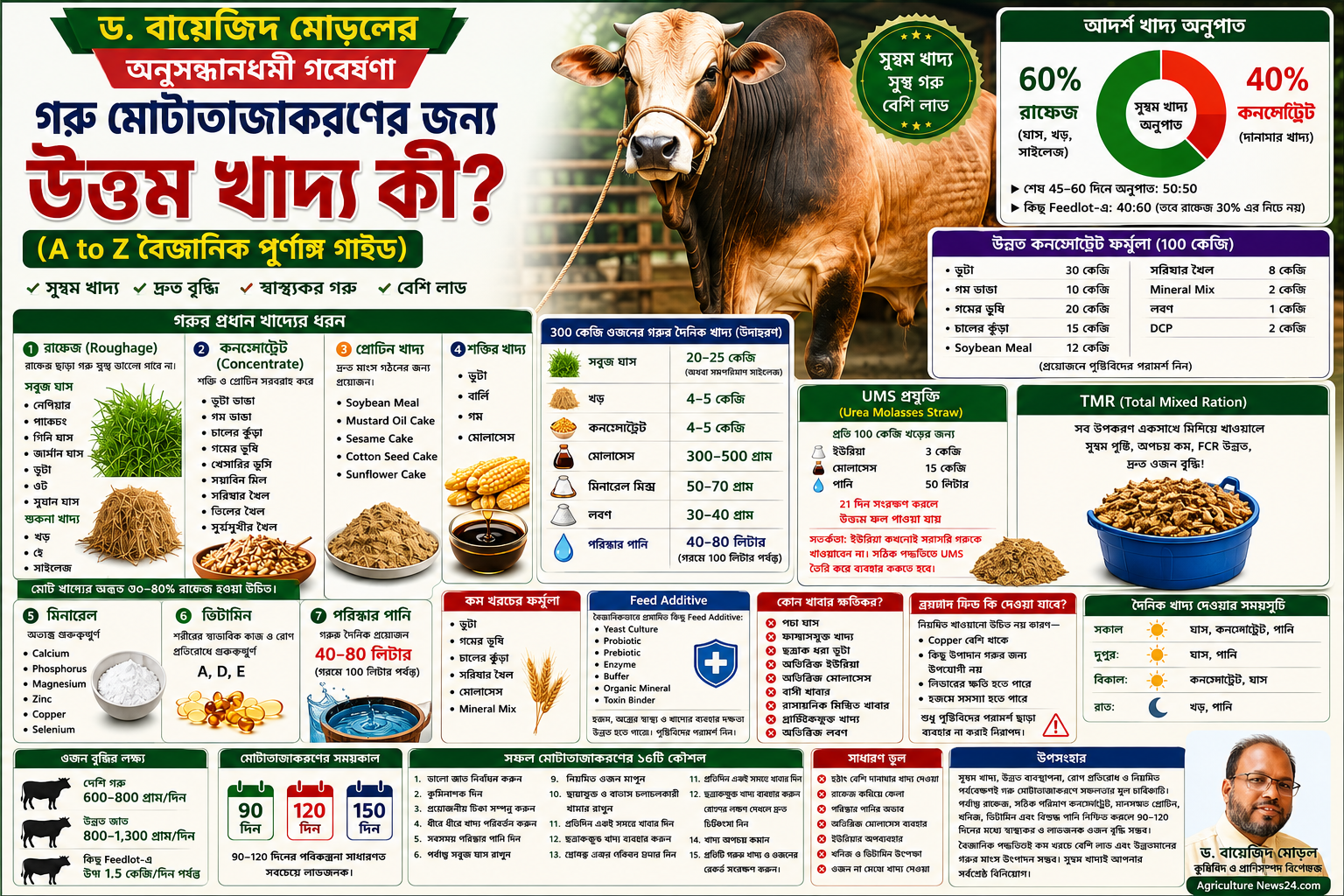
ড. বায়েজিদ মোড়লের অনুসন্ধ্যানধর্মী গবেষণা | গরু মোটাতাজাকরণের জন্য উত্তম খাদ্য কী? (A to Z বৈজ্ঞানিক পূর্ণাঙ্গ গাইড)।।
লেখক: ড. বায়েজিদ মোড়ল।।
Agriculture News24.com-এর জন্য গবেষণাধর্মী প্রতিবেদন।।
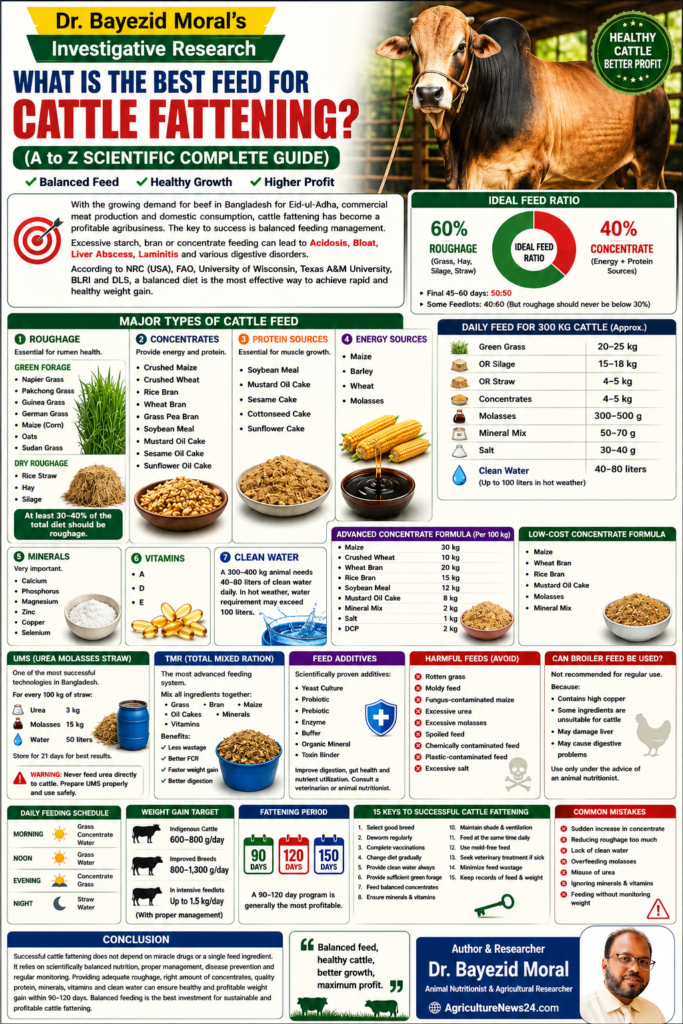
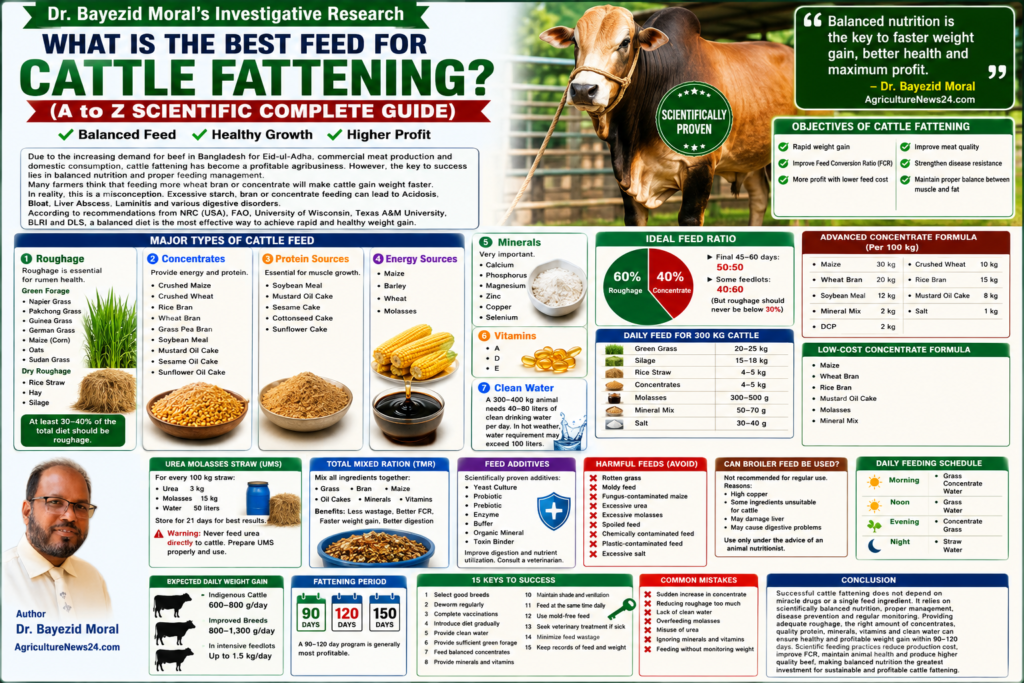
বাংলাদেশে কোরবানি, বাণিজ্যিক মাংস উৎপাদন এবং দেশীয় গরুর মাংসের চাহিদা বৃদ্ধির ফলে গরু মোটাতাজাকরণ একটি লাভজনক কৃষি ব্যবসায় পরিণত হয়েছে। তবে সফলতার মূল চাবিকাঠি হলো সুষম খাদ্য ব্যবস্থাপনা।
অনেক খামারি মনে করেন, বেশি ভুষি বা বেশি কনসেনট্রেট খেলালেই গরু দ্রুত মোটা হবে। বাস্তবে এটি ভুল ধারণা। অতিরিক্ত শর্করা, ভুষি বা দানাদার খাদ্য গরুর Acidosis, Bloat, Liver Abscess, Laminitis এবং হজমজনিত নানা সমস্যা সৃষ্টি করতে পারে।
বিশ্বের বিভিন্ন গবেষণা, বিশেষ করে NRC (National Research Council, USA), FAO, University of Wisconsin, Texas A&M University, Bangladesh Livestock Research Institute (BLRI) এবং বাংলাদেশ প্রাণিসম্পদ অধিদপ্তর (DLS)-এর সুপারিশ অনুযায়ী সুষম খাদ্যই দ্রুত ও স্বাস্থ্যকর ওজন বৃদ্ধির সবচেয়ে কার্যকর উপায়।
মোটাতাজাকরণের উদ্দেশ্য
- দ্রুত ওজন বৃদ্ধি
- Feed Conversion Ratio (FCR) উন্নত করা
- কম খরচে বেশি লাভ
- মাংসের মান বৃদ্ধি
- রোগ প্রতিরোধ ক্ষমতা বৃদ্ধি
- চর্বি ও মাংসের সঠিক ভারসাম্য
গরুর প্রধান খাদ্যের ধরন
১. রাফেজ (Roughage)
রাফেজ ছাড়া গরু সুস্থ থাকতে পারে না।
সবুজ ঘাস
- নেপিয়ার
- প্যাকচং
- গিনি ঘাস
- জার্মান ঘাস
- ভুট্টা
- ওট
- সুদান ঘাস
শুকনো খাদ্য
- খড়
- হে
- সাইলেজ
মোট খাদ্যের অন্তত ৩০–৪০% রাফেজ হওয়া উচিত।
২. কনসেনট্রেট (Concentrate)
এগুলো শক্তি ও প্রোটিন সরবরাহ করে।
উদাহরণ:
- ভুট্টা ভাঙা
- গম ভাঙা
- চালের কুঁড়া
- গমের ভূষি
- খেসারির ভুসি
- সয়াবিন মিল
- সরিষার খৈল
- তিলের খৈল
- সূর্যমুখীর খৈল
৩. প্রোটিন খাদ্য
দ্রুত মাংস গঠনের জন্য প্রয়োজন।
উৎস
- Soybean Meal
- Mustard Oil Cake
- Sesame Cake
- Cotton Seed Cake
- Sunflower Cake
৪. শক্তির খাদ্য
- ভুট্টা
- বার্লি
- গম
- মোলাসেস
৫. মিনারেল
অত্যন্ত গুরুত্বপূর্ণ।
প্রয়োজন
- Calcium
- Phosphorus
- Magnesium
- Zinc
- Copper
- Selenium
৬. Vitamin
- A
- D
- E
৭. পরিষ্কার পানি
একটি ৩০০–৪০০ কেজি গরুর দৈনিক প্রয়োজন ৪০–৮০ লিটার পানি।
গরমে ১০০ লিটারও লাগতে পারে।
আদর্শ খাদ্য অনুপাত
গবেষণা অনুযায়ী
৬০% Roughage
৪০% Concentrate
শেষ ৪৫–৬০ দিনে ৫০:৫০
কিছু Feedlot-এ ৪০:৬০
তবে এর নিচে Roughage নামানো উচিত নয়।
৩০০ কেজি ওজনের গরুর দৈনিক খাদ্য
সবুজ ঘাস
২০–২৫ কেজি
অথবা
সাইলেজ
১৫–১৮ কেজি
অথবা
খড়
৪–৫ কেজি
কনসেনট্রেট
৪–৫ কেজি
মোলাসেস
৩০০–৫০০ গ্রাম
মিনারেল মিক্স
৫০–৭০ গ্রাম
লবণ
৩০–৪০ গ্রাম
উন্নত কনসেনট্রেট ফর্মুলা (১০০ কেজি)
ভুট্টা – ৩০ কেজি
গম ভাঙা – ১০ কেজি
গমের ভূষি – ২০ কেজি
চালের কুঁড়া – ১৫ কেজি
Soybean Meal – ১২ কেজি
সরিষার খৈল – ৮ কেজি
Mineral Mix – ২ কেজি
লবণ – ১ কেজি
DCP – ২ কেজি
কম খরচের ফর্মুলা
ভুট্টা
গমের ভূষি
চালের কুঁড়া
সরিষার খৈল
মোলাসেস
Mineral Mix
Urea Molasses Straw (UMS)
বাংলাদেশে সবচেয়ে সফল প্রযুক্তির একটি।
প্রতি ১০০ কেজি খড়
- ইউরিয়া ৩ কেজি
- মোলাসেস ১৫ কেজি
- পানি ৫০ লিটার
২১ দিন সংরক্ষণ করলে ভালো ফল পাওয়া যায়।
সতর্কতা: ইউরিয়া কখনোই সরাসরি গরুকে খাওয়ানো যাবে না। UMS সঠিক পদ্ধতিতে প্রস্তুত করে ব্যবহার করতে হবে।
Total Mixed Ration (TMR)
বর্তমানে সবচেয়ে উন্নত প্রযুক্তি।
একসাথে মিশিয়ে
- ঘাস
- ভুষি
- ভুট্টা
- খৈল
- মিনারেল
- ভিটামিন
খাওয়ানো হয়।
সুবিধা
- অপচয় কম
- FCR ভালো
- দ্রুত ওজন বৃদ্ধি
- হজম ভালো
Feed Additive
বৈজ্ঞানিকভাবে প্রমাণিত কিছু Feed Additive:
- Yeast Culture
- Probiotic
- Prebiotic
- Enzyme
- Buffer
- Organic Mineral
- Toxin Binder
এসব ব্যবহার করলে হজম, অন্ত্রের স্বাস্থ্য ও খাদ্যের ব্যবহার দক্ষতা উন্নত হতে পারে। প্রয়োজনে পশুচিকিৎসক বা প্রাণিপুষ্টিবিদের পরামর্শ নিন।
কোন খাবার ক্ষতিকর?
নিচের খাদ্য কখনোই দেবেন না—
- পচা ঘাস
- ফাঙ্গাসযুক্ত খাদ্য
- ছত্রাক ধরা ভুট্টা
- অতিরিক্ত ইউরিয়া
- অতিরিক্ত মোলাসেস
- বাসি খাবার
- রাসায়নিক মিশ্রিত খাবার
- প্লাস্টিকযুক্ত খাদ্য
- অতিরিক্ত লবণ
ব্রয়লার ফিড কি দেওয়া যাবে?
অনেকেই ব্রয়লার মুরগির ফিড গরুকে খাওয়ান।
এটি নিয়মিত দেওয়া উচিত নয়।
কারণ—
- Copper বেশি থাকে
- কিছু উপাদান গরুর জন্য উপযোগী নয়
- লিভারের ক্ষতি হতে পারে
- হজমে সমস্যা হতে পারে
শুধু পশু পুষ্টিবিদের পরামর্শ ছাড়া এটি ব্যবহার না করাই নিরাপদ।
দৈনিক খাদ্য দেওয়ার সময়সূচি
সকাল
- ঘাস
- কনসেনট্রেট
- পানি
দুপুর
- ঘাস
- পানি
বিকেল
- কনসেনট্রেট
- ঘাস
রাত
- খড়
- পানি
ওজন বৃদ্ধির লক্ষ্য
ভালো ব্যবস্থাপনায় দেশি গরু প্রতিদিন ৬০০–৮০০ গ্রাম
উন্নত জাত ৮০০–১,৩০০ গ্রাম
কিছু Feedlot-এ ১.৫ কেজি পর্যন্ত দৈনিক ওজন বৃদ্ধি সম্ভব।
মোটাতাজাকরণের সময়কাল
- ৯০ দিন
- ১২০ দিন
- ১৫০ দিন
৯০–১২০ দিনের পরিকল্পনা সাধারণত সবচেয়ে লাভজনক।
সফল মোটাতাজাকরণের ১৫টি কৌশল
১. ভালো জাত নির্বাচন করুন।
২. কৃমিনাশক দিন।
৩. প্রয়োজনীয় টিকা সম্পন্ন করুন।
৪. ধীরে ধীরে খাদ্য পরিবর্তন করুন।
৫. সবসময় পরিষ্কার পানি দিন।
৬. পর্যাপ্ত সবুজ ঘাস রাখুন।
৭. সুষম কনসেনট্রেট ব্যবহার করুন।
৮. মিনারেল ও ভিটামিন নিশ্চিত করুন।
৯. নিয়মিত ওজন মাপুন।
১০. ছায়াযুক্ত ও বাতাস চলাচলকারী খামার রাখুন।
১১. প্রতিদিন একই সময়ে খাবার দিন।
১২. ছত্রাকমুক্ত খাদ্য ব্যবহার করুন।
১৩. রোগের লক্ষণ দেখলে দ্রুত চিকিৎসা নিন।
১৪. খাদ্য অপচয় কমান।
১৫. প্রতিটি গরুর খাদ্য ও ওজনের রেকর্ড সংরক্ষণ করুন।
সাধারণ ভুল
- হঠাৎ বেশি দানাদার খাদ্য দেওয়া।
- রাফেজ কমিয়ে ফেলা।
- পরিষ্কার পানির অভাব।
- অতিরিক্ত মোলাসেস ব্যবহার।
- ইউরিয়ার অপব্যবহার।
- খনিজ ও ভিটামিন উপেক্ষা।
- ওজন না মেপে খাদ্য দেওয়া।
উপসংহার
গরু মোটাতাজাকরণের সাফল্য কোনো জাদুকরী ওষুধ বা একক খাদ্যের ওপর নির্ভর করে না; এটি নির্ভর করে বৈজ্ঞানিকভাবে সুষম খাদ্য, উন্নত ব্যবস্থাপনা, রোগ প্রতিরোধ এবং নিয়মিত পর্যবেক্ষণের ওপর। পর্যাপ্ত রাফেজ, সঠিক পরিমাণ কনসেনট্রেট, মানসম্মত প্রোটিন, খনিজ, ভিটামিন এবং বিশুদ্ধ পানি নিশ্চিত করা গেলে ৯০–১২০ দিনের মধ্যে স্বাস্থ্যকর ও লাভজনক ওজন বৃদ্ধি সম্ভব।
খামারিরা যদি বৈজ্ঞানিক খাদ্য ব্যবস্থাপনা অনুসরণ করেন, তবে উৎপাদন খরচ কমবে, Feed Conversion Ratio (FCR) উন্নত হবে, পশুর স্বাস্থ্য ভালো থাকবে এবং মাংসের গুণগত মানও বৃদ্ধি পাবে। টেকসই ও লাভজনক গরু মোটাতাজাকরণের জন্য সুষম খাদ্যই সবচেয়ে বড় বিনিয়োগ।
Dr. Bayezid Moral’s Investigative Research
What Is the Best Feed for Cattle Fattening? (A to Z Scientific Complete Guide)
Author: Dr. Bayezid Moral
A Research-Based Report for AgricultureNews24.com
Introduction
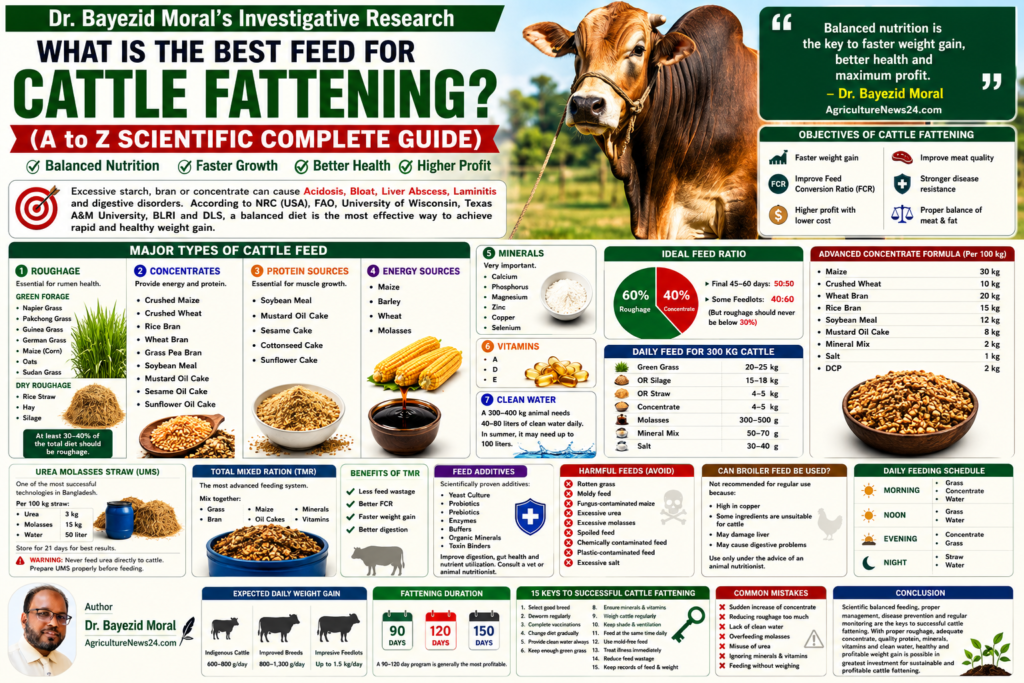
With the growing demand for beef in Bangladesh for Eid-ul-Adha, commercial meat production, and domestic consumption, cattle fattening has become a highly profitable agribusiness. However, the key to success lies in balanced nutrition and proper feeding management.
Many farmers believe that feeding more wheat bran or concentrate will make cattle gain weight faster. In reality, this is a misconception. Excessive starch, bran, or concentrate feeding can lead to Acidosis, Bloat, Liver Abscess, Laminitis, and various digestive disorders.
According to recommendations from internationally recognized organizations and institutions such as the National Research Council (NRC, USA), FAO, the University of Wisconsin, Texas A&M University, the Bangladesh Livestock Research Institute (BLRI), and the Department of Livestock Services (DLS), Bangladesh, a balanced diet is the most effective way to achieve rapid and healthy weight gain.
Objectives of Cattle Fattening
- Achieve rapid weight gain
- Improve Feed Conversion Ratio (FCR)
- Increase profitability with lower feed costs
- Improve meat quality
- Strengthen disease resistance
- Maintain the proper balance between muscle and fat
Major Types of Cattle Feed
1. Roughage
Roughage is essential for maintaining rumen health and overall well-being.
Green Forage
- Napier Grass
- Pakchong Grass
- Guinea Grass
- German Grass
- Maize (Corn)
- Oats
- Sudan Grass
Dry Roughage
- Rice Straw
- Hay
- Silage
At least 30–40% of the total diet should consist of roughage.
2. Concentrates
Concentrates provide energy and protein.
Examples include:
- Crushed Maize
- Crushed Wheat
- Rice Bran
- Wheat Bran
- Grass Pea Bran
- Soybean Meal
- Mustard Oil Cake
- Sesame Oil Cake
- Sunflower Oil Cake
3. Protein Sources
Protein is essential for rapid muscle development.
Examples:
- Soybean Meal
- Mustard Oil Cake
- Sesame Cake
- Cottonseed Cake
- Sunflower Cake
4. Energy Sources
- Maize
- Barley
- Wheat
- Molasses
5. Minerals
Minerals are vital for growth and metabolism.
Important minerals include:
- Calcium
- Phosphorus
- Magnesium
- Zinc
- Copper
- Selenium
6. Vitamins
- Vitamin A
- Vitamin D
- Vitamin E
7. Clean Water
A 300–400 kg animal requires approximately 40–80 liters of clean drinking water per day.
During hot weather, water requirements may exceed 100 liters daily.
Ideal Feed Ratio
Scientific recommendations suggest:
- 60% Roughage
- 40% Concentrates
During the final 45–60 days before marketing:
- 50:50 Roughage : Concentrate
Some commercial feedlots use:
- 40:60 Roughage : Concentrate
However, roughage should never be reduced below 30% of the total ration.
Daily Feed Requirement for a 300 kg Animal
Green Grass
20–25 kg
OR
Silage
15–18 kg
OR
Rice Straw
4–5 kg
Concentrates
4–5 kg
Molasses
300–500 g
Mineral Mixture
50–70 g
Salt
30–40 g
Advanced Concentrate Formula (Per 100 kg)
- Maize – 30 kg
- Crushed Wheat – 10 kg
- Wheat Bran – 20 kg
- Rice Bran – 15 kg
- Soybean Meal – 12 kg
- Mustard Oil Cake – 8 kg
- Mineral Mix – 2 kg
- Salt – 1 kg
- Dicalcium Phosphate (DCP) – 2 kg
Low-Cost Concentrate Formula
- Maize
- Wheat Bran
- Rice Bran
- Mustard Oil Cake
- Molasses
- Mineral Mix
Urea Molasses Straw (UMS)
UMS is one of the most successful cattle feeding technologies practiced in Bangladesh.
For every 100 kg of straw:
- Urea – 3 kg
- Molasses – 15 kg
- Water – 50 liters
Store the mixture for 21 days before feeding for the best results.
Warning: Never feed urea directly to cattle. UMS must always be prepared according to the recommended method.
Total Mixed Ration (TMR)
TMR is one of the most advanced feeding systems available today.
It combines all feed ingredients into a single balanced ration, including:
- Grass
- Bran
- Maize
- Oil Cakes
- Minerals
- Vitamins
Benefits
- Reduced feed wastage
- Improved Feed Conversion Ratio (FCR)
- Faster weight gain
- Better digestion
Feed Additives
Scientifically proven feed additives include:
- Yeast Culture
- Probiotics
- Prebiotics
- Enzymes
- Buffers
- Organic Minerals
- Toxin Binders
These additives improve digestion, gut health, and nutrient utilization. Consult a veterinarian or animal nutritionist before use.
Harmful Feeds to Avoid
Never feed cattle:
- Rotten grass
- Moldy feed
- Fungus-contaminated maize
- Excessive urea
- Excessive molasses
- Spoiled feed
- Chemically contaminated feed
- Plastic-contaminated feed
- Excessive salt
Can Broiler Feed Be Used?
Many farmers feed broiler poultry feed to cattle.
Routine use is not recommended because:
- It often contains excessive copper.
- Some ingredients are unsuitable for cattle.
- It may damage the liver.
- It can cause digestive disorders.
It should only be used under the supervision of a qualified animal nutritionist.
Daily Feeding Schedule
Morning
- Grass
- Concentrates
- Water
Noon
- Grass
- Water
Evening
- Concentrates
- Grass
Night
- Straw
- Water
Expected Daily Weight Gain
With proper management:
Indigenous Cattle
600–800 g/day
Improved Breeds
800–1,300 g/day
Some intensive commercial feedlots may achieve:
Up to 1.5 kg/day
Recommended Fattening Period
- 90 Days
- 120 Days
- 150 Days
A 90–120 day feeding program is generally considered the most profitable.
15 Keys to Successful Cattle Fattening
- Select healthy and superior breeds.
- Deworm regularly.
- Complete all recommended vaccinations.
- Introduce dietary changes gradually.
- Ensure continuous access to clean drinking water.
- Provide sufficient green forage.
- Feed balanced concentrate rations.
- Supply adequate minerals and vitamins.
- Monitor body weight regularly.
- Maintain a well-ventilated and shaded housing system.
- Feed cattle at the same time every day.
- Use mold-free feed ingredients.
- Seek veterinary treatment immediately if illness occurs.
- Minimize feed wastage.
- Keep proper records of feed intake and body weight.
Common Feeding Mistakes
- Suddenly increasing concentrate feeding
- Reducing roughage excessively
- Providing insufficient clean water
- Feeding too much molasses
- Misusing urea
- Ignoring minerals and vitamins
- Feeding without monitoring body weight
Conclusion
Successful cattle fattening does not depend on miracle drugs or a single feed ingredient. Instead, it relies on scientifically balanced nutrition, proper management, disease prevention, and continuous monitoring.
Providing adequate roughage, appropriate levels of concentrates, high-quality protein, essential minerals, vitamins, and clean drinking water can ensure healthy and profitable weight gain within 90–120 days.
Farmers who adopt scientific feeding practices can reduce production costs, improve Feed Conversion Ratio (FCR), maintain healthier cattle, and produce higher-quality beef. In modern beef production, balanced nutrition is the greatest investment for sustainable and profitable cattle fattening.