















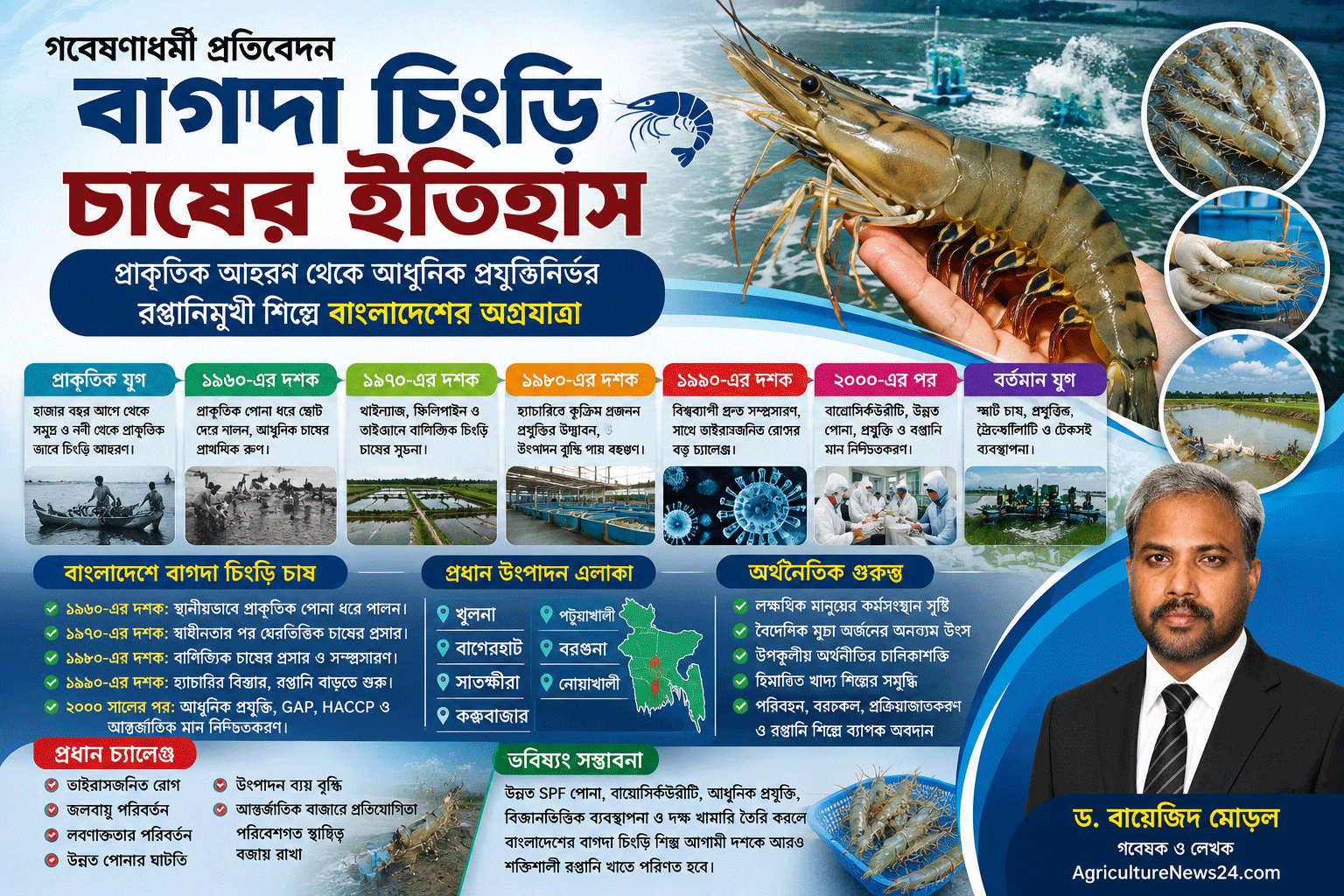
বাগদা চিংড়ি চাষের ইতিহাস//ড. বায়েজিদ মোড়লের গবেষণাধর্মী প্রতিবেদন।।
বাগদা চিংড়ি (বৈজ্ঞানিক নাম: Penaeus monodon) বিশ্বের অন্যতম মূল্যবান সামুদ্রিক চিংড়ি। আন্তর্জাতিক বাজারে এটি Black Tiger Shrimp নামে পরিচিত। সুস্বাদু মাংস, বড় আকার, উচ্চ রপ্তানি মূল্য এবং চাষের লাভজনকতার কারণে বাগদা চিংড়ি দক্ষিণ ও দক্ষিণ-পূর্ব এশিয়ার বহু দেশে একটি গুরুত্বপূর্ণ রপ্তানিমুখী কৃষি-শিল্পে পরিণত হয়েছে। বাংলাদেশের উপকূলীয় অঞ্চলেও বাগদা চিংড়ি চাষ বৈদেশিক মুদ্রা অর্জনের অন্যতম প্রধান উৎস।
বাগদা চিংড়ির প্রাকৃতিক ইতিহাস
বাগদা চিংড়ির উৎপত্তি ভারত-প্রশান্ত মহাসাগরীয় (Indo-Pacific) অঞ্চলে। এটি প্রাকৃতিকভাবে পাওয়া যায়—
- বাংলাদেশ
- ভারত
- মিয়ানমার
- থাইল্যান্ড
- ভিয়েতনাম
- মালয়েশিয়া
- ইন্দোনেশিয়া
- ফিলিপাইন
- শ্রীলঙ্কা
- অস্ট্রেলিয়া
প্রাকৃতিক পরিবেশে এরা নদীর মোহনা, লবণাক্ত খাল, ম্যানগ্রোভ বন এবং সমুদ্র উপকূলে বসবাস করে।
প্রাচীন যুগে চিংড়ি আহরণ
হাজার হাজার বছর আগে থেকেই মানুষ নদী ও সমুদ্র থেকে চিংড়ি সংগ্রহ করত।
তখন—
- কোনো কৃত্রিম চাষ ছিল না।
- সম্পূর্ণ প্রাকৃতিকভাবে মাছ ও চিংড়ি ধরা হতো।
- স্থানীয় জনগোষ্ঠী খাদ্য হিসেবে ব্যবহার করত।
- অতিরিক্ত চিংড়ি শুকিয়ে সংরক্ষণ করা হতো।
আধুনিক বাগদা চাষের সূচনা
১৯৫০-এর দশকের আগে পৃথিবীতে বাগদা চাষ বলতে তেমন কিছু ছিল না।
তখন মানুষ—
- জোয়ারের পানির সঙ্গে ঢুকে পড়া প্রাকৃতিক পোনা ধরে
- ছোট ঘেরে বড় করত।
এটি ছিল আধুনিক চাষের প্রাথমিক রূপ।
১৯৬০-এর দশক
এই সময়ে—
থাইল্যান্ড ও ফিলিপাইনে গবেষকরা বাগদা চাষ নিয়ে গবেষণা শুরু করেন।
মূল গবেষণা ছিল—
- পোনা সংগ্রহ
- খাদ্য
- বৃদ্ধি
- পানির গুণগত মান
- উৎপাদন বাড়ানো
১৯৭০-এর দশক: বাণিজ্যিক যুগের শুরু
১৯৭০-এর দশককে বাগদা চাষের বাণিজ্যিক যুগের সূচনা বলা হয়।
এই সময়—
- থাইল্যান্ড
- তাইওয়ান
- ফিলিপাইন
বড় আকারে চিংড়ি চাষ শুরু করে।
বিশ্ববাজারে হিমায়িত চিংড়ির চাহিদা দ্রুত বাড়তে থাকে।
১৯৮০-এর দশক: হ্যাচারির বিপ্লব
এটি ছিল সবচেয়ে গুরুত্বপূর্ণ সময়।
প্রথমবারের মতো—
- কৃত্রিম প্রজনন
- হ্যাচারিতে পোনা উৎপাদন
- রোগ নিয়ন্ত্রণ
- উন্নত খাদ্য
ব্যাপকভাবে ব্যবহৃত হতে শুরু করে।
এর ফলে—
- উৎপাদন কয়েকগুণ বৃদ্ধি পায়।
- প্রাকৃতিক পোনার ওপর নির্ভরতা কমে যায়।
১৯৯০-এর দশক
এই সময়ে—
বিশ্বজুড়ে বাগদা চাষ দ্রুত সম্প্রসারিত হয়।
প্রধান উৎপাদক দেশগুলো—
- থাইল্যান্ড
- ইন্দোনেশিয়া
- ভারত
- ভিয়েতনাম
- বাংলাদেশ
একই সময়ে ভাইরাসজনিত রোগ বিশেষ করে White Spot Syndrome Virus (WSSV) বড় চ্যালেঞ্জ হয়ে ওঠে।
২০০০-এর দশক
এই সময় বায়োসিকিউরিটি গুরুত্ব পায়।
উন্নয়ন ঘটে—
- SPF Broodstock
- উন্নত হ্যাচারি
- পানির মান নিয়ন্ত্রণ
- উন্নত ফিড
- রোগ নির্ণয় প্রযুক্তি
বর্তমান যুগ
আজ বাগদা চাষে ব্যবহার হচ্ছে—
- Biosecurity Farm
- Smart Water Management
- Automatic Aerator
- Water Quality Sensor
- PCR Disease Test
- Traceability System
- Export Quality Certification
বাংলাদেশে বাগদা চাষের ইতিহাস
বাংলাদেশে বাগদা চাষের ইতিহাস অত্যন্ত সমৃদ্ধ।
১৯৬০-এর দশক
খুলনা, সাতক্ষীরা ও বাগেরহাট অঞ্চলে স্থানীয়ভাবে প্রাকৃতিক পোনা ধরে ঘেরে পালন করা হতো।
১৯৭০-এর দশক
স্বাধীনতার পর উপকূলীয় এলাকায় ঘেরভিত্তিক চিংড়ি চাষ জনপ্রিয় হতে শুরু করে।
১৯৮০-এর দশক
এ সময় শুরু হয় প্রকৃত বাণিজ্যিক বাগদা চাষ।
বিশেষ করে—
- খুলনা
- বাগেরহাট
- সাতক্ষীরা
- কক্সবাজার
অঞ্চলে দ্রুত সম্প্রসারণ ঘটে।
১৯৯০-এর দশক
বাংলাদেশে একের পর এক হ্যাচারি স্থাপিত হয়।
চিংড়ি রপ্তানি দেশের অন্যতম বৈদেশিক মুদ্রা অর্জনকারী খাতে পরিণত হয়।
২০০০ সালের পর
সরকার ও বেসরকারি প্রতিষ্ঠান কাজ শুরু করে—
- উন্নত পোনা
- রোগ নিয়ন্ত্রণ
- GAP
- HACCP
- Export Certification
বাংলাদেশের প্রধান বাগদা উৎপাদন এলাকা
- খুলনা
- বাগেরহাট
- সাতক্ষীরা
- কক্সবাজার
- পটুয়াখালী
- বরগুনা
- নোয়াখালী
অর্থনৈতিক গুরুত্ব
বাংলাদেশের বাগদা শিল্প—
- লক্ষাধিক মানুষের কর্মসংস্থান সৃষ্টি করেছে।
- বৈদেশিক মুদ্রা অর্জনের অন্যতম উৎস।
- উপকূলীয় অর্থনীতির চালিকাশক্তি।
- হিমায়িত খাদ্য শিল্পকে সমৃদ্ধ করেছে।
- পরিবহন, বরফকল, প্রক্রিয়াজাতকরণ ও রপ্তানি শিল্পে ব্যাপক অবদান রাখছে।
প্রধান চ্যালেঞ্জ
বর্তমানে বাগদা শিল্পের সামনে কয়েকটি বড় চ্যালেঞ্জ রয়েছে—
- ভাইরাসজনিত রোগ
- জলবায়ু পরিবর্তন
- লবণাক্ততার পরিবর্তন
- উন্নত পোনার ঘাটতি
- উৎপাদন ব্যয় বৃদ্ধি
- আন্তর্জাতিক বাজারে প্রতিযোগিতা
- পরিবেশগত স্থায়িত্ব বজায় রাখা
ভবিষ্যৎ সম্ভাবনাযদি বাংলাদেশে—
- উন্নত SPF পোনা উৎপাদন,
- আধুনিক হ্যাচারি,
- বায়োসিকিউরিটি,
- বিজ্ঞানভিত্তিক খাদ্য ব্যবস্থাপনা,
- আন্তর্জাতিক মানের ট্রেসেবিলিটি,
- এবং দক্ষ খামারি প্রশিক্ষণ
নিশ্চিত করা যায়, তাহলে বাগদা চিংড়ি শিল্প আগামী দশকে দেশের অন্যতম শক্তিশালী রপ্তানি খাতে পরিণত হতে পারে।
সমাপনী মূল্যায়ন
বাগদা চিংড়ি চাষের ইতিহাস মূলত প্রাকৃতিক আহরণ থেকে বিজ্ঞানভিত্তিক বাণিজ্যিক চাষে রূপান্তরের ইতিহাস। ১৯৭০-এর দশকে যে শিল্পের বাণিজ্যিক যাত্রা শুরু হয়েছিল, তা আজ অত্যাধুনিক প্রযুক্তিনির্ভর রপ্তানিমুখী খাতে পরিণত হয়েছে। বাংলাদেশের উপকূলীয় অঞ্চল এই শিল্পের একটি গুরুত্বপূর্ণ কেন্দ্র। যথাযথ গবেষণা, উন্নত প্রযুক্তি, রোগ নিয়ন্ত্রণ এবং টেকসই ব্যবস্থাপনা নিশ্চিত করা গেলে বাগদা চিংড়ি বাংলাদেশের নীল অর্থনীতি (Blue Economy) ও রপ্তানি আয়ের অন্যতম প্রধান ভিত্তি হিসেবে আরও শক্তিশালী ভূমিকা পালন করবে।
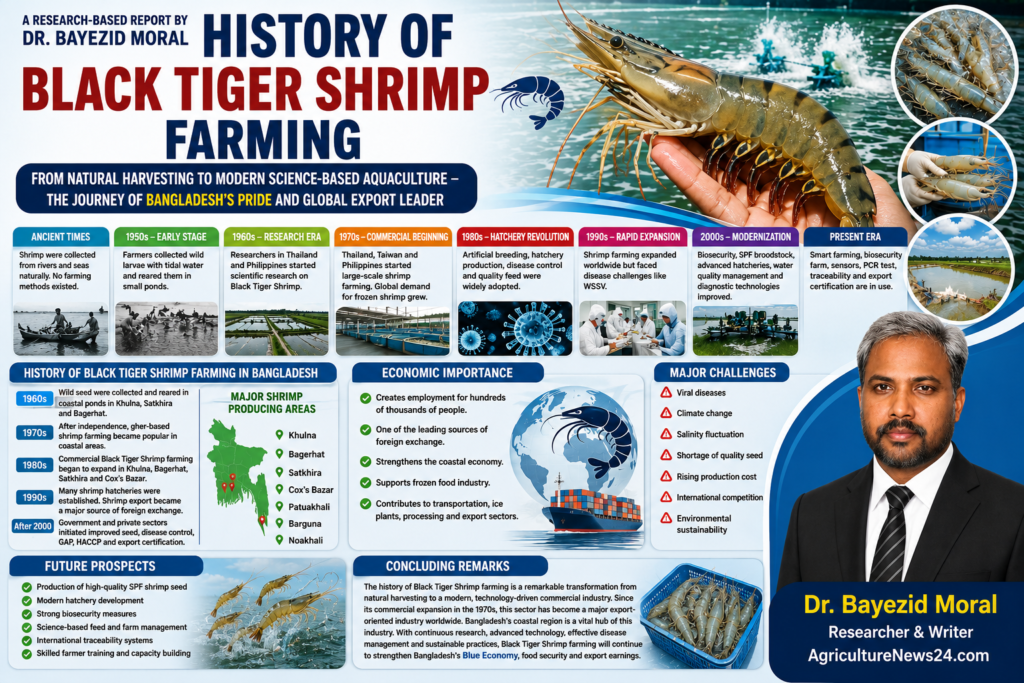
History of Black Tiger Shrimp Farming
A Research-Based Report by Dr. Bayezid Moral
(A Reference Guide for Students, Researchers, Farmers, and Aquaculture Professionals)
Introduction
The Black Tiger Shrimp (Penaeus monodon) is one of the world’s most valuable marine shrimp species. Internationally recognized as the Black Tiger Shrimp, it is highly prized for its large size, excellent taste, and premium export value. Due to its profitability and strong global demand, Black Tiger Shrimp farming has become a major export-oriented aquaculture industry across South and Southeast Asia. In Bangladesh, shrimp farming is one of the country’s leading sources of foreign exchange earnings and plays a significant role in the coastal economy.
Natural History of Black Tiger Shrimp
The Black Tiger Shrimp originated in the Indo-Pacific region and is naturally distributed across:
- Bangladesh
- India
- Myanmar
- Thailand
- Vietnam
- Malaysia
- Indonesia
- Philippines
- Sri Lanka
- Australia
In nature, this species inhabits estuaries, mangrove forests, tidal canals, brackish water lagoons, and coastal marine environments.
Shrimp Harvesting in Ancient Times
People have harvested shrimp from rivers and seas for thousands of years.
During this period:
- There was no artificial farming.
- Shrimp were collected entirely from natural waters.
- Coastal communities used shrimp as an important food source.
- Surplus shrimp were sun-dried and preserved for future consumption.
The Beginning of Modern Black Tiger Shrimp Farming
Before the 1950s, commercial Black Tiger Shrimp farming was virtually nonexistent.
At that time:
- Farmers collected naturally occurring shrimp larvae entering ponds with tidal water.
- The larvae were reared in simple earthen ponds until market size.
This practice marked the earliest form of modern shrimp culture.
The 1960s
During the 1960s, researchers in Thailand and the Philippines began scientific studies on Black Tiger Shrimp culture.
Research mainly focused on:
- Seed collection
- Nutrition
- Growth performance
- Water quality management
- Production improvement
The 1970s: Beginning of Commercial Farming
The 1970s marked the beginning of commercial Black Tiger Shrimp farming.
Countries such as:
- Thailand
- Taiwan
- The Philippines
started large-scale commercial shrimp production.
At the same time, global demand for frozen shrimp increased rapidly.
The 1980s: The Hatchery Revolution
The 1980s became a milestone in shrimp aquaculture.
For the first time, the industry widely adopted:
- Artificial breeding
- Hatchery-produced post-larvae
- Disease management
- Commercial formulated feeds
As a result:
- Production increased dramatically.
- Dependence on wild shrimp seed declined significantly.
The 1990s
During the 1990s, Black Tiger Shrimp farming expanded rapidly worldwide.
Major producing countries included:
- Thailand
- Indonesia
- India
- Vietnam
- Bangladesh
However, the industry also faced serious disease outbreaks, particularly White Spot Syndrome Virus (WSSV), which caused substantial production losses.
The 2000s
Biosecurity became a major priority during this decade.
Key developments included:
- SPF (Specific Pathogen Free) broodstock
- Modern hatchery technology
- Improved water quality management
- High-quality commercial feeds
- Advanced disease diagnostic techniques
The Present Era
Modern Black Tiger Shrimp farming now incorporates advanced technologies, including:
- Biosecurity farming systems
- Smart water management
- Automatic aerators
- Water quality sensors
- PCR disease diagnostics
- Traceability systems
- International export quality certification
History of Black Tiger Shrimp Farming in Bangladesh
Bangladesh has a rich history of Black Tiger Shrimp farming.
The 1960s
Farmers in Khulna, Satkhira, and Bagerhat traditionally collected wild shrimp seed and reared them in coastal ponds.
The 1970s
Following Bangladesh’s independence, shrimp farming expanded rapidly throughout the coastal belt, with gher-based culture becoming increasingly popular.
The 1980s
Commercial Black Tiger Shrimp farming began to flourish.
Major production zones included:
- Khulna
- Bagerhat
- Satkhira
- Cox’s Bazar
Shrimp farming expanded rapidly across these regions.
The 1990s
Numerous shrimp hatcheries were established across the country.
Shrimp exports became one of Bangladesh’s leading sources of foreign exchange earnings.
After 2000
Government agencies and private organizations introduced:
- Improved shrimp seed
- Disease control programs
- Good Aquaculture Practices (GAP)
- HACCP standards
- Export certification systems
Major Black Tiger Shrimp Producing Areas in Bangladesh
- Khulna
- Bagerhat
- Satkhira
- Cox’s Bazar
- Patuakhali
- Barguna
- Noakhali
Economic Importance
The Black Tiger Shrimp industry in Bangladesh has:
- Created employment opportunities for hundreds of thousands of people.
- Become one of the country’s leading sources of foreign exchange.
- Strengthened the coastal economy.
- Supported the frozen seafood processing industry.
- Contributed significantly to transportation, ice production, processing, packaging, and export sectors.
Major Challenges
Despite its success, the industry continues to face several major challenges:
- Viral diseases
- Climate change
- Salinity fluctuations
- Shortage of quality shrimp seed
- Rising production costs
- Increasing international competition
- Environmental sustainability concerns
Future Prospects
Bangladesh has tremendous potential to strengthen its Black Tiger Shrimp industry by ensuring:
- Production of high-quality SPF shrimp seed
- Modern hatchery facilities
- Strong biosecurity measures
- Science-based feeding and farm management
- International traceability systems
- Continuous farmer training and capacity building
With these improvements, the Black Tiger Shrimp sector could become one of Bangladesh’s strongest export industries over the coming decade.
Conclusion
The history of Black Tiger Shrimp farming is a story of transformation—from traditional harvesting of wild shrimp to a modern, science-based commercial aquaculture industry. Since its commercial expansion during the 1970s, the sector has evolved into a technology-driven export industry that plays a vital role in global seafood production.
Bangladesh’s coastal region remains one of the country’s most important centers for Black Tiger Shrimp farming. Through continued research, technological innovation, effective disease management, and sustainable farming practices, the industry can further strengthen its contribution to Bangladesh’s Blue Economy, food security, rural livelihoods, and foreign exchange earnings in the years ahead.