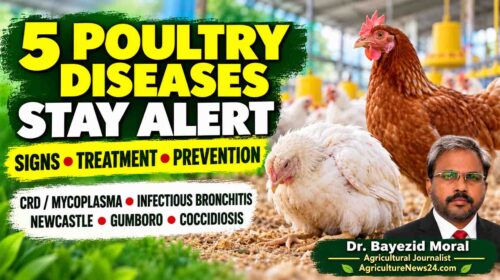
















মুরগির হাঁচি-কাশি থেকে হঠাৎ মৃত্যু: পাঁচ রোগের লক্ষণ, চিকিৎসা ও খামার রক্ষার উপায়।।
আবহাওয়া পরিবর্তনের সময়ে বাড়তি নজর চাই; দ্রুত রোগ শনাক্ত, সঠিক চিকিৎসা ও খামার ব্যবস্থাপনাই ক্ষতি কমানোর প্রধান পথ।।
কৃষি সাংবাদিক ড. বায়েজিদ মোড়লের অভিজ্ঞতাভিত্তিক প্রতিবেদন।।
সম্পাদক, AgricultureNews24.com
দীর্ঘ ২৬ বছরের কৃষি সাংবাদিকতায় দেশের বিভিন্ন অঞ্চলের খামারে ঘুরে মুরগি পালনের সাফল্যের পাশাপাশি রোগে বিপর্যস্ত খামারিদেরও দেখেছি। দীর্ঘদিন প্রয়াত পশুচিকিৎসক ডা. নুরুল আমীন সাহেবের সঙ্গে কাজের সুবাদে খামারের রোগবালাই ও চিকিৎসা ব্যবস্থাপনা কাছ থেকে দেখার সুযোগ হয়েছে। পরবর্তী সময়ে ডা. মেহেদী হাসান ভূঁইয়ার সঙ্গে বিভিন্ন খামারে গিয়ে তাঁর রোগ নির্ণয়, চিকিৎসা ও খামারিদের পরামর্শ দেওয়ার কার্যক্রম দেখছি। এসব অভিজ্ঞতায় একটি বিষয় বারবার সামনে এসেছে—রোগের শুরুতে সঠিক ব্যবস্থা নিতে পারলে অনেক ক্ষেত্রেই ক্ষতির মাত্রা কমানো সম্ভব।
আবহাওয়া পরিবর্তনের এই সময়ে মুরগির হাঁচি-কাশি, শ্বাসে ঘড়ঘড় শব্দ, খাবার কম খাওয়া, পাতলা পায়খানা কিংবা ডিম কমে যাওয়ার মতো লক্ষণ অবহেলা করা উচিত নয়। সিআরডি বা মাইকোপ্লাজমা সংক্রমণ, ইনফেকশাস ব্রংকাইটিস, রানীক্ষেত, গামবোরো ও ককসিডিওসিস—এই পাঁচ রোগ সম্পর্কে খামারিদের স্পষ্ট ধারণা থাকা প্রয়োজন।
তবে এই পাঁচ রোগ এখন দেশের সর্বত্র ছড়িয়ে পড়েছে—এমন সিদ্ধান্ত নিতে নজরদারি ও পরীক্ষার তথ্য প্রয়োজন। খামারে এসব রোগ হতে পারে ধরে প্রস্তুত থাকা এবং লক্ষণ দেখা দিলে দ্রুত ব্যবস্থা নেওয়াই এই প্রতিবেদনের উদ্দেশ্য।
রোগের নাম ধরে ওষুধ দেওয়ার আগে যা বুঝতে হবে
হাঁচি-কাশি হলেই সিআরডি, সবুজ পায়খানা হলেই রানীক্ষেত কিংবা রক্তমিশ্রিত পায়খানা হলেই ককসিডিওসিস—এভাবে নিশ্চিত হওয়া যায় না। একই লক্ষণ একাধিক রোগে দেখা যায়। আবার একটি মুরগির দলে একসঙ্গে একাধিক সংক্রমণও থাকতে পারে।
ঘরে অ্যামোনিয়া, ধুলা, ভেজা লিটার, অতিরিক্ত গরম বা ঠান্ডা এবং বাতাস চলাচলের ঘাটতিও শ্বাসতন্ত্রের সমস্যা বাড়ায়। তাই চিকিৎসার শুরুতে রোগের ইতিহাস, বয়স, টিকার তথ্য, দৈনিক মৃত্যুহার ও ঘরের পরিবেশ দেখতে হবে। প্রয়োজনে পশুচিকিৎসকের মাধ্যমে ময়নাতদন্ত ও পরীক্ষাগারে নমুনা পরীক্ষা করতে হবে।
নিচের চিকিৎসা নির্দেশনা রোগভিত্তিক করণীয় বোঝানোর জন্য। ওষুধের মাত্রা ও মেয়াদ নির্ধারণ করতে হবে মুরগির ওজন, পানি খাওয়ার পরিমাণ, ওষুধের ঘনত্ব এবং ডিম বা মাংসে ব্যবহারের অনুমোদন বিবেচনা করে।
১. সিআরডি বা মাইকোপ্লাজমা সংক্রমণ: ঘড়ঘড় শব্দ শুনলেই সতর্ক হোন
মাইকোপ্লাজমা, বিশেষ করে Mycoplasma gallisepticum, মুরগির দীর্ঘস্থায়ী শ্বাসতন্ত্রের সমস্যার গুরুত্বপূর্ণ কারণ। এর সঙ্গে অন্য জীবাণুর সংক্রমণ ও প্রতিকূল পরিবেশ যুক্ত হলে রোগ জটিল হতে পারে।
প্রাথমিক লক্ষণ: হাঁচি-কাশি, নাক দিয়ে পানি, চোখে পানি বা ফেনা, শ্বাসে ঘড়ঘড় শব্দ, খাবার কম খাওয়া ও বৃদ্ধি কমে যাওয়া। কোনো কোনো ক্ষেত্রে চোখের আশপাশ ফুলতে পারে। লেয়ারে ডিম উৎপাদনও কমতে পারে।
আক্রান্ত হলে চিকিৎসা ও করণীয়: প্রথমেই ঘরের বাতাস, ধুলা ও অ্যামোনিয়ার সমস্যা ঠিক করতে হবে। ভেজা লিটার সরাতে হবে এবং মুরগির ওপর সরাসরি ঠান্ডা বাতাস লাগা বন্ধ করতে হবে।
পশুচিকিৎসক রোগ নির্ণয়ের ভিত্তিতে মাইকোপ্লাজমার বিরুদ্ধে কার্যকর ও অনুমোদিত অ্যান্টিমাইক্রোবিয়াল নির্বাচন করতে পারেন। কিছু ক্ষেত্রে টাইলসিন বা ডক্সিসাইক্লিনজাতীয় ওষুধ বিবেচিত হয়; তবে সব পণ্য ডিম উৎপাদনরত মুরগির জন্য অনুমোদিত নয়। নিজে থেকে ওষুধ নির্বাচন বা একাধিক অ্যান্টিবায়োটিক মেশানো উচিত নয়।
চিকিৎসায় লক্ষণ কমলেও মুরগি সংক্রমণের বাহক থেকে যেতে পারে। তাই সুস্থ দেখালেই সংক্রমণ পুরোপুরি দূর হয়েছে ধরে নেওয়া যাবে না।
প্রতিরোধ: নির্ভরযোগ্য উৎস থেকে বাচ্চা সংগ্রহ, বিভিন্ন বয়সের মুরগি আলাদা রাখা, আক্রান্ত দল থেকে সুস্থ দলে যাতায়াত নিয়ন্ত্রণ এবং পর্যাপ্ত বায়ু চলাচল নিশ্চিত করা জরুরি। প্রজনন খামারে মাইকোপ্লাজমা নিয়ন্ত্রণ বিশেষ গুরুত্বপূর্ণ, কারণ সংক্রমিত মা-মুরগি থেকে ডিমের মাধ্যমেও বাচ্চায় সংক্রমণ যেতে পারে।
২. ইনফেকশাস ব্রংকাইটিস—আইবি: শ্বাসতন্ত্রের পাশাপাশি ডিম ও কিডনিতেও প্রভাব
আইবি একটি দ্রুত ছড়ানো ভাইরাসজনিত রোগ। ভাইরাসের ধরন ও মুরগির বয়স অনুযায়ী শ্বাসতন্ত্র, প্রজননতন্ত্র বা কিডনি আক্রান্ত হতে পারে।
প্রাথমিক লক্ষণ: দ্রুত অনেক মুরগির মধ্যে হাঁচি-কাশি ছড়িয়ে পড়া, শ্বাসে শব্দ, নাক দিয়ে পানি এবং খাবার কম খাওয়া। ছোট বাচ্চায় শ্বাসকষ্ট বেশি হতে পারে।
লেয়ারে হঠাৎ ডিম কমে যাওয়া, পাতলা বা বিকৃত খোলস এবং ডিমের সাদা অংশ বেশি পানির মতো হওয়া দেখা যেতে পারে। কিডনি আক্রান্ত হলে পানি খাওয়া বেড়ে যাওয়া, ভেজা বিষ্ঠা ও সাদা ইউরেট বেশি দেখা দিতে পারে।
আক্রান্ত হলে চিকিৎসা ও করণীয়: আইবি ভাইরাস দূর করার নির্দিষ্ট ওষুধ নেই। চিকিৎসার মূল লক্ষ্য হলো মুরগিকে সহায়তা দেওয়া এবং জটিলতা কমানো। বয়স অনুযায়ী আরামদায়ক তাপমাত্রা, পরিষ্কার পানি ও পর্যাপ্ত বায়ু চলাচল নিশ্চিত করতে হবে।
পানিশূন্যতা থাকলে পশুচিকিৎসকের পরামর্শে উপযুক্ত ইলেক্ট্রোলাইট দেওয়া যেতে পারে। কিডনি আক্রান্ত হওয়ার সন্দেহ থাকলে ওষুধ ও পানির ব্যবস্থাপনায় বিশেষ সতর্কতা প্রয়োজন।
অ্যান্টিবায়োটিক আইবি ভাইরাসের চিকিৎসা নয়। দ্বিতীয় পর্যায়ের ব্যাকটেরিয়াজনিত সংক্রমণ থাকলে পশুচিকিৎসক প্রয়োজন অনুযায়ী ব্যবহার করতে পারেন।
প্রতিরোধ: স্থানীয় ঝুঁকি ও প্রচলিত ভাইরাসের ধরন বিবেচনায় পশুচিকিৎসকের পরামর্শে টিকাসূচি তৈরি করতে হবে। শুধু টিকা দেওয়ার তারিখ ঠিক রাখলেই হবে না—সংরক্ষণ, প্রয়োগপদ্ধতি ও পুরো দলে সঠিকভাবে পৌঁছানোও জরুরি। আক্রান্ত খামারের সরঞ্জাম ও লোকজনের মাধ্যমে সংক্রমণ প্রবেশ ঠেকাতে হবে।
৩. রানীক্ষেত—নিউক্যাসল: দ্রুত মৃত্যু ও স্নায়বিক লক্ষণে জরুরি ব্যবস্থা
রানীক্ষেত ভাইরাসজনিত রোগ। ভাইরাসের তীব্রতা, মুরগির বয়স ও রোগ প্রতিরোধক্ষমতার ওপর ক্ষতির মাত্রা নির্ভর করে।
প্রাথমিক লক্ষণ: ঝিমানো, খাবার কমে যাওয়া, শ্বাসকষ্ট, কাশি, ডিম উৎপাদন কমা এবং কখনো সবুজাভ পাতলা পায়খানা।
তীব্র অবস্থায় ঘাড় বেঁকে যাওয়া, পা বা ডানা অবশ হওয়া, ভারসাম্য হারানো এবং দ্রুত অনেক মুরগির মৃত্যু হতে পারে। তবে সবুজ পায়খানা একা রানীক্ষেতের প্রমাণ নয়।
আক্রান্ত হলে চিকিৎসা ও করণীয়: রানীক্ষেতের ভাইরাস নির্মূল করার নির্দিষ্ট চিকিৎসা নেই। সন্দেহ হলে আক্রান্ত মুরগির চলাচল বন্ধ করে দ্রুত পশুচিকিৎসক বা উপজেলা প্রাণিসম্পদ দপ্তরকে জানাতে হবে।
পরিষ্কার পানি, উপযুক্ত পরিবেশ ও প্রয়োজনভিত্তিক সহায়ক চিকিৎসা দেওয়া হয়। ব্যাকটেরিয়ার জটিলতা থাকলে চিকিৎসক পৃথক ব্যবস্থা নেবেন। অ্যান্টিবায়োটিক দিয়ে রানীক্ষেত সারানো যায় না।
হঠাৎ বেশি মৃত্যু, তীব্র শ্বাসকষ্ট, ঝুঁটি নীলচে হওয়া বা স্নায়বিক লক্ষণ দেখা দিলে বার্ড ফ্লুসহ অন্য গুরুতর রোগও বাদ দিতে হবে। মৃত মুরগি নিজে কাটাছেঁড়া না করে পরীক্ষার জন্য কর্তৃপক্ষের সহায়তা নিন। অসুস্থ বা মৃত মুরগি বিক্রি, জবাই বা খাওয়ার জন্য ব্যবহার করবেন না।
প্রতিরোধ: সঠিক টিকাসূচি, টিকার কার্যকারিতা বজায় রাখা ও কঠোর জীবাণুনিরাপত্তা প্রধান ব্যবস্থা। টিকা রোগ প্রতিরোধের উপায়; ইতিমধ্যে অসুস্থ মুরগি সারানোর ওষুধ নয়। আক্রান্ত খামারে জরুরি টিকা দেওয়া হবে কি না, তা পশুচিকিৎসক পরিস্থিতি দেখে সিদ্ধান্ত নেবেন।
৪. গামবোরো: অল্পবয়সী মুরগিতে রোগ প্রতিরোধক্ষমতার ওপর আঘাত
গামবোরো বা ইনফেকশাস বার্সাল ডিজিজ মুরগির রোগ প্রতিরোধ ব্যবস্থাকে ক্ষতিগ্রস্ত করে। সাধারণত তিন থেকে ছয় সপ্তাহ বয়সে প্রকাশ্য রোগ বেশি দেখা যায়; আরও কম বয়সে সংক্রমণ হলে স্পষ্ট লক্ষণ ছাড়াও রোগ প্রতিরোধক্ষমতা ক্ষতিগ্রস্ত হতে পারে।
প্রাথমিক লক্ষণ: হঠাৎ ঝিমানো, পালক ফুলিয়ে বসে থাকা, খাবার কম খাওয়া, পানির মতো বা সাদাটে পায়খানা এবং পায়ুপথের চারপাশ নোংরা হওয়া। পানিশূন্যতা ও দ্রুত মৃত্যু দেখা দিতে পারে।
আক্রান্ত হলে চিকিৎসা ও করণীয়: গামবোরোর ভাইরাসের বিরুদ্ধে নির্দিষ্ট চিকিৎসা নেই। পরিষ্কার পানি সহজে পাওয়ার ব্যবস্থা, প্রয়োজন অনুযায়ী ইলেক্ট্রোলাইট এবং আরামদায়ক পরিবেশ নিশ্চিত করাই সহায়ক চিকিৎসার ভিত্তি।
দুর্বল মুরগি পানির কাছে যেতে পারছে কি না, তা দেখতে হবে। পানির পাত্র বাড়ানোর প্রয়োজন হতে পারে। কিডনিতে চাপ বাড়াতে পারে এমন ওষুধ নিজে থেকে দেওয়া উচিত নয়। দ্বিতীয় পর্যায়ের সংক্রমণ হলে পশুচিকিৎসক চিকিৎসা নির্ধারণ করবেন।
প্রতিরোধ: মাতৃজাত অ্যান্টিবডি, বাচ্চার উৎস ও খামারের ঝুঁকি অনুযায়ী টিকার সময় নির্ধারণ জরুরি। সব খামারে একই দিনে একই টিকাসূচি সমান কার্যকর নাও হতে পারে।
গামবোরোর ভাইরাস পরিবেশে টিকে থাকতে পারে। তাই পুরোনো লিটার সরানো, জৈব ময়লা পরিষ্কার, উপযুক্ত জীবাণুনাশক সঠিক ঘনত্বে ব্যবহার এবং ব্যাচের মধ্যবর্তী বিরতি গুরুত্বপূর্ণ।
৫. ককসিডিওসিস: রক্ত আসার আগেই রোগ শুরু হতে পারে
ককসিডিওসিস Eimeria নামের পরজীবীর কারণে হয়। ভেজা লিটার, পানির লিকেজ ও অতিরিক্ত ঘনত্ব রোগের চাপ বাড়াতে পারে।
প্রাথমিক লক্ষণ: খাবার কমে যাওয়া, বৃদ্ধি থেমে যাওয়া, পালক এলোমেলো থাকা, ঝিমানো এবং পাতলা বা শ্লেষ্মাযুক্ত পায়খানা। কিছু ধরনের সংক্রমণে রক্তমিশ্রিত বিষ্ঠা দেখা যায়। সব ককসিডিওসিসে রক্ত দেখা যায় না।
আক্রান্ত হলে চিকিৎসা ও করণীয়: পশুচিকিৎসক বিষ্ঠা পরীক্ষা ও প্রয়োজনে ময়নাতদন্তের মাধ্যমে রোগ শনাক্ত করে অনুমোদিত ককসিডিওসিসের ওষুধ নির্বাচন করবেন। অ্যামপ্রোলিয়াম বা টলট্রাজুরিলজাতীয় উপাদান কিছু পরিস্থিতিতে বিবেচিত হতে পারে; কিন্তু পণ্যের অনুমোদন, মুরগির ধরন এবং ডিম-মাংসের প্রত্যাহারকাল যাচাই ছাড়া ব্যবহার করা যাবে না।
খাদ্যে আগে থেকেই কোন ককসিডিওস্ট্যাট আছে, তা চিকিৎসককে জানাতে হবে। একই সঙ্গে ভেজা লিটার সরানো, পানির লিক বন্ধ এবং খাবার-পানির পাত্রে বিষ্ঠা পড়া ঠেকাতে হবে।
প্রতিরোধ: খামারের জন্য পরিকল্পিত টিকা বা অনুমোদিত খাদ্যভিত্তিক নিয়ন্ত্রণ কর্মসূচি নিতে হবে। ককসিডিয়ার ডিম্বক অনেক সাধারণ জীবাণুনাশকে সহজে নষ্ট হয় না। তাই শুধু জীবাণুনাশক ছিটিয়ে নিশ্চিন্ত হলে চলবে না—লিটার শুকনা রাখা ও ভালোভাবে পরিষ্কার করা অত্যন্ত গুরুত্বপূর্ণ।
খামারে রোগ দেখা দিলে প্রথম দিনেই যে কাজগুলো করবেন
১. হিসাব লিখুন: মোট মুরগি, বয়স, অসুস্থ ও মৃতের সংখ্যা, খাবার-পানি গ্রহণ এবং ডিম উৎপাদনের পরিবর্তন নথিবদ্ধ করুন।
২. চলাচল নিয়ন্ত্রণ করুন: আক্রান্ত শেডের কর্মী, জুতা, খাঁচা ও সরঞ্জাম অন্য শেডে ব্যবহার বন্ধ করুন। সম্ভব হলে সুস্থ শেডের কাজ আগে এবং আক্রান্ত শেডের কাজ শেষে করুন।
৩. পরিবেশ পরীক্ষা করুন: তাপমাত্রা, বায়ু চলাচল, লিটার, অ্যামোনিয়া ও পানির লিক দেখুন। ঠান্ডার ভয়ে ঘর পুরো বন্ধ করে দেবেন না।
৪. চিকিৎসককে সম্পূর্ণ তথ্য দিন: টিকার তারিখ, ব্যবহৃত ওষুধ, খাদ্যে থাকা ওষুধ এবং রোগ শুরু হওয়ার সময় জানান। সম্ভব হলে ওষুধ শুরুর আগেই প্রয়োজনীয় নমুনা সংগ্রহের ব্যবস্থা করুন; তবে জরুরি চিকিৎসা বিলম্ব করবেন না।
৫. মৃত মুরগি নিরাপদে ব্যবস্থাপনা করুন: খোলা জায়গা, খাল বা পুকুরে ফেলবেন না। স্থানীয় প্রাণিসম্পদ দপ্তরের নির্দেশনায় নিষ্পত্তি করুন।
যেসব খামারে রোগ হয়নি: এখন থেকেই প্রতিরোধ
বাচ্চা ও ব্যাচ ব্যবস্থাপনা: নির্ভরযোগ্য উৎসের বাচ্চা নিন। একই শেডে বিভিন্ন বয়সের মুরগি মেশানো এড়িয়ে চলুন। সম্ভব হলে একসঙ্গে মুরগি তোলা এবং একসঙ্গে শেড খালি করার ব্যবস্থা অনুসরণ করুন।
পরিষ্কার ও জীবাণুমুক্তকরণ: ব্যাচ শেষে লিটার ও জৈব ময়লা সরিয়ে পরিষ্কার, ধোয়া ও শুকানোর পর উপযুক্ত জীবাণুনাশক ব্যবহার করুন। নোংরা ফুটবাথে শুধু জীবাণুনাশক ঢাললে কার্যকর সুরক্ষা পাওয়া যায় না।
বাতাস ও লিটার: বয়স অনুযায়ী তাপমাত্রা রাখুন। সরাসরি ঠান্ডা বাতাস ঠেকিয়েও ঘরের আর্দ্রতা ও ক্ষতিকর গ্যাস বের হওয়ার ব্যবস্থা রাখতে হবে। পানির পাত্রের উচ্চতা ও চাপ ঠিক রাখুন।
খাদ্য ও পানি: নিরাপদ পানি, পরিষ্কার পানির লাইন এবং ছত্রাকমুক্ত সুষম খাদ্য নিশ্চিত করুন। ভিটামিন বা তথাকথিত ইমিউনিটি বুস্টার টিকা ও জীবাণুনিরাপত্তার বিকল্প নয়।
টিকা: খামারভিত্তিক লিখিত টিকাসূচি রাখুন। টিকার সংরক্ষণ, মেয়াদ, মিশ্রণ ও প্রয়োগে ভুল হলে সুরক্ষা কমতে পারে। পানির মাধ্যমে টিকা দেওয়ার সময় সংশ্লিষ্ট পণ্যের নির্দেশনা মেনে চলুন।
ওষুধে শৃঙ্খলা: রোগ ঠেকানোর নামে নিয়মিত অ্যান্টিবায়োটিক ব্যবহার করবেন না। চিকিৎসা লাগলে নির্ধারিত মাত্রা ও মেয়াদ অনুসরণ করুন। ডিম বা মাংস বাজারজাত করার আগে ওষুধের প্রত্যাহারকাল মানুন। ডিমের জন্য অনুমোদিত নয় এমন পণ্য শুধু কয়েক দিন ডিম ফেলে দিলেই ব্যবহারযোগ্য হয়ে যায় না।
খামার বাঁচাতে প্রতিদিনের পর্যবেক্ষণই বড় শক্তি
দীর্ঘ মাঠ-অভিজ্ঞতায় দেখেছি, খামারি যখন মুরগির স্বাভাবিক আচরণ ভালোভাবে চেনেন, তখন অস্বাভাবিক পরিবর্তনও দ্রুত ধরতে পারেন। খাবারের কাছে কম ভিড়, পানির ব্যবহার বদলে যাওয়া, সন্ধ্যায় অস্বাভাবিক শ্বাসের শব্দ কিংবা ডিম উৎপাদনে হঠাৎ পতন—এসবই আগাম সতর্কতার সংকেত হতে পারে।
অসুস্থ খামারে দ্রুত রোগ নির্ণয় ও প্রয়োজনভিত্তিক চিকিৎসা; সুস্থ খামারে টিকা, জীবাণুনিরাপত্তা ও ভালো ব্যবস্থাপনা—এই সমন্বিত চর্চাই ক্ষতি কমানোর পথ। কোনো ব্যবস্থাই শতভাগ নিশ্চয়তা দেয় না, কিন্তু নিয়মিত নজরদারি ও সময়মতো সিদ্ধান্ত বড় বিপর্যয়ের ঝুঁকি কমাতে পারে।
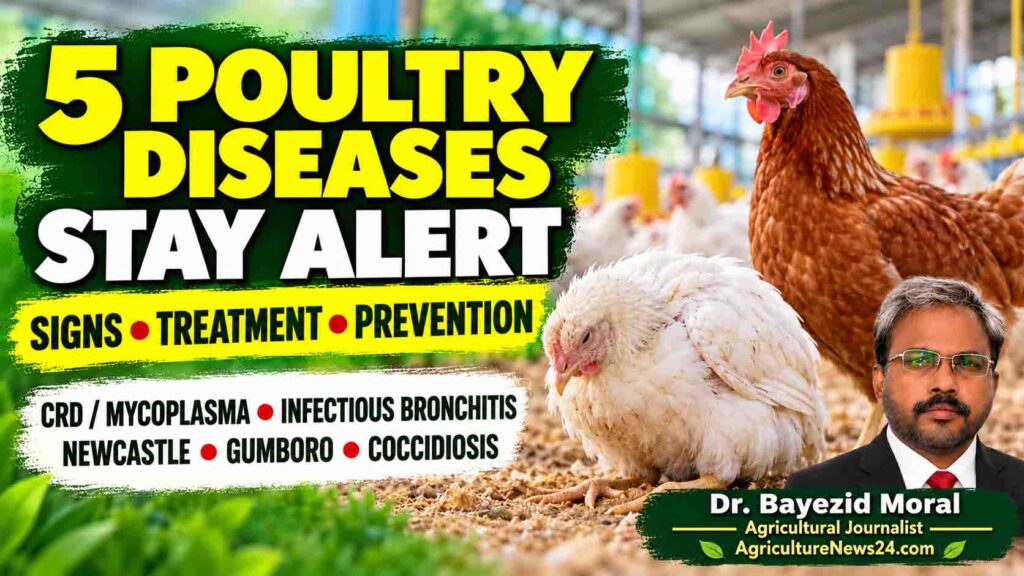
From Coughing to Sudden Death in Chickens: Signs, Treatment and Prevention of Five Major Poultry Diseases
Closer monitoring during seasonal changes, early diagnosis and proper farm management can help reduce losses
A field-experience-based report by agricultural journalist Dr. Bayezid Moral
Editor, AgricultureNews24.com
During 26 years of agricultural journalism, I have visited poultry farms across Bangladesh and witnessed both successful farming and devastating losses caused by disease. Working closely with the late veterinarian Dr. Nurul Amin gave me valuable opportunities to observe poultry diseases, treatment and farm management firsthand. Subsequently, I have accompanied Dr. Mehedi Hasan Bhuiyan on farm visits, observing his diagnostic work, treatment and advice to farmers.
One lesson has emerged repeatedly from these experiences: recognising a problem early and taking the right action can often reduce losses.
During seasonal changes, symptoms such as sneezing, coughing, rattling breathing, reduced feed intake, diarrhoea and declining egg production deserve immediate attention. Farmers should understand five important diseases: chronic respiratory disease associated with Mycoplasma infection, infectious bronchitis, Newcastle disease, infectious bursal disease and coccidiosis.
However, claiming that all five diseases are currently widespread across Bangladesh would require surveillance and laboratory evidence. This report aims to help farmers prepare for these risks and respond promptly when signs appear.
Understand the Problem Before Choosing a Medicine
Sneezing does not automatically mean Mycoplasma infection. Green droppings alone do not confirm Newcastle disease, and bloody droppings do not establish coccidiosis without further assessment. Several diseases produce similar signs, and more than one infection may affect a flock simultaneously.
Ammonia, dust, wet litter, unsuitable temperatures and poor ventilation can also cause or worsen respiratory problems. Diagnosis should therefore consider the flock’s age, vaccination history, daily mortality, disease history and housing conditions. Veterinary postmortem examination and laboratory testing may be necessary.
The treatment information below explains disease-specific approaches. Medicine doses and treatment duration must be determined according to body weight, water consumption, product concentration and approval for use in meat-producing or egg-laying birds.
1. Mycoplasma Infection and Chronic Respiratory Disease: Take Rattling Breathing Seriously
Mycoplasma, particularly Mycoplasma gallisepticum, is an important cause of chronic respiratory problems in chickens. Other infections and poor environmental conditions can make the disease more severe.
Early signs: Sneezing, coughing, nasal discharge, watery or foamy eyes, rattling breathing, reduced feed intake and slower growth. Swelling around the eyes may occur. Egg production may decline in laying hens.
Treatment and immediate management: First, correct ventilation problems and reduce dust and ammonia. Remove wet litter and prevent cold air from blowing directly onto birds.
Following diagnosis, a veterinarian may select an effective, approved antimicrobial. Medicines containing tylosin or doxycycline may be considered in some circumstances. However, not every product is approved for laying hens producing eggs for human consumption. Farmers should avoid choosing medicines independently or mixing several antibiotics.
Treatment may reduce clinical signs without eliminating infection. Recovered birds may remain carriers, so an apparently healthy flock should not automatically be considered free of Mycoplasma.
Prevention: Obtain chicks from reliable sources, separate age groups, restrict movement between affected and healthy flocks, and maintain adequate ventilation. Mycoplasma control is particularly important in breeding flocks because infection can pass from infected hens to chicks through eggs.
2. Infectious Bronchitis: Effects on Breathing, Eggs and Kidneys
Infectious bronchitis, or IB, is a rapidly spreading viral disease. Depending on the virus strain and the birds’ age, it may affect the respiratory tract, reproductive system or kidneys.
Early signs: Sneezing and coughing spreading quickly through the flock, abnormal respiratory sounds, nasal discharge and reduced feed intake. Young chicks may develop more pronounced breathing difficulties.
In laying hens, signs may include a sudden drop in egg production, thin or misshapen shells and unusually watery egg whites. Kidney involvement may cause increased drinking, wet droppings and excessive white urates.
Treatment and immediate management: There is no specific medicine that eliminates the IB virus. Treatment focuses on supporting affected birds and reducing complications. Provide an age-appropriate temperature, clean drinking water and adequate ventilation.
A veterinarian may recommend suitable electrolytes when birds are dehydrated. Suspected kidney involvement requires particular care in medicine selection and water management.
Antibiotics do not treat the IB virus. A veterinarian may prescribe them if a secondary bacterial infection requires treatment.
Prevention: Develop a vaccination programme with a veterinarian, considering local risks and circulating virus strains. Correct storage and administration—and ensuring that the vaccine reaches the entire flock—are as important as vaccination dates. Prevent the introduction of infection through people and equipment arriving from affected farms.
3. Newcastle Disease: Rapid Deaths and Nervous Signs Require Urgent Action
Newcastle disease is caused by a virus. Its severity depends on the virus strain, the birds’ age and their level of immunity.
Early signs: Depression, reduced feeding, breathing difficulties, coughing, falling egg production and sometimes greenish diarrhoea.
Severe cases may involve twisted necks, weakness or paralysis of the legs or wings, loss of balance and rapidly increasing deaths. Green droppings alone, however, do not confirm Newcastle disease.
Treatment and immediate management: There is no specific treatment that eliminates the Newcastle disease virus. If it is suspected, restrict the movement of affected birds and contact a veterinarian or the Upazila Livestock Office promptly.
Clean water, suitable housing conditions and appropriate supportive care may help affected birds. A veterinarian should assess any secondary bacterial complications. Antibiotics cannot cure Newcastle disease.
Sudden high mortality, severe respiratory distress, bluish combs or nervous signs also require investigation for other serious diseases, including avian influenza. Avoid opening carcasses yourself; seek official assistance with diagnostic sampling. Do not sell, slaughter or use sick or dead birds for food.
Prevention: Appropriate vaccination, proper vaccine handling and strict biosecurity are essential. Vaccines prevent disease; they are not medicines that cure birds already showing illness. A veterinarian should decide whether emergency vaccination is appropriate during a suspected outbreak.
4. Infectious Bursal Disease—Gumboro: An Attack on the Immune System
Infectious bursal disease, commonly known as Gumboro, damages the chicken’s immune system. Clinical disease occurs most commonly at around three to six weeks of age. Infection in younger birds may impair immunity without producing obvious signs.
Early signs: Sudden depression, sitting with ruffled feathers, reduced feeding, watery or whitish diarrhoea and soiling around the vent. Dehydration and rapidly increasing mortality may occur.
Treatment and immediate management: There is no specific treatment against the Gumboro virus. Supportive care centres on easy access to clean water, appropriate electrolytes when needed and comfortable environmental conditions.
Check whether weak birds can reach drinking water. Additional drinkers may be necessary. Avoid giving medicines that could place extra stress on the kidneys without veterinary advice. A veterinarian should assess and treat secondary infections when present.
Prevention: Vaccination timing should consider maternal antibodies, chick source and farm risk. The same vaccination schedule may not work equally well on every farm.
The virus can persist in the environment. Removing old litter, thoroughly cleaning away organic material, using a suitable disinfectant at the correct concentration and allowing an appropriate interval between flocks are important control measures.
5. Coccidiosis: Disease May Begin Before Blood Appears
Coccidiosis is caused by parasites belonging to the genus Eimeria. Wet litter, leaking drinkers and overcrowding can increase the challenge.
Early signs: Reduced feed intake, poor growth, untidy feathers, depression and loose or mucus-containing droppings. Some forms cause bloody droppings. Not every case of coccidiosis produces visible blood.
Treatment and immediate management: A veterinarian may diagnose the disease through faecal examination and, when necessary, postmortem findings before selecting an approved anticoccidial medicine.
Products containing amprolium or toltrazuril may be considered in certain circumstances. However, their approval, suitability for the particular class of bird and meat or egg withdrawal requirements must be checked before use.
Tell the veterinarian whether the feed already contains a coccidiostat. At the same time, remove wet litter, repair leaking drinkers and prevent droppings from contaminating feed and water.
Prevention: Establish an appropriate vaccination or approved feed-based control programme for the farm. Coccidial oocysts are resistant to many common disinfectants. Spraying disinfectant alone is therefore insufficient; thorough cleaning and dry litter are especially important.
What to Do on the First Day of a Suspected Outbreak
- Keep records: Note flock size, age, numbers sick and dead, feed and water intake, and changes in egg production.
- Control movement: Stop sharing workers’ footwear, crates and equipment between affected and unaffected houses. Where possible, attend to healthy houses first and affected houses last.
- Check the environment: Assess temperature, ventilation, litter condition, ammonia and water leaks. Do not seal the house completely because of cold weather.
- Give the veterinarian complete information: Provide vaccination dates, medicines already used, medicated-feed details and the time signs first appeared. Arrange sampling before treatment where practical, without delaying urgent care.
- Manage dead birds safely: Do not discard carcasses in open areas, canals or ponds. Follow local livestock authorities’ instructions for safe disposal.
Prevention for Farms That Have Not Yet Been Affected
Chicks and flock management: Purchase chicks from reliable sources. Avoid keeping different age groups in the same house. Where practical, follow an all-in, all-out system.
Cleaning and disinfection: After each flock, remove litter and organic material, clean, wash and dry the house, then apply a suitable disinfectant. Adding disinfectant to a dirty footbath does not provide reliable protection.
Ventilation and litter: Maintain temperatures appropriate for the birds’ age. Prevent direct cold draughts while allowing moisture and harmful gases to escape. Adjust drinker height and pressure to minimise spillage.
Feed and water: Provide safe water, clean water lines and balanced feed free from mould. Vitamins and products marketed as “immunity boosters” cannot replace vaccination and biosecurity.
Vaccination: Keep a written, farm-specific vaccination schedule. Errors in storage, expiry checks, mixing or administration can reduce protection. Follow the product instructions carefully when administering vaccines through drinking water.
Responsible medicine use: Do not use antibiotics routinely simply to “prevent disease.” When treatment is necessary, follow the prescribed dose and duration. Observe the withdrawal period before marketing eggs or meat. A product not approved for laying hens does not become suitable merely because eggs are discarded for a few days.
Daily Observation Is One of a Farmer’s Strongest Defences
My field experience has shown that farmers who know their flock’s normal behaviour are often better placed to notice problems early. Fewer birds gathering at feeders, changing water consumption, unusual breathing sounds in the evening or a sudden decline in egg production can all provide warning signs.
Affected farms need early diagnosis and appropriate treatment. Healthy farms need vaccination, biosecurity and sound daily management. No measure provides an absolute guarantee, but consistent observation and timely decisions can reduce the risk of major losses.