
















১ হাজার লেয়ার মুরগির খামার: কত পুঁজি, কত ঝুঁকি, কখন লাভ?
প্রতিদিন ডিম বিক্রি মানেই প্রতিদিন লাভ নয়; বাচ্চা তোলার আগে বুঝতে হবে পুরো উৎপাদনচক্রের হিসাব।।
কৃষি সাংবাদিক ড. বায়েজিদ মোড়লের গবেষণাধর্মী প্রতিবেদন।।

সকালে খামার থেকে ডিম বের হচ্ছে, ব্যবসায়ী এসে নিয়ে যাচ্ছেন, হাতে টাকাও আসছে। বাইরে থেকে দেখলে মনে হতে পারে, লেয়ার মুরগির খামার মানেই প্রতিদিনের নিশ্চিত আয়। কিন্তু সেই টাকা থেকে খাদ্যের বিল, শ্রম, বিদ্যুৎ, পরিবহন ও ঋণের কিস্তি মেটানোর পর খামারির হাতে কত থাকে? মুরগি কেনা ও ডিম দেওয়া শুরুর আগের কয়েক মাসের ব্যয়ই বা উঠে আসে কখন?
আমার প্রায় ২৬ বছরের কৃষি সাংবাদিকতায় দেশের বিভিন্ন অঞ্চলের খামারি ও পোল্ট্রি বিশেষজ্ঞদের কাছ থেকে জানা, দেখা ও শোনা অভিজ্ঞতা মিলিয়ে একটি বিষয় বারবার সামনে এসেছে—লেয়ার খামারে উৎপাদনের পাশাপাশি অর্থের প্রবাহ বুঝতে হয়। ভালো মুরগি, উপযুক্ত খাদ্য ও যত্নের সঙ্গে প্রয়োজন পর্যাপ্ত চলতি মূলধন, নির্ভরযোগ্য বাজার এবং নিয়মিত হিসাব।
হাজার মুরগির খামার একটি পরিবারের আয়ের ভিত্তি হতে পারে। আবার অসম্পূর্ণ হিসাব নিয়ে শুরু করলে একই খামার ঋণের বোঝাও বাড়াতে পারে। তাই প্রশ্ন শুধু ‘কত লাভ হবে’ নয়; প্রশ্ন হলো, কত টাকা নিয়ে শুরু করলে খামারটি প্রতিকূল সময়েও চালু রাখা সম্ভব?
হিসাবের ভিত্তি: এই প্রতিবেদনের বাজেট ও লাভ-লোকসানের সারণিগুলো ব্যাখ্যামূলক মডেল; এগুলো বর্তমান বাজারদরের তালিকা বা কোনো নির্দিষ্ট খামারের নিরীক্ষিত হিসাব নয়। বিনিয়োগের আগে স্থানীয় বাচ্চা, খাদ্য, নির্মাণসামগ্রী, সরঞ্জাম ও খামার পর্যায়ের ডিমের দর বসিয়ে হিসাব হালনাগাদ করতে হবে।
১ হাজার বাচ্চা মানেই প্রতিদিন ১ হাজার ডিম নয়
নতুন উদ্যোক্তাদের হিসাবে প্রথম ভুলটি প্রায়ই এখানেই হয়। এক হাজার বাচ্চা তুললেই উৎপাদনকালে প্রতিদিন এক হাজার বিক্রয়যোগ্য ডিম পাওয়া যাবে—এমন অনুমান বাস্তবসম্মত নয়। পালনকালে মৃত্যু বা বাদ পড়া, বয়সভেদে উৎপাদনের পরিবর্তন, ছোট ও ভাঙা ডিম—সবকিছু হিসাবের মধ্যে রাখতে হবে।
উন্নত বাণিজ্যিক লেয়ার নির্দিষ্ট ব্যবস্থাপনায় উচ্চ উৎপাদন দিতে পারে। তবে জাতের নির্দেশিকায় দেওয়া উৎপাদনকে নিজের খামারের নিশ্চিত ফল ধরে নেওয়া ঠিক হবে না। হাই-লাইন ব্রাউনের ডিসেম্বর ২০২৫ নির্দেশিকায় প্রায় ১৩৯ দিনে ৫০ শতাংশ উৎপাদনে পৌঁছানোর মানদণ্ড দেওয়া হয়েছে; স্থানীয় পরিবেশ ও ব্যবস্থাপনায় ফল ভিন্ন হতে পারে। hyline.com
প্রথম ডিম পাওয়া, ভালো উৎপাদনে পৌঁছানো এবং বিনিয়োগ ফেরত পাওয়া—এই তিনটি আলাদা বিষয়। ব্যবসার পরিকল্পনাতেও এগুলো আলাদা করে দেখতে হবে।
কত পুঁজি নিয়ে শুরু করবেন?
১ হাজার লেয়ারের খামারে কত টাকা লাগবে, তার একটি সর্বজনীন উত্তর নেই। নিজের জমি ও ব্যবহারযোগ্য শেড থাকলে হিসাব এক রকম। নতুন শেড, খাঁচা, পানির ব্যবস্থা ও বিদ্যুৎ সংযোগ করতে হলে আরেক রকম।
এক দিনের বাচ্চা কিনে বড় করবেন, নাকি ডিম দেওয়ার কাছাকাছি বয়সের পুলেট কিনবেন—এ সিদ্ধান্তও মূলধনের প্রয়োজন বদলে দেয়। পুলেট কিনলে অপেক্ষার সময় কমে, কিন্তু শুরুতে পাখি কেনার জন্য বেশি অর্থ লাগে। বয়স, ওজন, স্বাস্থ্য ও টিকার রেকর্ড যাচাইও জরুরি।
নিজের জমিতে এক দিনের বাচ্চা থেকে শুরু করার একটি প্রাথমিক পরিকল্পনার উদাহরণ নিচে দেওয়া হলো।
| খরচের খাত | মডেল বরাদ্দ |
|---|---|
| সাধারণ শেড, মেঝে, ড্রেনেজ ও প্রয়োজনীয় অবকাঠামো | ৪–৭ লাখ টাকা |
| খাঁচা অথবা নির্বাচিত পালনপদ্ধতির সরঞ্জাম | ১.৫–৩ লাখ টাকা |
| পানি, বিদ্যুৎ, ব্রুডিং ও অন্যান্য প্রাথমিক সরঞ্জাম | ০.৮–১.২ লাখ টাকা |
| বাচ্চা কেনা ও অর্থবহ ডিম উৎপাদন শুরু পর্যন্ত পালনব্যয় | ৫–৭ লাখ টাকা |
| উৎপাদন শুরুর পর প্রায় দুই মাসের পরিচালন তহবিল | ৪.৫–৬ লাখ টাকা |
| অতিরিক্ত জরুরি তহবিল | ১–১.৫ লাখ টাকা |
| মোট পরিকল্পিত অর্থের প্রয়োজন | ১৬.৮–২৫.৭ লাখ টাকা |
এখানে জমি কেনা, বড় ধরনের ভূমি উন্নয়ন, স্বয়ংক্রিয় পরিবেশ নিয়ন্ত্রণ এবং ঋণের সুদ অন্তর্ভুক্ত নেই। একই সরঞ্জামের ব্যয় যেন দুই খাতে না পড়ে, সে জন্য সরবরাহকারীর বিস্তারিত তালিকা ধরে বাজেট করতে হবে।
এই মোট অর্থ এক দিনে খরচ হবে না। এর একটি অংশ অবকাঠামোয়, একটি অংশ মুরগি বড় করতে এবং বাকি অংশ খামার সচল রাখতে প্রয়োজন হবে। আগে থেকেই উপযুক্ত শেড থাকলে মোট প্রয়োজন কমতে পারে।
মাঠের অভিজ্ঞতার আলোকে এখানে যে কথাটি জোর দিয়ে বলব—খামার নির্মাণে সব টাকা শেষ করে দেওয়া যাবে না। মুরগির খাবার কেনার টাকাও মূলধনের অংশ।
ডিম আসার আগের মাসগুলোই প্রথম পরীক্ষা
বাচ্চা বড় হচ্ছে, প্রতিদিন খাদ্য লাগছে, পরিচর্যা চলছে; অথচ ডিম বিক্রির আয় নেই। এই সময়ের ব্যয় অনেকে শুরুতে কম করে ধরেন।
বাচ্চার দাম তুলনামূলক কম পেলেই প্রকল্প সাশ্রয়ী হয়ে গেল—এমন নয়। নির্ধারিত সময়ে উপযুক্ত ওজন ও সমতা অর্জন করতে না পারলে পরবর্তী উৎপাদন ক্ষতিগ্রস্ত হতে পারে। আবার প্রথম দিকে পাওয়া ছোট ডিমের বিক্রয়মূল্যও পূর্ণ আকারের ডিমের সমান নাও হতে পারে।
২০২৬ সালের ৯ অক্টোবর প্রকাশিত বিডিনিউজ টোয়েন্টিফোর ডটকমের একটি প্রতিবেদনে বরিশালের এক খামারি হাজার বাচ্চাকে ১৮০ দিন পর্যন্ত পালনে অন্তত ১২ লাখ টাকা ব্যয়ের কথা জানিয়েছেন। এটি একজন খামারির অভিজ্ঞতা; সব খামারের ব্যয়ের মানদণ্ড নয়। তবে স্থানীয় বাস্তব হিসাব সংগ্রহ ছাড়া শুধু সাধারণ বাজেটের ওপর নির্ভর করার সীমাবদ্ধতা এতে বোঝা যায়। bdnews24.com
মাসে কত টাকার খাদ্য লাগতে পারে?
লেয়ার খামারের অর্থনীতি বুঝতে প্রতিদিনের খাদ্য ব্যবহার মাপতে হবে। বয়স, জাত, উৎপাদন, আবহাওয়া ও খাদ্যের পুষ্টিমান অনুযায়ী প্রয়োজন বদলায়। হাই-লাইন ব্রাউনের নির্দেশিকায় ১৯–১০০ সপ্তাহে গড় দৈনিক খাদ্য গ্রহণ প্রায় ১০৯–১১৭ গ্রাম দেখানো হয়েছে। এটি সংশ্লিষ্ট জাতের নির্দেশক মান; সব খামারের জন্য নির্ধারিত রেশন নয়। hyline.com
হিসাব বোঝার জন্য ধরা যাক:
- উৎপাদনে থাকা জীবিত মুরগি: ১,০০০টি।
- দৈনিক মাথাপিছু খাদ্য: ১১৫ গ্রাম।
- মডেলে খাদ্যের দাম: কেজিপ্রতি ৬৫ টাকা।
- হিসাবের মাস: ৩০ দিন।
তাহলে দৈনিক খাদ্য লাগবে ১১৫ কেজি। মাসে প্রয়োজন ৩,৪৫০ কেজি, যার মূল্য ২ লাখ ২৪ হাজার ২৫০ টাকা।
এটি শুধু খাদ্যের হিসাব। শ্রম, বিদ্যুৎ, স্বাস্থ্য ব্যবস্থাপনা, পরিবহন, মেরামত এবং আগের বিনিয়োগের ব্যয় এখনো যোগ হয়নি।
এই মডেলে খাদ্যের দাম কেজিতে এক টাকা বাড়লে মাসিক ব্যয় বাড়বে ৩,৪৫০ টাকা। ফলে খাদ্যের ছোট মূল্যবৃদ্ধিও হাজার মুরগির হিসাবে বড় প্রভাব ফেলতে পারে।
৮৫০টি ডিম হলে লাভ কত?
ধরা যাক, এক হাজার জীবিত মুরগি থেকে প্রতিদিন গড়ে ৮৫০টি বিক্রয়যোগ্য ডিম পাওয়া যাচ্ছে। মাসে বিক্রি হবে ২৫ হাজার ৫০০টি।
একটি উদাহরণভিত্তিক মাসিক হিসাব হতে পারে:
| খাত | মাসিক মডেল ব্যয় |
|---|---|
| খাদ্য | ২,২৪,২৫০ টাকা |
| শ্রম, বিদ্যুৎ, পানি, স্বাস্থ্য ব্যবস্থাপনা, পরিবহন ও অন্যান্য চলতি ব্যয় | ৩৫,০০০ টাকা |
| পুলেট তৈরির নিট ব্যয় ও অবকাঠামোর অবচয়ের জন্য বরাদ্দ | ২০,০০০ টাকা |
| মোট | ২,৭৯,২৫০ টাকা |
শেষের ২০ হাজার টাকা একটি সরলীকৃত বরাদ্দ। বাস্তবে পুলেট তৈরির ব্যয় থেকে উৎপাদন শেষে মুরগি বিক্রির প্রত্যাশিত মূল্য বাদ দিয়ে, সম্ভাব্য উৎপাদনকাল ধরে তা বণ্টন করতে হবে। অবকাঠামোর অবচয়ও আলাদাভাবে হিসাব করতে হবে।
এই অনুমানগুলো অপরিবর্তিত থাকলে ফল দাঁড়ায়:
| খামারির পাওয়া গড় ডিমের দাম | মাসিক ডিম বিক্রি | মডেল ফলাফল |
|---|---|---|
| ৯ টাকা | ২,২৯,৫০০ টাকা | ৪৯,৭৫০ টাকা ঘাটতি |
| ১০ টাকা | ২,৫৫,০০০ টাকা | ২৪,২৫০ টাকা ঘাটতি |
| ১১ টাকা | ২,৮০,৫০০ টাকা | ১,২৫০ টাকা উদ্বৃত্ত |
| ১২ টাকা | ৩,০৬,০০০ টাকা | ২৬,৭৫০ টাকা উদ্বৃত্ত |
এখানে ঋণের সুদ, জমি বা শেডভাড়া এবং বড় ধরনের আকস্মিক ক্ষতি ধরা হয়নি। মালিক নিজে কাজ করলে তাঁর শ্রমের মূল্যও হিসাবে রাখতে হবে। বিষ্ঠা বিক্রির নিট আয় থাকলে তা যুক্ত হবে।
এই মডেলে খরচ ওঠার জন্য প্রতিটি বিক্রয়যোগ্য ডিমে প্রয়োজন প্রায় ১০ টাকা ৯৫ পয়সা। অতিরিক্ত ব্যয় থাকলে প্রয়োজনীয় দাম আরও বাড়বে।
সবচেয়ে গুরুত্বপূর্ণ হলো, দোকানের খুচরা দাম দিয়ে এই হিসাব করা যাবে না। ব্যবহার করতে হবে খামারি বাস্তবে যে গড় দাম পান—আকারভেদে মূল্য, ভাঙা ডিম ও বিক্রয়-সংশ্লিষ্ট কর্তন বিবেচনার পরের দাম।
উৎপাদন কমলে একই খাদ্যে ডিমের খরচ বাড়ে
একই মডেলে দৈনিক বিক্রয়যোগ্য ডিম ৮৫০টি থেকে ৮০০টিতে নেমে এলে মাসে ডিম হবে ২৪ হাজার। মাসিক ব্যয় একই ধরে ডিমপ্রতি খরচ দাঁড়াবে প্রায় ১১ টাকা ৬৪ পয়সা।
দৈনিক ৭৫০টি হলে মাসে বিক্রয়যোগ্য ডিম হবে ২২ হাজার ৫০০টি; ডিমপ্রতি খরচ প্রায় ১২ টাকা ৪১ পয়সা।
বাস্তবে উৎপাদন বদলালে কিছু ব্যয়ও বদলাবে। কিন্তু এই তুলনা একটি বিষয় পরিষ্কার করে—শুধু খাদ্যের দাম নয়, সেই খাদ্য থেকে কতটি বিক্রয়যোগ্য ডিম পাওয়া যাচ্ছে, সেটিও লাভের নির্ধারক।
এ কারণে প্রতিদিনের খাতায় মুরগির সংখ্যা, খাদ্য ব্যবহার, মোট ডিম, ভাঙা ও বাদ দেওয়া ডিম, বিক্রয়মূল্য এবং মৃত্যুর তথ্য থাকা প্রয়োজন।
সবচেয়ে বড় ঝুঁকি কোথায়?
দীর্ঘদিনের খামার-অভিজ্ঞতা নিয়ে আলোচনায় অর্থের সংকটের বিষয়টি বিশেষভাবে সামনে আসে। আয় কমলে খাদ্য কমিয়ে দেওয়া বা প্রয়োজনীয় পরিচর্যা পিছিয়ে দেওয়ার চাপ তৈরি হয়। এতে উৎপাদন আরও দুর্বল হওয়ার আশঙ্কা থাকে।
দ্বিতীয় ঝুঁকি স্বাস্থ্য ও ব্যবস্থাপনা। রোগ, তাপের চাপ, পানি সরবরাহে ব্যাঘাত কিংবা বায়ু চলাচলের সমস্যা হলে মৃত্যুর পাশাপাশি উৎপাদনও ক্ষতিগ্রস্ত হতে পারে। স্থানীয় প্রাণিসম্পদ দপ্তর ও দায়িত্বপ্রাপ্ত ভেটেরিনারিয়ানের সঙ্গে খামারভিত্তিক প্রতিরোধ পরিকল্পনা আগে থেকেই তৈরি করা প্রয়োজন।
তৃতীয় ঝুঁকি বাজার। একজন ক্রেতার ওপর নির্ভরতা, বিক্রির টাকা পেতে দেরি এবং আকারভেদে অস্বচ্ছ মূল্য নির্ধারণ—সবই নগদ অর্থের প্রবাহে চাপ দিতে পারে।
চতুর্থ ঝুঁকি ঋণের কাঠামো। ডিম বিক্রির আয় শুরু হওয়ার আগেই বড় কিস্তি পড়লে ভালো প্রকল্পও অর্থসংকটে পড়তে পারে। আবার ঋণের আসল ফেরত দেওয়া নগদ অর্থের বহির্গমন হলেও পুরো কিস্তিকে উৎপাদনব্যয় ধরলে লাভের হিসাব ভুল হবে; সুদ ও আসল আলাদা রাখতে হবে।
কখন লাভ, কখন বিনিয়োগ ফেরত?
লেয়ার খামারে এই প্রশ্নের উত্তর তিন ধাপে দিতে হবে।
প্রথমত, ডিম বিক্রির টাকা দিয়ে দৈনন্দিন খরচ মিটছে কি না। দ্বিতীয়ত, পুলেট তৈরির নিট ব্যয়, অবচয়, সুদ ও মালিকের শ্রম ধরার পর উদ্বৃত্ত থাকছে কি না। তৃতীয়ত, পুরো প্রকল্পে বিনিয়োগ করা অর্থ কত দিনে ফেরত আসছে।
ভালো উৎপাদনের একটি মাসে উদ্বৃত্ত পাওয়া মানেই পুরো ব্যাচ লাভজনক নয়। কম উৎপাদনের সময়, বাজারদরের পতন, মৃত্যু এবং খামার খালি রেখে পরিষ্কার ও পরবর্তী ব্যাচ প্রস্তুতির সময়ও হিসাবে আনতে হবে।
উৎপাদন শেষে মুরগি বিক্রির আয় আছে, কিন্তু সেই অর্থের পুরোটাই লাভ নয়। পুলেট তৈরির নিট ব্যয় হিসাব করার সময় যদি মুরগি বিক্রির মূল্য আগেই বাদ দেওয়া হয়ে থাকে, তাহলে শেষে আবার একই অর্থকে লাভ হিসেবে যোগ করা যাবে না।
তাই যাচাই ছাড়া ‘ছয় মাসে মূলধন উঠে যাবে’ বা ‘হাজার লেয়ারে মাসে নিশ্চিত এত টাকা লাভ’ বলা দায়িত্বশীল হবে না। ব্যাচ শেষের পূর্ণ হিসাবই প্রকৃত ফল দেখাবে।
অভিজ্ঞতার শিক্ষা: মুরগি তোলার আগে হিসাব তুলুন
আমার দীর্ঘ কৃষি সাংবাদিকতার অভিজ্ঞতার আলোকে নতুন খামারিকে প্রথম পরামর্শ হবে—বাচ্চা কেনার আগে কাছাকাছি অন্তত তিনটি চালু খামারের হিসাব বুঝুন। শুধু ভালো উৎপাদনের দিনের গল্প শুনলে হবে না; কম দামের মাসে তারা কীভাবে খামার চালিয়েছেন, সেটিও জানতে হবে।
নিজের পরিকল্পনায় খাদ্যের দাম বাড়িয়ে, ডিমের দাম কমিয়ে এবং উৎপাদন প্রত্যাশার নিচে ধরে আবার হিসাব করুন। সেই পরিস্থিতিতেও খাদ্য কেনা ও প্রয়োজনীয় পরিচর্যা চালানোর অর্থ আছে কি না দেখুন।
হাজার লেয়ারের খামারে সম্ভাবনা আছে। তবে সেই সম্ভাবনাকে আয়ে রূপ দিতে প্রতিদিনের কাজের সঙ্গে প্রতিদিনের হিসাব মিলতে হবে। খামারির সাফল্য শুধু কত ডিম পেলেন, সেখানে নয়; সব ব্যয় মিটিয়ে পরবর্তী ব্যাচ শুরু করার সামর্থ্য কতটা থাকল, সেখানেও।
তথ্যভিত্তি: লেখকের বর্ণিত দীর্ঘ সাংবাদিকতার অভিজ্ঞতা; হাই-লাইন ইন্টারন্যাশনালের বাণিজ্যিক লেয়ার নির্দেশিকা, ডিসেম্বর ২০২৫; বিডিনিউজ টোয়েন্টিফোর ডটকমের ৯ অক্টোবর ২০২৬-এর বাজার ও খামারি প্রতিবেদন। আর্থিক সারণিগুলো স্বতন্ত্র ব্যাখ্যামূলক হিসাব।
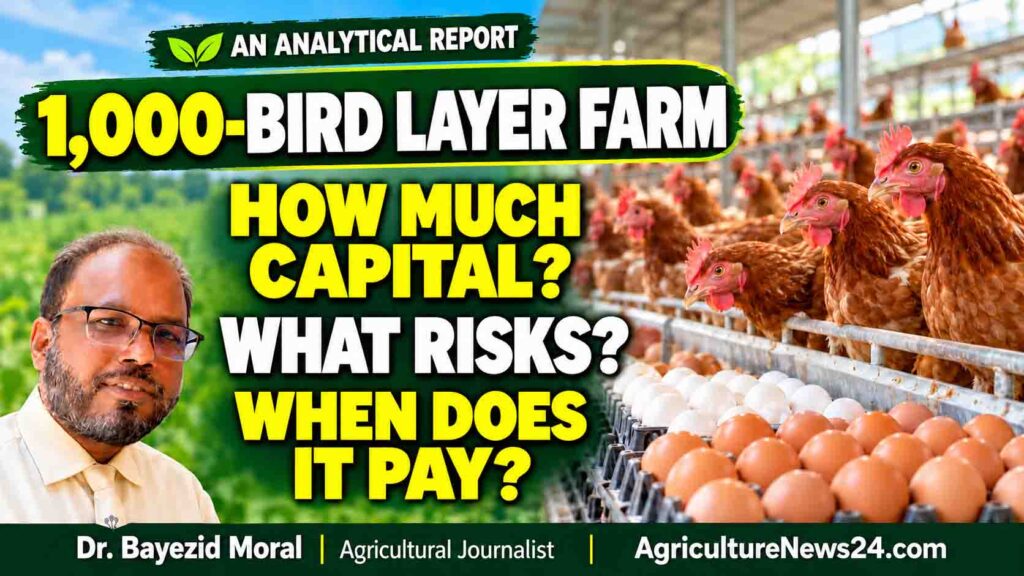
A 1,000-Bird Layer Farm: How Much Capital, What Risks, and When Does It Become Profitable?
Daily egg sales do not necessarily mean daily profit. Understanding the full production cycle is essential before investing.
An analytical report by agricultural journalist Dr. Bayezid Moral
Eggs leave the farm every morning. Traders collect them, and money comes in. From the outside, a layer poultry farm may look like a business that generates a dependable daily income. But how much remains after paying for feed, labour, electricity, transport and loan instalments? When does the farmer recover the cost of purchasing and raising the birds before they begin laying?
Over nearly 26 years of agricultural journalism, my visits to farms across Bangladesh and conversations with farmers and poultry specialists have repeatedly highlighted one lesson: successful layer farming requires an understanding of both production and cash flow. Healthy birds, suitable feed and proper care must be supported by adequate working capital, reliable buyers and consistent recordkeeping.
A 1,000-bird layer farm can become a foundation for a family’s income. It can also increase debt if the investment begins with an incomplete financial plan. The question is therefore more than “How much profit can I make?” It is also “How much money will I need to keep the farm operating when conditions become difficult?”
Basis of the calculations: The budgets and profit-and-loss tables in this report are illustrative financial models. They are neither current market price lists nor audited accounts from a particular farm. Before investing, farmers should update every calculation using local quotations for chicks, feed, construction materials and equipment, together with actual farm-gate egg prices.
A Thousand Chicks Do Not Mean a Thousand Eggs Every Day
One of the first mistakes new entrepreneurs make is assuming that purchasing 1,000 chicks will eventually produce 1,000 saleable eggs every day. Actual performance must account for mortality, birds removed from the flock, changes in production with age, and small, cracked or otherwise unsaleable eggs.
Commercial layers can achieve high production under appropriate management. However, the performance targets in a breed guide should never be treated as guaranteed results for an individual farm. Hy-Line Brown’s December 2025 guide gives approximately 139 days as its benchmark for reaching 50% production, while recognising that local conditions and management affect performance. www.hyline.com
Producing the first egg, reaching a commercially useful production level and recovering the investment are three separate milestones. A business plan must distinguish between them.
How Much Capital Is Needed?
There is no single investment figure that applies to every 1,000-bird layer farm. A farmer who already owns suitable land and a usable shed faces a different budget from someone who must construct housing and install cages, water systems and electricity.
The choice between raising day-old chicks and purchasing ready-to-lay pullets also changes the financing requirements. Pullets shorten the waiting period before egg income begins, but purchasing them requires more money upfront. Their age, body weight, health and vaccination records must also be verified.
The following is an illustrative planning budget for starting with day-old chicks on land already owned by the farmer.
| Expenditure item | Illustrative allocation |
|---|---|
| Basic shed, flooring, drainage and essential infrastructure | BDT 400,000–700,000 |
| Cages or equipment for the selected housing system | BDT 150,000–300,000 |
| Water, electricity, brooding and other initial equipment | BDT 80,000–120,000 |
| Chicks and rearing expenses until meaningful egg production begins | BDT 500,000–700,000 |
| Operating funds for approximately two months after production begins | BDT 450,000–600,000 |
| Additional emergency reserve | BDT 100,000–150,000 |
| Total planned funding requirement | BDT 1,680,000–2,570,000 |
This budget excludes land purchase, substantial land development, automated environmental control systems and loan interest. Detailed supplier quotations are necessary to prevent the same equipment from being counted under multiple headings.
The entire amount will not be spent at once. Some will go into infrastructure, some into raising the birds, and the remainder will support ongoing operations. An existing suitable shed may substantially reduce the total requirement.
One lesson from field experience deserves particular emphasis: do not spend all available money building the farm. The money needed to feed the birds is also part of the capital requirement.
The Months Before Egg Production Are the First Financial Test
Chicks need feed and daily care as they grow, but there is no egg income during the early rearing period. New farmers sometimes underestimate the cost of this stage.
Purchasing inexpensive chicks does not automatically make the project economical. Failure to achieve appropriate body weight and flock uniformity on schedule can affect subsequent performance. Early eggs may also be smaller and sell for less than standard-sized eggs.
A bdnews24.com report published on 9 October 2026 quoted a farmer in Barishal who estimated spending at least BDT 1.2 million to raise 1,000 chicks through 180 days. This was one farmer’s reported experience, rather than a universal cost benchmark. It nevertheless illustrates why local farm records are essential when assessing an investment. bdnews24.com
How Much Might the Monthly Feed Bill Be?
Understanding a layer farm’s finances begins with measuring daily feed consumption. Requirements vary with age, strain, production, weather and nutrient composition. Hy-Line Brown’s guide gives average daily consumption of approximately 109–117 grams per bird between 19 and 100 weeks. This is a strain-specific reference, rather than a fixed feeding allowance for every farm. www.hyline.com
For an illustrative calculation, assume:
- Live hens in production: 1,000.
- Daily feed consumption: 115 grams per bird.
- Assumed feed price: BDT 65 per kilogram.
- Accounting period: 30 days.
Daily feed consumption would be 115 kilograms. Monthly consumption would reach 3,450 kilograms, costing BDT 224,250.
That covers feed alone. Labour, electricity, health management, transport, maintenance and the cost of earlier investment still need to be included.
Under this model, every BDT 1 increase in the price of a kilogram of feed adds BDT 3,450 to the monthly bill. A seemingly small price increase can therefore have a significant effect across a 1,000-bird flock.
What Happens If the Farm Sells 850 Eggs a Day?
Suppose 1,000 live hens produce an average of 850 saleable eggs daily. Monthly sales volume would be 25,500 eggs.
An illustrative monthly cost model could look like this:
| Item | Illustrative monthly cost |
|---|---|
| Feed | BDT 224,250 |
| Labour, electricity, water, health management, transport and other operating expenses | BDT 35,000 |
| Allocation for net pullet-rearing cost and infrastructure depreciation | BDT 20,000 |
| Total | BDT 279,250 |
The BDT 20,000 allocation is a simplified assumption. In a farm-specific calculation, the expected sale value of spent hens should be deducted from the pullet-rearing cost, and the remaining amount spread across the expected production period. Infrastructure depreciation should be calculated separately.
If these assumptions remain unchanged, the results would be:
| Average price received per egg | Monthly egg revenue | Illustrative result |
|---|---|---|
| BDT 9 | BDT 229,500 | BDT 49,750 deficit |
| BDT 10 | BDT 255,000 | BDT 24,250 deficit |
| BDT 11 | BDT 280,500 | BDT 1,250 surplus |
| BDT 12 | BDT 306,000 | BDT 26,750 surplus |
These results exclude loan interest, land or shed rent and major unexpected losses. The owner’s labour must also be valued if it has not already been included. Any net income from manure sales should be added.
In this model, the break-even price is approximately BDT 10.95 per saleable egg. Additional expenses would raise that requirement.
The calculation must use the average price the farmer actually receives, accounting for egg grades and relevant sales deductions. Retail shop prices cannot be substituted for farm-gate returns.
Lower Production Raises the Cost per Egg
If daily saleable egg output falls from 850 to 800 under the same model, monthly sales volume drops to 24,000 eggs. With the assumed monthly cost unchanged, the cost per egg rises to approximately BDT 11.64.
At 750 saleable eggs daily, monthly volume becomes 22,500 eggs, and the cost per egg rises to approximately BDT 12.41.
Some expenses would also change in practice. Nevertheless, the comparison demonstrates an essential point: profitability depends on both the price of feed and the number of saleable eggs produced from it.
Daily records should therefore include live bird numbers, feed consumption, total eggs, cracked and rejected eggs, selling prices and mortality.
Where Are the Biggest Risks?
Cash shortages are a recurring concern in discussions about farm performance. When revenue falls, farmers may feel pressure to reduce feeding or postpone essential care, potentially weakening production further.
Health and management present another major risk. Disease, heat stress, interrupted water supply and inadequate ventilation can affect both survival and output. A farm-specific prevention plan should be prepared with the local livestock office and the veterinarian responsible for the flock.
Market arrangements also matter. Dependence on a single buyer, delayed payments and unclear pricing by egg size or grade can place pressure on working capital.
Loan structure creates a further challenge. Large repayments falling due before egg revenue begins can put even a viable project under financial strain. Loan principal and interest must be recorded separately: principal repayment affects cash flow, while treating the entire instalment as a production expense distorts the profit calculation.
When Does the Farm Become Profitable—and When Is the Investment Recovered?
These questions require three separate assessments.
First, does egg revenue cover everyday operating expenses? Second, is there a surplus after accounting for net pullet-rearing costs, depreciation, interest and the owner’s labour? Third, how long does it take to recover the money invested in the project?
A surplus during one strong production month does not establish that the entire flock cycle is profitable. The calculation must also include low-production periods, falling egg prices, mortality and the downtime needed to clean the farm and prepare for the next flock.
Spent-hen sales generate income at the end of production, but that money is not automatically all profit. If the expected spent-hen value was already deducted when calculating net pullet-rearing costs, it must not be counted again as an additional profit.
Claims such as “the investment will be recovered in six months” or “1,000 layers guarantee a fixed monthly profit” therefore require evidence. The full flock-cycle accounts reveal the actual result.
The Lesson from Experience: Prepare the Accounts Before Bringing in the Birds
Drawing on my years of agricultural journalism, my first advice to a new farmer would be to examine the records of at least three operating farms nearby before purchasing chicks. Listen to their experiences during low-price months as well as periods of strong production.
Recalculate the proposed business with higher feed prices, lower egg prices and production below expectations. Then assess whether enough money would remain to maintain feeding and essential care.
A 1,000-bird layer farm offers opportunity. Turning that opportunity into sustainable income requires daily management and reliable financial records. Success is measured by the ability to meet all costs and retain the resources needed to begin the next flock—not simply by the number of eggs collected.
Source basis: The author’s stated experience in agricultural journalism; Hy-Line International’s commercial layer guide, December 2025; and bdnews24.com’s farm and market report published on 9 October 2026. The financial tables are independent illustrative calculations.