















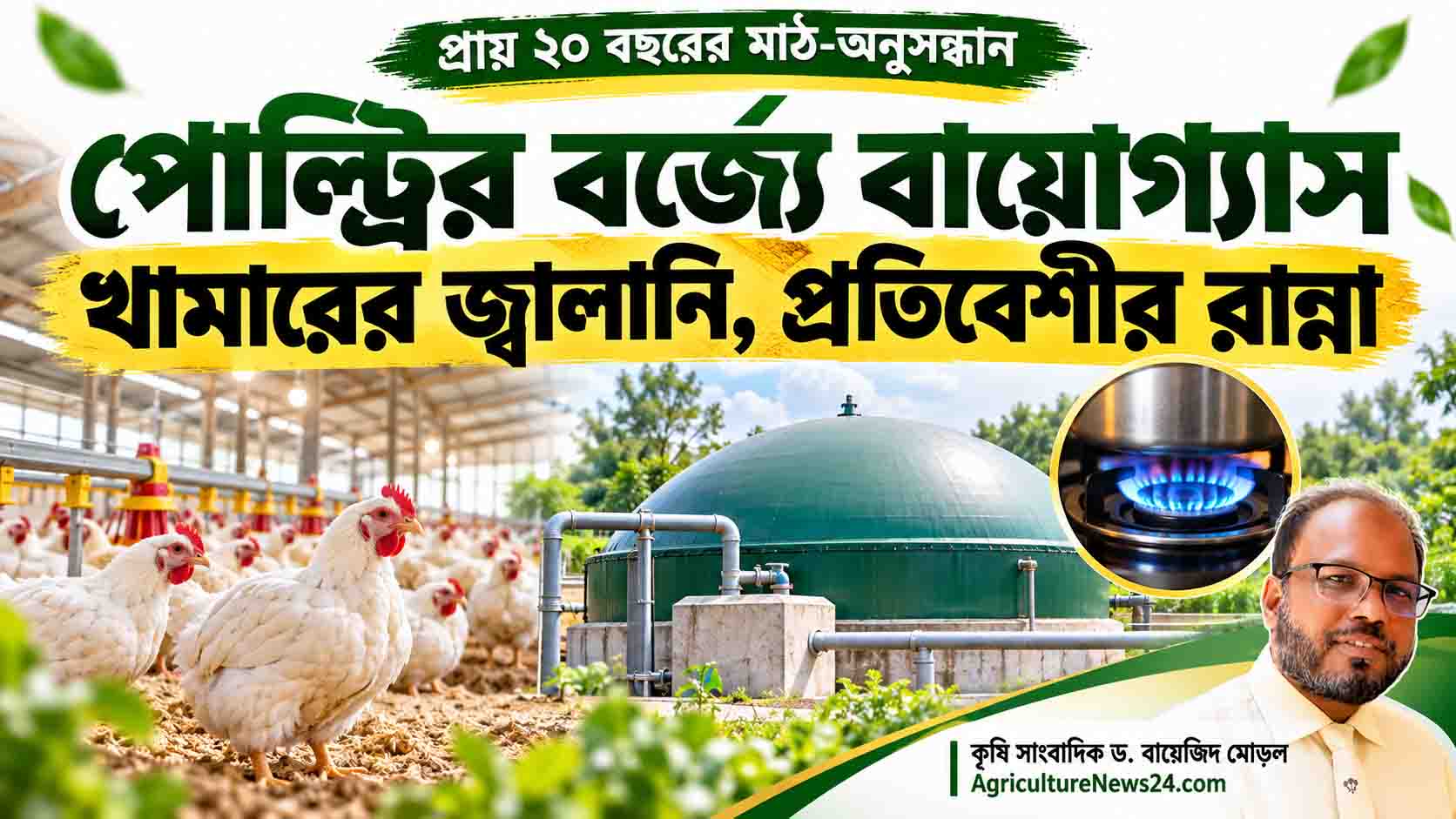
পোল্ট্রির বর্জ্যে খামারের জ্বালানি, প্রতিবেশীর রান্না: বায়োগ্যাসে বাংলাদেশের সম্ভাবনা
প্রায় ২০ বছরের মাঠ-অভিজ্ঞতায় পাঁচ শতাধিক পোল্ট্রি খামারের উদ্যোগ, জ্বালানি সাশ্রয়, সামাজিক সেবা ও টেকসই সম্প্রসারণের পথ
কৃষি সাংবাদিক ড. বায়েজিদ মোড়লের গবেষণাধর্মী প্রতিবেদন
পোল্ট্রি খামার বললে সাধারণত আমাদের চোখে ভেসে ওঠে ডিম, মুরগি, খাবার ও উৎপাদনের হিসাব। কিন্তু প্রায় দুই দশক ধরে দেশের বিভিন্ন খামারে ঘুরে আমি আরেকটি সম্ভাবনা দেখেছি। যে বিষ্ঠা ও জৈব বর্জ্য খামারির জন্য ব্যবস্থাপনার সমস্যা তৈরি করে, উপযুক্ত প্রযুক্তিতে সেই বর্জ্যই হয়ে উঠতে পারে জ্বালানির উৎস। বায়োগ্যাস ব্যবহার করে খামার নিজের প্রয়োজনের কিছু অংশ মেটাতে পারে; আবার আশপাশের মানুষের রান্নার ব্যবস্থাতেও অবদান রাখতে পারে।
আমার প্রতিবেদনের অভিজ্ঞতায় এমন পোল্ট্রি খামার রয়েছে, যেখানে নিজেদের চাহিদা মিটিয়ে প্রতিবেশীদের গ্যাস ব্যবহারের সুযোগ দেওয়া হয়েছে। খামারের বর্জ্য থেকে মানুষের রান্নাঘরে জ্বালানি পৌঁছানোর এই ঘটনা পোল্ট্রি খাতের সামাজিক অবদানকে নতুনভাবে দেখার সুযোগ দেয়।
বাংলাদেশের পোল্ট্রি খাতের উন্নয়ন নিয়ে আলোচনা করতে গেলে তাই ডিম ও মাংস উৎপাদনের পাশাপাশি বর্জ্যের কার্যকর ব্যবহারও গুরুত্ব পাওয়া প্রয়োজন। বায়োগ্যাস সেই আলোচনার একটি গুরুত্বপূর্ণ অংশ। তবে সম্ভাবনাকে স্থায়ী সুফলে রূপ দিতে হলে নির্মাণের সঙ্গে পরিচালনা, অর্থনীতি, নিরাপত্তা ও পরিবেশ ব্যবস্থাপনাকে যুক্ত করতে হবে।
শ্যামল বাংলায় শুরু: ২০০৬–০৭ সালের অভিজ্ঞতা
২০০৬–০৭ সালে বাংলাভিশনের ‘শ্যামল বাংলা’ অনুষ্ঠানে আমি বায়োগ্যাস নিয়ে প্রতিবেদন প্রচার করি। তখন দেশের বিভিন্ন স্থানের যেসব খামারে বায়োগ্যাস ব্যবহার হতো, সেগুলোর ইতিবাচক দিক তুলে ধরেছিলাম। খামারের বর্জ্য যে ব্যবহারযোগ্য সম্পদ হতে পারে, সেই বাস্তব অভিজ্ঞতা দর্শকের সামনে পৌঁছে দেওয়াই ছিল উদ্দেশ্য।
প্রতিবেদনটি ব্যাপক সাড়া পায়। পরবর্তী সময়ে দেশের বিভিন্ন পোল্ট্রি খামারে বায়োগ্যাস স্থাপন ও ব্যবহারের উদ্যোগ নিয়ে আমি ধারাবাহিকভাবে কাজ করি। বড় প্রতিষ্ঠানের পাশাপাশি মাঝারি ও ছোট খামারের অভিজ্ঞতাও তুলে ধরেছি।
আমার নিজের কাজের আনুমানিক হিসাবে, পাঁচ শতাধিক পোল্ট্রি খামারে বায়োগ্যাস বিষয়ে প্রতিবেদন করেছি। এই সংখ্যা আমার সাংবাদিকতার অনুসন্ধানের পরিধি বোঝায়। এটিকে দেশে বর্তমানে সচল পোল্ট্রি বায়োগ্যাস প্লান্টের সরকারি সংখ্যা হিসেবে দেখা যাবে না।
এই দীর্ঘ যাত্রায় কৃষি সাংবাদিকতা, উদ্যোক্তার আগ্রহ, প্রযুক্তিগত সহায়তা ও অর্থায়নের মধ্যে সম্পর্ক দেখতে পেয়েছি। সংবাদমাধ্যম একটি সম্ভাবনার পরিচয় মানুষের কাছে পৌঁছে দিতে পারে। সেই সম্ভাবনাকে বাস্তবে রূপ দেন খামারি, প্রকৌশলী, গবেষক, নির্মাণকারী ও অর্থায়নকারী প্রতিষ্ঠান।
বড় পোল্ট্রি খামারগুলোর উদ্যোগ
ডায়মন্ড এগ, প্রোটিন হাউজ, নাহার পোল্ট্রি, প্যারাগন পোল্ট্রি, কাজী ফার্মস ও নারিশের মতো বড় প্রতিষ্ঠানের খামার নিয়ে কাজ করার অভিজ্ঞতা আমার রয়েছে। এসব প্রতিষ্ঠানের খামার ও হ্যাচারিসংলগ্ন বায়োগ্যাস উদ্যোগ আমার অনুসন্ধানের গুরুত্বপূর্ণ অংশ।
বড় খামারে বর্জ্যকে উৎপাদন ব্যবস্থাপনার সঙ্গে যুক্ত করে দেখা জরুরি। মুরগির সংখ্যা বাড়লে বিষ্ঠা ও অন্যান্য বর্জ্য সংগ্রহ, সংরক্ষণ এবং ব্যবস্থাপনার প্রয়োজনও বাড়ে। সেই বর্জ্য থেকে জ্বালানি উৎপাদন করা গেলে খামারের একটি সমস্যাকে ব্যবহারযোগ্য সম্পদে রূপ দেওয়ার সুযোগ তৈরি হয়।
তবে প্রতিটি খামারের অভিজ্ঞতা আলাদা। একই প্রতিষ্ঠানের সব খামারে একই প্রযুক্তি, একই উৎপাদন বা একই অর্থনৈতিক ফল রয়েছে—এমন সিদ্ধান্ত নেওয়া ঠিক হবে না। কোন খামারে কী ধরনের প্লান্ট, কী উপকরণ ব্যবহার হয়, গ্যাস কোথায় কাজে লাগে এবং কত দিন ধরে চলছে, তা খামারভিত্তিকভাবে দেখতে হবে।
হ্যাচারির ক্ষেত্রেও বর্জ্যের ধরন আলাদা করে মূল্যায়ন প্রয়োজন। মুরগির বিষ্ঠা, বিছানার উপকরণ মেশানো লিটার এবং হ্যাচারির অন্যান্য বর্জ্যকে একই উপকরণ ধরে একইভাবে ব্যবহার করা যাবে না। উপযুক্ত বর্জ্য নির্বাচন ও প্রক্রিয়াকরণের জন্য বিশেষজ্ঞের পরামর্শ দরকার।
খামারের সীমানা পেরিয়ে মানুষের সেবা
আমার দেখা ও প্রতিবেদন করা উদ্যোগগুলোর মধ্যে প্রতিবেশীদের গ্যাস ব্যবহারের সুযোগ দেওয়ার বিষয়টি বিশেষভাবে গুরুত্বপূর্ণ।
খামার ও স্থানীয় মানুষের সম্পর্ক নিয়ে আলোচনা করলে প্রায়ই দুর্গন্ধ, বর্জ্য ও পরিবেশের অভিযোগ সামনে আসে। কিন্তু খামারের বর্জ্য থেকে আশপাশের পরিবারের রান্নার জ্বালানি পাওয়া গেলে সম্পর্কের আরেকটি দিক তৈরি হয়। একটি উৎপাদন প্রতিষ্ঠান স্থানীয় সেবার উৎসও হয়ে উঠতে পারে।
এই উদ্যোগের প্রকৃত মূল্য জানতে উপকারভোগী পরিবারের সংখ্যা, সরবরাহের সময়কাল, দৈনিক গ্যাস পাওয়ার সময় এবং আগের জ্বালানির তুলনায় সাশ্রয় জানতে হবে। গ্যাস বিনা মূল্যে দেওয়া হচ্ছে নাকি মূল্য নেওয়া হচ্ছে, সেটিও পরিষ্কার থাকা প্রয়োজন।
বিনা মূল্যের সরবরাহ সামাজিক সেবার উদাহরণ। মূল্য নিয়ে সরবরাহ করলে সেটি স্থানীয় জ্বালানি সেবার একটি ব্যবসায়িক ব্যবস্থা। দুই ক্ষেত্রেই নিয়মিত সরবরাহ, নিরাপদ সংযোগ এবং রক্ষণাবেক্ষণের দায়িত্ব গুরুত্বপূর্ণ।
আমার মতে, এই অভিজ্ঞতাগুলো নথিবদ্ধ করা প্রয়োজন। খামারের মালিকের বক্তব্যের পাশাপাশি যাঁরা গ্যাস ব্যবহার করছেন, তাঁদের অভিজ্ঞতাও শুনতে হবে। এতে বোঝা যাবে, পোল্ট্রি বায়োগ্যাস মানুষের জীবনে কী ধরনের পরিবর্তন আনছে।
মালয়েশিয়ার অভিজ্ঞতা ও প্রযুক্তির বিনিময়
২০১৪ সালে বায়োগ্যাস বিষয়ে প্রতিবেদন করতে আমি মালয়েশিয়া যাই। সেই সফর আমার অনুসন্ধানে আন্তর্জাতিক অভিজ্ঞতা যুক্ত করে।
আমার জানা অনুযায়ী, এস্টিনো নামের প্রতিষ্ঠান মালয়েশিয়ার পোল্ট্রি খাতে বায়োগ্যাস নিয়ে কাজ করে এবং বাংলাদেশেও এ বিষয়ে কার্যক্রম রয়েছে। এই তথ্য আমার সফর ও পেশাগত অভিজ্ঞতার ভিত্তিতে উল্লেখ করছি; প্রতিষ্ঠানটির বর্তমান প্রকল্পসংখ্যা বা সক্ষমতার পরিসংখ্যান এখানে উপস্থাপন করছি না।
বিদেশি প্রযুক্তি বাংলাদেশের জন্য সুযোগ তৈরি করতে পারে। কিন্তু কোনো প্রযুক্তি গ্রহণের আগে আমাদের খামারের বাস্তব পরিস্থিতির সঙ্গে তার উপযোগিতা বিচার করতে হবে। বর্জ্য সংগ্রহের পদ্ধতি, পানি, জমি, দক্ষ কর্মী, গ্যাসের চাহিদা এবং মেরামতের সুযোগ বিবেচনায় নেওয়া প্রয়োজন।
প্রযুক্তি সংগ্রহের সঙ্গে পরিচালনার জ্ঞানও দরকার। প্লান্টে সমস্যা হলে কে সমাধান করবেন, যন্ত্রাংশ কোথায় পাওয়া যাবে এবং কর্মীকে কে প্রশিক্ষণ দেবেন—বিনিয়োগের আগেই এসব প্রশ্নের উত্তর থাকতে হবে।
দেশীয় বাস্তবায়ন ও বিদেশি প্রযুক্তির সহযোগিতা
সংশ্লিষ্ট প্রতিষ্ঠানের প্রকাশিত তথ্য ও পুরোনো বিবরণ থেকে জেনেছি, বাংলাদেশে বায়োগ্যাসের বিকাশে প্রযুক্তি সরবরাহ, স্থানীয় বাস্তবায়ন, অর্থায়ন এবং মান যাচাইয়ের পৃথক ভূমিকা রয়েছে।
২০১০ সালের ২৮ জানুয়ারি প্রকাশিত এক নিবন্ধে চিকস অ্যান্ড ফিডসের ব্যবস্থাপনা পরিচালক একলাসুল হক চীনের হাংঝৌ এনার্জি অ্যান্ড এনভায়রনমেন্টাল ইঞ্জিনিয়ারিং—HEEE এবং ক্যামডার সঙ্গে সহযোগিতার কথা উল্লেখ করেন। তাঁর বিবরণে HEEE-এর সঙ্গে বায়োগ্যাস প্রকল্প উন্নয়ন এবং ক্যামডার সঙ্গে বায়োগ্যাস জেনারেটরসংক্রান্ত সহযোগিতার কথা রয়েছে। একই লেখায় প্যারাগনের প্রকল্পে চিকস অ্যান্ড ফিডসের বাস্তবায়ন-ভূমিকার উল্লেখ পাওয়া যায়। এটি সেই সময়ের সহযোগিতার তথ্য; বর্তমান কার্যক্রমের অবস্থা আলাদাভাবে যাচাই করা প্রয়োজন।
ডিপি ক্লিনটেকের প্রকাশিত ঘোষণা থেকে জেনেছি, বাংলাদেশের চিকস অ্যান্ড ফিডসের সহযোগিতায় পটুয়াখালীতে পৌর বর্জ্য থেকে বায়োগ্যাস উৎপাদনের সমাধান সরবরাহের চুক্তি করা হয়েছিল। এটি পৌর বর্জ্যের প্রকল্প। জৈববর্জ্য থেকে জ্বালানি উৎপাদনে স্থানীয় প্রতিষ্ঠান ও আন্তর্জাতিক প্রযুক্তির সহযোগিতার একটি প্রাসঙ্গিক উদাহরণ হিসেবে বিষয়টি গুরুত্বপূর্ণ। তবে চুক্তির ঘোষণা দিয়ে প্রকল্পটি বর্তমানে চালু বা ঘোষিত উৎপাদন অর্জন করছে বলা যায় না।
জার্মানির ইউপিএম—UPM Umwelt-Projekt-Management GmbH-এর প্রকাশিত প্রকল্পবিবরণে ১৫ জুন ২০১৫ থেকে ১৪ জুন ২০১৭ মেয়াদে আইডিকলের বায়োগ্যাস কর্মসূচির কারিগরি নিরীক্ষা ও পর্যবেক্ষণের কাজের উল্লেখ রয়েছে। এই অভিজ্ঞতা দেখায়, প্লান্ট নির্মাণের পাশাপাশি মান যাচাই এবং কর্মসূচির উন্নয়ন সহায়তাও প্রয়োজন।
গ্রামীণ শক্তি ও আইডিকলের অবদান
দেশীয় পর্যায়ে গ্রামীণ শক্তির বায়োগ্যাস কার্যক্রম গুরুত্বপূর্ণ। প্রতিষ্ঠানটির নিজস্ব তথ্য অনুযায়ী, তারা বাংলাদেশে ৫০ হাজারের বেশি বায়োগ্যাস প্লান্ট স্থাপন করেছে। এই সংখ্যা শুধু পোল্ট্রি খামারের নয়; প্রতিষ্ঠানটির সামগ্রিক বায়োগ্যাস কার্যক্রমের হিসাব।
আইডিকলের প্রকাশিত তথ্য থেকে জেনেছি, প্রতিষ্ঠানটি ২০০৬ সাল থেকে বাংলাদেশে বায়োগ্যাস ও জৈবসার কর্মসূচি বাস্তবায়ন করছে। ডিসেম্বর ২০২৩ পর্যন্ত তাদের অর্থায়নে ৬৮ হাজারের বেশি বায়োগ্যাস প্লান্ট নির্মিত হয়েছে। এটিও বিভিন্ন ধরনের প্লান্টের সম্মিলিত হিসাব। গ্রামীণ শক্তি ও আইডিকলের সংখ্যা সরাসরি যোগ করা যাবে না; একই প্লান্ট উভয় হিসাবের অন্তর্ভুক্ত থাকতে পারে।
আইডিকলের বিবরণ অনুযায়ী, ২০০৬ সাল থেকে তাদের অর্থায়নে ১০টি বৃহৎ বায়োগ্যাস প্রকল্প স্থাপিত হয়েছে; প্রতিটির ক্ষমতা ১০ থেকে ৪০০ কিলোওয়াটের মধ্যে। এই তথ্য দেশের সব বাণিজ্যিক বায়োগ্যাস প্রকল্পের মোট সংখ্যা নয়।
এই প্রাতিষ্ঠানিক তথ্যের সঙ্গে মাঠ-অভিজ্ঞতা মিলিয়ে আমার মনে হয়েছে, বাংলাদেশে বায়োগ্যাস নিয়ে দীর্ঘদিনের কাজ ও অর্থায়নের ভিত্তি রয়েছে। এখন নির্মাণের সংখ্যার পাশাপাশি কতগুলো প্লান্ট সচল, কতটা গ্যাস ব্যবহার হচ্ছে এবং খামারি কতটা সুবিধা পাচ্ছেন, তা নিয়মিত জানা প্রয়োজন।
বর্জ্য থেকে জ্বালানি: গবেষণা কী বলছে
গবেষণা থেকে জেনেছি, অক্সিজেনবিহীন পরিবেশে অণুজীব জৈব পদার্থ ভাঙার মাধ্যমে বায়োগ্যাস তৈরি হয়। উপযুক্ত ব্যবস্থায় সেই গ্যাস রান্না, তাপ বা বিদ্যুৎ উৎপাদনে ব্যবহার করা যায়।
বাংলাদেশের প্রেক্ষাপটে পোল্ট্রি লিটার ও গোবর একসঙ্গে ব্যবহার নিয়ে প্রকাশিত পরীক্ষামূলক গবেষণায় বায়োগ্যাস উৎপাদনের সম্ভাবনা পাওয়া গেছে। তবে পরীক্ষাগারের ফলকে বাণিজ্যিক খামারের নিশ্চিত উৎপাদন হিসেবে ধরা যাবে না। বর্জ্যের গঠন, মিশ্রণের অনুপাত ও পরিচালনার ওপর ফল নির্ভর করে।
পোল্ট্রির বিষ্ঠার নাইট্রোজেন থেকে তৈরি অ্যামোনিয়া অতিরিক্ত হলে গ্যাস উৎপাদনের প্রক্রিয়ায় বাধা আসতে পারে। তাই বেশি বিষ্ঠা দিলেই বেশি গ্যাস হবে—এমন সরল ধারণা কার্যকর নয়। উপযুক্ত নকশা, নিয়মিত তদারকি ও দক্ষ পরিচালনা দরকার।
খামারির লাভ বুঝতে পূর্ণ হিসাব প্রয়োজন
আমার মতে, বায়োগ্যাস প্লান্টের সফলতা বিচার করতে হলে উৎপাদিত গ্যাসের কতটুকু বাস্তবে ব্যবহার হচ্ছে, তা জানতে হবে। ব্যবহার না হওয়া গ্যাসকে জ্বালানি সাশ্রয় হিসেবে ধরা যাবে না।
রান্নায় গ্যাস ব্যবহার এবং বিদ্যুৎ উৎপাদনের হিসাবও আলাদা। জেনারেটর থাকলে গ্যাস পরিশোধন, যন্ত্রের রক্ষণাবেক্ষণ ও প্রকৃত বিদ্যুৎ উৎপাদন হিসাবে আনতে হবে।
খামারের নিট আর্থিক সুবিধা নির্ধারণে প্রতিস্থাপিত জ্বালানি ও বিদ্যুতের মূল্য, অবশিষ্ট পদার্থের যাচাইকৃত সুবিধা এবং বর্জ্য ব্যবস্থাপনায় সাশ্রয় বিবেচনায় নিতে হবে। সেখান থেকে পরিচালনা, শ্রম, মেরামত ও রক্ষণাবেক্ষণের ব্যয় বাদ দিতে হবে। ঋণের সুদ এবং যন্ত্র প্রতিস্থাপনের খরচও গুরুত্বপূর্ণ।
আগে বিষ্ঠা বিক্রি করে আয় হলে সেই হারানো আয় হিসাবের মধ্যে আসবে। অবশিষ্ট পদার্থ বিক্রি না হলে কাল্পনিক বিক্রয় আয় যোগ করা যাবে না।
খামারভিত্তিক যাচাইকৃত হিসাব ছাড়া নির্দিষ্ট মাসিক লাভ বা কত বছরে বিনিয়োগ উঠে আসবে, তা বলা দায়িত্বশীল হবে না। নির্ভরযোগ্য হিসাবই নতুন উদ্যোক্তাকে সঠিক সিদ্ধান্ত নিতে সাহায্য করবে।
অবশিষ্ট পদার্থের কৃষিতে ব্যবহার
বায়োগ্যাস উৎপাদনের পর প্লান্টে তরল ও কঠিন অবশিষ্ট পদার্থ থাকে। আন্তর্জাতিক জ্বালানি সংস্থার তথ্য থেকে জেনেছি, এই অবশিষ্ট পদার্থ সার হিসেবে কাজে লাগানোর সুযোগ রয়েছে।
তবে গ্যাস তৈরি হয়েছে বলেই অবশিষ্ট পদার্থ সম্পূর্ণ জীবাণুমুক্ত বা যেকোনো মাত্রায় ব্যবহারযোগ্য—এমন সিদ্ধান্ত নেওয়া যাবে না। কৃষিজমিতে প্রয়োগের আগে পুষ্টিমান, প্রয়োজনীয় প্রক্রিয়াকরণ, নিরাপদ সংরক্ষণ এবং প্রয়োগের মাত্রা সম্পর্কে কৃষিবিদের পরামর্শ দরকার।
পরীক্ষা ছাড়া একে রাসায়নিক সারের সম্পূর্ণ বিকল্প বলাও ঠিক হবে না। উপযুক্ত ব্যবস্থাপনার মাধ্যমে ব্যবহার নিশ্চিত করা গেলে পোল্ট্রি ও ফসল উৎপাদনের মধ্যে সম্পদের একটি কার্যকর সংযোগ তৈরি হতে পারে।
পরিবেশগত সুফল ও নিরাপত্তা
বায়োগ্যাসের পরিবেশগত মূল্য আলোচনা করতে গিয়ে শুধু গ্যাস তৈরির কথায় থামলে চলবে না। আন্তর্জাতিক জ্বালানি সংস্থা মিথেন লিকের গুরুত্ব তুলে ধরেছে। উৎপাদিত গ্যাস বাতাসে বেরিয়ে গেলে প্রত্যাশিত জলবায়ু সুবিধা কমে যেতে পারে।
তাই নিরাপদ পাইপলাইন, নিয়মিত লিক পরীক্ষা, প্রয়োজনীয় গ্যাস পরিশোধন এবং অবশিষ্ট পদার্থের সঠিক ব্যবস্থাপনা প্রকল্পের অংশ হতে হবে। আগুন ও বিষাক্ত গ্যাসের ঝুঁকি মোকাবিলায় প্রশিক্ষিত কর্মী এবং উপযুক্ত নিরাপত্তাব্যবস্থাও প্রয়োজন।
প্রতিবেশীদের গ্যাস সরবরাহ করা হলে নিরাপত্তার দায়িত্ব আরও বিস্তৃত হয়। সংযোগ স্থাপন, ব্যবহার ও মেরামতের স্পষ্ট নিয়ম থাকতে হবে।
প্রাণিসম্পদ অধিদপ্তরকে যুক্ত করে সমন্বিত উদ্যোগ
আমার মতে, পোল্ট্রি বায়োগ্যাসের সম্প্রসারণে প্রাণিসম্পদ অধিদপ্তরকে আরও সুসংগঠিতভাবে যুক্ত করা প্রয়োজন। মাঠপর্যায়ের খামার-তথ্য ব্যবহার করে সংগ্রহযোগ্য বর্জ্যের পরিমাণ চিহ্নিত করা, খামারিদের সচেতন করা এবং প্রশিক্ষণ আয়োজনের ক্ষেত্রে অধিদপ্তর গুরুত্বপূর্ণ সহযোগী হতে পারে।
প্রকৌশল নকশা ও জ্বালানির নিরাপত্তার জন্য সংশ্লিষ্ট প্রকৌশলী ও জ্বালানি প্রতিষ্ঠানের সহযোগিতা প্রয়োজন। পরিবেশ ব্যবস্থাপনায় পরিবেশসংশ্লিষ্ট প্রতিষ্ঠান এবং অবশিষ্ট পদার্থের কৃষিতে ব্যবহারে কৃষিবিদদের যুক্ত করতে হবে।
ছোট খামারের জন্য যৌথ প্লান্টের সম্ভাবনা বিবেচনা করা যেতে পারে। তবে বর্জ্য পরিবহনের খরচ, গ্যাস ব্যবহারের ব্যবস্থা, মালিকানা এবং পরিচালনার দায়িত্ব আগে নির্ধারণ করতে হবে।
বড় খামারের অভিজ্ঞতা ছোট উদ্যোক্তার কাছে পৌঁছাতে সহজ ভাষায় প্রশিক্ষণ, প্রদর্শনী কার্যক্রম ও নির্ভরযোগ্য পরামর্শসেবা প্রয়োজন। সফল প্লান্টের পাশাপাশি বন্ধ প্লান্টের কারণও প্রকাশ করতে হবে, যাতে একই ভুল নতুন করে না হয়।
প্রায় দুই দশকের অভিজ্ঞতা থেকে ভবিষ্যতের পথ
বায়োগ্যাস নিয়ে আমার দীর্ঘ কাজের অভিজ্ঞতা থেকে মনে হয়েছে, বাংলাদেশের পোল্ট্রি খাতে এর অবদান মূল্যায়নের জন্য একটি খামারভিত্তিক তথ্যভান্ডার প্রয়োজন। সেখানে সচল, আংশিক সচল ও বন্ধ প্লান্টের তথ্য থাকবে। থাকবে বিনিয়োগ, প্রকৃত ব্যবহার, পরিচালন ব্যয়, উপকারভোগী এবং সমস্যা সমাধানের বিবরণ।
অর্থায়নের সঙ্গে প্রশিক্ষণ ও রক্ষণাবেক্ষণ যুক্ত করতে হবে। গবেষণা প্রতিষ্ঠান ও বিশ্ববিদ্যালয়কে মাঠের দীর্ঘমেয়াদি উৎপাদন, অর্থনৈতিক ফল এবং নিরাপদ সার ব্যবহার নিয়ে কাজ করতে হবে। প্রতিবেশীদের গ্যাস দেওয়ার উদ্যোগে সরবরাহের দায়িত্ব ও নিরাপত্তা নিশ্চিত করতে হবে।
২০০৬–০৭ সালে ‘শ্যামল বাংলা’য় যে সম্ভাবনা তুলে ধরেছিলাম, প্রায় ২০ বছর পর সেই অভিজ্ঞতাকে আরও গভীরভাবে মূল্যায়নের সময় এসেছে। আমি দেখেছি, পোল্ট্রি খামারের বর্জ্য মানুষের কাজে লাগতে পারে। খামারের প্রয়োজন মেটানোর পাশাপাশি আশপাশের পরিবারও সুবিধা পেতে পারে।
এখন প্রয়োজন সেই অভিজ্ঞতাকে নির্ভরযোগ্য হিসাব, টেকসই পরিচালনা এবং সমন্বিত সহায়তার সঙ্গে যুক্ত করা। পোল্ট্রি খাতের উন্নয়ন পরিকল্পনায় বর্জ্য থেকে জ্বালানি উৎপাদনকে যথাযথ গুরুত্ব দেওয়া হলে বায়োগ্যাস খামারি, কৃষক ও স্থানীয় মানুষের জন্য দীর্ঘমেয়াদি সুফল বয়ে আনতে পারে।
তথ্যসূত্র: লেখকের দেওয়া মাঠ-অভিজ্ঞতা ও মালয়েশিয়া সফরের বিবরণ; আইডিকল; গ্রামীণ শক্তি; চিকস অ্যান্ড ফিডসের ব্যবস্থাপনা পরিচালকের প্রকাশিত নিবন্ধ; ডিপি ক্লিনটেক; ইউপিএম; এফএও; আন্তর্জাতিক জ্বালানি সংস্থা এবং পোল্ট্রি লিটার থেকে বায়োগ্যাস উৎপাদনসংক্রান্ত গবেষণা।
Poultry Waste Powers Farms and Neighbours’ Kitchens: Bangladesh’s Biogas Potential
Nearly 20 years of field reporting across more than 500 poultry farms: initiatives, energy savings, community services and the path to sustainable expansion
A research-based report by agricultural journalist Dr. Bayezid Moral
When we think of poultry farms, we usually think of eggs, chickens, feed and production costs. Yet during nearly two decades of visits to farms across Bangladesh, I have seen another important possibility. Poultry manure and organic waste, which create management challenges for farmers, can become a source of energy through suitable technology. Biogas can meet part of a farm’s own energy needs while also supporting cooking in neighbouring households.
Among the initiatives I have reported on are poultry farms that supply gas to nearby families after meeting their own requirements. This connection between farm waste and household cooking offers a different perspective on the poultry sector’s contribution to society.
Discussions about developing Bangladesh’s poultry sector should therefore include the productive use of waste alongside egg and meat production. Biogas deserves an important place in that discussion. To turn its potential into lasting benefits, however, construction must be supported by sound operation, financial planning, safety and environmental management.
The Beginning: Shyamal Bangla in 2006–2007
In 2006–2007, I broadcast reports on biogas through Banglavision’s Shyamal Bangla programme. At that time, I highlighted the positive experiences of farms already using biogas in different parts of Bangladesh. My purpose was to show viewers that farm waste could become a useful resource.
The reports attracted considerable attention. I subsequently continued reporting on biogas installation and use at poultry farms across the country, covering large enterprises as well as medium and small farms.
Based on my own approximate records of this work, I have reported on biogas at more than 500 poultry farms. This figure describes the scope of my journalistic investigations. It should not be treated as an official count of poultry biogas plants currently operating in Bangladesh.
Throughout this journey, I have observed a relationship between agricultural journalism, entrepreneurial interest, technical support and financing. The media can introduce an opportunity to the public. Farmers, engineers, researchers, construction firms and financing institutions turn that opportunity into reality.
Initiatives at Major Poultry Farms
My reporting experience includes farms associated with major enterprises such as Diamond Egg, Protein House, Nahar Poultry, Paragon Poultry, Kazi Farms and Nourish. Biogas initiatives at their farms and operations associated with hatcheries have formed an important part of my investigations.
At large farms, waste management needs to be integrated into the production system. As bird numbers increase, so does the need to collect, store and manage manure and other waste. Producing energy from suitable waste creates an opportunity to turn a management challenge into a useful resource.
Each farm’s experience is different, however. We cannot assume that every farm belonging to the same company uses identical technology or achieves the same production and financial results. The plant design, feedstock, uses of the gas and operating history must be assessed at each site.
Hatchery waste also requires separate evaluation. Poultry manure, litter mixed with bedding materials and other hatchery waste cannot automatically be treated as the same feedstock. Expert advice is needed to select suitable materials and determine appropriate processing methods.
Serving Communities Beyond the Farm
One particularly important aspect of the initiatives I have visited and reported on is the provision of gas to neighbouring households.
Discussions about relations between farms and local communities often focus on odour, waste and environmental complaints. When farm waste supplies cooking fuel to nearby families, another dimension emerges: a production enterprise can also become a source of local services.
To understand the true value of these initiatives, we need to know how many families benefit, how long they have received gas, how many hours a day it is available and how much they save compared with their previous cooking fuels.
It is also important to establish whether gas is supplied free of charge or sold. Free supply represents a community service. Paid supply is a local energy service business. Both require reliable delivery, safe connections and clear maintenance responsibilities.
In my view, these experiences should be documented systematically. Alongside farm owners’ accounts, we need to hear from the families using the gas. Their experiences can help explain how poultry biogas affects everyday life.
Experience in Malaysia and the Exchange of Technology
In 2014, I travelled to Malaysia to report on biogas. That visit added an international perspective to my investigations.
To my knowledge, a company known as Estino works with biogas in Malaysia’s poultry sector and also has activities in Bangladesh. I mention this on the basis of my visit and professional experience; I am not presenting independently verified figures for its current projects or capacity.
Foreign technology can create opportunities for Bangladesh. Before adopting it, however, we must assess its suitability for local farms. Waste collection methods, water, land, skilled workers, gas demand and access to repairs all need consideration.
Acquiring technology must be accompanied by operational knowledge. Before investing, farmers should know who will address technical problems, where spare parts will be available and who will train their workers.
Cooperation Between Local Implementers and Foreign Technology Providers
Published information and historical accounts show that technology supply, local implementation, financing and quality assurance have played distinct roles in Bangladesh’s biogas development.
In an article published on 28 January 2010, Chicks and Feeds Managing Director Ekhlasul Haque described cooperation with China’s Hangzhou Energy and Environmental Engineering—HEEE—and CAMDA. His account referred to collaboration with HEEE on biogas project development and with CAMDA on biogas generators. It also described Chicks and Feeds’ implementation role in Paragon projects. This documents cooperation at that time; the current status of those activities requires separate verification.
A published announcement by DP CleanTech states that it signed a contract to supply a municipal waste-to-biogas solution in Patuakhali in cooperation with Bangladesh’s Chicks and Feeds. This concerns municipal waste rather than a poultry farm plant. Nevertheless, it provides a relevant example of cooperation between a local company and an international technology provider. The contract announcement alone does not establish that the project is currently operating or achieving its proposed output.
Germany’s UPM Umwelt-Projekt-Management GmbH describes technical auditing and monitoring work for IDCOL’s biogas programme during the period from 15 June 2015 to 14 June 2017. This experience illustrates the importance of quality assessment and programme improvement alongside plant construction.
Contributions of Grameen Shakti and IDCOL
Grameen Shakti has made an important contribution to biogas development in Bangladesh. According to its own published information, it has installed more than 50,000 biogas plants nationwide. This represents its overall biogas activities, rather than poultry farm installations alone.
IDCOL states that it has implemented its Biogas and Bio-fertilizer Programme in Bangladesh since 2006. By December 2023, it had financed more than 68,000 biogas plants. This figure covers different types of installations. Grameen Shakti’s and IDCOL’s totals should not simply be added together, as the same installations may appear in both programmes’ figures.
IDCOL also reports that it has financed 10 large biogas projects since 2006, with individual capacities ranging from 10 to 400 kilowatts. This is not a national total of all commercial biogas projects.
Combining this institutional information with my field experience, I believe Bangladesh has an established foundation of biogas activities and financing. We now need regular information on how many plants remain operational, how much gas is actually used and what benefits farmers receive.
From Waste to Energy: What Research Shows
Research explains that biogas is produced when microorganisms break down organic material in an environment without oxygen. With suitable equipment, the resulting gas can be used for cooking, heat or electricity generation.
Experimental research relevant to Bangladesh has demonstrated the potential to produce biogas by combining poultry litter with cattle dung. Laboratory results, however, should not be treated as guaranteed output at a commercial farm. Feedstock composition, mixing ratios and operating conditions affect performance.
Excessive ammonia arising from the nitrogen in poultry manure can inhibit the digestion process. The simple assumption that adding more manure will always produce more gas is therefore unreliable. Appropriate design, regular monitoring and skilled operation are necessary.
Understanding Farmers’ Returns Requires Complete Accounts
In my view, assessing a biogas plant’s success requires knowing how much of its output is actually used. Unused gas cannot be counted as an energy saving.
Cooking gas use and electricity generation also require separate calculations. Where a generator is involved, gas treatment, equipment maintenance and actual electricity output must be included.
A farm’s net financial benefit should account for the value of displaced fuel and purchased electricity, verified benefits from the remaining material and savings in waste management. Operating costs, labour, repairs and maintenance must then be deducted. Loan interest and equipment replacement costs are also important.
If the farm previously earned money by selling manure, that lost income must be considered. If the remaining material is not sold, hypothetical sales revenue should not be added.
Without verified farm accounts, it would be irresponsible to claim a specific monthly profit or investment payback period. Reliable calculations help new entrepreneurs make informed decisions.
Agricultural Use of the Remaining Material
Biogas production leaves liquid and solid material, commonly known as digestate. The International Energy Agency identifies opportunities to use this material as fertilizer.
Producing gas does not automatically make the remaining material completely free of pathogens or suitable for application at any rate. Before applying it to agricultural land, farmers need advice on nutrient content, necessary processing, safe storage and application rates.
It should not be described as a complete replacement for chemical fertilizers without supporting tests. Properly managed use can nevertheless create a productive resource connection between poultry farming and crop production.
Environmental Benefits and Safety
An assessment of biogas’s environmental value must extend beyond gas production. The International Energy Agency highlights the importance of methane leakage. If produced gas escapes into the atmosphere, the expected climate benefits can be reduced.
Safe pipelines, regular leak checks, appropriate gas treatment and proper digestate management must therefore be part of the project. Trained workers and suitable safety arrangements are also needed to manage fire and toxic gas risks.
Supplying neighbouring households extends these safety responsibilities beyond the farm. Clear procedures are needed for installing, using and repairing connections.
A Coordinated Approach Involving the Department of Livestock Services
In my view, the Department of Livestock Services should be involved more systematically in expanding poultry biogas. Using farm information available at the field level, it could help identify recoverable waste quantities, raise farmers’ awareness and support training.
Engineers and relevant energy institutions are needed for plant design and energy safety. Environmental institutions should contribute to waste and environmental management, while agricultural specialists should guide the use of digestate on farmland.
Shared plants could be considered for small farms. Before proceeding, however, participants need clear arrangements for waste transport costs, gas use, ownership and operating responsibilities.
Training in accessible language, demonstration activities and dependable advisory services can help transfer lessons from large farms to smaller entrepreneurs. The causes of plant closure should be shared alongside success stories so that new investors can avoid repeating earlier mistakes.
Turning Nearly Two Decades of Experience into Future Progress
My long reporting experience has convinced me that Bangladesh needs a farm-level database to assess poultry biogas’s contribution. It should include operational, partly operational and closed plants, together with information on investment, actual use, operating costs, beneficiaries and problem-solving.
Financing should be linked to training and maintenance. Research institutions and universities should examine long-term field performance, financial outcomes and safe fertilizer use. Initiatives supplying gas to neighbouring families need clear responsibility for reliable service and safety.
Nearly 20 years after presenting this opportunity through Shyamal Bangla in 2006–2007, it is time to assess those experiences more closely. I have seen that poultry farm waste can serve people. Alongside meeting farm needs, it can benefit nearby households.
The next step is to connect these experiences with reliable accounts, sustainable operation and coordinated support. Giving waste-to-energy an appropriate place in poultry development planning can help biogas deliver lasting benefits to farmers, crop producers and local communities.
Sources: The author’s supplied field experiences and account of his Malaysia visit; IDCOL; Grameen Shakti; the published article by the Managing Director of Chicks and Feeds; DP CleanTech; UPM; FAO; the International Energy Agency; and research on biogas production from poultry litter.