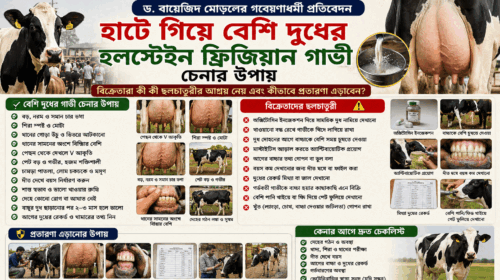

















বেশি দুধের গাভী চেনার উপায়: বড় ওলান নয়, উৎপাদনের প্রমাণই আসল
চেহারা, বংশতথ্য, দুধের রেকর্ড ও স্বাস্থ্য পরীক্ষা মিলিয়ে গাভী নির্বাচন করলে কমতে পারে ভুল কেনার ঝুঁকি।
কৃষি সাংবাদিক ড. বায়েজিদ মোড়লের গবেষণাধর্মী প্রতিবেদন
গাভী কিনতে গিয়ে খামারির প্রথম প্রশ্ন—“দিনে কত লিটার দুধ দেয়?” বিক্রেতা বড় ওলান দেখান, কখনো একবেলা দোহন করেও দেখান। কিন্তু বাড়িতে আনার পর প্রত্যাশিত দুধ না পেলে ক্রেতা বিপাকে পড়েন।
শুধু গায়ের রং, শরীরের আকার, বড় ওলান কিংবা মোটা দুধের শিরা দেখে দৈনিক উৎপাদন নির্ভরযোগ্যভাবে বলা যায় না। সঠিক সিদ্ধান্তের জন্য দুধের রেকর্ড, বাচ্চা দেওয়ার তারিখ, বংশপরিচয়, স্বাস্থ্য এবং নিজের খামারের সামর্থ্য একসঙ্গে যাচাই করতে হবে।

বেশি দুধের গাভী বলতে কী বোঝায়?
একদিন বেশি দুধ দেওয়া এবং দীর্ঘ সময় ভালো উৎপাদন ধরে রাখা এক বিষয় নয়। বর্তমানে কত দুধ পাওয়া যাচ্ছে, বাচ্চা দেওয়ার পর কত দিন হয়েছে, আগের দুধদানকালে উৎপাদন কেমন ছিল এবং কী পরিমাণ খাদ্য লেগেছে—এসব জানতে হবে।
দুধদানের ভিন্ন পর্যায়ে থাকা দুটি গাভীকে শুধু আজকের উৎপাদন দিয়ে তুলনা করলে ভুল সিদ্ধান্ত হতে পারে।
১. প্রথমে দেখুন দুধের রেকর্ড
গাভী নির্বাচন শুরু করুন খামারের হিসাবখাতা থেকে। সকাল-বিকেলের পৃথক দুধ, দৈনিক মোট উৎপাদন এবং গত কয়েক সপ্তাহের পরিবর্তন দেখুন। তিনবার দোহন হলে তিনবেলার হিসাব নিন।
আগের বাচ্চার পর সর্বোচ্চ উৎপাদন, দুধদানের স্থায়িত্ব, চিকিৎসা ও প্রজননের ইতিহাসও যাচাই করুন। রেকর্ড না থাকলেই গাভী খারাপ নয়; তবে অনিশ্চয়তা বাড়ে। তখন সরাসরি পর্যবেক্ষণ ও স্বাধীন স্বাস্থ্য পরীক্ষা আরও জরুরি।

২. একবেলার দুধ দেখে দাম ঠিক করবেন না
একবারের দোহন পুরো দিনের স্বাভাবিক উৎপাদনের প্রমাণ নয়। আগের দোহনের পর কত সময় পেরিয়েছে, বাছুর কতটুকু দুধ খেয়েছে এবং সম্পূর্ণ দোহন হয়েছে কি না—জানতে হবে।
সম্ভব হলে স্বাভাবিক খাদ্য ও দোহনের রুটিনে টানা দুই–তিন দিন সব বেলার দুধ মাপুন। এটি ব্যবহারিক যাচাইপদ্ধতি, সর্বজনীন বৈজ্ঞানিক ক্রয়মান নয়।
দোহনের সময়, খাদ্য, বাছুরের অংশ ও ওষুধ ব্যবহারের তথ্য লিখুন। মোট উৎপাদন, দোহন করা দুধ এবং বিক্রিযোগ্য দুধ আলাদা হিসাব করুন।

৩. বড় ওলানের চেয়ে সুগঠিত ও সুস্থ ওলান গুরুত্বপূর্ণ
দোহনের আগে ও পরে ওলান দেখুন। শরীরের সঙ্গে দৃঢ়ভাবে যুক্ত কি না, অতিরিক্ত ঝুলে পড়েছে কি না এবং চার অংশে অস্বাভাবিক অসমতা রয়েছে কি না লক্ষ্য করুন।
কোনো অংশ শক্ত, গরম, ফোলা বা ব্যথাযুক্ত হলে সতর্ক হোন। দোহনের পরও অস্বাভাবিক শক্তভাব থাকলে পরীক্ষা করান। বড় ওলান বেশি দুধের নিশ্চয়তা নয়; ফোলা বা রোগেও আকার বদলাতে পারে।

৪. চারটি বাঁট কার্যকর কি না যাচাই করুন
বাঁটের আকার ও অবস্থান দোহনের সুবিধাকে প্রভাবিত করে। অতিরিক্ত লম্বা, ছোট, কাছাকাছি বা অস্বাভাবিক অবস্থানের বাঁটে দোহন কঠিন হতে পারে।
চারটি বাঁট থেকে পৃথকভাবে দুধ বের হচ্ছে কি না দেখুন। কোনো অংশ থেকে দুধ না এলে কিংবা অস্বাভাবিক দুধ এলে শুধু মোট উৎপাদন দেখে কেনার সিদ্ধান্ত নেবেন না।

৫. গোপন ওলান প্রদাহ পরীক্ষা করুন
বাইরে স্বাভাবিক দেখালেও ওলানে গোপন প্রদাহ থাকতে পারে। দৃশ্যমান লক্ষণ ছাড়াই এতে দুধের পরিমাণ ও গুণগত মান ক্ষতিগ্রস্ত হয়।
ক্যালিফোর্নিয়া ম্যাস্টাইটিস টেস্ট বা সিএমটি এবং দুধের দেহকোষের সংখ্যা পর্যবেক্ষণ সমস্যা শনাক্তে সহায়ক। প্রয়োজনে দুধের কালচার পরীক্ষা লাগে। সিএমটি একাই জীবাণু বা চিকিৎসা নির্ধারণ করে না।
কেনার আগে প্রাণিচিকিৎসক দিয়ে পরীক্ষা করান। দুধে দলা, রক্ত বা অস্বাভাবিক পানির মতো ভাব থাকলে গুরুত্ব দিন।

৬. শরীরের গঠন দেখুন, কিন্তু রোগা গাভীকে স্বয়ংক্রিয়ভাবে ভালো ভাববেন না
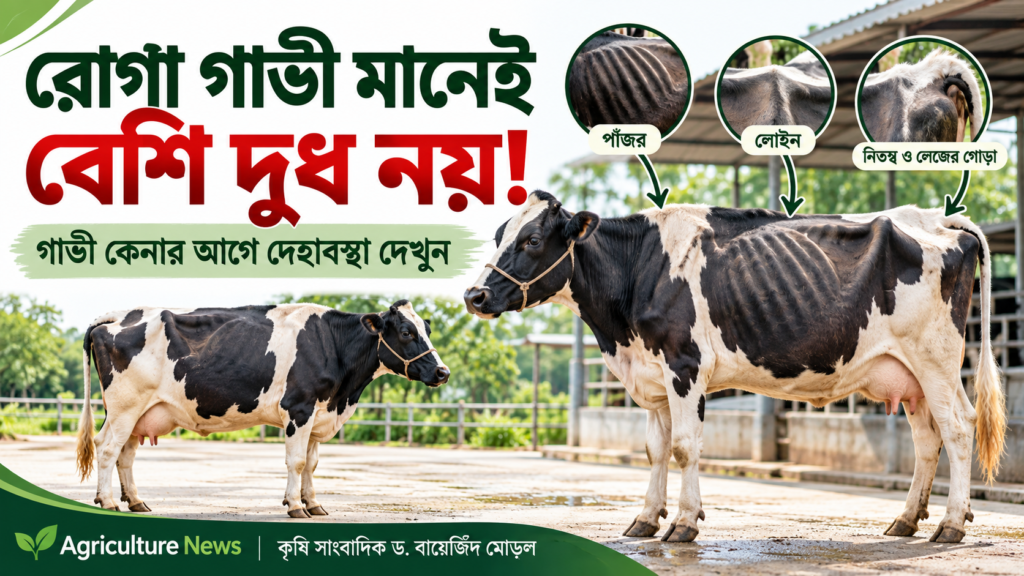
দুধাল গাভী মাংস উৎপাদনের গরুর মতো পেশিবহুল না-ও হতে পারে। কিন্তু অতিরিক্ত রোগা দেখেই “সব খাবার দুধে যাচ্ছে” ভাবা ঠিক নয়।
দেহাবস্থা মূল্যায়নে সাধারণত ১ থেকে ৫ মাত্রার স্কোর ব্যবহৃত হয়; ১ অত্যন্ত রোগা, ৫ অত্যন্ত স্থূল। উপযুক্ত অবস্থা দুধদান ও প্রজননের পর্যায় অনুযায়ী বিচার করতে হয়। পাঁজর, কোমর, নিতম্ব দেখার পাশাপাশি সাম্প্রতিক ওজন হ্রাস, ক্ষুধা ও রোগের ইতিহাস জানুন।
৭. পা ও ক্ষুর ভালো না হলে উৎপাদন ধরে রাখা কঠিন
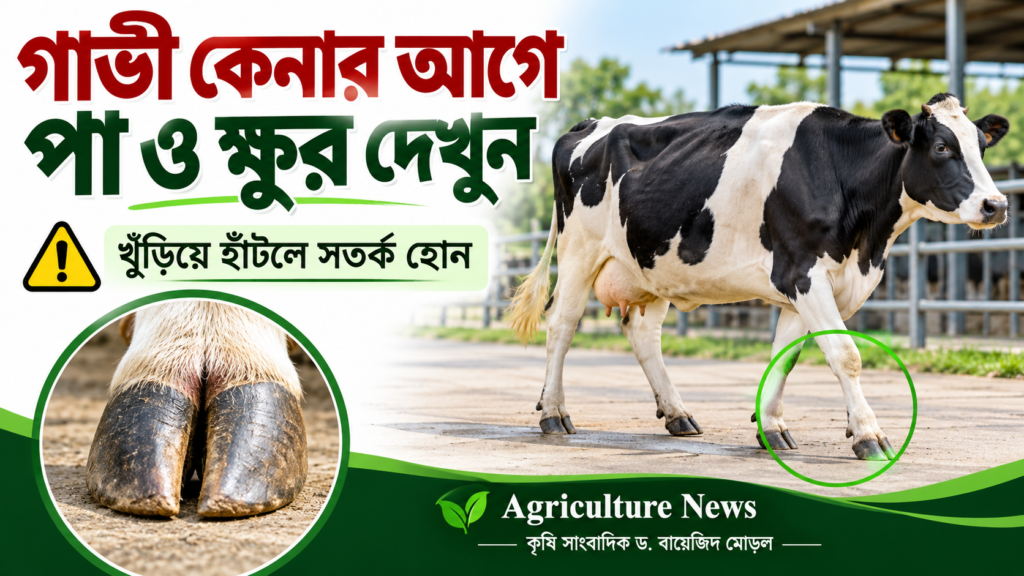
পা ও ক্ষুরে সমস্যা থাকলে গাভীর হাঁটা, খাবার-পানি গ্রহণ এবং দাঁড়িয়ে দোহনে অসুবিধা হয়। এতে উৎপাদন ধরে রাখা কঠিন হতে পারে।
সমতল, পিছল নয় এমন জায়গায় হাঁটিয়ে দেখুন। খুঁড়িয়ে হাঁটে কি না, কোনো পায়ে ভর কম দেয় কি না এবং উঠতে-বসতে কষ্ট হয় কি না লক্ষ্য করুন। ক্ষুরে ক্ষত বা অস্বাভাবিক বৃদ্ধিও পরীক্ষা করুন।
৮. জাতের নামের পাশাপাশি বংশের প্রমাণ দেখুন
“উন্নত ফ্রিজিয়ান” বা “জার্সি সংকর” বললেই জাত নিশ্চিত হয় না। গায়ের রং দিয়ে সংকরজাতের সঠিক শতাংশ নির্ধারণ করা যায় না।
সম্ভব হলে মায়ের উৎপাদনের রেকর্ড, ব্যবহৃত ষাঁড় বা বীজের পরিচয়, কৃত্রিম প্রজননের নথি এবং গাভীর জন্মতারিখ মিলিয়ে দেখুন। বংশতথ্য সম্ভাবনা বোঝায়; মা বেশি দুধ দিলেই মেয়েও সমান দেবে—এ নিশ্চয়তা নেই।

৯. নিজের খামারের সঙ্গে গাভীর সামর্থ্য মিলিয়ে নিন
বেশি দুধের গাভীর জন্য পর্যাপ্ত মানসম্মত খাদ্য, পরিষ্কার পানি, আরামদায়ক বাসস্থান ও চিকিৎসা দরকার। বাংলাদেশের গরম-আর্দ্র পরিবেশে বাতাস চলাচল এবং গরম কমানোর ব্যবস্থাও গুরুত্বপূর্ণ।
অন্য খামারে ভালো উৎপাদন করা গাভী আপনার খামারে একই ফল দেবে কি না, তা ব্যবস্থাপনার পার্থক্যের ওপরও নির্ভর করে। কেনার আগে নিয়মিত খাদ্য ও পরিচর্যার সামর্থ্য বিচার করুন।

১০. প্রজননের ইতিহাস ছাড়া মূল্যায়ন অসম্পূর্ণ
বর্তমান দুধের পাশাপাশি নিয়মিত গর্ভধারণ ও বাচ্চা দেওয়ার ইতিহাস জানতে হবে। শেষ প্রসবের তারিখ, কতবার প্রজনন করানো হয়েছে এবং আগের প্রসবে জটিলতা ছিল কি না যাচাই করুন।
বিক্রেতা গর্ভবতী দাবি করলে প্রাণিচিকিৎসক দিয়ে নিশ্চিত করুন। দাঁত দেখে বয়সের ধারণা পেলেও জন্ম ও প্রজননের নথির সঙ্গে মিলিয়ে নিন।

১১. বেশি দুধ এবং বেশি লাভের হিসাব এক নয়
ধরা যাক, প্রতি লিটার দুধের দাম ৬০ টাকা। একটি গাভীর বিক্রিযোগ্য দুধ ১৫ লিটার, খাদ্যব্যয় ৫০০ টাকা; অন্যটির দুধ ২০ লিটার, খাদ্যব্যয় ৮০০ টাকা। উভয়ের খাদ্যব্যয় বাদে অবশিষ্ট ৪০০ টাকা।
এটি কেবল বোঝানোর উদাহরণ, বর্তমান বাজারদর নয়। অবশিষ্ট অর্থও নিট লাভ নয়। শ্রম, চিকিৎসা, বিদ্যুৎ, বাসস্থান, প্রজনন, মূলধন ও দুধ বন্ধ থাকার ব্যয় ধরতে হবে।

প্রচলিত ধারণা ও বাস্তব যাচাই
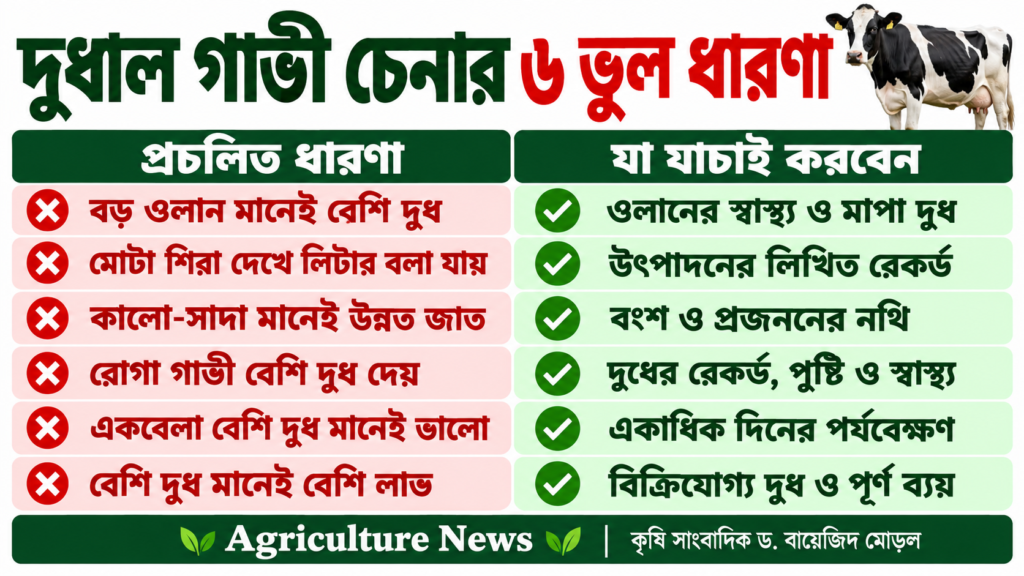
বড় ওলানের বদলে সুস্থ ওলান ও মাপা দুধ দেখুন। মোটা শিরার বদলে উৎপাদনের রেকর্ড নিন। গায়ের রঙের বদলে বংশের নথি যাচাই করুন। রোগা শরীরকে ভালো উৎপাদনের প্রমাণ ভাববেন না। একবেলার প্রদর্শনের বদলে একাধিক দিন পর্যবেক্ষণ করুন। বেশি দুধের সঙ্গে পূর্ণ ব্যয়ও মিলিয়ে দেখুন।
কেনার আগে খামারির করণীয়
প্রথমে তথ্য নিন: দুধ, খাদ্য, প্রসব, চিকিৎসা ও প্রজননের ইতিহাস সংগ্রহ করুন।
তারপর নিজে দেখুন: স্বাভাবিক দোহন, ওলান, বাঁট, হাঁটা ও খাবার গ্রহণ পর্যবেক্ষণ করুন।
স্বাধীন পরীক্ষা করান: ক্রেতার পক্ষে প্রাণিচিকিৎসক দিয়ে স্বাস্থ্য ও প্রয়োজনমতো গর্ভাবস্থা যাচাই করান।
লিখিতভাবে কিনুন: পরিচয়, দাম ও বিক্রেতার দাবিগুলো রসিদে রাখুন।
নিজের সামর্থ্য হিসাব করুন: কেনার পাশাপাশি নিয়মিত খরচ বহনের সক্ষমতা নিশ্চিত করুন।
ভালো গাভী নির্বাচনের ভিত্তি হলো মাপা উৎপাদন, যাচাইযোগ্য ইতিহাস, সুস্থতা ও উপযুক্ত ব্যবস্থাপনা।

How to Identify a High-Yielding Dairy Cow: Production Records Matter More Than Udder Size
Assessing appearance, pedigree, milk records and health together can reduce the risk of buying the wrong cow.
A research-based report by agricultural journalist Dr. Bayezid Moral
When buying a dairy cow, a farmer’s first question is usually, “How many litres of milk does she produce daily?” The seller may point to a large udder or demonstrate a single milking. Yet after bringing the cow home, the buyer may find that production falls below expectations.
Coat colour, body size, a large udder or prominent milk veins cannot reliably establish daily milk yield. A sound decision requires checking production records, calving dates, pedigree, health and the buyer’s capacity to manage the animal.
What Does a High-Yielding Dairy Cow Mean?
Producing a large quantity of milk on one day is different from maintaining good production over time. Buyers should consider current yield, days since calving, production during the previous lactation, and the feed required to support that output.
Comparing two cows at different stages of lactation solely on their current daily yield can lead to a poor decision.
1. Check Milk Production Records First
Begin with the farm’s record book. Check morning and evening yields, daily totals and changes over recent weeks. If the cow is milked three times daily, review all three milkings.
Also examine peak production after the previous calving, lactation length, treatment history and breeding records. Missing records do not automatically mean a cow is unsuitable, but they increase uncertainty. Direct observation and an independent health examination then become even more important.
2. Do Not Set the Price Based on One Milking
A single milking does not establish normal daily production. Find out how long it has been since the previous milking, how much milk the calf has consumed and whether milking was complete.
Where possible, measure every milking for two or three consecutive days under the cow’s normal feeding and milking routine. This is a practical verification method, rather than a universal scientific purchasing standard.
Record milking times, feed, calf consumption and medication use. Keep total production, milk collected and saleable milk as separate figures.
3. A Well-Attached, Healthy Udder Matters More Than a Large One
Inspect the udder before and after milking. Check whether it is firmly attached, hangs excessively low or has unusual differences between its four quarters.
Be alert to hardness, heat, swelling or pain. Unusual firmness that remains after milking requires examination. A large udder does not guarantee high production; swelling or disease can also change its size.
4. Check Whether All Four Teats Are Functional
Teat size and position affect ease of milking. Excessively long, short, closely placed or unusually positioned teats may make milking difficult.
Check milk flow from each teat separately. If one quarter produces no milk or produces abnormal milk, do not make a purchasing decision based solely on the cow’s total yield.
5. Test for Subclinical Mastitis
An udder may look normal while having subclinical mastitis. This condition can reduce milk quantity and quality without obvious external signs.
The California Mastitis Test, or CMT, and somatic cell count monitoring can help identify udder problems. Milk culture may be needed in some cases. CMT alone does not identify the organism responsible or determine treatment.
Arrange a veterinary examination before purchase. Clots, blood or an unusually watery appearance in the milk deserve attention.
6. Assess Body Structure, but Do Not Automatically Consider a Thin Cow a Good Milker
A dairy cow may be less muscular than a beef animal. However, assuming that an extremely thin cow is “putting all her feed into milk” is misleading.
Body condition is commonly assessed on a scale of 1 to 5, with 1 indicating extreme thinness and 5 indicating excessive fatness. Suitable condition depends on the stage of lactation and reproduction. Examine the ribs, loin and hips, and ask about recent weight loss, appetite and illness.
7. Poor Feet and Hooves Make Sustained Production Difficult
Foot and hoof problems can interfere with walking, access to feed and water, and standing comfortably during milking. These difficulties can make production harder to maintain.
Watch the cow walk on a level, non-slip surface. Look for limping, reduced weight-bearing on one leg or difficulty getting up and lying down. Inspect the hooves for wounds and abnormal growth.
8. Look for Pedigree Evidence Alongside Breed Names
Descriptions such as “improved Friesian” or “Jersey crossbred” do not confirm a cow’s ancestry. Coat colour cannot establish an exact crossbreeding percentage.
Where possible, check the dam’s production records, the identity of the sire or semen used, artificial insemination records and the cow’s date of birth. Pedigree helps indicate potential, but a high-yielding mother does not guarantee that her daughter will produce the same amount.
9. Match the Cow’s Requirements to Your Farm’s Capacity
A high-yielding cow needs sufficient quality feed, clean water, comfortable housing and veterinary care. In Bangladesh’s hot, humid conditions, ventilation and measures to reduce heat stress are also important.
Whether a cow performs as well on your farm as on another depends partly on differences in management. Assess your ability to provide regular feeding and care before purchasing.
10. Assessment Is Incomplete Without Reproductive History
Alongside current milk yield, examine the cow’s history of conception and calving. Verify the last calving date, the number of breeding attempts and any previous calving complications.
If the seller claims the cow is pregnant, have a veterinarian confirm it. Teeth can help estimate age, but the estimate should be compared with birth and breeding records where available.
11. More Milk Does Not Necessarily Mean More Profit
Suppose milk sells for Tk 60 per litre. One cow provides 15 litres of saleable milk daily with a feed cost of Tk 500; another provides 20 litres with a feed cost of Tk 800. Both leave Tk 400 after feed costs.
This is an illustrative example, not a statement of current market prices. The remaining amount is not net profit. Labour, treatment, electricity, housing, breeding, capital and dry-period costs must also be included.
Common Beliefs and Practical Verification
Assess udder health and measured milk yield instead of relying on udder size. Check production records rather than prominent milk veins. Verify pedigree documents rather than coat colour. Do not treat thinness as proof of high production. Observe several days instead of relying on one demonstration. Compare higher milk yield with the full cost of maintaining it.
What Farmers Should Do Before Buying
Collect information first: Obtain milk production, feeding, calving, treatment and breeding histories.
Then observe directly: Watch normal milking, udder and teat condition, walking and feed intake.
Arrange an independent examination: Have a veterinarian working for the buyer check health and, where necessary, pregnancy status.
Document the purchase: Record the cow’s identity, price and the seller’s claims on the purchase receipt.
Assess your capacity: Confirm that you can afford ongoing expenses as well as the purchase price.
Selecting a good dairy cow depends on measured production, verifiable history, sound health and suitable management.