














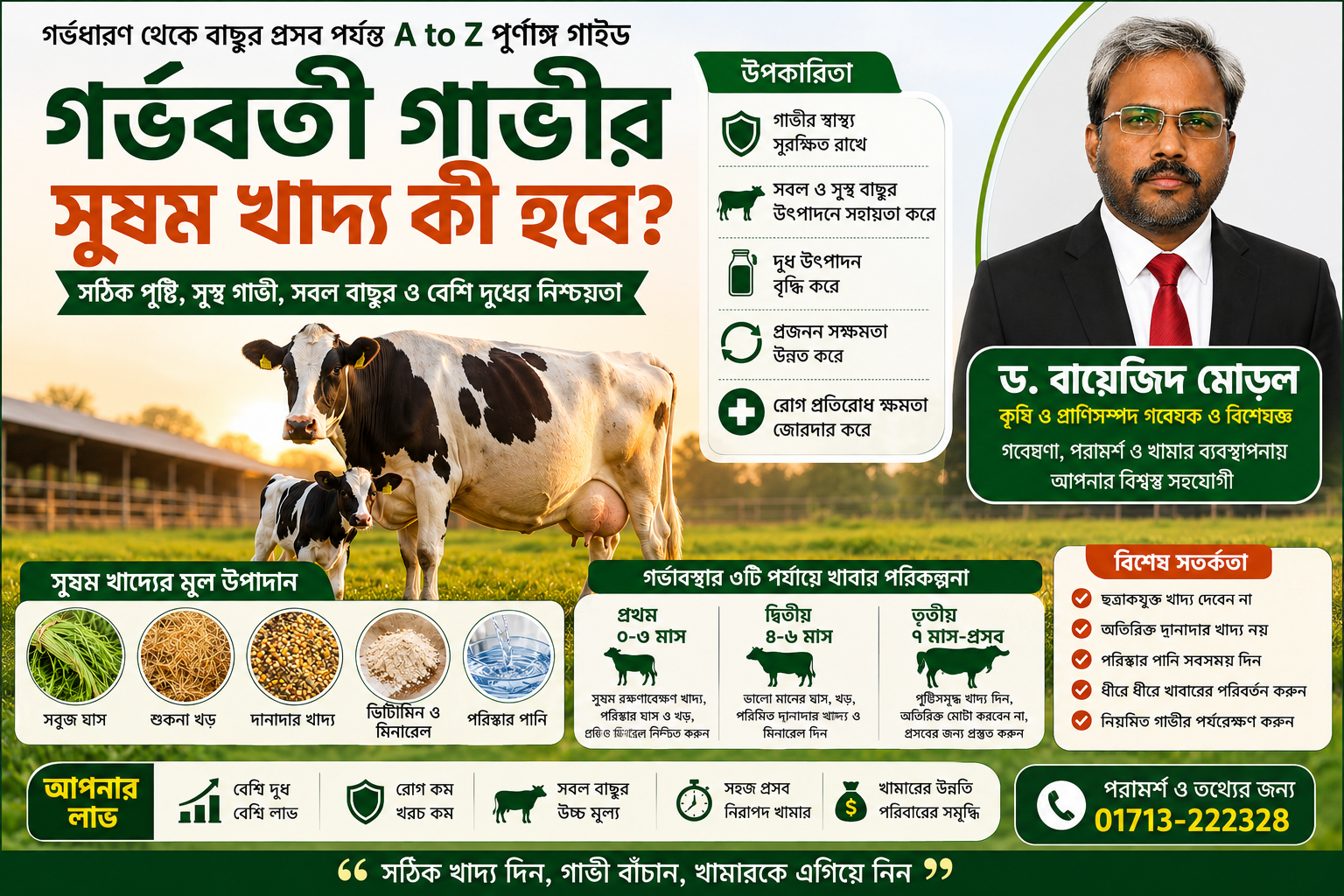
গর্ভবতী গাভীর সুষম খাদ্য কী হবে?গর্ভধারণ থেকে বাছুর প্রসব পর্যন্ত A to Z পূর্ণাঙ্গ গাইড//গবেষণা ও প্রতিবেদন: ড. বায়েজিদ মোড়ল
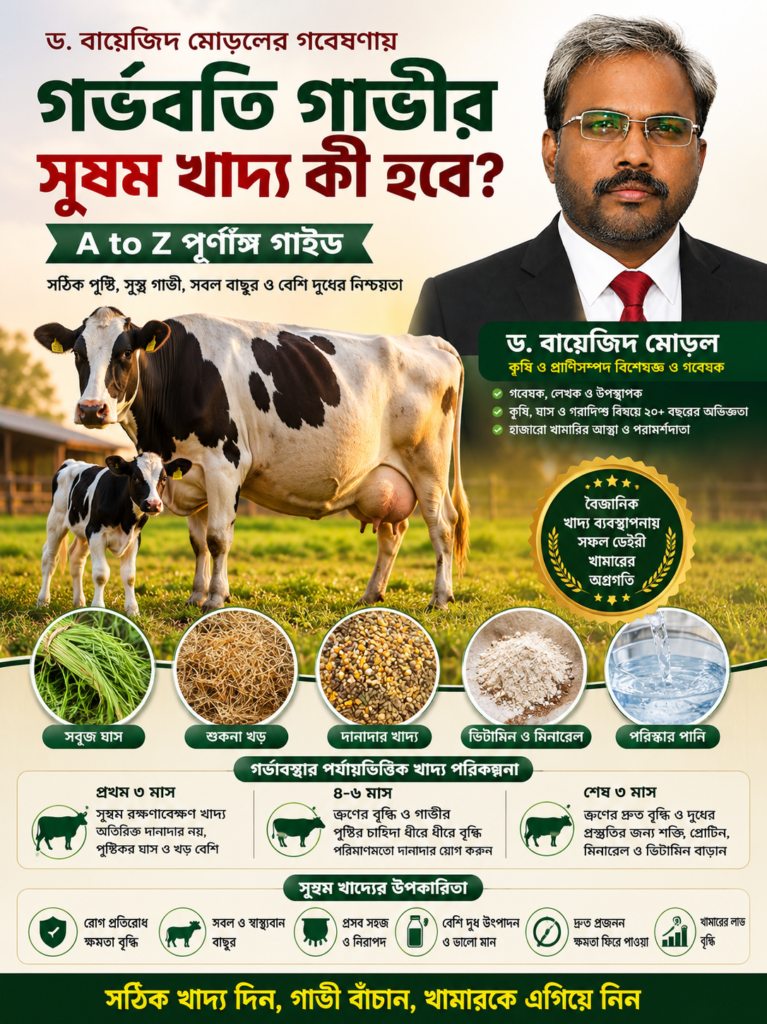
একটি সুস্থ গাভী, সবল বাছুর এবং পরবর্তী দুধ উৎপাদনের ভিত্তি তৈরি হয় গর্ভাবস্থাতেই। গর্ভবতী গাভীকে শুধু পেট ভরে খাবার দিলেই দায়িত্ব শেষ হয় না। তাকে এমনভাবে খাদ্য দিতে হবে, যাতে গাভীর নিজের শরীর ঠিক থাকে, গর্ভের বাছুর স্বাভাবিকভাবে বেড়ে ওঠে, প্রসব সহজ হয় এবং প্রসবের পর পর্যাপ্ত দুধ উৎপাদন করতে পারে।
গর্ভাবস্থায় প্রয়োজনের তুলনায় কম খাদ্য দিলে গাভী দুর্বল হয়ে পড়ে, বাছুরের জন্ম ওজন কম হতে পারে, দুধ উৎপাদন কমে এবং প্রসবের পর প্রজননক্ষমতা ফিরে আসতে দেরি হতে পারে। আবার অতিরিক্ত দানাদার খাদ্য দিয়ে গাভীকে বেশি মোটা করলেও প্রসবকালীন জটিলতা, ক্ষুধা কমে যাওয়া, কিটোসিস বা ফ্যাটি লিভারের ঝুঁকি বাড়তে পারে। বিশেষ করে প্রসবের সময় ১–৫ স্কেলে বডি কন্ডিশন স্কোর ৩.৭৫ বা তার বেশি হলে বিপাকজনিত সমস্যার ঝুঁকি বাড়ে।
১. গর্ভবতী গাভীর খাদ্য নির্ধারণের প্রধান বিষয়
সব গর্ভবতী গাভীকে একই পরিমাণ খাদ্য দেওয়া যাবে না। খাদ্য তালিকা তৈরির আগে জানতে হবে—
- গাভীর শরীরের ওজন কত;
- দেশি, শংকর নাকি উচ্চ উৎপাদনশীল জাত;
- বর্তমানে দৈনিক কত লিটার দুধ দিচ্ছে;
- গর্ভাবস্থার কত মাস চলছে;
- গাভী রোগা, স্বাভাবিক নাকি অতিরিক্ত মোটা;
- গাভী প্রথমবার বাচ্চা দেবে নাকি একাধিকবার বাচ্চা দিয়েছে;
- সরবরাহ করা ঘাস ও খড়ের পুষ্টিমান কেমন;
- গাভীর চলাফেরা ও পরিবেশগত চাপ কতটা।
খাদ্যের প্রকৃত পুষ্টি আসে এর শুষ্ক পদার্থ বা ড্রাই ম্যাটার অংশ থেকে। সাধারণভাবে একটি প্রাপ্তবয়স্ক গাভীর মোট ড্রাই ম্যাটার গ্রহণ তার দৈহিক ওজন, দুধ উৎপাদন ও গর্ভাবস্থার ওপর নির্ভর করে। মোটামুটি শরীরের ওজনের প্রায় ২.৫–৩ শতাংশ ড্রাই ম্যাটার হিসেবে ধরা যায়, তবে প্রসবের কাছাকাছি সময়ে পেটের ভেতর বাছুরের চাপ ও হরমোনগত পরিবর্তনের কারণে খাদ্য গ্রহণ কমে যেতে পারে।
২. গর্ভাবস্থাকে তিনটি পর্যায়ে ভাগ করুন
প্রথম পর্যায়: গর্ভধারণ থেকে তিন মাস
এ সময়ে ভ্রূণের আকার ছোট থাকে। তাই শুধু গর্ভধারণের জন্য খুব বেশি অতিরিক্ত খাদ্যের প্রয়োজন হয় না। তবে গাভী যদি দুধ দেয়, তাহলে দুধ উৎপাদনের চাহিদা অনুযায়ী খাদ্য দিতে হবে।
এই পর্যায়ে লক্ষ্য হবে—
- গাভীর ওজন যেন হঠাৎ কমে না যায়;
- পরিষ্কার ও পুষ্টিকর খাদ্য সরবরাহ করা;
- অতিরিক্ত দানাদার খাদ্য না দেওয়া;
- প্রোটিন, খনিজ ও ভিটামিনের ঘাটতি না রাখা;
- বিশুদ্ধ পানি নিশ্চিত করা।
গাভী দুধ দিলে শুধু গর্ভবতী হিসেবে নয়, বরং দুধ উৎপাদনকারী গাভী হিসেবেও রেশন তৈরি করতে হবে।
দ্বিতীয় পর্যায়: চার থেকে ছয় মাস
এ পর্যায়ে গর্ভের বাছুর ধীরে ধীরে বড় হতে থাকে। গাভীর খাদ্যে ভালো মানের সবুজ ঘাস, শুকনা আঁশজাতীয় খাদ্য, পরিমিত দানাদার খাদ্য এবং খনিজ মিশ্রণ নিশ্চিত করতে হবে।
গাভী যদি তখনও দুধ দেয়, দুধের পরিমাণ অনুযায়ী কনসেনট্রেট দিতে হবে। তবে বডি কন্ডিশন নিয়মিত দেখে খাদ্যের পরিমাণ বাড়ানো বা কমানো জরুরি।
তৃতীয় পর্যায়: সাত মাস থেকে প্রসব
গর্ভাবস্থার শেষ তিন মাস সবচেয়ে গুরুত্বপূর্ণ। এ সময়ে গর্ভের বাছুরের দ্রুত বৃদ্ধি ঘটে এবং গাভীর স্তনগ্রন্থি পরবর্তী দুধ উৎপাদনের জন্য প্রস্তুত হয়। পর্যাপ্ত পুষ্টি না পেলে গাভী দুর্বল হতে পারে এবং বাছুরের বৃদ্ধি ব্যাহত হতে পারে। অন্যদিকে হঠাৎ বেশি খাদ্য দিলে হজমের গোলযোগ দেখা দিতে পারে।
শেষ তিন মাসে খাদ্যের পুষ্টিমান কিছুটা বাড়াতে হবে, কিন্তু গাভীকে অতিরিক্ত মোটা করা যাবে না। গাভী রোগা হলে শেষ ত্রৈমাসিকের আগেই তার বডি কন্ডিশন উন্নত করা উত্তম।
৩. গর্ভবতী গাভীর সুষম খাদ্যের প্রধান উপাদান
ক. সবুজ ঘাস
সবুজ ঘাস গর্ভবতী গাভীর রেশনের অন্যতম প্রধান অংশ। ঘাস থেকে আঁশ, প্রোটিন, ভিটামিন এবং কিছু খনিজ পাওয়া যায়।
উপযুক্ত ঘাসের মধ্যে রয়েছে—
- নেপিয়ার;
- পাকচং;
- জার্মান;
- প্যারা;
- গিনি;
- ভুট্টার সবুজ গাছ;
- ওট;
- দেশি ঘাস;
- ডালজাতীয় ঘাস;
- উন্নত জাতের অন্যান্য নিরাপদ ঘাস।
একটি ৩৫০–৪৫০ কেজি ওজনের গাভীকে সাধারণভাবে প্রতিদিন প্রায় ১৫–২৫ কেজি ভালো মানের সবুজ ঘাস দেওয়া যেতে পারে। ঘাসে পানির পরিমাণ বেশি হলে প্রয়োজনীয় ড্রাই ম্যাটার পূরণে খড় বা সাইলেজ যোগ করতে হবে।
অতিরিক্ত কচি ও ভেজা ঘাস একবারে বেশি দিলে পেট ফাঁপা, পাতলা পায়খানা বা রুমেনের ভারসাম্য নষ্ট হতে পারে। ঘাস কেটে কিছুক্ষণ রেখে এবং ২–৩ ইঞ্চি আকারে কুচি করে দেওয়া ভালো।
খ. শুকনা খড়
ধানের খড় বাংলাদেশের গাভীর খাদ্যের প্রচলিত উৎস। তবে শুধু খড় দিয়ে গর্ভবতী গাভীর পুষ্টির চাহিদা পূরণ হয় না। খড়ে প্রোটিন ও শক্তি কম থাকে।
একটি মাঝারি ওজনের গাভীকে সাধারণত প্রতিদিন ৩–৫ কেজি শুকনা ও পরিষ্কার খড় দেওয়া যেতে পারে। সবুজ ঘাস কম থাকলে খড়ের পরিমাণ বাড়তে পারে, তবে সঙ্গে দানাদার খাদ্য ও প্রোটিনের উৎস বাড়াতে হবে।
খড় অবশ্যই হতে হবে—
- ছত্রাকমুক্ত;
- দুর্গন্ধমুক্ত;
- ধুলাবালিমুক্ত;
- বৃষ্টিতে ভেজা নয়;
- পচা বা কালো দাগবিহীন।
গ. সাইলেজ
ভালো মানের ভুট্টা বা ঘাসের সাইলেজ শক্তি ও আঁশের উৎকৃষ্ট উৎস। প্রতিদিন আনুমানিক ৮–১৫ কেজি সাইলেজ দেওয়া যেতে পারে। তবে গাভী আগে সাইলেজ না খেলে অল্প দিয়ে শুরু করতে হবে।
পচা, দুর্গন্ধযুক্ত, অতিরিক্ত কালো, ছত্রাকযুক্ত বা বাতাসে নষ্ট হওয়া সাইলেজ গর্ভবতী গাভীকে দেওয়া যাবে না।
ঘ. দানাদার খাদ্য
দানাদার খাদ্য থেকে শক্তি, প্রোটিন, খনিজ ও ভিটামিন পাওয়া যায়। দানাদার মিশ্রণে সাধারণত থাকতে পারে—
- ভুট্টা ভাঙা;
- গমের ভুসি;
- চালের কুঁড়া;
- খেসারি বা অন্যান্য নিরাপদ ডালজাতীয় উপাদান;
- সয়াবিন মিল;
- সরিষার খৈল;
- তিলের খৈল;
- মোলাসেস;
- খনিজ মিশ্রণ;
- লবণ।
সয়াবিন মিল ও ক্যানোলা মিলের মতো উদ্ভিজ্জ উৎসগুলো গাভীর খাদ্যে বহুল ব্যবহৃত প্রোটিনের উৎস।
দানাদার খাদ্যের পরিমাণ নির্ভর করবে গাভীর দুধ উৎপাদন ও শারীরিক অবস্থার ওপর। একটি শুকনা, গর্ভবতী, স্বাভাবিক বডি কন্ডিশনের মাঝারি গাভীকে সাধারণভাবে ১.৫–৩ কেজি দানাদার খাদ্য দেওয়া যেতে পারে। গাভী দুধ দিলে দুধের উৎপাদন অনুযায়ী অতিরিক্ত কনসেনট্রেট যোগ করতে হবে।
৪. একটি ব্যবহারযোগ্য দানাদার খাদ্যের নমুনা ফর্মুলা
নিচের ফর্মুলাটি ১০০ কেজি দানাদার খাদ্যের একটি সাধারণ উদাহরণ—
| খাদ্য উপাদান | পরিমাণ |
|---|---|
| ভুট্টা ভাঙা | ২৫ কেজি |
| গমের ভুসি | ৩০ কেজি |
| চালের কুঁড়া বা রাইস পলিশ | ২০ কেজি |
| সয়াবিন মিল | ১০ কেজি |
| সরিষার খৈল | ১০ কেজি |
| মোলাসেস | ২ কেজি |
| ডেইরি মিনারেল মিক্সচার | ২ কেজি |
| খাবার লবণ | ১ কেজি |
| মোট | ১০০ কেজি |
স্থানীয় উপাদানের পুষ্টিমান, আর্দ্রতা, ছত্রাক, মূল্য ও প্রাপ্যতা অনুযায়ী ফর্মুলা পরিবর্তন করতে হবে। একই সঙ্গে সয়াবিন মিল ও সরিষার খৈল ব্যবহার করলে মোট প্রোটিনের মাত্রা হিসাব করে নিতে হবে।
ইউরিয়া, ইউরিয়া-মোলাসেস ব্লক বা অন্য কোনো নন-প্রোটিন নাইট্রোজেন উৎস বিশেষজ্ঞের নির্দেশনা ছাড়া গর্ভবতী গাভীকে দেওয়া উচিত নয়। ভুল পরিমাণে ইউরিয়া মারাত্মক বিষক্রিয়া ও মৃত্যু ঘটাতে পারে।
৫. ৩৫০–৪৫০ কেজি ওজনের গর্ভবতী গাভীর দৈনিক নমুনা রেশন
নমুনা–১: গাভী দুধ দিচ্ছে না, প্রসবের ২ মাসের বেশি বাকি
- সবুজ ঘাস: ১৫–২০ কেজি
- শুকনা খড়: ৪–৫ কেজি
- দানাদার খাদ্য: ১.৫–২ কেজি
- মিনারেল মিক্সচার: প্রস্তুতকারকের নির্দেশনা অনুযায়ী, সাধারণত ৫০–১০০ গ্রাম
- লবণ: ৩০–৫০ গ্রাম
- পানি: ইচ্ছামতো পরিষ্কার পানি
নমুনা–২: গাভী দুধ দিচ্ছে এবং ৪–৬ মাসের গর্ভবতী
- সবুজ ঘাস: ১৮–২৫ কেজি
- খড়: ৩–৪ কেজি
- দানাদার খাদ্য: রক্ষণাবেক্ষণের প্রয়োজনের সঙ্গে দুধ উৎপাদন অনুযায়ী অতিরিক্ত
- মিনারেল মিক্সচার: ৫০–১০০ গ্রাম বা লেবেল অনুযায়ী
- লবণ: ৩০–৫০ গ্রাম
- পর্যাপ্ত বিশুদ্ধ পানি
দুধের চর্বি, গাভীর ওজন এবং খাদ্যের মান অনুযায়ী প্রতি লিটার দুধের জন্য প্রয়োজনীয় দানাদার খাদ্যের পরিমাণ ভিন্ন হবে। তাই শুধু “প্রতি তিন লিটার দুধে এক কেজি” ধরনের একক নিয়মে না গিয়ে গাভীর শরীর ও গোবর পর্যবেক্ষণ করতে হবে।
নমুনা–৩: প্রসবের শেষ ৩ সপ্তাহের গাভী
- সবুজ ঘাস: ১২–১৮ কেজি
- ভালো মানের খড়: ৪–৫ কেজি
- দানাদার খাদ্য: ২–৩ কেজি, কয়েক ভাগে
- প্রয়োজন অনুযায়ী সাইলেজ: ৫–১০ কেজি
- ড্রাই-কাউ বা ক্লোজ-আপ মিনারেল মিশ্রণ: পুষ্টিবিদের পরামর্শ অনুযায়ী
- লবণ ও বিশুদ্ধ পানি
- পচা বা ছত্রাকযুক্ত খাদ্য সম্পূর্ণ নিষিদ্ধ
প্রসবের আগের দুই থেকে তিন সপ্তাহকে ট্রানজিশন বা ক্লোজ-আপ সময় বলা হয়। এ সময়ের রেশন এমন হতে হবে, যাতে গাভীর রুমেন ধীরে ধীরে প্রসব-পরবর্তী অধিক পুষ্টিসমৃদ্ধ রেশনের সঙ্গে খাপ খাইয়ে নিতে পারে।
৬. ড্রাই পিরিয়ড বা দুধ বন্ধ রাখার সময়
সাধারণভাবে সম্ভাব্য প্রসবের প্রায় ৬–৮ সপ্তাহ আগে দুধ দোহন বন্ধ করে গাভীকে বিশ্রাম দেওয়া হয়। ক্ষুদ্র খামারের ব্যবস্থাপনা নির্দেশিকায় প্রায় দুই মাস আগে ড্রাই-অফ করার পরামর্শ দেওয়া হয়েছে।
ড্রাই পিরিয়ডকে দুই ভাগে ভাগ করা যায়—
ফার-অফ ড্রাই পিরিয়ড
প্রসবের প্রায় ২১ দিন আগ পর্যন্ত। এ সময়ে রেশন হবে তুলনামূলকভাবে বেশি আঁশযুক্ত এবং মাঝারি শক্তিসম্পন্ন। অতিরিক্ত ভুট্টা, চালের কুঁড়া বা দানাদার খাদ্য দিয়ে গাভীকে মোটা করা যাবে না।
ক্লোজ-আপ পিরিয়ড
প্রসবের শেষ ২১ দিন। এ সময়ে ধীরে ধীরে দানাদার খাদ্য বাড়িয়ে গাভীর রুমেনকে প্রসব-পরবর্তী খাদ্যের জন্য প্রস্তুত করতে হবে। একদিনে হঠাৎ দানাদার খাদ্য বাড়ানো যাবে না।
৭. বডি কন্ডিশন স্কোর বা গাভীর শারীরিক অবস্থা
গর্ভবতী গাভীর খাদ্য ব্যবস্থাপনায় বডি কন্ডিশন স্কোর অত্যন্ত গুরুত্বপূর্ণ। শুধু ওজন দেখলে গাভীর শরীরে চর্বির সঠিক অবস্থা বোঝা যায় না।
১–৫ স্কেলে—
- ২.৫-এর নিচে: গাভী রোগা;
- প্রায় ৩.০–৩.৫: অধিকাংশ গাভীর জন্য গ্রহণযোগ্য;
- ৩.৭৫ বা তার বেশি: অতিরিক্ত মোটা হওয়ার ঝুঁকি;
- ৪ বা তার বেশি: প্রসব-পরবর্তী বিপাকজনিত রোগের আশঙ্কা বেশি।
ড্রাই-অফ, প্রসবের সময় এবং প্রসবের পর সর্বোচ্চ দুধ উৎপাদনের কাছাকাছি সময়ে বডি কন্ডিশন পরীক্ষা করা উচিত।
গাভী রোগা হলে হঠাৎ অতিরিক্ত দানা না দিয়ে ধীরে ধীরে শক্তি ও প্রোটিন বাড়াতে হবে। গাভী অতিরিক্ত মোটা হলে তাকে না খাইয়ে রোগা করার চেষ্টা করা বিপজ্জনক; বরং আঁশযুক্ত নিয়ন্ত্রিত রেশন দিতে হবে।
৮. প্রোটিনের প্রয়োজন
প্রোটিন প্রয়োজন হয়—
- গর্ভের বাছুরের বৃদ্ধি;
- গাভীর পেশি ও শরীর রক্ষা;
- স্তনগ্রন্থির বিকাশ;
- রোগ প্রতিরোধক্ষমতা;
- প্রসব-পরবর্তী দুধ উৎপাদন।
প্রোটিনের ভালো উৎস—
- সয়াবিন মিল;
- সরিষার খৈল;
- তিলের খৈল;
- মসুর বা মটরজাতীয় উপজাত;
- ডালজাতীয় সবুজ ঘাস;
- উপযুক্ত বাণিজ্যিক ডেইরি ফিড।
প্রোটিন বেশি দিলেই ফল ভালো হবে না। শক্তি ও প্রোটিনের মধ্যে ভারসাম্য থাকতে হবে। শক্তির ঘাটতি রেখে বেশি প্রোটিন দিলে তার বড় অংশ শরীর কার্যকরভাবে ব্যবহার করতে পারে না।
উচ্চ উৎপাদনশীল শুকনা গাভীর জন্য ড্রাই ম্যাটার গ্রহণ নির্ধারণের পর পর্যাপ্ত বিপাকযোগ্য প্রোটিন সরবরাহ করা জরুরি। এটি রোগ প্রতিরোধ, স্তনগ্রন্থির প্রস্তুতি এবং প্রসব-পরবর্তী প্রোটিনের ঘাটতি মোকাবিলায় সহায়তা করে।
৯. খনিজ ও ভিটামিন ব্যবস্থাপনা
গর্ভবতী গাভীর জন্য প্রয়োজনীয় প্রধান খনিজ হলো—
- ক্যালসিয়াম;
- ফসফরাস;
- ম্যাগনেশিয়াম;
- সোডিয়াম;
- পটাশিয়াম;
- সালফার;
- কপার;
- জিংক;
- সেলেনিয়াম;
- আয়োডিন;
- কোবাল্ট;
- ম্যাঙ্গানিজ।
প্রধান ভিটামিন হলো—
- ভিটামিন এ;
- ভিটামিন ডি;
- ভিটামিন ই।
শুধু ঘাস ও খড়ের ওপর নির্ভর করলে অনেক ক্ষেত্রে প্রয়োজনীয় খনিজের ঘাটতি থেকে যেতে পারে। উচ্চ উৎপাদনশীল বা গর্ভবতী গাভীর জন্য ভালো মানের ডেইরি মিনারেল মিক্সচার প্রয়োজন হতে পারে।
তবে মিনারেল মিশ্রণ অনুমান করে বেশি দেওয়া যাবে না। বিশেষ করে সেলেনিয়াম, কপার ও আয়োডিন অতিরিক্ত হলে বিষক্রিয়া হতে পারে।
১০. ক্যালসিয়াম ও মিল্ক ফিভার প্রতিরোধ
প্রসবের পর হঠাৎ দুধ উৎপাদন শুরু হলে গাভীর ক্যালসিয়ামের চাহিদা অনেক বেড়ে যায়। শরীর দ্রুত প্রয়োজনীয় ক্যালসিয়াম সরবরাহ করতে না পারলে মিল্ক ফিভার বা হাইপোক্যালসেমিয়া হতে পারে।
ড্রাই পিরিয়ডে অতিরিক্ত ক্যালসিয়াম খাওয়ানো সব সময় উপকারী নয়। বরং অনিয়ন্ত্রিত অতিরিক্ত ক্যালসিয়াম গাভীর নিজস্ব ক্যালসিয়াম নিয়ন্ত্রণব্যবস্থাকে দুর্বল করতে পারে।
বড় খামারে প্রসবের আগের রেশনে DCAD বা Dietary Cation-Anion Difference নিয়ন্ত্রণ এবং অ্যানায়নিক সল্ট ব্যবহার করা হয়। কিন্তু এটি অত্যন্ত হিসাবনির্ভর। খাদ্য পরীক্ষা, প্রস্রাবের pH পর্যবেক্ষণ এবং পুষ্টিবিদের তত্ত্বাবধান ছাড়া অ্যানায়নিক সল্ট ব্যবহার করা উচিত নয়। ভুল প্রয়োগে খাদ্য গ্রহণ কমে যাওয়া ও বিপাকীয় সমস্যার ঝুঁকি তৈরি হয়।
১১. পরিষ্কার পানির প্রয়োজন
পানি গাভীর সবচেয়ে গুরুত্বপূর্ণ খাদ্য উপাদান। পানির ঘাটতিতে—
- খাদ্য গ্রহণ কমে যায়;
- হজম ব্যাহত হয়;
- শরীরের তাপমাত্রা নিয়ন্ত্রণে সমস্যা হয়;
- দুধ উৎপাদন কমে;
- কোষ্ঠকাঠিন্য হতে পারে।
গরম আবহাওয়া, বড় দেহের ওজন এবং দুধ উৎপাদনের কারণে পানির প্রয়োজন অনেক বেড়ে যায়। তাই গর্ভবতী গাভীর সামনে সব সময় পরিষ্কার, দুর্গন্ধমুক্ত ও নিরাপদ পানি রাখতে হবে।
পুকুর, নর্দমা, বন্যার পানি বা রাসায়নিক দূষিত উৎসের পানি দেওয়া যাবে না। পানির পাত্র প্রতিদিন পরিষ্কার করতে হবে।
১২. দিনে কতবার খাদ্য দেবেন?
সম্ভব হলে দৈনিক রেশন তিন থেকে চার ভাগে ভাগ করে দেওয়া ভালো।
একটি ব্যবহারযোগ্য সময়সূচি হতে পারে—
- সকাল: খড় ও কিছু সবুজ ঘাস;
- সকাল দোহনের পর: দানাদার খাদ্যের একটি অংশ;
- দুপুর: সবুজ ঘাস বা সাইলেজ;
- বিকেল: খড় ও দানাদার খাদ্যের দ্বিতীয় অংশ;
- রাত: অবশিষ্ট আঁশযুক্ত খাদ্য।
একবারে বেশি দানা দিলে রুমেন অ্যাসিডোসিস, বদহজম, পেট ফাঁপা এবং পাতলা পায়খানার ঝুঁকি বাড়ে। খাদ্য পরিবর্তন কমপক্ষে ৭–১৪ দিনে ধীরে ধীরে করা উচিত।
১৩. গর্ভবতী গাভীকে যেসব খাদ্য দেওয়া যাবে না
গর্ভবতী গাভীর জন্য নিষিদ্ধ বা ঝুঁকিপূর্ণ খাদ্য হলো—
- ছত্রাকযুক্ত খড়;
- পচা সাইলেজ;
- দুর্গন্ধযুক্ত ভুসি বা কুঁড়া;
- বাসি ও গাঁজানো ভাত;
- অতিরিক্ত ইউরিয়াযুক্ত খাদ্য;
- কীটনাশকযুক্ত ঘাস;
- রাস্তার পাশের দূষিত ঘাস;
- বিষাক্ত আগাছা;
- অতিরিক্ত কচি ডালজাতীয় ঘাস;
- অপরিচিত শিল্পবর্জ্য;
- অতিরিক্ত লবণ;
- পলিথিন বা দড়ি মিশ্রিত খাদ্য;
- পচা ফল ও সবজি;
- অতিরিক্ত আলু, কচু বা অপরিশোধিত ঝুঁকিপূর্ণ উপজাত;
- মুরগির বিষ্ঠা বা লিটার;
- অতিরিক্ত তেল বা চর্বি।
বিষাক্ত গাছপালা খাওয়ার পর গাভীর খাবার বন্ধ করা, দুর্বলতা, ওজন কমা, দ্রুত নাড়ি বা অন্যান্য অস্বাভাবিক লক্ষণ দেখা দিতে পারে।
১৪. ছত্রাক ও আফলাটক্সিন থেকে সুরক্ষা
ভেজা ভুট্টা, চালের কুঁড়া, খৈল, খড় ও দানাদার খাদ্যে ছত্রাক জন্মাতে পারে। ছত্রাকযুক্ত খাদ্যে মাইকোটক্সিন থাকলে—
- খাদ্য গ্রহণ কমে;
- রোগ প্রতিরোধক্ষমতা দুর্বল হয়;
- গর্ভপাতের ঝুঁকি বাড়তে পারে;
- লিভারের ক্ষতি হতে পারে;
- দুধ উৎপাদন কমতে পারে।
খাদ্য শুকনা, উঁচু, বাতাস চলাচল করে এমন স্থানে রাখতে হবে। বস্তা মাটির ওপর না রেখে প্যালেটের ওপর রাখুন। শুধু টক্সিন বাইন্ডার ব্যবহার করে পচা খাদ্য নিরাপদ করা যায় না; দৃশ্যমানভাবে নষ্ট খাদ্য ফেলে দিতে হবে।
১৫. গর্ভবতী বকনার বিশেষ খাদ্য ব্যবস্থাপনা
প্রথমবার বাচ্চা দেবে এমন বকনা একই সঙ্গে নিজের শরীর এবং গর্ভের বাছুর—দুইয়ের বৃদ্ধির জন্য পুষ্টি চায়। তাই পূর্ণবয়স্ক গাভীর তুলনায় তার প্রয়োজন কিছুটা ভিন্ন।
গর্ভবতী বকনার ক্ষেত্রে—
- পর্যাপ্ত প্রোটিন নিশ্চিত করুন;
- অতিরিক্ত মোটা হতে দেবেন না;
- বড় গাভীর সঙ্গে খাবারের প্রতিযোগিতা কমান;
- আলাদা ফিডিং স্পেস দিন;
- নিয়মিত ওজন ও বডি কন্ডিশন দেখুন;
- প্রসবের আগে খনিজ ও ভিটামিনের ঘাটতি পূরণ করুন।
বকনাকে বেশি দানা খাইয়ে দ্রুত বড় করার চেষ্টা করলে অতিরিক্ত চর্বি জমে ভবিষ্যৎ দুধ উৎপাদন ও প্রসবের ওপর নেতিবাচক প্রভাব পড়তে পারে।
১৬. যমজ বাছুর বা অতিরিক্ত ঝুঁকির গাভী
যমজ বাছুর ধারণ করা গাভী, অতিরিক্ত রোগা গাভী, বৃদ্ধ গাভী বা আগে মিল্ক ফিভার ও কিটোসিস হয়েছে—এমন গাভীকে বিশেষ পর্যবেক্ষণে রাখতে হবে।
এ ধরনের গাভীর ক্ষেত্রে—
- ঘন ঘন বডি কন্ডিশন পরীক্ষা;
- খাদ্য গ্রহণ কমছে কি না দেখা;
- প্রয়োজনে আলাদা গ্রুপে রাখা;
- রক্ত বা প্রস্রাব পরীক্ষা;
- পুষ্টিবিদ ও পশুচিকিৎসকের পরিকল্পনা;
- প্রসবের সম্ভাব্য তারিখের আগেই প্রস্তুতি নেওয়া জরুরি।
১৭. গরমের সময় খাদ্য ব্যবস্থাপনা
বাংলাদেশের গরম ও আর্দ্র আবহাওয়ায় গাভী কম খেতে পারে। হিট স্ট্রেসে খাদ্য গ্রহণ কমলে গাভী ও গর্ভের বাছুর উভয়ই ক্ষতিগ্রস্ত হতে পারে।
গরমের সময়—
- সকাল ও সন্ধ্যার ঠান্ডা সময়ে বেশি খাদ্য দিন;
- ছায়া ও বাতাস চলাচলের ব্যবস্থা করুন;
- ফ্যান বা স্প্রিংকলার ব্যবহার করুন;
- সব সময় ঠান্ডা ও পরিষ্কার পানি রাখুন;
- পচনশীল ভেজা খাদ্য দীর্ঘ সময় ফিডারে রাখবেন না;
- খনিজ ও লবণের সঠিক ভারসাম্য বজায় রাখুন।
ট্রানজিশন গাভীর ক্ষেত্রে আরামদায়ক শেড, শুকনা বিছানা এবং হিট স্ট্রেস নিয়ন্ত্রণ খাদ্য ব্যবস্থাপনার মতোই গুরুত্বপূর্ণ।
১৮. প্রসবের শেষ সপ্তাহে করণীয়
প্রসবের এক সপ্তাহ আগে—
- গাভীকে পরিষ্কার ও আলাদা স্থানে রাখুন;
- হঠাৎ খাদ্য পরিবর্তন করবেন না;
- অল্প অল্প করে কয়েকবার খাদ্য দিন;
- গাভী খাচ্ছে এবং জাবর কাটছে কি না দেখুন;
- পেট ফাঁপা, পাতলা পায়খানা বা কোষ্ঠকাঠিন্য আছে কি না দেখুন;
- পরিষ্কার পানি নিশ্চিত করুন;
- অতিরিক্ত মোটা বা রোগা হলে পশুচিকিৎসকের পরামর্শ নিন;
- প্রসবের নির্ধারিত তারিখ লিখে রাখুন;
- জরুরি যোগাযোগ নম্বর প্রস্তুত রাখুন।
প্রসবের ঠিক আগে কোনো গাভী খাদ্য সম্পূর্ণ বন্ধ করে দিলে, অতিরিক্ত দুর্বল হলে বা দীর্ঘ সময় শুয়ে থাকলে তা স্বাভাবিক ধরে অপেক্ষা করা উচিত নয়।
১৯. প্রসবের পর খাদ্য কীভাবে শুরু করবেন?
প্রসবের পরপরই গাভীকে পরিষ্কার ও হালকা গরম পানি দেওয়া যেতে পারে। এরপর ভালো মানের নরম ঘাস, খড় এবং সহজপাচ্য খাদ্য দিন।
প্রথম দিনেই অতিরিক্ত দানাদার খাদ্য দেওয়া উচিত নয়। কয়েক দিনের মধ্যে ধীরে ধীরে দানা বাড়াতে হবে। গাভীর ক্ষুধা, জাবর কাটা, গোবর এবং দুধ উৎপাদন পর্যবেক্ষণ করতে হবে।
প্রসবের পর লক্ষ্য করুন—
- গাভী দাঁড়াতে পারছে কি না;
- কান ঠান্ডা হয়ে যাচ্ছে কি না;
- ঘাড় বাঁকা করে আছে কি না;
- খাদ্য খাচ্ছে কি না;
- ফুল বা প্লাসেন্টা সময়মতো পড়েছে কি না;
- জ্বর আছে কি না;
- স্তন ফুলে গেছে বা শক্ত হয়েছে কি না।
মিল্ক ফিভার, কিটোসিস, জরায়ুর সংক্রমণ, ফুল আটকে থাকা ও মাস্টাইটিসের লক্ষণ দেখা দিলে দ্রুত পশুচিকিৎসক ডাকতে হবে।
২০. দৈনিক পর্যবেক্ষণ তালিকা
প্রতিদিন নিচের বিষয়গুলো দেখুন—
- গাভী স্বাভাবিক পরিমাণে খাবার খাচ্ছে কি না;
- নিয়মিত জাবর কাটছে কি না;
- গোবর স্বাভাবিক কি না;
- পানি গ্রহণ করছে কি না;
- পেট অস্বাভাবিকভাবে ফুলেছে কি না;
- নাক ও চোখ দিয়ে স্রাব হচ্ছে কি না;
- যোনিপথে অস্বাভাবিক রক্ত বা দুর্গন্ধযুক্ত স্রাব আছে কি না;
- শরীরের ওজন বা বডি কন্ডিশন দ্রুত কমছে কি না;
- দাঁড়ানো ও হাঁটা স্বাভাবিক কি না;
- প্রসবের সম্ভাব্য লক্ষণ দেখা যাচ্ছে কি না।
খাদ্য গ্রহণ কমে যাওয়া অনেক বিপাকজনিত ও প্রসবকালীন সমস্যার প্রথম লক্ষণ হতে পারে।
২১. খাদ্য ব্যবস্থাপনার ১০টি সাধারণ ভুল
১. শুধু খড় দিয়ে গাভী পালন করা;
২. গর্ভাবস্থার শেষ দিকে হঠাৎ বেশি দানা দেওয়া;
৩. গাভীকে অতিরিক্ত মোটা করা;
৪. রোগা গাভীর খাদ্য সময়মতো না বাড়ানো;
৫. খনিজ মিশ্রণ না দেওয়া;
৬. অতিরিক্ত ক্যালসিয়াম দেওয়া;
৭. পচা বা ছত্রাকযুক্ত খাদ্য ব্যবহার করা;
৮. পর্যাপ্ত পানি না দেওয়া;
৯. একবারে সব খাদ্য দেওয়া;
১০. গাভীর ওজন ও দুধ উৎপাদন বিবেচনা না করে একই রেশন দেওয়া।
২২. কখন পশুচিকিৎসকের সঙ্গে যোগাযোগ করবেন?
নিচের কোনো লক্ষণ দেখা দিলে দ্রুত পশুচিকিৎসকের পরামর্শ নিন—
- ১২ ঘণ্টার বেশি খাবার না খাওয়া;
- জাবর বন্ধ হয়ে যাওয়া;
- পেট অস্বাভাবিকভাবে ফুলে যাওয়া;
- রক্তপাত;
- দুর্গন্ধযুক্ত যোনিস্রাব;
- জ্বর;
- বারবার উঠা-বসা;
- প্রসবের লক্ষণ শুরু হলেও অগ্রগতি না হওয়া;
- শ্বাসকষ্ট;
- হঠাৎ পড়ে যাওয়া;
- খিঁচুনি;
- গর্ভপাত;
- অতিরিক্ত দুর্বলতা;
- প্রসবের পর দাঁড়াতে না পারা।
২৩. সফল খাদ্য ব্যবস্থাপনার মূলনীতি
গর্ভবতী গাভীর সুষম খাদ্যের সহজ সূত্র হলো—
ভালো মানের আঁশ + প্রয়োজনীয় শক্তি + পর্যাপ্ত প্রোটিন + সঠিক খনিজ ও ভিটামিন + বিশুদ্ধ পানি + নিয়মিত পর্যবেক্ষণ।
খাদ্য এমন হতে হবে, যাতে—
- গাভী না রোগা হয়, না অতিরিক্ত মোটা হয়;
- গর্ভের বাছুর স্বাভাবিকভাবে বাড়ে;
- রুমেন সুস্থ থাকে;
- প্রসব সহজ হয়;
- মিল্ক ফিভার ও কিটোসিসের ঝুঁকি কমে;
- প্রসবের পর দ্রুত খাদ্য গ্রহণ শুরু হয়;
- পরবর্তী দুধ উৎপাদনের ভিত্তি শক্ত হয়।
শেষ কথা
গর্ভবতী গাভীর খাদ্য ব্যবস্থাপনা একটি দিনের কাজ নয়; এটি গর্ভধারণের শুরু থেকে প্রসব এবং প্রসব-পরবর্তী সময় পর্যন্ত ধারাবাহিক প্রক্রিয়া। অনেক খামারি গাভীকে গর্ভবতী হওয়ার পর আগের মতোই খাদ্য দেন এবং শেষ মাসে হঠাৎ দানাদার খাদ্য বাড়ান। এই পদ্ধতি বিজ্ঞানসম্মত নয়।
প্রথমে গাভীর ওজন, দুধ উৎপাদন, গর্ভাবস্থার মাস এবং বডি কন্ডিশন নির্ধারণ করতে হবে। এরপর স্থানীয়ভাবে পাওয়া ঘাস, খড়, সাইলেজ ও দানাদার উপাদানের ভিত্তিতে রেশন তৈরি করতে হবে। খাদ্যের গুণমান ভালো না হলে শুধু পরিমাণ বাড়িয়ে কোনো লাভ হবে না।
মনে রাখতে হবে, গর্ভবতী গাভীর পুষ্টিতে বিনিয়োগ মানে শুধু একটি গাভীর পেছনে ব্যয় নয়। এটি সুস্থ বাছুর, নিরাপদ প্রসব, অধিক দুধ উৎপাদন, দ্রুত পুনঃপ্রজনন এবং একটি লাভজনক ডেইরি খামারের ভবিষ্যতে বিনিয়োগ।
সতর্কতা: প্রতিবেদনে উল্লেখিত খাদ্যের পরিমাণ সাধারণ ব্যবহারিক নির্দেশনা। গাভীর ওজন, জাত, দুধ উৎপাদন, খাদ্যের পরীক্ষিত পুষ্টিমান, আবহাওয়া ও স্বাস্থ্যগত অবস্থার ভিত্তিতে একজন প্রাণিপুষ্টিবিদ বা নিবন্ধিত পশুচিকিৎসকের মাধ্যমে চূড়ান্ত রেশন তৈরি করা উচিত।
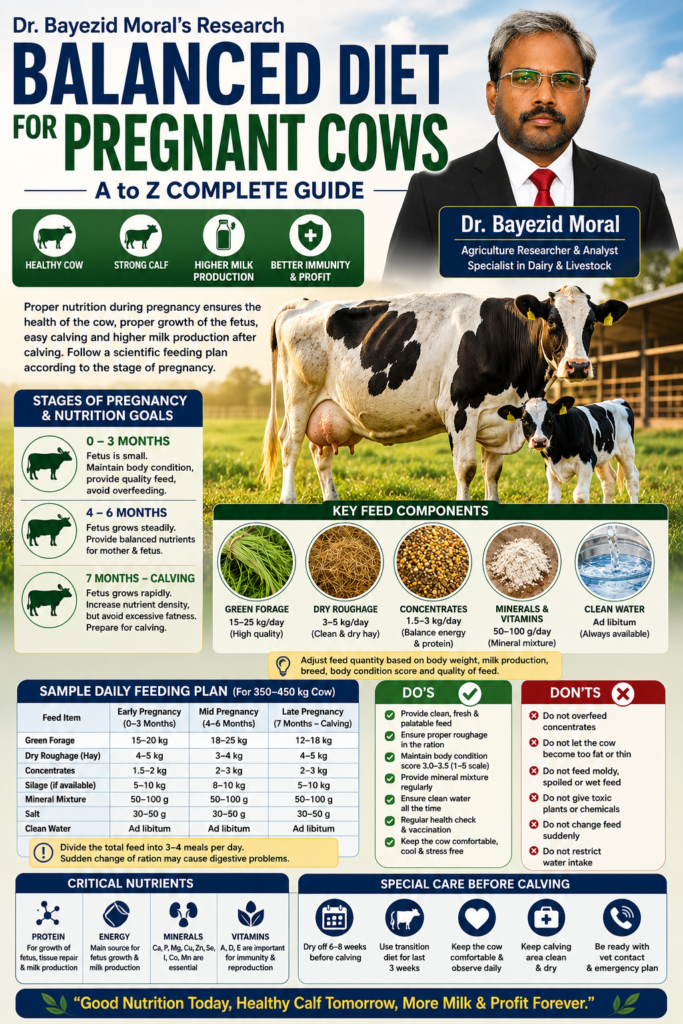
Balanced Nutrition for Pregnant Dairy Cows: An A–Z Complete Guide from Conception to Calving
Research & Report by Dr. Bayezid Moral
Introduction
The foundation of a healthy dairy cow, a vigorous calf, and high milk production is established during pregnancy. Feeding a pregnant cow is not simply about satisfying her appetite; it is about providing a scientifically balanced diet that supports her own health, ensures proper fetal development, facilitates an easy calving process, and prepares her for optimal milk production after calving.
Insufficient nutrition during pregnancy can weaken the cow, reduce calf birth weight, decrease milk yield, and delay the return of reproductive performance after calving. On the other hand, excessive concentrate feeding that leads to obesity may increase the risk of calving difficulties, reduced feed intake, ketosis, and fatty liver syndrome. A Body Condition Score (BCS) above 3.75 (on a 1–5 scale) at calving is associated with a greater risk of metabolic disorders.
1. Key Factors for Planning the Diet of a Pregnant Cow
Every pregnant cow should not receive the same amount of feed. Before preparing a feeding program, the following factors should be evaluated:
- Body weight
- Breed (Indigenous, Crossbred, or High-Producing Dairy Breed)
- Current daily milk production
- Stage of pregnancy
- Body Condition Score (Thin, Normal, or Overweight)
- Whether she is a first-calf heifer or a mature cow
- Nutritional quality of available forage and hay
- Environmental conditions and physical activity
The nutritional value of feed is determined primarily by its Dry Matter (DM) content. Generally, a mature dairy cow consumes dry matter equivalent to approximately 2.5–3% of her body weight, depending on milk production and pregnancy status. Feed intake usually declines during the final weeks of pregnancy because of fetal growth and hormonal changes.
2. Stages of Pregnancy and Nutritional Requirements
Stage 1: Conception to 3 Months
During early pregnancy, the fetus is very small, so additional nutrients for pregnancy alone are minimal. However, if the cow is lactating, her diet should be formulated according to milk production.
Objectives
- Prevent sudden weight loss
- Provide clean and nutritious feed
- Avoid excessive concentrate feeding
- Ensure adequate protein, minerals, and vitamins
- Supply unlimited clean drinking water
For lactating cows, the ration should be formulated considering both pregnancy and milk production.
Stage 2: Four to Six Months
During mid-pregnancy, fetal growth accelerates gradually. The cow should receive:
- High-quality green forage
- Adequate roughage
- Balanced concentrate feed
- Mineral supplementation
If the cow is still producing milk, concentrate feeding should be adjusted according to milk yield. Body condition should be monitored regularly to avoid excessive weight gain or loss.
Stage 3: Seven Months to Calving
The final trimester is the most critical stage of pregnancy.
During this period:
- The fetus grows rapidly.
- The udder develops in preparation for the next lactation.
- Nutrient requirements increase considerably.
Poor nutrition at this stage may result in:
- Weak cows
- Poor fetal growth
- Low birth-weight calves
- Reduced milk production after calving
However, excessive feeding should also be avoided because over-conditioned cows are more prone to calving difficulties and metabolic diseases. Thin cows should improve their body condition before entering the last trimester.
3. Major Components of a Balanced Diet
A. Green Forage
Green forage is the most important component of a pregnant cow’s diet.
It supplies:
- Dietary fiber
- Protein
- Vitamins
- Essential minerals
Suitable forage crops include:
- Napier Grass
- Pakchong Grass
- German Grass
- Para Grass
- Guinea Grass
- Green Maize
- Oats
- Native Grass
- Leguminous Forages
- Other improved fodder varieties
A 350–450 kg pregnant cow generally requires approximately 15–25 kg of high-quality green forage daily.
If forage contains excessive moisture, additional hay or silage should be provided to meet dry matter requirements.
Very young, lush grass should not be fed in excessive amounts because it may cause:
- Bloat
- Diarrhea
- Rumen imbalance
For best results, grass should be chopped into 2–3 inch lengths before feeding.
Part–2: Roughage, Concentrates, Sample Feeding Plans & Dry Cow Management
Research & Report by Dr. Bayezid Moral
B. Dry Hay
Rice straw is the most commonly used roughage for cattle in Bangladesh. However, hay alone cannot meet the nutritional requirements of a pregnant cow because it is generally low in protein and energy.
A medium-sized pregnant cow should receive approximately 3–5 kg of clean, dry hay per day. When green forage is limited, the amount of hay may be increased, but additional concentrates and protein supplements should also be included in the ration.
Good-quality hay should be:
- Free from mold
- Free from foul odor
- Free from dust
- Completely dry
- Free from black spots or decay
Poor-quality hay not only reduces feed intake but may also expose pregnant cows to harmful fungi and mycotoxins.
C. Silage
High-quality maize or grass silage is an excellent source of energy and digestible fiber. Pregnant cows can generally receive 8–15 kg of silage per day, depending on body weight and the rest of the ration.
If a cow has never been fed silage before, introduce it gradually over several days to allow the rumen microbes to adapt.
Never feed silage that is:
- Rotten
- Moldy
- Blackened
- Foul-smelling
- Spoiled due to air exposure
Poor-quality silage can seriously affect feed intake, digestion, fetal health, and future milk production.
D. Concentrate Feed
Concentrates provide:
- Energy
- Protein
- Essential minerals
- Vitamins
A balanced concentrate mixture may contain:
- Cracked maize
- Wheat bran
- Rice polish
- Pulse by-products
- Soybean meal
- Mustard oil cake
- Sesame oil cake
- Molasses
- Mineral mixture
- Salt
Soybean meal is one of the best plant protein sources for dairy cattle because of its excellent amino acid profile.
The amount of concentrate depends on:
- Body weight
- Stage of pregnancy
- Milk production
- Body Condition Score (BCS)
A dry pregnant cow in normal condition generally requires 1.5–3 kg of concentrate per day.
Lactating pregnant cows require additional concentrate based on their milk yield.
Example Concentrate Formula (100 kg)
A practical concentrate mixture may include:
| Ingredient | Quantity |
|---|---|
| Cracked Maize | 25 kg |
| Wheat Bran | 30 kg |
| Rice Polish | 20 kg |
| Soybean Meal | 10 kg |
| Mustard Oil Cake | 10 kg |
| Molasses | 2 kg |
| Dairy Mineral Mixture | 2 kg |
| Salt | 1 kg |
| Total | 100 kg |
The formula should always be adjusted according to:
- Nutrient quality
- Moisture content
- Local ingredient availability
- Market price
- Feed analysis results
Warning
Never feed urea or urea-molasses blocks to pregnant cows without professional nutritional guidance. Incorrect use may result in severe ammonia poisoning and even death.
Sample Daily Feeding Plan
(350–450 kg Pregnant Cow)
Example 1
Dry Pregnant Cow
(More than Two Months Before Calving)
- Green forage: 15–20 kg
- Dry hay: 4–5 kg
- Concentrate: 1.5–2 kg
- Mineral mixture: 50–100 g
- Salt: 30–50 g
- Clean water: Unlimited
Example 2
Lactating Cow (4–6 Months Pregnant)
- Green forage: 18–25 kg
- Dry hay: 3–4 kg
- Concentrate according to milk production
- Mineral mixture: 50–100 g
- Salt: 30–50 g
- Unlimited clean water
The amount of concentrate should not be determined by a fixed rule alone. Instead, feeding decisions should consider:
- Milk fat percentage
- Body weight
- Feed quality
- Body condition
- Manure consistency
Example 3
Last Three Weeks Before Calving
- Green forage: 12–18 kg
- Good-quality hay: 4–5 kg
- Concentrate: 2–3 kg, divided into several meals
- Silage (if available): 5–10 kg
- Close-up or Dry Cow Mineral Mixture
- Salt
- Unlimited clean water
Never feed moldy or spoiled feed during this critical period.
Transition Feeding
The last two to three weeks before calving are known as the Transition Period or Close-Up Period.
The primary objective during this stage is to gradually prepare the rumen for the high-energy ration required after calving.
Sudden dietary changes should always be avoided.
Dry Cow Period
A dairy cow should generally be dried off 6–8 weeks before the expected calving date.
This allows:
- Mammary tissue regeneration
- Fetal growth
- Recovery from previous lactation
- Preparation for the next lactation
The dry period can be divided into two phases.
Far-Off Dry Period
This period lasts until approximately 21 days before calving.
The diet should contain:
- More roughage
- Moderate energy
- Controlled concentrate feeding
Avoid excessive maize, rice polish, or concentrates that can make cows overweight.
Close-Up Dry Period
The final 21 days before calving.
During this stage:
- Gradually increase concentrate feeding.
- Prepare the rumen for post-calving lactation.
- Never increase concentrates abruptly.
A gradual transition greatly reduces the risk of digestive and metabolic disorders after calving.
Body Condition Score (BCS)
Body Condition Scoring is one of the most valuable management tools for feeding pregnant dairy cows.
Body weight alone cannot accurately indicate body fat reserves.
BCS Scale
Below 2.5
- Thin cow
- Requires nutritional improvement
3.0–3.5
- Ideal for most dairy cows
3.75 or above
- Over-conditioned
- Higher risk of calving complications
4.0 or above
- High risk of metabolic diseases after calving
BCS should be evaluated:
- At dry-off
- Before calving
- Immediately after calving
- At peak milk production
If a cow is thin, increase dietary energy gradually.
If she is overweight, never attempt rapid weight loss by restricting feed.
Instead, provide a controlled high-fiber diet.
Part–3: Protein, Minerals, Water, Feeding Schedule & Unsafe Feeds
Research & Report by Dr. Bayezid Moral
8. Protein Requirements
Protein is one of the most essential nutrients for pregnant dairy cows. It supports both maternal health and fetal development throughout pregnancy.
Protein is required for:
- Proper growth of the developing fetus
- Maintenance of muscles and body tissues
- Mammary gland development
- Strong immune function
- Preparation for milk production after calving
Excellent Protein Sources
High-quality protein feeds include:
- Soybean Meal
- Mustard Oil Cake
- Sesame Oil Cake
- Lentil and Pulse By-products
- Leguminous Green Forages
- Commercial Dairy Concentrate Feed
Providing excessive protein does not necessarily improve production. A balanced relationship between dietary energy and protein is essential.
If sufficient energy is unavailable, much of the dietary protein cannot be utilized efficiently and is instead wasted.
For high-producing dry cows, adequate metabolizable protein is particularly important for:
- Immune function
- Mammary tissue development
- Preparing the cow for the next lactation
9. Mineral and Vitamin Nutrition
A balanced mineral program is essential for healthy pregnancy, easy calving, and future milk production.
Major Minerals Required
Pregnant cows require adequate amounts of:
- Calcium
- Phosphorus
- Magnesium
- Sodium
- Potassium
- Sulfur
- Copper
- Zinc
- Selenium
- Iodine
- Cobalt
- Manganese
Essential Vitamins
The most important vitamins include:
- Vitamin A
- Vitamin D
- Vitamin E
Many locally available roughages cannot provide sufficient minerals for high-producing dairy cows.
Therefore, feeding a high-quality dairy mineral mixture is strongly recommended.
Important Warning
Never provide excessive mineral supplementation based on guesswork.
Too much:
- Selenium
- Copper
- Iodine
can become toxic and seriously affect both the cow and the unborn calf.
10. Calcium Nutrition and Milk Fever Prevention
One of the most common metabolic disorders after calving is Milk Fever (Hypocalcemia).
Immediately after calving, milk production begins rapidly, dramatically increasing the cow’s calcium requirement.
If the body cannot supply calcium quickly enough, the cow may develop:
- Muscle weakness
- Difficulty standing
- Loss of appetite
- Paralysis
- Death in severe cases
Avoid Excessive Calcium Before Calving
Many farmers believe feeding extra calcium before calving prevents milk fever.
In reality, excessive calcium during the dry period may reduce the cow’s natural ability to mobilize calcium from her bones after calving.
Large commercial dairy farms often use DCAD (Dietary Cation-Anion Difference) programs during the close-up period.
However, DCAD feeding requires:
- Professional ration formulation
- Feed analysis
- Urine pH monitoring
- Veterinary supervision
It should never be practiced without expert guidance.
11. Water Requirements
Water is the most important nutrient in a dairy cow’s diet.
Insufficient water intake may result in:
- Reduced feed intake
- Poor digestion
- Heat stress
- Lower milk production
- Constipation
Water demand increases significantly due to:
- High environmental temperature
- Large body size
- Milk production
- Pregnancy
Pregnant cows should always have access to:
- Clean water
- Fresh water
- Odor-free water
- Safe drinking water
Never provide water from:
- Floodwater
- Drainage canals
- Polluted ponds
- Chemically contaminated sources
Water troughs should be cleaned every day.
12. Feeding Frequency
Instead of feeding the entire ration at once, divide the daily feed into three or four meals.
Example Feeding Schedule
Morning
- Hay
- Green forage
After Morning Milking
- First portion of concentrate
Midday
- Green forage or silage
Evening
- Hay
- Remaining concentrate
Night
- Remaining roughage
Why Divide the Feed?
Feeding excessive concentrate in a single meal increases the risk of:
- Ruminal Acidosis
- Indigestion
- Bloat
- Diarrhea
Whenever changing the ration, introduce new feeds gradually over 7–14 days.
Sudden dietary changes may disturb rumen microorganisms and reduce feed efficiency.
13. Feeds That Should Never Be Given to Pregnant Cows
Certain feeds can seriously threaten the health of both the pregnant cow and her unborn calf.
Avoid feeding:
- Moldy hay
- Rotten silage
- Spoiled wheat bran
- Fermented or stale cooked rice
- Excessive urea-containing feed
- Pesticide-contaminated grass
- Roadside forage exposed to pollutants
- Toxic weeds
- Excessive young legume forage
- Unknown industrial by-products
- Excess salt
- Feed contaminated with plastic or rope
- Rotten fruits and vegetables
- Unsafe potato or taro by-products
- Poultry litter or manure
- Excess fat or oil
Consumption of poisonous plants may cause:
- Loss of appetite
- Weakness
- Weight loss
- Rapid heartbeat
- Abnormal nervous signs
- Pregnancy complications
14. Preventing Mold and Aflatoxin Contamination
Feed contamination with fungi is one of the most overlooked problems in dairy farming.
Mold commonly develops in:
- Wet maize
- Rice polish
- Oil cakes
- Hay
- Concentrate feed
Mycotoxins produced by molds can lead to:
- Reduced feed intake
- Suppressed immunity
- Increased abortion risk
- Liver damage
- Reduced milk production
Proper Feed Storage
Always store feed:
- In a dry place
- On raised wooden pallets
- With good ventilation
- Protected from rain
- Away from rodents and insects
Do not rely solely on toxin binders.
If feed is visibly moldy or spoiled, it should be discarded immediately rather than fed to livestock.
Key Takeaways
A successful nutrition program for pregnant dairy cows depends on:
✔ Adequate protein
✔ Balanced minerals and vitamins
✔ Unlimited clean water
✔ Multiple small meals each day
✔ Safe, uncontaminated feed ingredients
✔ Proper feed storage practices
These management practices significantly improve:
- Pregnancy success
- Calf health
- Milk production
- Farm profitability
Part–4: Special Feeding Management, Heat Stress, Pre-Calving & Post-Calving Care
Research & Report by Dr. Bayezid Moral
15. Special Nutritional Management for Pregnant Heifers
Pregnant heifers (first-calf animals) require special nutritional attention because they are still growing while simultaneously supporting the development of the unborn calf. Their nutritional needs differ from those of mature cows.
Feeding Recommendations
A pregnant heifer should receive:
- Adequate high-quality protein
- Balanced dietary energy
- Sufficient minerals and vitamins
- Good-quality forage
- Constant access to clean drinking water
Important Management Practices
- Avoid over-conditioning (obesity).
- Minimize competition with older cows during feeding.
- Provide separate feeding space whenever possible.
- Monitor body weight and Body Condition Score (BCS) regularly.
- Correct mineral deficiencies before calving.
Overfeeding concentrates to accelerate growth can lead to excessive fat deposition, increasing the risk of calving difficulties and reducing future milk production.
16. Feeding High-Risk Pregnant Cows
Certain pregnant cows require more intensive nutritional management and monitoring than others.
These include:
- Cows carrying twins
- Thin cows
- Older cows
- Cows with a previous history of Milk Fever
- Cows with previous Ketosis
- Animals recovering from serious illness
Management Recommendations
- Evaluate Body Condition Score frequently.
- Monitor daily feed intake.
- House them separately if necessary.
- Perform blood or urine tests when recommended.
- Develop an individual nutrition program with a veterinarian or animal nutritionist.
- Prepare for calving well before the expected due date.
Proper management of high-risk cows greatly reduces reproductive and metabolic problems.
17. Feeding During Hot Weather
Bangladesh experiences high temperature and humidity for much of the year. Heat stress can significantly reduce feed intake and negatively affect both the pregnant cow and the developing calf.
Heat Stress Management
During hot weather:
- Offer most of the feed during the cooler morning and evening hours.
- Provide adequate shade.
- Ensure proper ventilation.
- Use fans whenever possible.
- Install sprinklers or misting systems if available.
- Supply unlimited cool, clean drinking water.
- Do not leave moist feed in the feeder for long periods.
- Maintain proper mineral and electrolyte balance.
Comfortable housing with dry bedding is just as important as proper nutrition during the transition period.
18. Management During the Final Week Before Calving
The last week of pregnancy is extremely important. Good nutritional and management practices during this period can reduce calving complications.
One Week Before Calving
- Move the cow to a clean maternity pen.
- Avoid sudden dietary changes.
- Feed smaller meals several times each day.
- Observe feed intake carefully.
- Check whether the cow is chewing cud normally.
- Monitor for bloat, diarrhea, or constipation.
- Ensure continuous access to clean water.
- Consult a veterinarian if the cow is extremely thin or obese.
- Record the expected calving date.
- Keep emergency contact numbers readily available.
Important Warning
If a cow:
- Completely stops eating,
- Becomes extremely weak,
- Or remains lying down for an unusually long period,
do not assume these are normal signs of calving. Immediate veterinary attention is essential.
19. Feeding Immediately After Calving
Proper nutrition immediately after calving determines how quickly the cow returns to full production.
Immediately after calving:
- Offer clean, lukewarm water.
- Feed soft, high-quality green forage.
- Provide good-quality hay.
- Supply easily digestible feed.
Avoid feeding excessive concentrate on the first day.
Instead, gradually increase concentrate over several days while monitoring:
- Appetite
- Cud chewing
- Manure consistency
- Milk production
Watch for These Warning Signs
Observe whether the cow:
- Can stand normally
- Has cold ears
- Holds her neck abnormally
- Eats normally
- Expels the placenta on time
- Develops fever
- Has swollen or hardened udders
Seek veterinary assistance immediately if signs of:
- Milk Fever
- Ketosis
- Retained Placenta
- Mastitis
- Uterine Infection
are observed.
20. Daily Monitoring Checklist
Daily observation is one of the most effective management tools for pregnant dairy cows.
Every day, check whether the cow:
✅ Eats a normal amount of feed
✅ Chews cud regularly
✅ Produces normal manure
✅ Drinks sufficient water
✅ Has an abnormally swollen abdomen
✅ Shows nasal or eye discharge
✅ Has abnormal vaginal discharge or bleeding
✅ Is losing body condition rapidly
✅ Walks and stands normally
✅ Shows signs of approaching calving
Early Warning
Reduced feed intake is often the first sign of metabolic disorders, digestive problems, or impending calving complications.
Early detection can save both the cow and the calf.
Key Points
Successful management during the final months of pregnancy depends on:
- Proper nutrition
- Comfortable housing
- Heat stress control
- Continuous monitoring
- Timely veterinary intervention
- Careful preparation for calving
Together, these practices improve:
- Calving success
- Calf survival
- Future milk production
- Farm profitability
Part–5: Common Feeding Mistakes, Veterinary Care, Golden Rules & Conclusion
Research & Report by Dr. Bayezid Moral
21. Ten Common Feeding Mistakes
Even experienced dairy farmers sometimes make nutritional mistakes that negatively affect pregnancy, calving, and future milk production. Recognizing and avoiding these errors can significantly improve herd performance.
The Most Common Mistakes
1. Feeding Only Rice Straw
Rice straw alone cannot meet the nutritional requirements of pregnant cows because it is deficient in protein, energy, vitamins, and minerals.
2. Increasing Concentrates Suddenly During Late Pregnancy
Abruptly increasing concentrate feed during the final stage of pregnancy can disturb rumen function and increase the risk of digestive disorders.
3. Allowing the Cow to Become Overweight
Over-conditioned cows are more likely to experience:
- Difficult calving (Dystocia)
- Milk Fever
- Ketosis
- Fatty Liver Syndrome
- Reduced feed intake after calving
4. Failing to Improve the Condition of Thin Cows
Thin cows should receive improved nutrition before the last trimester rather than waiting until just before calving.
5. Ignoring Mineral Supplementation
Mineral deficiencies may result in:
- Weak calves
- Poor immunity
- Reproductive problems
- Reduced milk yield
6. Feeding Excess Calcium Before Calving
Excessive calcium during the dry period may actually increase the risk of Milk Fever after calving.
7. Feeding Moldy or Spoiled Feed
Moldy feed can contain harmful mycotoxins that reduce feed intake, damage the liver, suppress immunity, and may even lead to abortion.
8. Inadequate Water Supply
Clean drinking water is often overlooked, yet it is the most essential nutrient for pregnant dairy cows.
9. Feeding the Entire Ration at Once
Large concentrate meals increase the likelihood of:
- Ruminal Acidosis
- Indigestion
- Bloat
- Digestive upset
10. Using the Same Feeding Program for Every Cow
Each cow has different nutritional requirements depending on:
- Body weight
- Milk production
- Breed
- Stage of pregnancy
- Body Condition Score
A single feeding program cannot meet the needs of every animal.
22. When Should You Call a Veterinarian?
Prompt veterinary assistance can save both the cow and the unborn calf.
Contact a veterinarian immediately if the cow:
- Refuses feed for more than 12 hours
- Stops chewing cud
- Develops severe abdominal swelling
- Experiences abnormal bleeding
- Has foul-smelling vaginal discharge
- Develops fever
- Frequently lies down and gets up without progress
- Shows signs of labor without successful calving
- Has difficulty breathing
- Suddenly collapses
- Suffers seizures
- Aborts the fetus
- Becomes extremely weak
- Cannot stand after calving
Early veterinary intervention greatly increases the chances of successful treatment and reduces economic losses.
23. Golden Principles of Feeding Pregnant Dairy Cows
The nutritional program for a pregnant dairy cow should follow one simple formula:
High-Quality Roughage + Adequate Energy + Sufficient Protein + Balanced Minerals & Vitamins + Unlimited Clean Water + Regular Monitoring
A properly balanced feeding program should ensure that:
- The cow remains neither too thin nor too fat.
- The fetus develops normally.
- Rumen function remains healthy.
- Calving occurs without major complications.
- The risk of Milk Fever and Ketosis is minimized.
- Feed intake resumes quickly after calving.
- The cow is fully prepared for high milk production in the next lactation.
Conclusion
Managing the nutrition of pregnant dairy cows is not a one-day task; it is a continuous process that begins at conception and extends through calving and the postpartum period. Unfortunately, many farmers continue feeding pregnant cows the same ration throughout gestation and only increase concentrate feed during the final month. This practice is not scientifically recommended.
Effective feeding management starts with evaluating:
- Body weight
- Milk production
- Stage of pregnancy
- Body Condition Score (BCS)
Based on these factors, a balanced ration should be formulated using locally available green forage, hay, silage, concentrates, minerals, and clean water.
It is important to remember that feed quality is just as important as feed quantity. Simply increasing the amount of poor-quality feed cannot ensure healthy cows or productive dairy farming.
Investing in the nutrition of pregnant dairy cows is not merely an expense—it is an investment in:
- Healthy calves
- Safe calving
- Higher milk production
- Better reproductive performance
- Longer productive life
- Greater farm profitability
Good nutrition today lays the foundation for a stronger, healthier, and more profitable dairy herd tomorrow.
Professional Disclaimer
The feeding recommendations presented in this guide are intended as general practical guidelines. Actual nutritional requirements vary according to:
- Breed
- Body weight
- Milk production
- Feed quality and laboratory analysis
- Environmental conditions
- Health status
For optimal results, farmers are strongly encouraged to consult a qualified animal nutritionist or licensed veterinarian before finalizing feeding programs for pregnant dairy cows.