
















ব্রয়লার ও সোনালি মুরগীর খামার ব্যবস্থাপনা//ব্রয়লার ও সোনালি পালনে লাভের চাবিকাঠি: ভালো খাদ্য, সঠিক ব্যবস্থাপনা ও নির্ভুল হিসাব।।
ড. বায়েজিদ মোড়লের গবেষণাধর্মী প্রতিবেদন

ভালো মানের খাদ্য দিয়েও মুরগির প্রত্যাশিত ওজন পাওয়া যাচ্ছে না। আবার একই ধরনের বাচ্চা ও খাদ্য ব্যবহার করে পাশের খামারি তুলনামূলক ভালো ফল পাচ্ছেন। এই পার্থক্য কেন?
মুরগির উৎপাদন শুধু খাদ্যের মানের ওপর নির্ভর করে না। বাচ্চার গুণগত মান, প্রথম সপ্তাহের পরিচর্যা, তাপমাত্রা, পানির সরবরাহ, বাতাস চলাচল, লিটার, রোগ প্রতিরোধ এবং খামারির প্রতিদিনের নজরদারি—সবকিছু একসঙ্গে কাজ করে। কোনো একটি জায়গায় দুর্বলতা থাকলে ভালো খাদ্যের সুফলও পুরোপুরি পাওয়া কঠিন।
ব্রয়লার ও সোনালি পালনের ক্ষেত্রে তাই শুধু ‘কত বস্তা খাদ্য লাগল’ বা ‘মুরগি কত বড় হলো’—এই দুই প্রশ্ন যথেষ্ট নয়। জানতে হবে, কত দিনে সেই ওজন হলো, কত খাদ্য ব্যবহৃত হলো, কত মুরগি মারা গেল এবং সব খরচ বাদ দিয়ে কত টাকা থাকল।
এই প্রতিবেদনে খাদ্য ও উৎপাদনের নির্দেশক তথ্য, স্বীকৃত কারিগরি ব্যবস্থাপনা নির্দেশিকা এবং ব্যবহারিক হিসাব একত্র করে খামারির জন্য একটি পর্যবেক্ষণ কাঠামো তুলে ধরা হয়েছে। এখানে ব্যবহৃত সংখ্যাগুলো নিশ্চিত উৎপাদনের প্রতিশ্রুতি নয়; জাত, পরিবেশ ও ব্যবস্থাপনা অনুযায়ী বাস্তব ফল পরিবর্তিত হতে পারে।
ব্রয়লার ও সোনালি: উৎপাদনের লক্ষ্য আলাদা, লাভের হিসাবও আলাদা
ব্রয়লার দ্রুত মাংস উৎপাদনের জন্য পালন করা হয়। সোনালি তুলনামূলক ধীরে বড় হয় এবং বিক্রয়যোগ্য ওজনে পৌঁছাতে বেশি সময় নেয়। কিন্তু দ্রুত বাড়লেই বেশি লাভ হবে কিংবা বেশি দামে বিক্রি হলেই লাভ নিশ্চিত হবে—এমন সিদ্ধান্ত নেওয়া যায় না।
চার্ট ১: ব্রয়লার ও সোনালির তুলনামূলক উৎপাদন নির্দেশক
| বিষয় | ব্রয়লার | সোনালি |
|---|---|---|
| বৃদ্ধির ধরন | দ্রুত | তুলনামূলক ধীর |
| পরিকল্পনায় ব্যবহৃত পালনকাল | প্রায় ৩০–৩৫ দিন | প্রায় ৪৫–৬০ দিন |
| নিচের উৎপাদন চার্টের শেষ বয়স | ৩৫ দিন | ৫৬ দিন |
| ওই বয়সে নির্দেশক গড় জীবন্ত ওজন | ২,২৮২ গ্রাম | ১,১৯৫ গ্রাম |
| ওই বয়স পর্যন্ত নির্দেশক মোট খাদ্য গ্রহণ | ৩,২৫৯ গ্রাম/মুরগি | ২,৪৫৬ গ্রাম/মুরগি |
| অর্থনৈতিক মূল্যায়নের প্রধান বিষয় | দ্রুত বৃদ্ধি, খাদ্যদক্ষতা ও বিক্রয়মূল্য | দীর্ঘ পালনকাল, খাদ্যদক্ষতা ও বাড়তি বিক্রয়মূল্য |
ব্রয়লারের ব্যাচ দ্রুত শেষ হলে বছরে বেশি ব্যাচ পালনের সুযোগ তৈরি হতে পারে। সোনালির দীর্ঘ পালনকালে ঘর, শ্রম ও পুঁজি বেশি সময় আটকে থাকে। এই সময়ের খরচও লাভের হিসাবে অন্তর্ভুক্ত করতে হবে।
প্রতি সপ্তাহে ওজন করুন, অনুমান করে সিদ্ধান্ত নেবেন না
মুরগি দেখতে বড় মনে হওয়া এবং প্রকৃত গড় ওজন এক বিষয় নয়। নিয়মিত ওজন না করলে বৃদ্ধির ঘাটতি অনেক সময় বিক্রির আগে ধরা পড়ে। তখন সংশোধনের সুযোগ কম থাকে।
চার্ট ২: ব্রয়লারের বয়সভিত্তিক ওজন ও খাদ্য গ্রহণ
| বয়স | নির্দেশক গড় জীবন্ত ওজন—গ্রাম/মুরগি | ওই বয়স পর্যন্ত মোট খাদ্য গ্রহণ—গ্রাম/মুরগি |
|---|---|---|
| বাচ্চা তোলার সময় | ৪৪ | ০ |
| ১ সপ্তাহ | ২০১ | ১৫৮ |
| ২ সপ্তাহ | ৫১০ | ৫৩৯ |
| ৩ সপ্তাহ | ৯৪৮ | ১,১৭৭ |
| ৪ সপ্তাহ | ১,৫৬৩ | ২,০৮৬ |
| ৫ সপ্তাহ | ২,২৮২ | ৩,২৫৯ |
চার্ট ৩: সোনালির বয়সভিত্তিক ওজন ও খাদ্য গ্রহণ
| বয়স | নির্দেশক গড় জীবন্ত ওজন—গ্রাম/মুরগি | ওই বয়স পর্যন্ত মোট খাদ্য গ্রহণ—গ্রাম/মুরগি |
|---|---|---|
| বাচ্চা তোলার সময় | ৩৫ | ০ |
| ১ সপ্তাহ | ১২২ | ১২১.৯ |
| ২ সপ্তাহ | ২৪৪ | ৩০৮.৮ |
| ৩ সপ্তাহ | ৩৮০ | ৫২১.৫ |
| ৪ সপ্তাহ | ৫৭৩ | ৭৯১.২ |
| ৫ সপ্তাহ | ৭১১ | ১,১২১ |
| ৬ সপ্তাহ | ৮৫২ | ১,৫৩৭ |
| ৭ সপ্তাহ | ১,০৪৩ | ১,৯৭৬ |
| ৮ সপ্তাহ | ১,১৯৫ | ২,৪৫৬ |
চার্ট ব্যবহারের নিয়ম: এগুলো একটি নির্দেশক ধারার হিসাব। নির্দিষ্ট জাতের হালনাগাদ উৎপাদন লক্ষ্যমাত্রা ও নিজের খামারের ফলের সঙ্গে মিলিয়ে ব্যবহার করতে হবে। খাদ্যের পরিমাণ দৈনিক নয়; সংশ্লিষ্ট বয়স পর্যন্ত মোট গ্রহণ।
প্রতি সপ্তাহে ঘরের বিভিন্ন স্থান থেকে প্রতিনিধিত্বশীল মুরগি নিয়ে ওজন করতে হবে। শুধু বড় মুরগি বেছে নিলে খামারের গড় ওজন বেশি দেখাবে। একই সঙ্গে ছোট-বড় মুরগির পার্থক্যও পর্যবেক্ষণ করা প্রয়োজন।
ওজন প্রত্যাশার নিচে থাকলে খাদ্যের পাশাপাশি পানি, তাপমাত্রা, বাতাস, রোগের লক্ষণ এবং খাদ্যপাত্রে পৌঁছানোর সুযোগ পরীক্ষা করতে হবে।
ভালো মানের ফিড বলতে কী বুঝতে হবে?
বাজারে পাওয়া ভালো মানের ফিড নির্বাচন করতে শুধু ব্র্যান্ডের পরিচিতি যথেষ্ট নয়। মুরগির বয়স ও ধরন অনুযায়ী উপযোগিতা, ঘোষিত পুষ্টিমান, উৎপাদনের তারিখ, সংরক্ষণের অবস্থা এবং খামারে পাওয়া ফল বিবেচনা করা জরুরি।
চার্ট ৪: পর্যায়ভিত্তিক খাদ্যের একটি পুষ্টিমান নির্দেশক
| পুষ্টি বা বৈশিষ্ট্য | ব্রয়লার স্টার্টার | ব্রয়লার গ্রোয়ার | ব্রয়লার ফিনিশার | সোনালি স্টার্টার | সোনালি গ্রোয়ার |
|---|---|---|---|---|---|
| খাদ্যের ধরন | ক্রাম্বল | পিলেট | পিলেট | ক্রাম্বল | পিলেট |
| আর্দ্রতা—সর্বোচ্চ, % | ১২ | ১২ | ১২ | ১২ | ১২ |
| ক্রুড প্রোটিন—সর্বনিম্ন, % | ২২ | ২১ | ২০ | ২১ | ২০ |
| ফ্যাট—সর্বনিম্ন, % | ৫ | ৫ | ৫ | ৪ | ৪ |
| ক্রুড ফাইবার—সর্বোচ্চ, % | ৫ | ৫ | ৫ | ৫ | ৫ |
| অ্যাশ—সর্বোচ্চ, % | ৯ | ৯ | ৯ | ৯ | ৯ |
| ক্যালসিয়াম—সর্বনিম্ন, % | ১ | ১ | ০.৯৫ | ১ | ১ |
| ফসফরাস—সর্বনিম্ন, % | ০.৪৫ | ০.৪ | ০.৪ | ০.৪ | ০.৪ |
| এই খাদ্যসূচিতে ব্যবহারকাল | ১–১৪ দিন | ১৫–২২ দিন | ২৩ দিন থেকে বিক্রি | ১–২৮ দিন | ২৯ দিন থেকে বিক্রি |
পুষ্টিমান সম্পর্কে ব্যাখ্যা: এটি একটি উদাহরণভিত্তিক খাদ্যসূচি; সর্বজনীন পুষ্টি চাহিদার মানদণ্ড নয়। বাজারে পাওয়া ভালো মানের ফিডের পুষ্টিমান ও ব্যবহারকাল পণ্যভেদে ভিন্ন হতে পারে। ফসফরাসের ক্ষেত্রে মোট ও উপলব্ধ ফসফরাসের পার্থক্যও গুরুত্বপূর্ণ। তাই পণ্যের লেবেল এবং নির্দিষ্ট জাতের পুষ্টি নির্দেশনা অনুসরণ করতে হবে।
খাদ্য গ্রহণের সময় বস্তা অক্ষত আছে কি না, অস্বাভাবিক গন্ধ বা ছত্রাক আছে কি না, খাদ্য ভেজা বা দলা পাকানো কি না—এসব দেখা প্রয়োজন। বস্তা শুকনা স্থানে প্যালেটের ওপর রাখতে হবে এবং আগে কেনা খাদ্য আগে ব্যবহার করতে হবে।
শুধু প্রোটিনের শতাংশ দিয়ে খাদ্যের সম্পূর্ণ মান বিচার করা যায় না। শক্তি, অ্যামিনো অ্যাসিড, খনিজের ভারসাম্য এবং খাদ্যের ব্যবহারযোগ্যতাও উৎপাদনের জন্য প্রয়োজনীয়।
খাদ্য রূপান্তর হার: কম খাদ্যে কত উৎপাদন?
খাদ্য রূপান্তর হার বা FCR খামারের খাদ্য ব্যবহারের দক্ষতা বোঝার একটি গুরুত্বপূর্ণ সূচক। তবে কোন পদ্ধতিতে হিসাব করা হয়েছে, তা পরিষ্কার থাকতে হবে।
জীবন্ত বিক্রয় ওজনভিত্তিক অনুপাত = মোট ব্যবহৃত খাদ্য ÷ মোট বিক্রি করা জীবন্ত ওজন।
ওজন বৃদ্ধিভিত্তিক হিসাব করলে প্রাথমিক বাচ্চার ওজন বাদ দিতে হয়। মৃত্যুহার সমন্বয় করা হলে সেটিও উল্লেখ করতে হয়।
উপরের উৎপাদন চার্টের শেষ বয়সের সংখ্যা দিয়ে সরল হিসাব করলে:
| মুরগির ধরন | হিসাব | খাদ্য ও জীবন্ত ওজনের অনুপাত |
|---|---|---|
| ব্রয়লার—৩৫ দিন | ৩,২৫৯ ÷ ২,২৮২ | প্রায় ১.৪৩ |
| সোনালি—৫৬ দিন | ২,৪৫৬ ÷ ১,১৯৫ | প্রায় ২.০৬ |
এই অনুপাতগুলোতে বাস্তব খামারের মৃত্যুহার ও খাদ্য অপচয় সমন্বয় করা হয়নি। তাই এগুলোকে নিজের ব্যাচের নিশ্চিত FCR ধরে নেওয়া যাবে না।
প্রথম সপ্তাহে পর্যাপ্ত খাদ্য গ্রহণ ও ভালো ব্রুডিং ব্যবস্থাপনা পরবর্তী উৎপাদনের জন্য গুরুত্বপূর্ণ—Cobb-এর কারিগরি আলোচনাতেও এ বিষয়ে গুরুত্ব দেওয়া হয়েছে।
প্রথম সপ্তাহে ভুল হলে পুরো ব্যাচে প্রভাব পড়ে
বাচ্চা আসার আগেই ঘর পরিষ্কার, শুকনা ও প্রয়োজনমতো উষ্ণ রাখতে হবে। খাদ্য ও পানি এমনভাবে দিতে হবে, যাতে বাচ্চা সহজে খুঁজে পায়।
Aviagen-এর Ross ব্যবস্থাপনা নির্দেশিকায় পুরো ঘরে ব্রুডিংয়ের প্রাথমিক বাতাসের তাপমাত্রা প্রায় ৩০° সেলসিয়াস এবং স্থানীয় ব্রুডারের প্রান্তে প্রায় ৩২° সেলসিয়াস উল্লেখ রয়েছে। ব্যবস্থাপনার ধরন ও বাচ্চার আচরণ অনুযায়ী তাপমাত্রা সমন্বয় প্রয়োজন।
| বাচ্চার আচরণ | সম্ভাব্য ব্যাখ্যা | করণীয় |
|---|---|---|
| তাপের উৎসের নিচে গাদাগাদি | ঠান্ডা লাগতে পারে | তাপমাত্রা ও ঠান্ডা বাতাস পরীক্ষা |
| তাপ থেকে দূরে সরে যায় ও হাঁপায় | অতিরিক্ত গরম হতে পারে | তাপ, বাতাস চলাচল ও পানি পরীক্ষা |
| ঘরের একদিকে জড়ো হয় | বাতাসের ঝাপটা বা অসম পরিবেশ | বাতাস ও তাপের বিস্তার পরীক্ষা |
| সমানভাবে ছড়িয়ে খায় ও পানি পান করে | পরিবেশ তুলনামূলক স্বস্তিদায়ক | পর্যবেক্ষণ অব্যাহত রাখা |
থার্মোমিটারের সংখ্যা প্রয়োজনীয়, কিন্তু মুরগির আচরণও দেখতে হবে। ঘরের একটি জায়গার তাপমাত্রা দিয়ে পুরো ঘরের অবস্থা বোঝা যায় না।
পরিষ্কার পানি ও শুকনা লিটার ছাড়া ভালো ফল কঠিন
পানির সরবরাহ কমে গেলে খাদ্য গ্রহণেও প্রভাব পড়তে পারে। তাই প্রতিদিন পানির পাত্র ও লাইন পরীক্ষা করতে হবে। দৈনিক পানির ব্যবহার নথিভুক্ত রাখলে অস্বাভাবিক পরিবর্তন দ্রুত শনাক্ত করা যায়। আন্তর্জাতিক ব্যবস্থাপনা নির্দেশিকাতেও এই রেকর্ড রাখার ওপর গুরুত্ব দেওয়া হয়েছে।
লিটার ভেজা থাকলে শুধু নতুন তুষ ছড়িয়ে সমস্যার সমাধান হয় না। পানি চুইয়ে পড়া, পাত্র উপচে যাওয়া, অপর্যাপ্ত বাতাস চলাচল কিংবা অস্বাভাবিক বিষ্ঠা—মূল কারণটি শনাক্ত করতে হবে।
ভেজা অংশ সরানো, প্রয়োজনমতো শুকনা লিটার যোগ করা এবং পানির ত্রুটি ঠিক করা দরকার। মুরগি উপস্থিত অবস্থায় লিটারে জীবাণুনাশক ব্যবহার করতে হলে সংশ্লিষ্ট পণ্যের অনুমোদন ও নিরাপত্তা নির্দেশনা নিশ্চিত করতে হবে।
রোগ প্রতিরোধে প্রতিদিনের শৃঙ্খলা প্রয়োজন
জৈবনিরাপত্তা কেবল খামারের প্রবেশপথে ফুটবাথ রাখার নাম নয়। ফুটবাথের দ্রবণ নোংরা হয়ে গেলে কিংবা নিয়মমতো পরিবর্তন না করলে প্রত্যাশিত কার্যকারিতা পাওয়া কঠিন।
খামারের জন্য আলাদা জুতা ও পোশাক রাখা, অপ্রয়োজনীয় দর্শনার্থী সীমিত করা, ইঁদুর ও বাইরের পাখি নিয়ন্ত্রণ করা এবং সরঞ্জাম পরিষ্কার রাখা প্রয়োজন। সম্ভব হলে একই ঘরে একই বয়সের মুরগি পালন এবং পুরো ব্যাচ একসঙ্গে খালি করা সুবিধাজনক।
টিকাসূচি নির্ধারণের আগে হ্যাচারির টিকা রেকর্ড, স্থানীয় রোগের পরিস্থিতি ও ব্যবহৃত টিকার ধরন বিবেচনা করতে হবে। নিবন্ধিত প্রাণিচিকিৎসকের পরামর্শ অনুযায়ী টিকা এবং প্রয়োজনীয় চিকিৎসা পরিচালনা করা উচিত। ওষুধ ব্যবহারের ক্ষেত্রে বিক্রির আগে প্রত্যাহারকালও মানতে হবে।
১,০০০ মুরগির খাদ্য পরিকল্পনা ও ব্যয়ের পরিবর্তন
নির্দেশক উৎপাদন চার্ট ধরে খাদ্যের একটি প্রাথমিক পরিকল্পনা করা যায়।
| বিষয় | ব্রয়লার—৩৫ দিন | সোনালি—৫৬ দিন |
|---|---|---|
| প্রতি মুরগির মোট খাদ্য | ৩.২৫৯ কেজি | ২.৪৫৬ কেজি |
| ১,০০০ মুরগির মোট খাদ্য | ৩,২৫৯ কেজি | ২,৪৫৬ কেজি |
| ৫০ কেজির বস্তায় পরিমাণ | প্রায় ৬৫.২ বস্তা | প্রায় ৪৯.১ বস্তা |
| কেজিতে খাদ্যের দাম ১ টাকা বাড়লে বাড়তি ব্যয় | ৩,২৫৯ টাকা | ২,৪৫৬ টাকা |
| কেজিতে খাদ্যের দাম ৫ টাকা বাড়লে বাড়তি ব্যয় | ১৬,২৯৫ টাকা | ১২,২৮০ টাকা |
এই হিসাব ধরে নেওয়া হয়েছে যে সব মুরগি নির্ধারিত বয়স পর্যন্ত নির্দেশক পরিমাণ খাদ্য গ্রহণ করেছে। বাস্তবে মৃত্যুহার, অপচয়, আবহাওয়া ও বৃদ্ধির কারণে প্রয়োজন পরিবর্তিত হবে।
খাদ্যের দাম সামান্য বাড়লেও বড় ব্যাচে ব্যয়ের পার্থক্য উল্লেখযোগ্য হয়। তবে কম দাম দেখে এমন খাদ্য কেনা উচিত নয়, যার ফলে বৃদ্ধি কমে যায় বা প্রতি কেজি উৎপাদনে খাদ্য বেশি লাগে। বিচার করতে হবে প্রতি কেজি জীবন্ত মুরগি উৎপাদনের মোট খরচ।
লাভ বুঝতে নিজের শ্রমের মূল্যও ধরুন
ব্যাচ বিক্রি করে হাতে টাকা থাকলেই পুরো অর্থ লাভ নয়। বাচ্চা, খাদ্য ও ওষুধের পাশাপাশি বিদ্যুৎ, জ্বালানি, লিটার, পরিবহন, শ্রম এবং ঘর-সরঞ্জামের ব্যবহারজনিত খরচও বাদ দিতে হবে।
ব্যাচের লাভ = মোট বিক্রয় আয় − ব্যাচের মোট উৎপাদন ও বিপণন ব্যয়।
| যে তথ্য রাখতে হবে | কেন প্রয়োজন |
|---|---|
| বাচ্চার সংখ্যা ও ক্রয়মূল্য | প্রাথমিক বিনিয়োগ নির্ধারণ |
| প্রতিদিনের খাদ্য ব্যবহার | খাদ্য ব্যয় ও দক্ষতা পর্যবেক্ষণ |
| পানি, মৃত্যু ও অসুস্থতার রেকর্ড | অস্বাভাবিক পরিবর্তন শনাক্ত |
| সাপ্তাহিক গড় ওজন | বৃদ্ধির অগ্রগতি যাচাই |
| শ্রম ও অন্যান্য খরচ | প্রকৃত উৎপাদন ব্যয় নির্ধারণ |
| বিক্রির সংখ্যা, মোট ওজন ও দাম | প্রকৃত আয় নির্ধারণ |
ব্রয়লার ও সোনালি খামারে লাভ বাড়ানোর জন্য কোনো একক খাদ্য বা ওষুধ যথেষ্ট নয়। বাজারে পাওয়া ভালো মানের ফিডের সঙ্গে মানসম্মত বাচ্চা, নিরাপদ পানি, স্বস্তিদায়ক পরিবেশ, রোগ প্রতিরোধ এবং নিয়মিত হিসাব যুক্ত করতে হবে। যে খামারি নিজের তথ্য ধরে সমস্যা শনাক্ত করেন এবং সময়মতো সংশোধন করেন, তাঁর পক্ষে উৎপাদনের উন্নতি ঘটানো ও লোকসানের কারণ বোঝা সহজ হয়।
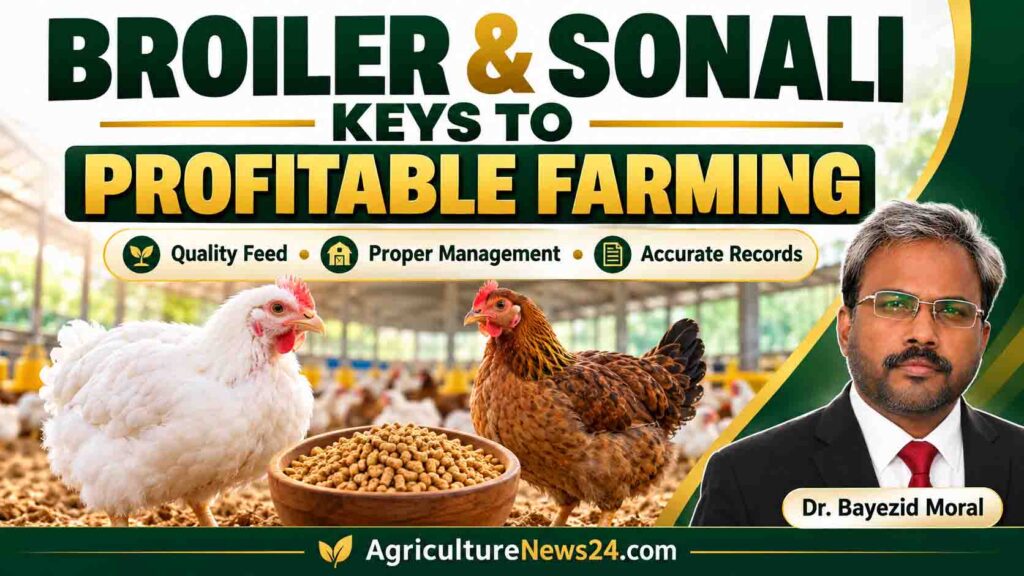
The Keys to Profitable Broiler and Sonali Farming: Quality Feed, Proper Management and Accurate Records
A Research-Based Report by Dr. Bayezid Moral
Despite using good-quality feed, some farmers fail to achieve the expected weight in their chickens. Meanwhile, a neighbouring farmer may obtain better results with similar chicks and feed. Why does this difference occur?
Poultry performance depends on much more than feed quality. Chick quality, care during the first week, temperature, water supply, ventilation, litter condition, disease prevention and daily supervision all work together. A weakness in any one area can prevent birds from gaining the full benefit of good feed.
For broiler and Sonali farming, two questions—“How many bags of feed were used?” and “How big did the chickens grow?”—are therefore insufficient. Farmers also need to know how long the birds took to reach that weight, how much feed was consumed, how many birds died and how much money remained after all expenses.
This report brings together indicative feeding and production figures, recognised technical management guidance and practical calculations to provide a monitoring framework for farmers. The figures are planning references rather than guaranteed results. Actual performance can vary with breed, environment and management.
Broilers and Sonali Chickens: Different Production Goals, Different Profit Calculations
Broilers are raised for rapid meat production. Sonali chickens grow more slowly and take longer to reach market weight. However, faster growth does not automatically mean higher profit, and a higher selling price does not guarantee profitability.
Chart 1: Comparative Production Indicators
| Item | Broiler | Sonali |
|---|---|---|
| Growth pattern | Rapid | Relatively slow |
| Indicative rearing period for planning | Approximately 30–35 days | Approximately 45–60 days |
| Final age in the production charts below | 35 days | 56 days |
| Indicative average live weight at that age | 2,282 grams | 1,195 grams |
| Indicative cumulative feed intake at that age | 3,259 grams per bird | 2,456 grams per bird |
| Main economic considerations | Rapid growth, feed efficiency and selling price | Longer rearing period, feed efficiency and higher selling price |
A shorter broiler production cycle may allow farmers to raise more batches each year. Sonali farming ties up housing, labour and capital for longer. These time-related costs must also be included in the profit calculation.
Weigh Birds Every Week—Do Not Rely on Visual Estimates
Birds appearing large and birds achieving a satisfactory average weight are two different things. Without regular weighing, growth shortfalls may remain unnoticed until shortly before sale, when there is little time to make corrections.
Chart 2: Age-Based Broiler Weight and Feed Intake
| Age | Indicative average live weight—grams per bird | Cumulative feed intake—grams per bird |
|---|---|---|
| At placement | 44 | 0 |
| 1 week | 201 | 158 |
| 2 weeks | 510 | 539 |
| 3 weeks | 948 | 1,177 |
| 4 weeks | 1,563 | 2,086 |
| 5 weeks | 2,282 | 3,259 |
Chart 3: Age-Based Sonali Weight and Feed Intake
| Age | Indicative average live weight—grams per bird | Cumulative feed intake—grams per bird |
|---|---|---|
| At placement | 35 | 0 |
| 1 week | 122 | 121.9 |
| 2 weeks | 244 | 308.8 |
| 3 weeks | 380 | 521.5 |
| 4 weeks | 573 | 791.2 |
| 5 weeks | 711 | 1,121 |
| 6 weeks | 852 | 1,537 |
| 7 weeks | 1,043 | 1,976 |
| 8 weeks | 1,195 | 2,456 |
How to use these charts: These figures represent an indicative performance pattern. They should be compared with current performance targets for the specific breed and with actual farm results. Feed intake is cumulative up to the stated age, rather than daily consumption.
Each week, farmers should weigh a representative sample of birds from different parts of the house. Selecting only larger birds will overstate the flock’s average weight. Differences between smaller and larger birds should also be monitored.
If weight falls below expectations, farmers should examine water availability, temperature, ventilation, signs of disease and access to feeders, alongside feed quality.
What Does Good-Quality Feed Mean?
When choosing good-quality feed available in the market, brand recognition alone is insufficient. Farmers should consider its suitability for the birds’ age and type, declared nutrient composition, manufacturing date, storage condition and actual farm performance.
Chart 4: An Indicative Nutrient Profile for Different Feeding Stages
| Nutrient or characteristic | Broiler starter | Broiler grower | Broiler finisher | Sonali starter | Sonali grower |
|---|---|---|---|---|---|
| Feed form | Crumble | Pellet | Pellet | Crumble | Pellet |
| Moisture—maximum, % | 12 | 12 | 12 | 12 | 12 |
| Crude protein—minimum, % | 22 | 21 | 20 | 21 | 20 |
| Fat—minimum, % | 5 | 5 | 5 | 4 | 4 |
| Crude fibre—maximum, % | 5 | 5 | 5 | 5 | 5 |
| Ash—maximum, % | 9 | 9 | 9 | 9 | 9 |
| Calcium—minimum, % | 1 | 1 | 0.95 | 1 | 1 |
| Phosphorus—minimum, % | 0.45 | 0.4 | 0.4 | 0.4 | 0.4 |
| Use period in this example feeding programme | Days 1–14 | Days 15–22 | Day 23 to sale | Days 1–28 | Day 29 to sale |
Explanation of the nutrient figures: This is an example feeding programme, rather than a universal nutritional requirement. Nutrient composition and recommended feeding periods can vary among good-quality commercial feeds. The distinction between total and available phosphorus is also important. Farmers should follow the product label and nutritional guidance for the specific breed.
When receiving feed, farmers should check whether bags are intact and whether the feed has an unusual smell, mould, excessive moisture or lumps. Bags should be stored on pallets in a dry place, and older stock should be used first.
Protein percentage alone does not fully establish feed quality. Energy, amino acids, mineral balance and the birds’ ability to utilise the feed also influence production.
Feed Conversion: How Much Output Is Obtained from Feed?
The feed conversion ratio, or FCR, is an important indicator of feed-use efficiency. However, the calculation method must be clearly stated.
Live-sale-weight-based ratio = Total feed used ÷ Total live weight sold.
When calculating feed conversion against weight gain, the chicks’ initial weight must be deducted. Any adjustment for mortality should also be explained.
Using the final-age figures in the production charts gives the following simple ratios:
| Bird type | Calculation | Feed-to-live-weight ratio |
|---|---|---|
| Broiler—35 days | 3,259 ÷ 2,282 | Approximately 1.43 |
| Sonali—56 days | 2,456 ÷ 1,195 | Approximately 2.06 |
These ratios have not been adjusted for actual farm mortality or feed wastage. They should therefore not be treated as guaranteed flock FCR results.
Adequate feed intake during the first week and effective brooding management are important for subsequent performance, as highlighted in Cobb’s technical guidance. www.cobbgenetics.com
Mistakes During the First Week Can Affect the Entire Batch
Before chicks arrive, the house should be clean, dry and warmed appropriately. Feed and water should be positioned so that chicks can find them easily.
Aviagen’s Ross management guidance gives an initial air temperature of approximately 30°C for whole-house brooding and approximately 32°C at the edge of a spot brooder. Temperature should be adjusted according to the brooding system and chick behaviour. aa-intl.aviagen.com
| Chick behaviour | Possible explanation | Action |
|---|---|---|
| Huddling beneath the heat source | Chicks may be cold | Check temperature and cold draughts |
| Moving away from the heat source and panting | Chicks may be too hot | Check heat, ventilation and water |
| Gathering on one side of the house | Draughts or uneven conditions | Check airflow and heat distribution |
| Spreading evenly while eating and drinking | Conditions are relatively comfortable | Continue monitoring |
Thermometer readings are necessary, but chick behaviour must also be observed. A temperature reading from one location cannot describe conditions throughout the house.
Clean Water and Dry Litter Are Essential for Good Performance
Insufficient water supply can affect feed intake. Drinkers and water lines should therefore be checked daily. Recording daily water consumption helps identify unusual changes promptly. International management guidance also emphasises keeping these records. ross-na.aviagen.com
Adding fresh rice husk alone does not solve wet-litter problems. Farmers need to identify the underlying cause, such as leaking water lines, overflowing drinkers, inadequate ventilation or abnormal droppings.
Wet patches should be removed, dry litter added where necessary and water-system faults corrected. If disinfectants are used on litter while birds are present, the product’s approval and safety instructions must be checked.
Disease Prevention Requires Daily Discipline
Biosecurity involves more than placing a footbath at the farm entrance. A dirty footbath solution, or one that is not replaced as instructed, may fail to provide the expected protection.
Dedicated farm footwear and clothing, restricted visitor access, rodent and wild-bird control, and clean equipment are necessary. Where practical, keeping birds of the same age in one house and emptying the entire batch together can support effective management.
Before establishing a vaccination programme, farmers should consider hatchery vaccination records, local disease conditions and the vaccine products being used. Vaccination and necessary treatment should be managed with advice from a registered veterinarian. Withdrawal periods must also be observed when medicines are used before sale.
Feed Planning and Cost Changes for 1,000 Birds
The indicative production charts can be used to prepare an initial feed plan.
| Item | Broiler—35 days | Sonali—56 days |
|---|---|---|
| Cumulative feed per bird | 3.259 kg | 2.456 kg |
| Total feed for 1,000 birds | 3,259 kg | 2,456 kg |
| Equivalent number of 50 kg bags | Approximately 65.2 bags | Approximately 49.1 bags |
| Additional cost if feed rises by BDT 1 per kg | BDT 3,259 | BDT 2,456 |
| Additional cost if feed rises by BDT 5 per kg | BDT 16,295 | BDT 12,280 |
This calculation assumes that all birds consume the indicated quantity of feed up to the stated age. Actual requirements will vary with mortality, wastage, weather and growth.
Even a small increase in feed price can substantially affect the cost of a large batch. However, choosing feed solely because it is cheaper can be costly if growth declines or more feed is required per kilogram of output. The relevant measure is the total cost of producing one kilogram of live chicken.
Include the Value of Your Own Labour When Calculating Profit
Cash remaining after selling a batch is not necessarily all profit. In addition to chicks, feed and medicines, farmers must deduct electricity, fuel, litter, transport, labour and the cost of using housing and equipment.
Batch profit = Total sales revenue − Total production and marketing costs.
| Information to record | Why it matters |
|---|---|
| Number of chicks and purchase price | Establishes the initial investment |
| Daily feed use | Tracks feed cost and efficiency |
| Water use, mortality and illness | Helps identify unusual changes |
| Weekly average weight | Measures growth progress |
| Labour and other expenses | Establishes the true production cost |
| Number sold, total live weight and selling price | Establishes actual revenue |
No single feed or medicine is sufficient to improve profitability in broiler and Sonali farming. Good-quality feed available in the market must be combined with quality chicks, safe water, a comfortable environment, disease prevention and regular recordkeeping. Farmers who use their own records to identify problems and make timely corrections are better placed to improve production and understand the causes of losses.
References: Aviagen, Ross Broiler Management Handbook, 2025; Cobb Genetics, Maximizing Broiler Performance. Production and feeding figures are used as indicative planning data and are not presented as independently verified field-trial results.