















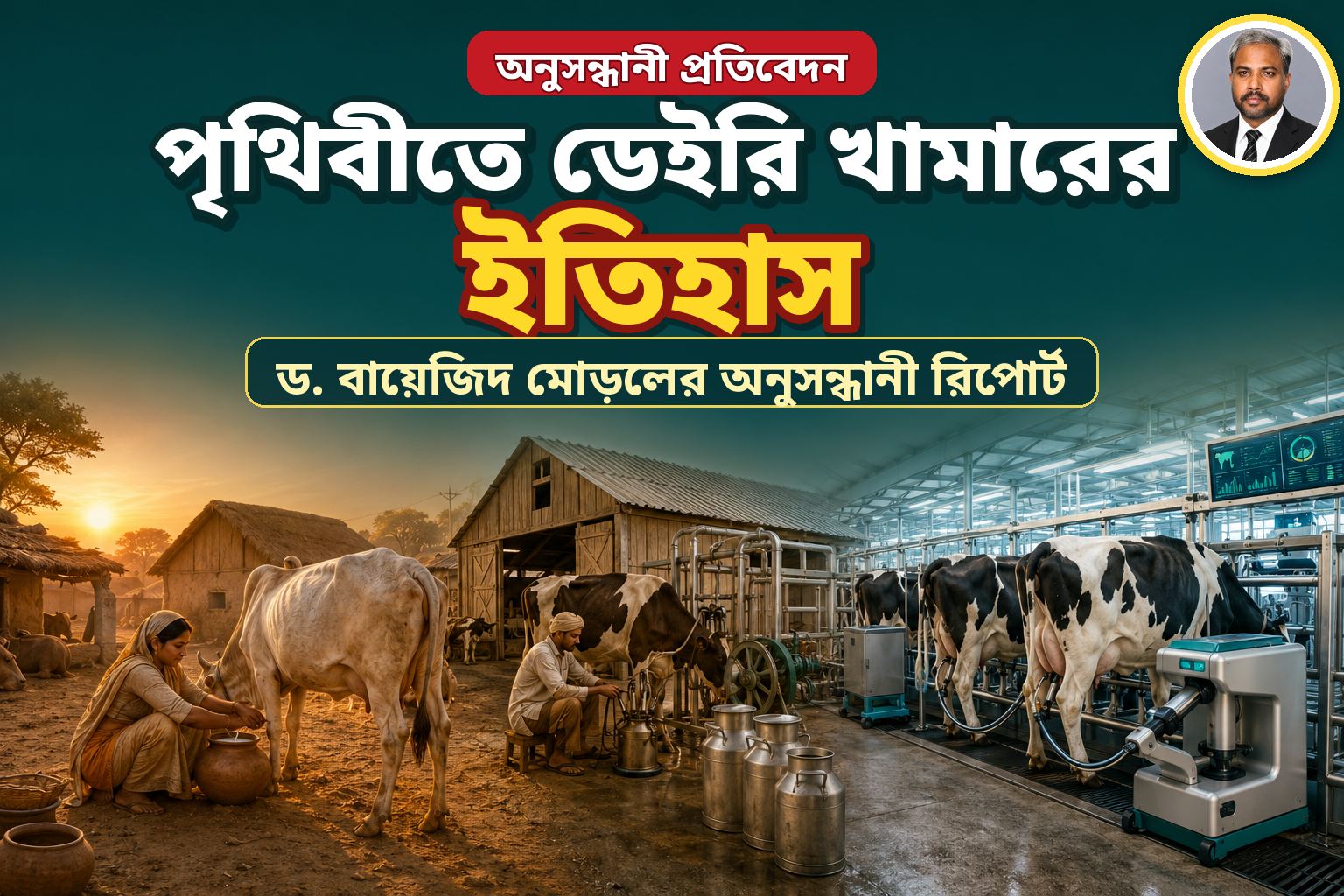
পৃথিবীতে ডেইরি খামারের ইতিহাস: গৃহপালিত গাভী থেকে রোবোটিক খামারের দীর্ঘ অভিযাত্রা//ড. বায়েজিদ মোড়লের তথ্যানুসন্ধানী প্রতিবেদন।।
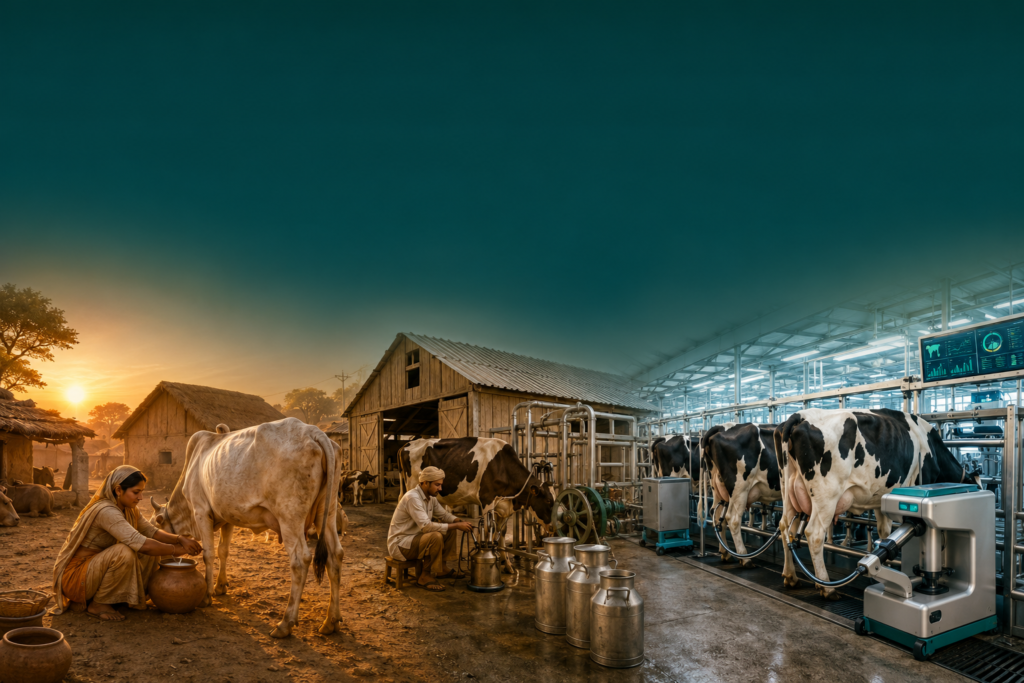
মানবসভ্যতার ইতিহাসে দুধ শুধু একটি খাদ্য নয়; এটি কৃষি, পুষ্টি, গ্রামীণ অর্থনীতি, বাণিজ্য, প্রযুক্তি ও সংস্কৃতির বিবর্তনের এক নীরব সাক্ষী। আজকের আধুনিক ডেইরি খামারে উন্নত জাতের গাভী, কৃত্রিম প্রজনন, সুষম খাদ্য, স্বয়ংক্রিয় দোহনযন্ত্র, দুধ শীতলীকরণ ট্যাংক, সেন্সর এবং কম্পিউটারনির্ভর ব্যবস্থাপনা ব্যবহৃত হচ্ছে। কিন্তু এই শিল্পের সূচনা হয়েছিল হাজার হাজার বছর আগে—মানুষ যখন প্রথমবার বন্য গবাদিপশুকে বশ মানিয়ে তার দুধ সংগ্রহ করতে শিখেছিল।
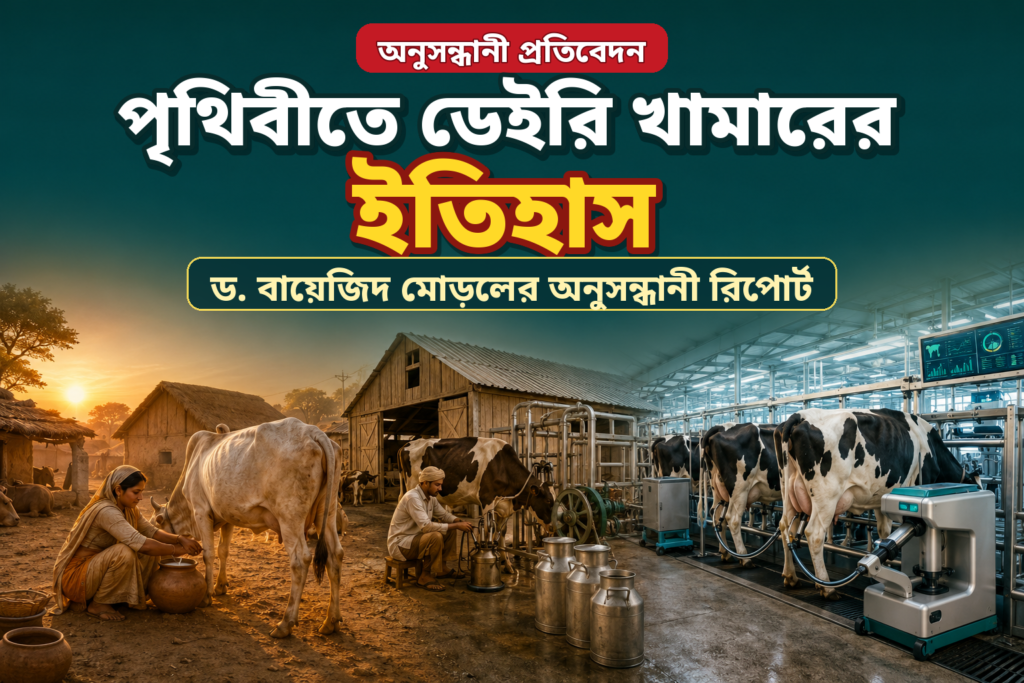
পৃথিবীতে ডেইরি খামারের ইতিহাস অনুসন্ধান করতে গেলে শুধু গাভী পালনের ইতিহাস জানলেই হবে না। জানতে হবে মানুষ কেন দুধ পান করতে শুরু করল, কীভাবে দই-ঘি-মাখন ও পনির তৈরি হলো, কোন যুগে বাণিজ্যিক ডেইরি খামারের জন্ম হলো এবং বিজ্ঞানের কোন কোন আবিষ্কার এই খাতকে আজকের অবস্থানে নিয়ে এসেছে।
শিকারি মানুষ থেকে পশুপালক সমাজ
প্রাগৈতিহাসিক যুগের মানুষ প্রথমে বন্য পশু শিকার করে মাংস সংগ্রহ করত। তখন পশুকে নিয়মিত খাদ্য, দুধ বা কৃষিকাজের উৎস হিসেবে ব্যবহারের ধারণা তৈরি হয়নি। কৃষিবিপ্লবের পর মানুষ ধীরে ধীরে স্থায়ী বসতি গড়ে তোলে এবং বন্য গবাদিপশু, ভেড়া ও ছাগলকে গৃহপালিত করতে শুরু করে।
ধারণা করা হয়, আজ থেকে প্রায় ১০ হাজার বছর আগে দক্ষিণ-পশ্চিম এশিয়া, আনাতোলিয়া, লেভান্ট ও মেসোপটেমিয়ার বিভিন্ন অঞ্চলে বন্য অরক্স বা বুনো গরু থেকে গৃহপালিত গবাদিপশুর বিকাশ ঘটে। দক্ষিণ এশিয়ায় জেবু বা কুঁজযুক্ত গরু—যা বৈজ্ঞানিকভাবে Bos indicus নামে পরিচিত—স্বতন্ত্রভাবে গৃহপালিত ও বিকশিত হয়। অন্যদিকে ইউরোপ ও পশ্চিম এশিয়ায় কুঁজবিহীন Bos taurus গরুর বিস্তার ঘটে।
প্রথমদিকে গবাদিপশু প্রধানত মাংস, চামড়া ও শ্রমের জন্য ব্যবহৃত হলেও মানুষ দ্রুত বুঝতে পারে, একটি জীবিত গাভী থেকে বারবার দুধ পাওয়া যায়। অর্থাৎ পশুকে জবাই না করেও দীর্ঘ সময় ধরে পুষ্টিকর খাদ্য সংগ্রহ করা সম্ভব। এ উপলব্ধিই মানবসভ্যতার ইতিহাসে তথাকথিত “সেকেন্ডারি প্রোডাক্টস রেভল্যুশন” বা গবাদিপশুর দ্বিতীয় পর্যায়ের ব্যবহারকে ত্বরান্বিত করে।
দুধ ব্যবহারের প্রাচীনতম প্রমাণ
প্রাচীন মানুষ কখন নিয়মিত দুধ সংগ্রহ শুরু করেছিল, তা নিয়ে দীর্ঘদিন ধরে বিতর্ক ছিল। কিন্তু প্রত্নতাত্ত্বিকেরা মাটির পাত্রের ভেতরে জমে থাকা প্রাণিজ চর্বির রাসায়নিক চিহ্ন বিশ্লেষণ করে দুধ ব্যবহারের প্রাচীন প্রমাণ খুঁজে পেয়েছেন।
আনাতোলিয়া ও পার্শ্ববর্তী অঞ্চলের প্রাচীন মাটির পাত্রে দুধের চর্বির অবশেষ পাওয়া গেছে। উত্তর-পশ্চিম আনাতোলিয়ায় প্রাপ্ত প্রমাণ থেকে বোঝা যায়, প্রাথমিক কৃষকেরা দুধ ও দুগ্ধজাত খাবার ব্যবহারের জ্ঞান নিয়েই নতুন অঞ্চলে বসতি স্থাপন করেছিল। ইরানি মালভূমিতে সপ্তম সহস্রাব্দ খ্রিষ্টপূর্বাব্দের দুধজাত চর্বির প্রত্যক্ষ প্রমাণও পাওয়া গেছে। অর্থাৎ প্রায় আট থেকে নয় হাজার বছর আগেই মানুষ গরু, ভেড়া ও ছাগলের দুধ ব্যবহার করছিল। প্রত্নতাত্ত্বিক গবেষণা, ইরানি মালভূমির গবেষণা
প্রাচীন মানুষের একটি বড় অংশ প্রাপ্তবয়স্ক অবস্থায় কাঁচা দুধের ল্যাকটোজ সহজে হজম করতে পারত না। ফলে তারা দুধকে দই, পনির, মাখন কিংবা অন্যান্য গাঁজনকৃত খাবারে রূপান্তর করত। গাঁজনের ফলে ল্যাকটোজ কমে যেত এবং খাবারটি দীর্ঘদিন সংরক্ষণ করা সম্ভব হতো। এ কারণেই দুধ প্রক্রিয়াজাতকরণ প্রযুক্তির ইতিহাসও প্রায় দুধ দোহনের ইতিহাসের মতোই পুরোনো।
ডালমাটিয়ান উপকূলে প্রায় ৭,২০০ বছরের পুরোনো পনির তৈরির প্রমাণ পাওয়া গেছে। গবেষকেরা দেখেছেন, ওই অঞ্চলে প্রথমে তরল দুধ ব্যবহার করা হলেও পরে গাঁজনকৃত দুগ্ধজাত খাবারের প্রচলন ঘটে। পেন স্টেটের গবেষণা প্রতিবেদন
প্রাচীন মেসোপটেমিয়া, মিসর ও সিন্ধু সভ্যতা
মেসোপটেমিয়ার সুমেরীয় সভ্যতায় গরু, ভেড়া ও ছাগলের দুধ থেকে বিভিন্ন খাদ্য তৈরির প্রমাণ পাওয়া যায়। মাটির ফলক ও চিত্রে পশুপালন, দোহন এবং দুগ্ধজাত খাবার সংরক্ষণের দৃশ্য ফুটে উঠেছে। মন্দির ও রাজপ্রাসাদের অধীনেও পশুর পাল পরিচালিত হতো। ফলে বলা যায়, পরিবারভিত্তিক পশুপালনের পাশাপাশি প্রাতিষ্ঠানিক ডেইরি ব্যবস্থাপনার প্রাথমিক রূপ তখনই গড়ে উঠেছিল।
প্রাচীন মিসরে গবাদিপশু ছিল সম্পদ, সামাজিক মর্যাদা এবং ধর্মীয় প্রতীকের অংশ। নীল নদের উর্বর অববাহিকায় পশুপালন ও শস্যচাষ একে অন্যের পরিপূরক ছিল। গবাদিপশু থেকে দুধ, মাংস, চামড়া এবং জমি চাষের শক্তি পাওয়া যেত।
সিন্ধু সভ্যতা ও প্রাচীন ভারতীয় সমাজেও গরু ও মহিষের দুধের গুরুত্ব ছিল অত্যন্ত বেশি। দুধ, দই, ঘি ও মাখন খাদ্য, ধর্মীয় আচার এবং সামাজিক অনুষ্ঠানের সঙ্গে যুক্ত হয়ে ওঠে। দক্ষিণ এশিয়ার গরম ও আর্দ্র আবহাওয়ায় কাঁচা দুধ বেশি সময় রাখা কঠিন ছিল। তাই ঘি, দই, ছানা ও মাখনের মতো পণ্যে দুধ রূপান্তরের শক্তিশালী ঐতিহ্য গড়ে ওঠে।
এ অঞ্চলেই মহিষের দুধ পরবর্তীকালে একটি বড় অর্থনৈতিক সম্পদে পরিণত হয়। গরুর তুলনায় মহিষের দুধে সাধারণত বেশি ফ্যাট থাকায় ঘি, মাখন, দই ও বিভিন্ন মিষ্টিজাত পণ্য তৈরিতে এর চাহিদা বাড়ে।
গ্রিস ও রোমে দুগ্ধ অর্থনীতি
প্রাচীন গ্রিস ও রোমে গরুর পাশাপাশি ভেড়া ও ছাগলের দুধ বিশেষভাবে গুরুত্বপূর্ণ ছিল। ভূমধ্যসাগরীয় পাহাড়ি অঞ্চলে গরুর বড় পাল পরিচালনা তুলনামূলক কঠিন ছিল বলে ছোট রোমন্থক প্রাণীর দুধ থেকে পনির তৈরি জনপ্রিয় হয়।
রোমানরা পশু প্রজনন, খাদ্য সরবরাহ, রোগ পর্যবেক্ষণ এবং দুধ প্রক্রিয়াজাতকরণ নিয়ে লিখিত নির্দেশনা তৈরি করেছিল। নগরকেন্দ্রিক বাজার সম্প্রসারণের কারণে গ্রামের উৎপাদক ও শহরের ভোক্তার মধ্যে বাণিজ্যিক সম্পর্ক গড়ে ওঠে। তবে আধুনিক শীতলীকরণব্যবস্থা না থাকায় তরল দুধ দূরে পরিবহন করা সম্ভব ছিল না। ফলে পনির ও মাখনের মতো অপেক্ষাকৃত দীর্ঘস্থায়ী পণ্যই বেশি বাণিজ্য হতো।
মধ্যযুগ: পরিবার, জমিদারি ও মঠভিত্তিক উৎপাদন
রোমান সাম্রাজ্যের পতনের পর ইউরোপে ডেইরি উৎপাদন আবার অনেকাংশে স্থানীয় ও পরিবারভিত্তিক হয়ে পড়ে। কৃষক পরিবারগুলো কয়েকটি গাভী পালন করত। পরিবারের নারী সদস্যরা সাধারণত দোহন, মাখন তৈরি, পনির প্রস্তুত এবং দুধ সংরক্ষণের দায়িত্ব পালন করতেন।
ইউরোপের বিভিন্ন খ্রিষ্টান মঠ ডেইরি প্রযুক্তির বিকাশে গুরুত্বপূর্ণ ভূমিকা রাখে। মঠগুলোর নিজস্ব জমি, পশুর পাল, খাদ্য সংরক্ষণব্যবস্থা এবং তুলনামূলক সংগঠিত শ্রমশক্তি ছিল। অনেক ঐতিহ্যবাহী ইউরোপীয় পনিরের উৎপত্তির সঙ্গে মঠ ও নির্দিষ্ট অঞ্চলের সম্পর্ক রয়েছে।
এই সময়ে জলবায়ু, পাহাড়, তৃণভূমি ও স্থানীয় খাদ্যসম্পদের সঙ্গে মানিয়ে বিভিন্ন আঞ্চলিক গবাদিপশুর জাত গড়ে ওঠে। কোনো জাত বেশি দুধ দিত, কোনোটি দুধের চর্বির জন্য বিখ্যাত ছিল, আবার কোনোটি দুধ ও কৃষিকাজ—দুই উদ্দেশ্যেই ব্যবহৃত হতো।
ডেইরি জাতের বিকাশ
আধুনিক ডেইরি শিল্পে জাত উন্নয়নের গুরুত্ব অপরিসীম। কিন্তু বিশেষায়িত দুধাল জাত তৈরির প্রক্রিয়াটি বহু শতাব্দীর নির্বাচিত প্রজননের ফল।
নেদারল্যান্ডস ও উত্তর জার্মানির ফ্রিজল্যান্ড অঞ্চলে গড়ে ওঠা হলস্টেইন-ফ্রিজিয়ান জাত উচ্চ দুধ উৎপাদনের জন্য বিশ্বব্যাপী জনপ্রিয় হয়। ইংল্যান্ড ও চ্যানেল দ্বীপপুঞ্জে জার্সি ও গার্নসি জাতের বিকাশ ঘটে, যাদের দুধে তুলনামূলক বেশি ফ্যাট ও সলিড থাকে। সুইজারল্যান্ডের ব্রাউন সুইস, স্কটল্যান্ডের আয়ারশায়ার এবং ইংল্যান্ডের শর্টহর্নও ডেইরি ইতিহাসে গুরুত্বপূর্ণ।
বর্তমানে যুক্তরাষ্ট্রের ডেইরি গাভীর বড় অংশ হলস্টেইন বা হলস্টেইন-ফ্রিজিয়ান। পাশাপাশি জার্সি, ব্রাউন সুইস, গার্নসি, আয়ারশায়ার ও মিল্কিং শর্টহর্নও পালন করা হয়। যুক্তরাষ্ট্রের কৃষি বিভাগের তথ্য
দক্ষিণ এশিয়ায় সাহিওয়াল, রেড সিন্ধি, গির, থারপারকার ও রাঠির মতো স্থানীয় জাত তাপসহনশীলতা, রোগপ্রতিরোধ, কম খাদ্যে টিকে থাকা এবং প্রজননক্ষমতার জন্য মূল্যবান। এসব জাতের দুধ উৎপাদন হলস্টেইনের তুলনায় কম হলেও স্থানীয় পরিবেশে তাদের অভিযোজনক্ষমতা বেশি।
কৃষিবিপ্লব ও পরিকল্পিত প্রজনন
সপ্তদশ ও অষ্টাদশ শতকে ইউরোপের কৃষিবিপ্লব ডেইরি খামারকে নতুন পর্যায়ে নিয়ে যায়। জমির উন্নত ব্যবহার, ঘাস ও পশুখাদ্য চাষ, শীতকালের জন্য খড় সংরক্ষণ এবং বাছাইকৃত প্রজননের মাধ্যমে গাভীর উৎপাদনশীলতা বাড়তে থাকে।
আগে গাভী ছিল একই সঙ্গে দুধ, মাংস ও কৃষিশ্রমের উৎস। কিন্তু বাজারের চাহিদা বাড়ার সঙ্গে সঙ্গে বিশেষায়িত দুধাল জাত নির্বাচন শুরু হয়। যেসব গাভী বেশি দুধ দিত, ভালো বাটের গঠন ছিল, দীর্ঘ ল্যাকটেশন বজায় রাখত এবং নিয়মিত বাচ্চা দিত—সেগুলো থেকে পরবর্তী প্রজন্ম তৈরির প্রবণতা বাড়ে।
এ সময় পশুর বংশপরিচয় সংরক্ষণের জন্য হার্ডবুক বা নিবন্ধনব্যবস্থা চালু হয়। এটি ছিল আধুনিক জেনেটিক উন্নয়ন ও পারফরম্যান্স রেকর্ডিংয়ের ভিত্তি।
নগরায়ণ ও বাণিজ্যিক ডেইরি খামারের জন্ম
অষ্টাদশ শতকের শেষ ভাগ ও ঊনবিংশ শতকে শিল্পবিপ্লবের ফলে ইউরোপ ও উত্তর আমেরিকার শহরগুলো দ্রুত বড় হতে থাকে। কৃষি থেকে বিচ্ছিন্ন নগরবাসীর দুধের চাহিদা বাড়ে। তখন শহরের আশপাশে বিশেষায়িত ডেইরি খামার প্রতিষ্ঠিত হতে শুরু করে।
রেলপথের বিস্তার দুধ পরিবহনে বড় পরিবর্তন আনে। আগে দুধ উৎপাদনস্থলের কাছাকাছি বিক্রি করতে হতো। রেলপথ চালু হওয়ার পর অপেক্ষাকৃত দূরের গ্রাম থেকেও শহরে দুধ পাঠানো সম্ভব হয়। পরবর্তী সময়ে ধাতব দুধের ক্যান, বরফের ব্যবহার এবং শীতলীকরণব্যবস্থার উন্নয়ন সরবরাহব্যবস্থাকে আরও নিরাপদ করে।
তবে দ্রুত সম্প্রসারিত শহুরে দুধের বাজারে ভেজাল, অপরিচ্ছন্নতা ও রোগজীবাণুর সমস্যা দেখা দেয়। কোনো কোনো শহরে মদ তৈরির কারখানার বর্জ্য খাওয়ানো গাভী থেকে নিম্নমানের দুধ উৎপাদিত হতো। গাভীগুলো অস্বাস্থ্যকর পরিবেশে থাকত এবং দুধও যথাযথ স্বাস্থ্যবিধি ছাড়াই বিক্রি হতো।
ফলে ডেইরি খামার শুধু উৎপাদনের বিষয় নয়—জনস্বাস্থ্য, খাদ্যনিরাপত্তা ও সরকারি নিয়ন্ত্রণের বিষয় হিসেবেও সামনে আসে।
পাস্তুরাইজেশন: জনস্বাস্থ্যে ঐতিহাসিক পরিবর্তন
ফরাসি বিজ্ঞানী লুই পাস্তুর উনিশ শতকে দেখান, অণুজীব খাদ্য ও পানীয় নষ্ট হওয়ার জন্য দায়ী। তাঁর গবেষণার ভিত্তিতে নিয়ন্ত্রিত তাপে তরল খাদ্যের ক্ষতিকর জীবাণু কমানোর যে পদ্ধতি গড়ে ওঠে, সেটিই পাস্তুরাইজেশন নামে পরিচিত।
দুধের মাধ্যমে যক্ষ্মা, ব্রুসেলোসিস, টাইফয়েডসহ বিভিন্ন রোগ ছড়িয়ে পড়ার প্রমাণ সামনে আসার পর পাস্তুরাইজেশনের গুরুত্ব বাড়ে। বিংশ শতাব্দীতে বহু দেশে বাণিজ্যিক দুধ পাস্তুরাইজেশন বাধ্যতামূলক বা মানসম্মত প্রক্রিয়ায় পরিণত হয়। যুক্তরাষ্ট্রের কৃষিবিষয়ক তথ্যে কাঁচা দুধজনিত সংক্রমণ প্রতিরোধে পাস্তুরাইজেশনকে বিংশ শতাব্দীর অন্যতম জনস্বাস্থ্য সাফল্য হিসেবে উল্লেখ করা হয়েছে। USDA-সংক্রান্ত প্রকাশনা
পাস্তুরাইজেশন ডেইরি শিল্পকে তিনভাবে বদলে দেয়। প্রথমত, ভোক্তার আস্থা বাড়ে। দ্বিতীয়ত, দুধের সংরক্ষণকাল বাড়ে। তৃতীয়ত, খামার থেকে প্রক্রিয়াজাতকরণ কেন্দ্র পর্যন্ত স্বাস্থ্যসম্মত সরবরাহব্যবস্থা প্রতিষ্ঠার প্রয়োজনীয়তা তৈরি হয়।
হাতে দোহন থেকে মেশিনে দোহন
হাজার হাজার বছর ধরে গাভী হাতে দোহন করা হয়েছে। হাতে দোহন সময়সাপেক্ষ এবং শ্রমনির্ভর হওয়ায় একটি পরিবার সীমিতসংখ্যক গাভী পরিচালনা করতে পারত।
ঊনবিংশ শতকে বিভিন্ন ধরনের দোহনযন্ত্র উদ্ভাবনের চেষ্টা শুরু হয়। প্রথম দিকের অনেক যন্ত্র গাভীর বাটের ক্ষতি করত বা মাস্টাইটিসের ঝুঁকি বাড়াত। পরে ভ্যাকুয়াম ও পালসেশন প্রযুক্তির উন্নতির মাধ্যমে কার্যকর মেশিন মিল্কিং ব্যবস্থা প্রতিষ্ঠিত হয়।
বিংশ শতাব্দীতে বিদ্যুৎ, ভ্যাকুয়াম পাম্প, স্টেইনলেস স্টিল পাইপলাইন এবং মিল্কিং পার্লারের বিস্তার বড় ডেইরি খামার গড়ে তোলা সম্ভব করে। একই সময়ে যান্ত্রিক শীতলীকরণ দুধ দ্রুত ঠান্ডা করে মান বজায় রাখার সুযোগ দেয়। গবেষণায় দেখা যায়, খামারে বিদ্যুতায়নের ফলে যান্ত্রিক কুলিং ব্যবহার করে দুধ আরও দ্রুত এবং কম তাপমাত্রায় ঠান্ডা করা সম্ভব হয়েছিল। Journal of Dairy Science-এর শতবর্ষ পর্যালোচনা
বোতলজাত দুধ ও প্রক্রিয়াজাত শিল্প
একসময় দুধওয়ালা খোলা পাত্র থেকে গ্রাহকের পাত্রে দুধ ঢেলে দিতেন। এতে দূষণের ঝুঁকি ছিল। কাচের বোতল, সিল করা ঢাকনা এবং স্বয়ংক্রিয় ভরাটব্যবস্থা দুধ বিপণনে বড় পরিবর্তন আনে।
বিশ শতকের প্রথমভাগে স্বয়ংক্রিয় বোতলজাতকরণ প্রযুক্তি বাণিজ্যিকভাবে ব্যবহৃত হতে শুরু করে। ১৯০৭ সালে প্রথম স্বয়ংক্রিয় বোতলযন্ত্রের পেটেন্ট এবং ১৯১৩ সাল থেকে যান্ত্রিক ক্যাপিং ও ফিলিং ব্যবহারের তথ্য পাওয়া যায়। ডেইরি প্রক্রিয়াজাতকরণের শতবর্ষ পর্যালোচনা
পরবর্তীকালে কাগজের কার্টন, প্লাস্টিকের পাত্র, ইউএইচটি প্রযুক্তি, গুঁড়া দুধ এবং দীর্ঘমেয়াদি সংরক্ষণযোগ্য প্যাকেজিং বিশ্বব্যাপী দুধের বাজার সম্প্রসারণ করে। দুধ তখন আর শুধু স্থানীয় খামারের পণ্য রইল না; এটি আন্তর্জাতিক খাদ্যবাণিজ্যের গুরুত্বপূর্ণ পণ্যে পরিণত হলো।
সমবায় আন্দোলন ও ক্ষুদ্র খামারির শক্তি
ডেইরি খামারের ইতিহাসে সমবায় আন্দোলনের ভূমিকা অত্যন্ত গুরুত্বপূর্ণ। একজন ক্ষুদ্র খামারির পক্ষে দুধ সংগ্রহ, শীতলীকরণ, পরিবহন, প্রক্রিয়াজাতকরণ ও বিপণনের অবকাঠামো তৈরি করা কঠিন। কিন্তু বহু খামারি একত্র হলে এ সমস্যা সমাধান করা সম্ভব।
ইউরোপে উনিশ শতকের শেষ ভাগ থেকে ডেইরি সমবায় দ্রুত বিস্তার লাভ করে। খামারিরা যৌথভাবে ক্রিমারি, পনির কারখানা ও বিপণনব্যবস্থা গড়ে তোলেন। সমবায় খামারিকে তুলনামূলক ভালো দর, প্রযুক্তিগত সহায়তা এবং বাজারে দরকষাকষির শক্তি দেয়।
ভারতের আমূল মডেল ডেইরি সমবায়ের অন্যতম সফল উদাহরণ। গ্রামের ক্ষুদ্র খামারিদের কাছ থেকে নিয়মিত দুধ সংগ্রহ, মান পরীক্ষা, শীতলীকরণ, প্রক্রিয়াজাতকরণ এবং ব্র্যান্ডের মাধ্যমে বিপণনের সমন্বিত কাঠামো তৈরি করা হয়। ভারতের “অপারেশন ফ্লাড” কর্মসূচি দুধ উৎপাদন বৃদ্ধি এবং জাতীয় মিল্ক গ্রিড তৈরিতে গুরুত্বপূর্ণ ভূমিকা রাখে।
এই মডেল প্রমাণ করেছে, ডেইরি শিল্পের উন্নয়ন শুধু বড় করপোরেট খামারের ওপর নির্ভরশীল নয়। সংগঠিত ক্ষুদ্র খামারিও একটি দেশের দুধ উৎপাদনের মেরুদণ্ড হতে পারে।
কৃত্রিম প্রজনন ও জেনেটিক বিপ্লব
বিংশ শতাব্দীতে কৃত্রিম প্রজনন বা আর্টিফিশিয়াল ইনসেমিনেশন ডেইরি খাতকে আমূল বদলে দেয়। একটি উচ্চমানের ষাঁড়ের বীর্য হাজার হাজার গাভীতে ব্যবহার করা সম্ভব হয়। হিমায়িত বীর্য সংরক্ষণ ও দূরবর্তী অঞ্চলে পরিবহনের সুবিধায় দ্রুত জাত উন্নয়ন সম্ভব হয়।
পরবর্তীকালে প্রজেনি টেস্টিংয়ের মাধ্যমে কোন ষাঁড়ের কন্যাগাভী বেশি দুধ দেয়, দুধে ফ্যাট-প্রোটিন বেশি থাকে, বাটের গঠন ভালো এবং রোগপ্রতিরোধ ক্ষমতা উন্নত—তা মূল্যায়ন করা শুরু হয়। এরপর কম্পিউটারভিত্তিক ব্রিডিং ভ্যালু, জিনোমিক নির্বাচন, সেক্সড সিমেন, এমব্রায়ো ট্রান্সফার ও ইন-ভিট্রো ফার্টিলাইজেশন ডেইরি প্রজননে নতুন সম্ভাবনা সৃষ্টি করে।
তবে শুধু বিদেশি উচ্চ উৎপাদনশীল জাত আমদানি করলেই সাফল্য আসে না। স্থানীয় আবহাওয়া, তাপমাত্রা, খাদ্য, রোগ এবং ব্যবস্থাপনার সঙ্গে সামঞ্জস্য না থাকলে উচ্চ উৎপাদনশীল গাভী দ্রুত অসুস্থ বা অনুৎপাদনশীল হয়ে পড়তে পারে। এ কারণে অনেক উন্নয়নশীল দেশে স্থানীয় জাত ও হলস্টেইন-ফ্রিজিয়ানের পরিকল্পিত সংকরায়ণ করা হয়েছে।
এফএওর বিশ্লেষণে ভারতীয় জেবু ও ইউরোপীয় ডেইরি জাতের সংকরায়ণে অনেক ক্ষেত্রে অর্ধেক থেকে তিন-চতুর্থাংশ ইউরোপীয় রক্তের গাভীতে ভালো উৎপাদন পাওয়ার উল্লেখ রয়েছে। তবে অঞ্চল ও ব্যবস্থাপনাভেদে ফলাফল পরিবর্তিত হয়। FAO-এর সংকরায়ণ অধ্যায়
খাদ্যবিজ্ঞান ও উৎপাদনের পরিবর্তন
প্রাচীন খামারে গাভী প্রাকৃতিক চারণভূমির ওপর নির্ভর করত। আধুনিক ডেইরি খামারে খাদ্যকে একটি বিজ্ঞান হিসেবে দেখা হয়। গাভীর ওজন, বয়স, গর্ভাবস্থা, দুধ উৎপাদন, দুধের ফ্যাট এবং শারীরিক অবস্থার ভিত্তিতে রেশন তৈরি করা হয়।
সাইলেজ, হে, সবুজ ঘাস, শস্য, তেলবীজের খৈল, খনিজ, ভিটামিন ও বিভিন্ন ফিড অ্যাডিটিভের সমন্বয়ে টোটাল মিক্সড রেশন বা টিএমআর জনপ্রিয় হয়েছে। রুমেনের অণুজীব, খাদ্যের হজমযোগ্যতা, প্রোটিন ও শক্তির ভারসাম্য নিয়ে গবেষণা গাভীর উৎপাদন বহুগুণ বাড়িয়েছে।
তবে বেশি দুধের জন্য শুধু বেশি দানাদার খাদ্য দিলেই হয় না। অপরিকল্পিত খাদ্যে এসিডোসিস, খুরের সমস্যা, প্রজনন ব্যর্থতা, ফ্যাটি লিভার ও দুধের ফ্যাট কমে যাওয়ার ঝুঁকি থাকে। আধুনিক ডেইরি ব্যবস্থাপনা তাই উৎপাদনের পাশাপাশি গাভীর স্বাস্থ্য ও দীর্ঘ কর্মজীবনের ওপর গুরুত্ব দেয়।
দ্বিতীয় বিশ্বযুদ্ধের পর ডেইরি শিল্পের সম্প্রসারণ
দ্বিতীয় বিশ্বযুদ্ধের পর ইউরোপ, উত্তর আমেরিকা, অস্ট্রেলিয়া ও নিউজিল্যান্ডে ডেইরি খাতে দ্রুত যান্ত্রিকীকরণ ঘটে। ট্রাক্টর, বিদ্যুৎ, পাইপলাইন মিল্কিং, বাল্ক মিল্ক কুলার, উন্নত প্রজনন এবং খাদ্য উৎপাদনব্যবস্থার ফলে কম শ্রমে বেশি গাভী পালন করা সম্ভব হয়।
শহরের জনসংখ্যা ও আয় বৃদ্ধির সঙ্গে তরল দুধ, মাখন, পনির, শিশুখাদ্য, আইসক্রিম ও দুধের গুঁড়ার বাজার বাড়ে। বহুজাতিক ডেইরি কোম্পানি এবং বড় প্রক্রিয়াজাতকরণ প্রতিষ্ঠান আন্তর্জাতিক বাজারে প্রবেশ করে।
একই সঙ্গে ছোট পারিবারিক খামারের সংখ্যা অনেক দেশে কমতে থাকে এবং প্রতিটি খামারে গাভীর সংখ্যা বাড়ে। যুক্তরাষ্ট্রের কৃষি বিভাগের বিশ্লেষণে দেখা যায়, প্রযুক্তি, উন্নত ব্যবস্থাপনা ও বৃহৎ খামারের দিকে কাঠামোগত পরিবর্তনের ফলে প্রতি গাভীর উৎপাদন এবং শ্রমদক্ষতা উল্লেখযোগ্যভাবে বেড়েছে। USDA Economic Research Service
রোবোটিক ডেইরি খামারের যুগ
বিশ শতকের শেষ দশকে স্বয়ংক্রিয় দোহনব্যবস্থা বা মিল্কিং রোবট বাণিজ্যিকভাবে ব্যবহার শুরু হয়। ১৯৯২ সাল থেকে অটোমেটিক মিল্কিং সিস্টেম বাণিজ্যিকভাবে পাওয়া যাচ্ছে বলে বৈজ্ঞানিক পর্যালোচনায় উল্লেখ রয়েছে। Automatic Milking Systems
রোবোটিক খামারে গাভী নিজের প্রয়োজন অনুযায়ী দোহন স্টেশনে প্রবেশ করে। ইলেকট্রনিক পরিচয় শনাক্তকারী গাভীকে চিহ্নিত করে; সেন্সর দুধের পরিমাণ, প্রবাহ, বৈদ্যুতিক পরিবাহিতা ও সম্ভাব্য মাস্টাইটিসের সংকেত সংগ্রহ করে। স্বয়ংক্রিয় ব্রাশ বাট পরিষ্কার করে এবং রোবোটিক বাহু মিল্কিং কাপ সংযুক্ত করে।
বর্তমানে অনেক খামারে গলায় বা পায়ে লাগানো সেন্সর দিয়ে গাভীর হাঁটাচলা, জাবর কাটা, শোয়ার সময়, খাদ্যগ্রহণ এবং হিট শনাক্ত করা হয়। ক্যামেরা ও কৃত্রিম বুদ্ধিমত্তা দিয়ে শরীরের অবস্থা, খোঁড়াভাব এবং আচরণগত পরিবর্তন পর্যবেক্ষণ করা হচ্ছে।
অর্থাৎ আধুনিক ডেইরি খামার শুধু পশুপালনের স্থান নয়; এটি তথ্য, জীববিজ্ঞান, প্রকৌশল ও ব্যবস্থাপনার সমন্বিত কেন্দ্র।
বিশ্বের ডেইরি খামারের ভিন্ন ভিন্ন ধরন
বিশ্বের সব ডেইরি খামার একই মডেলে চলে না। নিউজিল্যান্ডে চারণভূমিনির্ভর মৌসুমি উৎপাদনব্যবস্থা শক্তিশালী। যুক্তরাষ্ট্রের অনেক অঞ্চলে বড় আকারের আবদ্ধ বা সেমি-আবদ্ধ খামার ও টিএমআর খাদ্যব্যবস্থা প্রচলিত। ইউরোপে পারিবারিক খামার, সমবায় এবং কঠোর পরিবেশ ও প্রাণিকল্যাণ মান গুরুত্বপূর্ণ।
ভারত, বাংলাদেশ, পাকিস্তান, নেপাল ও আফ্রিকার বহু দেশে ক্ষুদ্র খামারি এক থেকে দশটি গরু বা মহিষ পালন করে দুধ উৎপাদন করেন। জমির স্বল্পতার কারণে অনেক ক্ষেত্রে গাভী ঘরে রেখে কেটে আনা ঘাস ও অন্যান্য খাদ্য খাওয়ানো হয়। এফএওর বাংলাদেশ ও মঙ্গোলিয়ার তুলনামূলক আলোচনায় উল্লেখ করা হয়েছে, বাংলাদেশে জমির সংকটের কারণে ক্ষুদ্র খামারিরা গরু-মহিষ বাড়িতে রেখে খাদ্য সরবরাহ করেন; বিপরীতে মঙ্গোলিয়ায় পশু বিস্তীর্ণ চারণভূমিতে চলাচল করে। FAO-এর তুলনামূলক প্রতিবেদন
এফএওর হিসাবে বিশ্বজুড়ে প্রায় ১৫ কোটি খামার পরিবার দুধ উৎপাদনের সঙ্গে যুক্ত। ক্ষুদ্র ডেইরি খামার পরিবারের খাদ্যনিরাপত্তা নিশ্চিত করার পাশাপাশি সংগ্রহ, পরিবহন, প্রক্রিয়াজাতকরণ ও বিপণনে বিপুল কর্মসংস্থান সৃষ্টি করে। FAO-এর ক্ষুদ্র ডেইরি প্রতিবেদন
বর্তমান বিশ্বে দুধ উৎপাদন
বর্তমানে গরু বিশ্বের সবচেয়ে বিস্তৃত বড় রোমন্থক প্রাণী এবং দুধ, মাংস, চামড়া ও কোনো কোনো অঞ্চলে কৃষিশ্রমের জন্য পালিত হয়। ঘাসভিত্তিক ব্যবস্থায় গবাদিপশু মানুষের সরাসরি খাওয়ার অনুপযোগী উদ্ভিজ্জ উপাদানকে উচ্চমানের প্রাণিজ প্রোটিনে রূপান্তর করে। FAO Livestock Systems
বিশ্বের দুধ শুধু গাভী থেকে আসে না। মহিষ, ছাগল, ভেড়া, উট, ইয়াক ও ঘোড়ার দুধও বিভিন্ন অঞ্চলের খাদ্য ও সংস্কৃতির অংশ। দক্ষিণ এশিয়ায় মহিষের দুধ, ভূমধ্যসাগরীয় অঞ্চলে ভেড়া ও ছাগলের দুধ এবং মরু অঞ্চলে উটের দুধ বিশেষ গুরুত্বপূর্ণ।
FAO-ভিত্তিক আন্তর্জাতিক উপাত্তে দেখা যায়, ১৯৬১ সালের পর বিশ্বে মোট দুধ উৎপাদন ধারাবাহিকভাবে বেড়েছে। জনসংখ্যা বৃদ্ধি, নগরায়ণ, আয় বৃদ্ধি, উন্নত জাত, খাদ্য ও প্রযুক্তি—সবকিছু মিলে এ সম্প্রসারণ ঘটেছে। FAO-ভিত্তিক বৈশ্বিক দুধ উৎপাদন উপাত্ত
সাফল্যের পাশাপাশি নতুন প্রশ্ন
ডেইরি শিল্পের ইতিহাস শুধু উৎপাদন বৃদ্ধির ইতিহাস নয়; এর সঙ্গে পরিবেশ, প্রাণিকল্যাণ ও সামাজিক ন্যায্যতার প্রশ্নও জড়িত।
বড় খামারে গোবর ও বর্জ্য ব্যবস্থাপনা সঠিক না হলে পানি ও বায়ুদূষণ হতে পারে। গবাদিপশুর পরিপাকক্রিয়া থেকে মিথেন নির্গমন হয়, যা জলবায়ু পরিবর্তনের সঙ্গে সম্পর্কিত। পশুখাদ্য উৎপাদনে জমি ও পানির ব্যবহারও গুরুত্বপূর্ণ।
অন্যদিকে শুধু বড় কোম্পানি ও বড় খামারের হাতে বাজার চলে গেলে ক্ষুদ্র খামারি দুধের ন্যায্য মূল্য থেকে বঞ্চিত হতে পারেন। উৎপাদন ব্যয়, খাদ্যের দাম এবং দুধের বাজারদরের মধ্যে ভারসাম্য না থাকলে উচ্চ উৎপাদনও খামারিকে লাভবান করতে পারে না।
আধুনিক ডেইরি খাত তাই তিনটি বিষয়ে ভারসাম্য খুঁজছে—
- অর্থনৈতিকভাবে লাভজনক উৎপাদন
- গাভীর স্বাস্থ্য ও প্রাণিকল্যাণ
- পরিবেশগতভাবে টেকসই ব্যবস্থাপনা
বায়োগ্যাস, সোলার বিদ্যুৎ, গোবর থেকে জৈবসার, পানি পুনর্ব্যবহার, নিখুঁত খাদ্য ব্যবস্থাপনা এবং কম মিথেন নির্গমনকারী প্রযুক্তি ভবিষ্যৎ ডেইরি খামারের গুরুত্বপূর্ণ অংশ হতে যাচ্ছে।
বাংলাদেশের জন্য ইতিহাসের শিক্ষা
পৃথিবীর ডেইরি খামারের দীর্ঘ ইতিহাস বিশ্লেষণ করলে বাংলাদেশের জন্য কয়েকটি গুরুত্বপূর্ণ শিক্ষা পাওয়া যায়।
প্রথমত, শুধু বেশি দুধ দেওয়া বিদেশি গাভী আনলেই ডেইরি শিল্প উন্নত হয় না। গাভীর জাতের সঙ্গে আবহাওয়া, খাদ্য, বাসস্থান, রোগ নিয়ন্ত্রণ এবং খামারির দক্ষতার সমন্বয় দরকার।
দ্বিতীয়ত, ক্ষুদ্র খামারিদের সংগঠিত না করলে একটি শক্তিশালী ডেইরি অর্থনীতি গড়ে তোলা কঠিন। গ্রামভিত্তিক দুধ সংগ্রহ কেন্দ্র, সমবায়, চিলিং সেন্টার এবং মানভিত্তিক মূল্য নির্ধারণ জরুরি।
তৃতীয়ত, খামার পর্যায়ে দুধ দ্রুত ঠান্ডা করার ব্যবস্থা থাকতে হবে। ব্যাকটেরিয়ার সংখ্যা, ফ্যাট, প্রোটিন ও ভেজালের পরীক্ষা করে মূল্য নির্ধারণ করলে ভালো দুধ উৎপাদনে খামারি উৎসাহিত হবেন।
চতুর্থত, বংশপরিচয় ও উৎপাদন রেকর্ড ছাড়া জাত উন্নয়ন সম্ভব নয়। কোন গাভী কত দুধ দিল, কতদিন ল্যাকটেশনে থাকল, কতবার প্রজনন করাতে হলো এবং কোন রোগে আক্রান্ত হলো—এসব তথ্য সংরক্ষণ করতে হবে।
পঞ্চমত, খামারিকে শুধু ঋণ বা গাভী দিলেই হবে না। নিরাপদ খাদ্য, পশুচিকিৎসা, কৃত্রিম প্রজনন, প্রশিক্ষণ, দুধের বাজার এবং বীমা—সবগুলোকে একটি সমন্বিত কাঠামোয় আনতে হবে।
শেষ কথা
পৃথিবীতে ডেইরি খামারের ইতিহাস প্রায় দশ হাজার বছরের মানবিক উদ্ভাবন, প্রয়োজন ও অভিযোজনের ইতিহাস। প্রাচীন মানুষ জীবিত পশু থেকে নিয়মিত খাদ্য পাওয়ার উপায় হিসেবে দুধের ব্যবহার শুরু করেছিল। পরে দই, ঘি, মাখন ও পনির দুধকে সংরক্ষণযোগ্য খাদ্যে রূপান্তর করে। নগরায়ণ বাণিজ্যিক ডেইরি খামারের জন্ম দেয়; পাস্তুরাইজেশন দুধকে নিরাপদ করে; রেলপথ ও শীতলীকরণ বাজার বিস্তৃত করে; দোহনযন্ত্র বড় খামারের পথ খুলে দেয়; কৃত্রিম প্রজনন জাত উন্নয়ন ত্বরান্বিত করে; আর সেন্সর ও রোবট ডেইরি খামারকে তথ্যনির্ভর প্রতিষ্ঠানে রূপান্তর করছে।
কিন্তু ইতিহাসের সবচেয়ে বড় শিক্ষা হলো—প্রযুক্তি একা কোনো ডেইরি শিল্পকে টেকসই করতে পারে না। প্রয়োজন দক্ষ খামারি, সুস্থ গাভী, নিরাপদ খাদ্য, কার্যকর বাজার, ন্যায্য মূল্য এবং পরিবেশের প্রতি দায়িত্বশীলতা।
আগামী দিনের সফল ডেইরি খামার হয়তো আরও বেশি স্বয়ংক্রিয় হবে, কিন্তু তার প্রাণকেন্দ্রে থাকবে সেই পুরোনো সম্পর্ক—মানুষ, প্রাণী, মাটি ও খাদ্যের পারস্পরিক নির্ভরতা। এই সম্পর্ককে সম্মান করেই পৃথিবীর ডেইরি শিল্পকে উৎপাদনশীল, মানবিক ও টেকসই পথে এগিয়ে নিতে হবে।
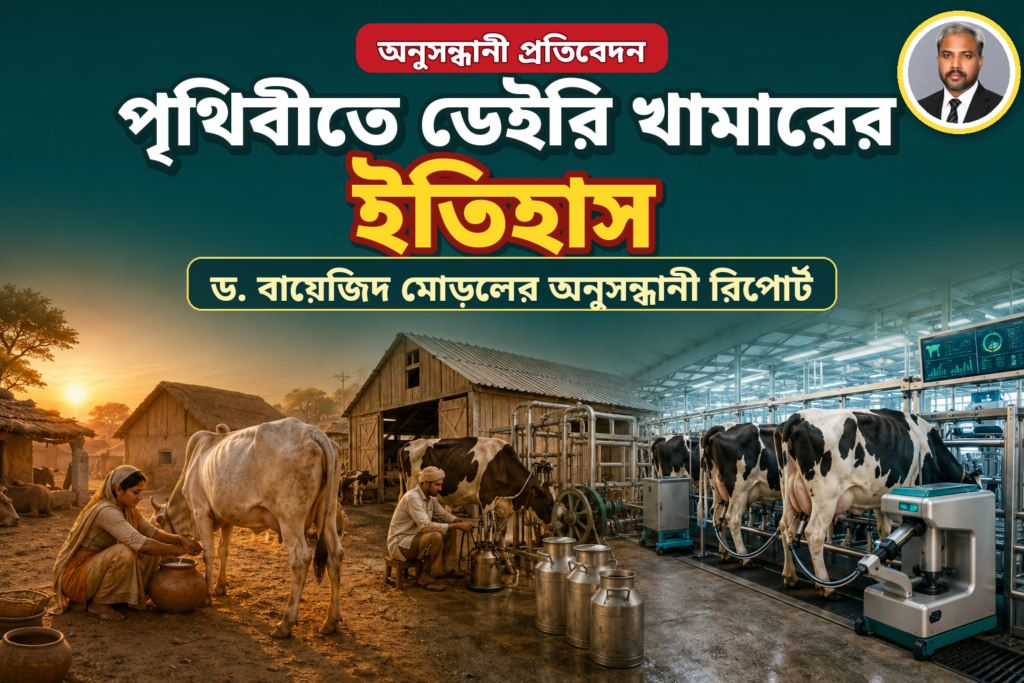
AGRICULTURE NEWS | INVESTIGATIVE REPORT
The History of Dairy Farming in the World
The Long Journey from Domesticated Cattle to Robotic Farms
An Investigative Report by Dr. Bayezid Moral
Throughout the history of human civilisation, milk has been far more than a food. It has been a silent witness to the evolution of agriculture, nutrition, rural economies, trade, technology and culture. Modern dairy farms now use high-yielding cattle, artificial insemination, balanced rations, automated milking equipment, bulk milk cooling tanks, sensors and computer-based management systems. Yet the foundations of this industry were laid thousands of years ago, when humans first learned to domesticate wild cattle and obtain milk from them.
An investigation into the history of dairy farming must therefore go beyond the history of keeping cows. It must examine why people began drinking milk, how yoghurt, ghee, butter and cheese emerged, when commercial dairy farms were established, and which scientific discoveries transformed dairying into the global industry we know today.
From Hunter-Gatherers to Pastoral Societies
In prehistoric times, humans initially obtained meat by hunting wild animals. The idea of keeping animals as regular sources of food, milk and agricultural power had not yet developed. Following the Agricultural Revolution, people gradually established permanent settlements and began domesticating wild cattle, sheep and goats.
It is generally believed that approximately 10,000 years ago, domestic cattle developed from wild aurochs in parts of Southwest Asia, Anatolia, the Levant and Mesopotamia. In South Asia, zebu or humped cattle, scientifically known as Bos indicus, were domesticated and developed along a distinct path. By contrast, humpless Bos taurus cattle spread across Europe and Western Asia.
Cattle were initially valued mainly for meat, hides and labour. People soon realised, however, that a living cow could provide milk repeatedly. This meant that nutritious food could be obtained for years without slaughtering the animal. That discovery accelerated what scholars describe as the “Secondary Products Revolution”: the transition from using livestock primarily for meat to also using them for milk, traction, fibre and other renewable products.
The Earliest Evidence of Milk Use
For many years, historians debated when ancient communities began collecting milk regularly. Archaeologists eventually found compelling evidence by analysing chemical traces of animal fats preserved inside ancient pottery.
Residues of milk fat have been identified in pottery from Anatolia and surrounding regions. Evidence from north-western Anatolia suggests that pioneer farming communities migrated with established knowledge of milk and dairy processing. Direct evidence of dairy fats from the seventh millennium BCE has also been identified on the Iranian Plateau. These findings indicate that humans were using milk from cattle, sheep and goats eight to nine thousand years ago.
Many prehistoric adults could not easily digest the lactose in fresh milk. Communities therefore transformed milk into yoghurt, cheese, butter and other fermented foods. Fermentation reduced lactose and allowed the products to be stored for longer periods. The history of dairy processing is consequently almost as old as the history of milking itself.
Evidence of cheese-making dating back roughly 7,200 years has been found on the Dalmatian coast. Research indicates that liquid milk was consumed in the region first, followed by the wider use of fermented dairy products.
Mesopotamia, Ancient Egypt and the Indus Civilisation
The Sumerian civilisation of Mesopotamia left evidence of foods produced from the milk of cattle, sheep and goats. Clay tablets and visual depictions show livestock keeping, milking and the storage of dairy products. Herds were also managed under the authority of temples and royal establishments. An early form of institutional dairy management therefore existed alongside household livestock keeping.
In ancient Egypt, cattle represented wealth, social status and religious symbolism. In the fertile Nile Valley, livestock production and crop cultivation complemented one another. Cattle supplied milk, meat, hides and draught power for farming.
Cow and buffalo milk also held great importance in the Indus civilisation and ancient Indian society. Milk, curd, ghee and butter became closely associated with everyday diets, religious rituals and social occasions. Because raw milk deteriorated quickly in South Asia’s hot and humid climate, a strong tradition emerged of converting it into longer-lasting products such as ghee, yoghurt, chhana and butter.
Buffalo milk later became a major economic resource in the region. Its generally higher fat content made it especially suitable for producing ghee, butter, yoghurt, sweets and other value-added dairy products.
The Dairy Economy of Greece and Rome
In ancient Greece and Rome, milk from sheep and goats was particularly important alongside cow’s milk. The mountainous Mediterranean landscape made it difficult to maintain large cattle herds, encouraging the production of cheese from smaller ruminants.
Roman writers produced guidance on animal breeding, feeding, disease observation and milk processing. As urban markets expanded, commercial links developed between rural producers and city consumers. Without modern refrigeration, however, liquid milk could not be transported over long distances. More durable products, particularly cheese and butter, therefore dominated dairy trade.
The Middle Ages: Household, Estate and Monastic Production
After the fall of the Roman Empire, dairy production in Europe again became largely local and household-based. Farming families typically kept a small number of cows. Women were generally responsible for milking, butter-making, cheese production and milk preservation.
Christian monasteries played an important role in advancing European dairy techniques. They possessed land, managed herds, stored feed and organised labour more systematically than many surrounding farms. The origins of numerous traditional European cheeses are closely associated with monasteries and particular geographic regions.
During this period, regional cattle populations adapted to local climates, mountains, grasslands and feed resources. Some became known for higher milk yields, others for milk fat, while many remained dual-purpose animals used for both milk and farm work.
The Development of Specialised Dairy Breeds
Breed improvement is central to modern dairying, but specialised dairy cattle are the result of centuries of selective breeding.
The Holstein-Friesian, developed in Friesland and neighbouring areas of the Netherlands and northern Germany, became globally renowned for high milk production. Jersey and Guernsey cattle developed in the Channel Islands and became valued for milk containing relatively high levels of fat and solids. Brown Swiss cattle from Switzerland, Ayrshire cattle from Scotland and Shorthorns from England also hold important places in dairy history.
Today, most dairy cows in the United States are Holsteins or Holstein-Friesians, although Jersey, Brown Swiss, Guernsey, Ayrshire and Milking Shorthorn cattle are also kept.
South Asian indigenous breeds such as Sahiwal, Red Sindhi, Gir, Tharparkar and Rathi are valuable for heat tolerance, disease resistance, reproductive ability and survival under limited feeding conditions. Their milk yield may be lower than that of Holsteins, but their capacity to adapt to local environments is often much greater.
The Agricultural Revolution and Planned Breeding
The European Agricultural Revolution of the seventeenth and eighteenth centuries brought dairy farming into a new phase. Better land use, cultivation of grasses and fodder crops, winter hay conservation and selective breeding steadily increased the productivity of dairy cattle.
Cows had previously served simultaneously as sources of milk, meat and draught power. As market demand grew, farmers began selecting specialised dairy animals. Cows that produced more milk, had sound udder conformation, maintained longer lactations and calved regularly were increasingly chosen as parents of the next generation.
Herd books and formal registration systems were introduced to preserve pedigree information. They laid the foundation for modern genetic improvement, performance recording and organised breed development.
Urbanisation and the Birth of Commercial Dairy Farming
During the late eighteenth and nineteenth centuries, the Industrial Revolution rapidly expanded cities in Europe and North America. As urban populations became separated from farming, demand for market milk increased. Specialised dairy farms began to develop around towns and cities.
The expansion of railways transformed milk transport. Previously, milk had to be sold close to where it was produced. Rail connections allowed milk to reach cities from more distant rural areas. Metal milk cans, the use of ice and improvements in cooling later made distribution more dependable.
Rapidly growing urban milk markets also created serious problems involving adulteration, poor hygiene and disease. In some cities, cows were kept near distilleries and fed industrial residues, producing low-quality “swill milk.” Animals were confined in unhealthy surroundings, and milk was sold without adequate sanitation.
Dairy farming consequently became not only an agricultural issue, but also a matter of public health, food safety and government regulation.
Pasteurisation: A Historic Public-Health Transformation
In the nineteenth century, French scientist Louis Pasteur demonstrated that microorganisms were responsible for the spoilage of food and beverages. His work led to the development of pasteurisation, in which liquids are heated under controlled conditions to reduce harmful microorganisms.
The importance of pasteurising milk increased as evidence emerged that milk could transmit tuberculosis, brucellosis, typhoid and other diseases. During the twentieth century, commercial milk pasteurisation became mandatory or standard practice in many countries. It is widely regarded as one of the major public-health achievements of the century.
Pasteurisation changed the dairy industry in three important ways. It strengthened consumer confidence, extended the usable life of milk and created a need for hygienic supply systems connecting farms with processing plants.
From Hand Milking to Machine Milking
For thousands of years, cows were milked by hand. Because hand milking is slow and labour-intensive, a household could manage only a limited number of dairy animals.
Inventors began experimenting with milking machines in the nineteenth century. Many early devices damaged teats or increased the risk of mastitis. Effective machine milking emerged only after improvements in vacuum and pulsation technology.
During the twentieth century, electricity, vacuum pumps, stainless-steel pipelines and purpose-built milking parlours made large dairy farms possible. Mechanical refrigeration also allowed milk to be cooled quickly and its quality preserved. Electrification of farms made it possible to cool milk faster and to much lower temperatures than before.
Bottled Milk and the Processing Industry
Milk was once delivered by vendors who poured it from open containers into household vessels, creating a considerable risk of contamination. Glass bottles, sealed caps and automated filling systems significantly improved dairy marketing and hygiene.
Commercial use of automated bottling technology began in the early twentieth century. The first automatic bottling machine was patented in 1907, while powered capping and filling equipment entered commercial use from 1913.
Paper cartons, plastic containers, ultra-high-temperature processing, milk powder and long-life packaging later expanded milk markets around the world. Milk was no longer merely a local farm product; it became an important commodity in international food trade.
The Cooperative Movement and the Strength of Smallholders
Cooperative organisation has played a defining role in the history of dairy farming. An individual smallholder cannot easily build facilities for milk collection, chilling, transport, processing and marketing. When many farmers act collectively, these challenges become manageable.
Dairy cooperatives expanded rapidly in Europe from the late nineteenth century. Farmers jointly established creameries, cheese factories and marketing systems. Cooperatives helped secure better prices, technical services and stronger bargaining power.
India’s Amul model is one of the world’s best-known examples. It established an integrated system for collecting milk regularly from village smallholders, testing quality, chilling, processing, branding and marketing. India’s Operation Flood programme later played a major role in increasing production and building a national milk grid.
This experience demonstrated that dairy development does not depend only on large corporate farms. Organised smallholders can form the backbone of a national milk economy.
Artificial Insemination and the Genetic Revolution
Artificial insemination transformed dairying during the twentieth century. Semen from one superior bull could be used in thousands of cows. Frozen semen could be stored and transported over long distances, greatly accelerating breed improvement.
Progeny testing then enabled breeders to evaluate which bulls produced daughters with higher milk yield, better fat and protein levels, sound udders and improved disease resistance. Computerised breeding values, genomic selection, sexed semen, embryo transfer and in-vitro fertilisation subsequently opened new possibilities.
Importing high-yielding exotic breeds, however, does not automatically bring success. If cattle are poorly matched to local climate, temperature, feed, disease pressure and management, they may quickly become sick or unproductive. Many developing countries have therefore used planned crossbreeding between indigenous cattle and Holstein-Friesians.
FAO analyses of crosses between Indian zebu and European dairy breeds have reported strong performance in many situations when European inheritance was between one-half and three-quarters, although results vary according to location and management.
Feed Science and the Transformation of Productivity
Ancient cattle depended mainly on natural grazing. On modern dairy farms, feeding is treated as a science. Rations are formulated according to body weight, age, pregnancy, milk yield, milk fat and body condition.
Total mixed rations combine silage, hay, green fodder, grains, oilseed meals, minerals, vitamins and selected feed additives. Research on rumen microorganisms, feed digestibility and the balance of protein and energy has multiplied the production potential of dairy cattle.
High milk yield cannot be achieved safely simply by feeding more concentrate. Poorly planned diets may cause ruminal acidosis, hoof disorders, reproductive failure, fatty liver and reduced milk fat. Modern management therefore focuses not only on yield, but also on animal health, longevity and lifetime productivity.
Post-War Expansion of the Dairy Industry
After the Second World War, dairy farming mechanised rapidly across Europe, North America, Australia and New Zealand. Tractors, electricity, pipeline milking, bulk milk coolers, improved breeding and mechanised feed production enabled farms to manage more cows with less labour.
Growth in urban populations and incomes expanded markets for fluid milk, butter, cheese, infant formula, ice cream and milk powder. Multinational dairy companies and large processing businesses entered international markets.
At the same time, the number of small family farms declined in many countries while average herd size increased. Analyses by the United States Department of Agriculture show that technology, improved management and structural movement towards larger farms substantially increased output per cow and labour efficiency.
The Era of Robotic Dairy Farming
Automatic milking systems, commonly known as milking robots, entered commercial use in the final decade of the twentieth century. Scientific reviews note that such systems have been commercially available since 1992.
On a robotic farm, a cow can enter the milking station according to her own routine. Electronic identification recognises the animal, while sensors record milk yield, flow, electrical conductivity and possible signs of mastitis. Automated brushes clean the teats and a robotic arm attaches the milking cups.
Many farms now use neck or leg sensors to monitor movement, rumination, lying time, feed intake and oestrus. Cameras and artificial intelligence are being used to assess body condition, lameness and behavioural change.
The modern dairy farm is therefore no longer simply a place where animals are kept. It has become an integrated centre of data, biology, engineering and management.
Different Dairy-Farming Systems Around the World
Dairy farms do not follow a single global model. New Zealand has a strong pasture-based, seasonal production system. Many regions of the United States rely on large confined or semi-confined farms using total mixed rations. Europe places considerable emphasis on family farms, cooperatives, environmental regulation and animal-welfare standards.
Across India, Bangladesh, Pakistan, Nepal and many African countries, smallholders often produce milk from one to ten cattle or buffaloes. Where land is scarce, cows are frequently stall-fed with cut-and-carry forage and other feeds. FAO comparisons note that Bangladeshi smallholders commonly keep cattle and buffaloes at home because of severe land constraints, whereas livestock in Mongolia travel across extensive rangelands.
FAO estimates that around 150 million farm households worldwide are engaged in milk production. Small-scale dairying strengthens household food security and generates employment throughout milk collection, transport, processing and marketing chains.
Milk Production in the Modern World
Cattle are now the world’s most widespread large ruminant livestock species. They are kept for milk, meat, hides and, in some regions, draught power. In grass-based systems, cattle can convert plant material that humans cannot eat directly into high-quality animal protein.
The world’s milk supply does not come only from cows. Buffaloes, goats, sheep, camels, yaks and horses also produce milk that is important to regional diets and cultures. Buffalo milk is especially significant in South Asia, sheep and goat milk in Mediterranean regions, and camel milk in arid zones.
International data based on FAO statistics show that global milk production has risen steadily since 1961. Population growth, urbanisation, higher incomes, improved breeds, better feeding and technological development have all contributed to this expansion.
New Questions Alongside Success
The history of the dairy industry is not merely a history of increasing production. It also raises questions about the environment, animal welfare and social justice.
Large farms can pollute water and air when manure and waste are poorly managed. Ruminant digestion produces methane, a greenhouse gas linked to climate change. Land and water used to grow animal feed are also significant concerns.
If markets become concentrated in the hands of a few large companies and farms, small producers may be denied fair milk prices. High yield alone cannot make a farmer profitable when production costs, feed prices and farm-gate milk prices are badly imbalanced.
Modern dairy development must therefore balance three objectives: economically profitable production; cattle health and animal welfare; and environmentally sustainable management.
Biogas, solar energy, organic fertiliser from manure, water recycling, precision feeding and technologies that reduce methane emissions are likely to become increasingly important on the dairy farms of the future.
Lessons from History for Bangladesh
The long global history of dairying offers several important lessons for Bangladesh.
First, the dairy industry cannot be developed simply by importing exotic cows with high production potential. Breed, climate, feed, housing, disease control and farmer skills must function as one system.
Second, a strong dairy economy is difficult to build without organising smallholders. Village milk-collection points, cooperatives, chilling centres and quality-based pricing are essential.
Third, milk must be cooled rapidly at farm or collection level. Pricing based on bacterial count, fat, protein and adulteration tests would reward farmers who produce clean, high-quality milk.
Fourth, breed improvement is impossible without pedigree and performance records. Farms need to record milk yield, lactation length, number of inseminations, calving performance and disease history.
Fifth, providing a farmer with only a loan or a cow is not enough. Safe feed, veterinary care, artificial insemination, training, reliable milk markets and insurance must be integrated into a coherent support system.
Conclusion
The history of dairy farming spans almost ten thousand years of human need, innovation and adaptation. Ancient communities began using milk as a renewable source of food from living animals. Yoghurt, ghee, butter and cheese made milk easier to preserve. Urbanisation gave birth to commercial dairy farms; pasteurisation made milk safer; railways and refrigeration expanded markets; milking machines enabled larger herds; artificial insemination accelerated genetic improvement; and sensors and robots are now transforming dairy farms into data-driven enterprises.
The greatest lesson of this history, however, is that technology alone cannot make a dairy industry sustainable. Success requires skilled farmers, healthy cattle, safe feed, efficient markets, fair prices and environmental responsibility.
The dairy farm of the future may be increasingly automated, but at its heart will remain an ancient relationship of mutual dependence among people, animals, soil and food. The global dairy industry must respect that relationship as it moves towards a future that is productive, humane and sustainable.