















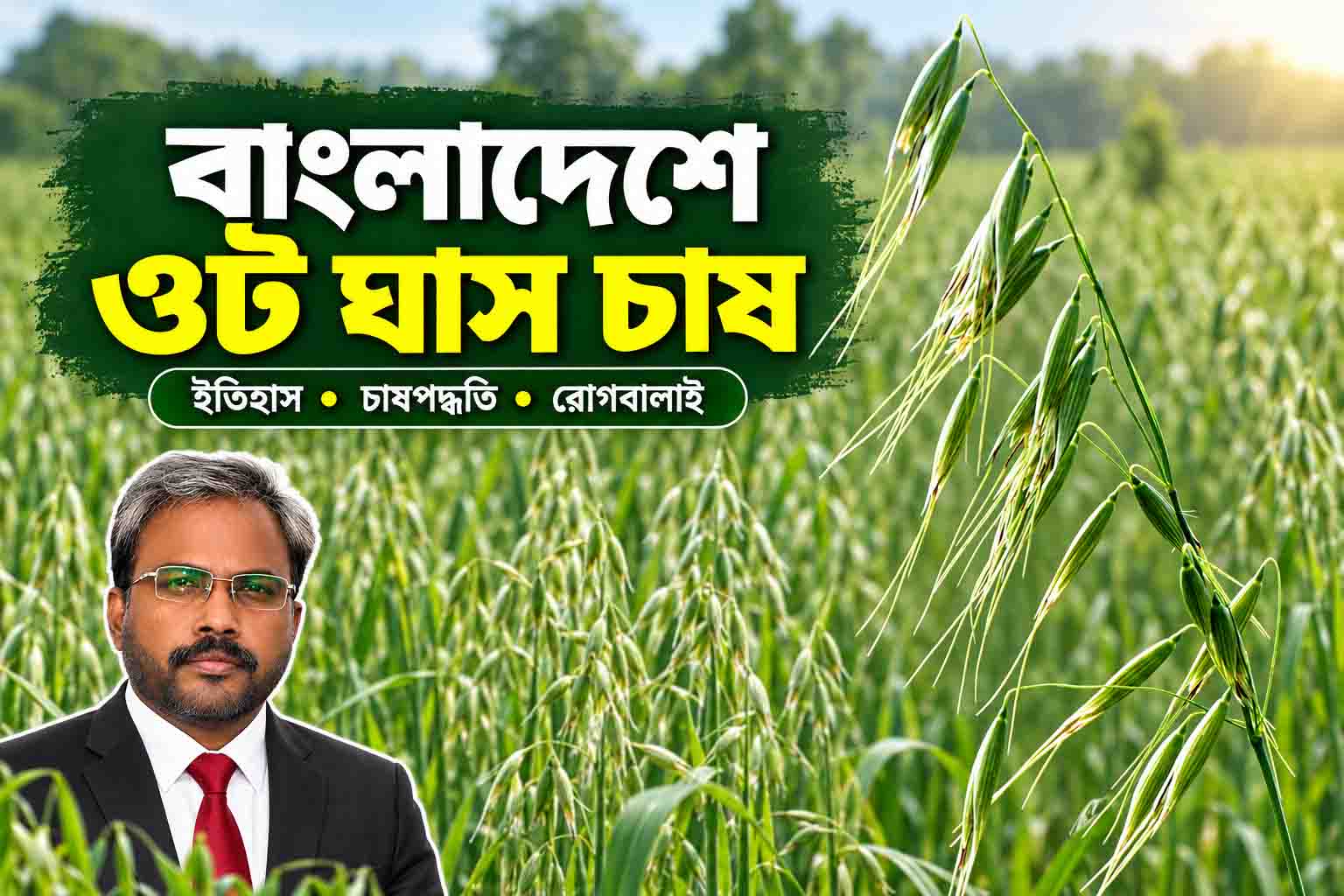
বাংলাদেশে ওট ঘাস চাষ: ইতিহাস, বৈশিষ্ট্য, চাষপদ্ধতি, রোগবালাই ও প্রতিকার।।
ড. বায়েজিদ মোড়লের গবেষণাধর্মী প্রতিবেদন।।
বাংলাদেশে গবাদিপশুর খাদ্যসংকট বিশেষ করে শীতকালে দুধ ও মাংস উৎপাদনের বড় বাধা। এ সময় প্রাকৃতিক ঘাসের উৎপাদন কমে যায় এবং খড়ের ওপর নির্ভরতা বেড়ে যায়। অথচ শুধু খড় খাইয়ে উচ্চ উৎপাদনশীল গাভী বা মোটাতাজাকরণের পশুর পুষ্টির চাহিদা পূরণ করা সম্ভব নয়। শীতকালীন সবুজ খাদ্যের এ ঘাটতি পূরণে গুরুত্বপূর্ণ ভূমিকা রাখতে পারে ওট ঘাস।
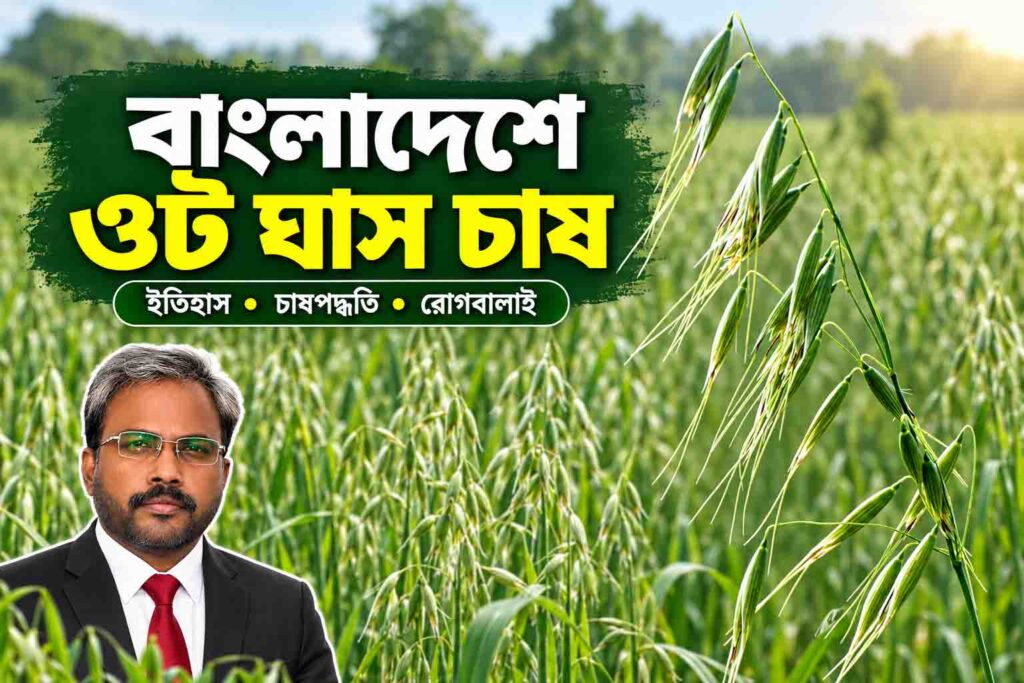
ওটের বৈজ্ঞানিক নাম Avena sativa L.। এটি Poaceae বা ঘাস পরিবারের একবর্ষজীবী শস্য। বিশ্বের অনেক দেশে ওট মানুষের খাদ্যশস্য হিসেবে পরিচিত হলেও বাংলাদেশ, ভারত, পাকিস্তান ও নেপালে এটি প্রধানত গরু, মহিষ, ছাগল ও ভেড়ার সবুজ খাদ্য হিসেবে চাষ করা হয়।
ওট ঘাসের উৎপত্তি ও ইতিহাস
ওটের উৎপত্তি সম্পর্কে গবেষকদের ধারণা—এটি প্রথমে গম ও বার্লির জমিতে আগাছা বা সহযোগী উদ্ভিদ হিসেবে জন্মাত। পরে ইউরোপ ও পশ্চিম এশিয়ার শীতল অঞ্চলে আলাদা শস্য হিসেবে এর নির্বাচন ও চাষ শুরু হয়। গম ও বার্লির তুলনায় ওটের গৃহপালিত শস্যে পরিণত হওয়ার ইতিহাস অপেক্ষাকৃত নতুন।
বর্তমানে ইউরোপ, উত্তর আমেরিকা, অস্ট্রেলিয়া, রাশিয়া এবং এশিয়ার বিভিন্ন দেশে ওট খাদ্যশস্য, পশুখাদ্য, হে, সাইলেজ ও কভার ক্রপ হিসেবে ব্যবহৃত হচ্ছে। মৃদু শীত এবং পর্যাপ্ত আর্দ্রতাযুক্ত অঞ্চলকে পশুখাদ্য হিসেবে ওট উৎপাদনের জন্য বিশেষ উপযোগী মনে করা হয়। FAO-এর Fodder Oats: A World Overview
বাংলাদেশে ওট ঘাস চাষের ইতিহাস
বাংলাদেশে ঠিক কোন সালে প্রথম ওট আনা হয়েছিল—এ বিষয়ে নির্ভরযোগ্য সরকারি নথিতে সুনির্দিষ্ট তথ্য পাওয়া যায় না। তাই একটি নির্দিষ্ট সালকে ‘ওট চাষ শুরুর বছর’ বলা বৈজ্ঞানিকভাবে ঠিক হবে না।
তবে বাংলাদেশ কৃষি বিশ্ববিদ্যালয়, বাংলাদেশ প্রাণিসম্পদ গবেষণা ইনস্টিটিউট—BLRI এবং সাভারের কেন্দ্রীয় গো-প্রজনন ও দুগ্ধ খামারে ওট নিয়ে বহু বছর ধরে গবেষণা ও পরীক্ষামূলক উৎপাদন হয়েছে। বাংলাদেশের গবেষকেরা অন্তত ১৯৯০-এর দশক থেকে ওটের ফলন, নাইট্রোজেন সার, কাটার বয়স এবং পুষ্টিমান নিয়ে কাজ করেছেন। ২০০১ সালে বাংলাদেশে ভুট্টা ও ওটের জৈবভর এবং পুষ্টিমান তুলনা করে গবেষণা প্রকাশিত হয়। ২০০৫ সালে বিভিন্ন মাত্রার নাইট্রোজেন ও ফসফরাস এবং কাটার বয়স অনুযায়ী ওটের ফলন ও পুষ্টিমান নিয়ে গবেষণা হয়। বাংলাদেশ কৃষি বিশ্ববিদ্যালয়ের প্রকাশনা তালিকা
২০১৯–২০ রবি মৌসুমে বাংলাদেশ কৃষি বিশ্ববিদ্যালয়ের গবেষণায় BLRI এবং কেন্দ্রীয় গো-প্রজনন ও দুগ্ধ খামার থেকে সংগৃহীত দুটি ওট জেনোটাইপ পরীক্ষা করা হয়। এটি প্রমাণ করে যে বাংলাদেশের সরকারি প্রতিষ্ঠানগুলোতে ওট ঘাসের জার্মপ্লাজম সংরক্ষণ ও মাঠপর্যায়ের ব্যবহার রয়েছে। BAU Research Progress
বর্তমানে দেশের ডেইরি খামার, সরকারি প্রাণিসম্পদ খামার, কৃষি বিশ্ববিদ্যালয় ও কিছু বাণিজ্যিক খামারে এটি শীতকালীন সবুজ খাদ্য হিসেবে চাষ করা হচ্ছে। তবে নেপিয়ার বা ভুট্টার তুলনায় মানসম্মত ওটবীজের সীমিত সরবরাহের কারণে এর সম্প্রসারণ এখনও প্রত্যাশিত পর্যায়ে পৌঁছায়নি।
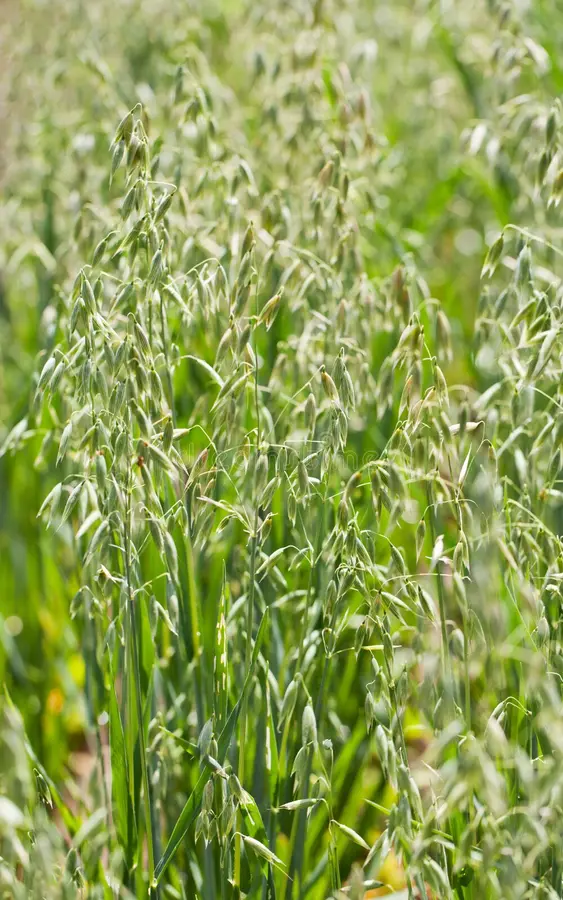
ওট ঘাসের প্রধান বৈশিষ্ট্য
১. শীতকালীন একবর্ষজীবী ঘাস
এটি মূলত রবি মৌসুমের ফসল। বাংলাদেশের অক্টোবরের শেষ থেকে ফেব্রুয়ারি-মার্চ পর্যন্ত আবহাওয়া ওট উৎপাদনের জন্য তুলনামূলকভাবে উপযোগী।
২. বীজের মাধ্যমে চাষ
নেপিয়ার বা পাকচংয়ের মতো কাণ্ড লাগাতে হয় না। সরাসরি বীজ বপন করে আবাদ করা যায়। ফলে দ্রুত বড় জমিতে চাষ করা সম্ভব।
৩. দ্রুত বৃদ্ধি
উপযুক্ত সময়ে বপন, সার ও সেচ দেওয়া হলে সাধারণত ৫০–৭০ দিনের মধ্যে প্রথমবার কাটার উপযোগী হতে পারে। জাত ও ব্যবস্থাপনার ওপর নির্ভর করে কোনো কোনো ওট একবার এবং কোনো কোনো জাত দুই বা ততোধিকবার কাটা যায়।
৪. সুস্বাদু ও নরম
কচি ওটের পাতা ও কাণ্ড নরম, রসালো এবং অধিকাংশ গবাদিপশু আগ্রহের সঙ্গে খায়। প্রয়োজনীয় পরিমাণে আঁশ থাকায় এটি রুমেনের স্বাভাবিক কার্যক্রম বজায় রাখতে সহায়তা করে।
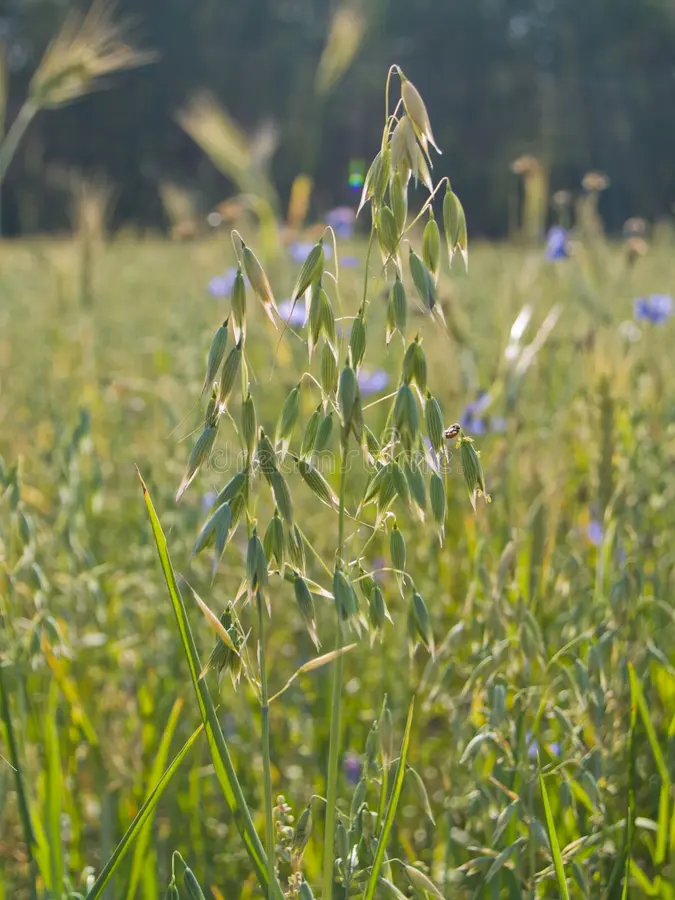
৫. পুষ্টিমান ভালো
ওট ঘাসে সাধারণত পাওয়া যায়—
- সহজপাচ্য শর্করা;
- পরিমিত ক্রুড প্রোটিন;
- কার্যকর আঁশ;
- ক্যালসিয়াম, ফসফরাস ও অন্যান্য খনিজ;
- ক্যারোটিন ও বিভিন্ন ভিটামিনের পূর্বসূরি।
জাত, মাটির উর্বরতা এবং কাটার বয়সভেদে শুকনো পদার্থে ক্রুড প্রোটিন প্রায় ৮–১৪ শতাংশ বা তারও বেশি হতে পারে। তবে বেশি বয়সে কাটলে উৎপাদন বাড়লেও প্রোটিন ও হজমযোগ্যতা কমে এবং আঁশ বাড়ে।
৬. হে ও সাইলেজ তৈরির উপযোগী
ওট সরাসরি সবুজ অবস্থায় খাওয়ানো যায়। আবার অতিরিক্ত উৎপাদন হলে হে বা সাইলেজ তৈরি করে খাদ্যসংকটের সময় ব্যবহার করা যায়। ওটের সঙ্গে খেসারি, মটর, ভেচ বা বারসিমের মতো ডালজাতীয় পশুখাদ্য মিশিয়ে চাষ করলে খাদ্যের প্রোটিন ও সামগ্রিক মান বাড়তে পারে।
৭. লবণাক্ত এলাকায় সম্ভাবনা
বাংলাদেশ কৃষি বিশ্ববিদ্যালয়ের গবেষণায় ওটকে খরা, তুলনামূলক অনুর্বরতা ও লবণাক্ততা সহ্য করার সম্ভাবনাময় ফসল হিসেবে উল্লেখ করা হয়েছে। তবে সব জাত সমান লবণসহিষ্ণু নয়; উপকূলীয় এলাকায় স্থানীয় পরীক্ষায় উপযোগী জাত নির্বাচন করতে হবে। Journal of Bangladesh Agricultural University
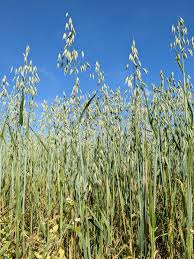
ওট ঘাস চাষপদ্ধতি
১. উপযুক্ত জমি
বেলে দোআঁশ থেকে এঁটেল দোআঁশ—বিভিন্ন মাটিতে ওট জন্মায়। তবে সবচেয়ে ভালো ফলনের জন্য প্রয়োজন—
- উর্বর দোআঁশ মাটি;
- পানি নিষ্কাশনের ব্যবস্থা;
- পর্যাপ্ত সূর্যালোক;
- সেচের সুবিধা;
- মাটির পিএইচ আনুমানিক ৫.৫–৭.৫।
জমিতে দীর্ঘ সময় পানি জমে থাকলে শিকড় পচা, চারা মারা যাওয়া ও ছত্রাকজনিত রোগ বাড়তে পারে।
২. জমি তৈরি
জমি ৩–৪ বার চাষ ও মই দিয়ে মাটি ঝুরঝুরে এবং সমতল করতে হবে। আগের ফসলের মোটা অবশিষ্টাংশ এবং বহুবর্ষজীবী আগাছা সরিয়ে ফেলতে হবে।
শেষ চাষের আগে ভালোভাবে পচানো গোবর বা কম্পোস্ট মাটির সঙ্গে মেশানো ভালো। ভারী মাটি বা বৃষ্টির পানি জমার আশঙ্কা থাকলে নালা তৈরি করতে হবে।
৩. বপনের সময়
বাংলাদেশে সাধারণভাবে উপযুক্ত সময়—
- উত্তর ও মধ্যাঞ্চল: অক্টোবরের শেষ থেকে নভেম্বরের মাঝামাঝি;
- দক্ষিণ ও অপেক্ষাকৃত উষ্ণ অঞ্চল: নভেম্বরের প্রথম থেকে শেষভাগ;
- প্রয়োজনে ডিসেম্বরের প্রথমভাগ পর্যন্ত বপন করা যায়, তবে দেরিতে বপন করলে গরম পড়ার আগে যথেষ্ট বৃদ্ধি না হওয়ায় ফলন কমতে পারে।
আমন ধান কাটার পর দ্রুত জমি তৈরি করে বপন করলে রবি মৌসুমের সময় ভালোভাবে ব্যবহার করা যায়। ধান ও বোরোর মধ্যবর্তী স্বল্প সময়ে ওট উৎপাদনের সম্ভাবনাও বাংলাদেশে গবেষণা করা হয়েছে। BARC গবেষণা তথ্যভান্ডার
৪. বীজ নির্বাচন ও বীজের হার
বিশ্বব্যাপী পশুখাদ্য ওটের বীজ হার সাধারণত হেক্টরপ্রতি ৬০–১০০ কেজি পর্যন্ত দেখা যায়। বাংলাদেশের পরিস্থিতিতে বীজের অঙ্কুরোদ্গম, বপনপদ্ধতি ও জাত অনুযায়ী আনুমানিক—
- লাইনে বপন: হেক্টরপ্রতি ৭০–৯০ কেজি;
- ছিটিয়ে বপন: হেক্টরপ্রতি ৯০–১০০ কেজি;
- প্রতি বিঘায় আনুমানিক ১০–১৪ কেজি।
বীজ কেনার আগে জাতের নাম, অঙ্কুরোদ্গম হার, উৎপাদনের বছর এবং উৎস যাচাই করতে হবে। খাদ্যের জন্য আমদানি করা প্রক্রিয়াজাত ওটকে বীজ হিসেবে ব্যবহার করা উচিত নয়।
৫. বপনপদ্ধতি
লাইনে বপন সবচেয়ে ভালো। এতে আগাছা পরিষ্কার, সার প্রয়োগ, সেচ এবং রোগ পর্যবেক্ষণ সহজ হয়।
- লাইন থেকে লাইনের দূরত্ব: ২০–২৫ সেন্টিমিটার;
- বপনের গভীরতা: ৩–৫ সেন্টিমিটার;
- বপনের পর হালকা মই দিয়ে বীজ ঢেকে দিতে হবে।
অতিরিক্ত গভীরে বীজ দিলে চারা উঠতে বিলম্ব হয় এবং অঙ্কুরোদ্গম কমে যেতে পারে।
৬. সার ব্যবস্থাপনা
সারের পরিমাণ মাটির পরীক্ষা, পূর্ববর্তী ফসল, জাত এবং প্রত্যাশিত ফলনের ভিত্তিতে নির্ধারণ করা উচিত। সাধারণ নির্দেশক মাত্রা হিসেবে হেক্টরপ্রতি ব্যবহার করা যেতে পারে—
- পচা গোবর বা কম্পোস্ট: ৫–১০ টন;
- নাইট্রোজেন: ৮০–১০০ কেজি;
- ফসফরাস: ৪০–৬০ কেজি;
- পটাশ: ৩০–৪০ কেজি।
এটি সারের পুষ্টি উপাদানের পরিমাণ; সরাসরি ইউরিয়া, টিএসপি ও এমওপির ওজন নয়। স্থানীয় মৃত্তিকা পরীক্ষা ছাড়া অন্ধভাবে মাত্রা অনুসরণ করা উচিত নয়।
সাধারণভাবে গোবর, সম্পূর্ণ ফসফরাস ও পটাশ এবং অর্ধেক নাইট্রোজেন শেষ চাষের সময় দিতে হবে। বাকি নাইট্রোজেন চারা প্রতিষ্ঠার পর অথবা প্রথম কাটার পর দিতে হবে। উপরিপ্রয়োগের পরপরই হালকা সেচ দিতে হবে।
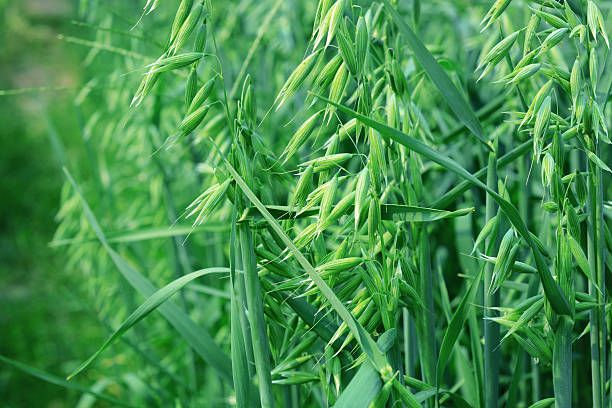
অতিরিক্ত ইউরিয়া দিলে—
- গাছ নরম হয়ে হেলে পড়তে পারে;
- রোগ বাড়তে পারে;
- খাদ্যে নাইট্রেট জমার ঝুঁকি তৈরি হতে পারে;
- উৎপাদন খরচ বাড়ে।
৭. সেচ
বপনের সময় মাটিতে পর্যাপ্ত রস না থাকলে হালকা সেচ দিতে হবে। এরপর মাটির ধরন ও আবহাওয়া অনুযায়ী ১৫–২৫ দিন পরপর সেচ প্রয়োজন হতে পারে।
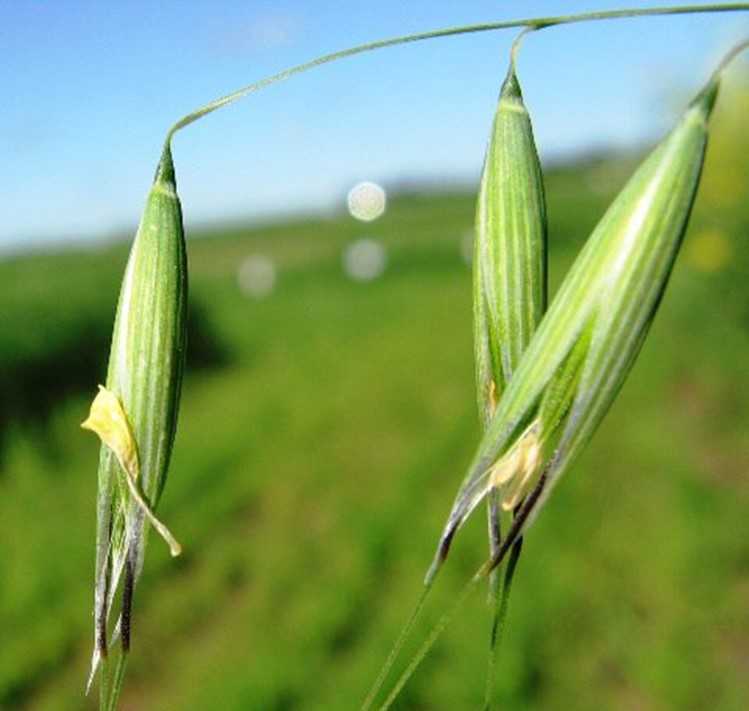
গুরুত্বপূর্ণ সময় হলো—
- অঙ্কুরোদ্গম ও চারা প্রতিষ্ঠা;
- কুশি গঠন;
- নাইট্রোজেন উপরিপ্রয়োগের পর;
- শীষ বের হওয়ার আগের সময়।
জমিতে পানি জমতে দেওয়া যাবে না।
৮. আগাছা ব্যবস্থাপনা
বপনের ২০–৩০ দিনের মধ্যে আগাছার প্রতিযোগিতা বেশি হয়। লাইনে বপন করলে নিড়ানি দিয়ে আগাছা পরিষ্কার করা যায়। ভালো বীজ, পরিচ্ছন্ন জমি এবং সঠিক বীজের হার আগাছা দমনে সহায়ক।
পশুখাদ্য ফসলে আগাছানাশক ব্যবহারের ক্ষেত্রে বিশেষ সতর্কতা দরকার। কারণ কাটার পর সরাসরি পশুকে খাওয়ানো হয়। কেবল বাংলাদেশে অনুমোদিত পণ্য, নিবন্ধিত ব্যবহারমাত্রা এবং নির্ধারিত pre-harvest interval অনুসরণ করতে হবে।
ঘাস কাটার সময় ও ফলন
উচ্চ পুষ্টিমান চাইলে শীষ বের হওয়ার ঠিক আগে বা বুটিং পর্যায়ে কাটা ভালো। ফলন ও পুষ্টিমান—দুটির মধ্যে ভারসাম্য চাইলে শীষ বের হওয়া থেকে প্রায় ৫০ শতাংশ ফুল আসার মধ্যে কাটা যেতে পারে।
অতিরিক্ত দেরিতে কাটলে—
- কাণ্ড শক্ত ও আঁশযুক্ত হয়;
- প্রোটিন ও হজমযোগ্যতা কমে;
- পশুর গ্রহণক্ষমতা কমতে পারে;
- বীজ শক্ত হলে খাদ্যের অপচয় বাড়ে।
একাধিকবার কাটার উপযোগী জাত হলে প্রথম কাটার সময় মাটি থেকে প্রায় ৮–১০ সেন্টিমিটার গোড়া রেখে কাটতে হবে। তবে সব ওটজাত ভালোভাবে পুনর্বৃদ্ধি করতে পারে না। তাই বীজের জাতগত বৈশিষ্ট্য জেনে নিতে হবে।
সবুজ ঘাসের ফলন জাত, বপনের সময়, সেচ, সার ও কাটার বয়স অনুযায়ী ব্যাপকভাবে পরিবর্তিত হয়। ভালো ব্যবস্থাপনায় হেক্টরপ্রতি আনুমানিক ৩০–৬০ টন সবুজ ঘাস পাওয়া যেতে পারে; অনুকূল পরিবেশে এর বেশি উৎপাদনও সম্ভব। এই সংখ্যা নিশ্চয়তা নয়—খামারভিত্তিক ফলন নির্ধারণে পরীক্ষামূলক প্লট রাখা ভালো।
ওট ঘাসের রোগবালাই ও প্রতিকার
বাংলাদেশে ওটের বাণিজ্যিক আবাদ সীমিত হওয়ায় অঞ্চলভিত্তিক রোগতালিকা এখনও পূর্ণাঙ্গ নয়। তবে বিশ্বব্যাপী ওটের যেসব রোগ গুরুত্বপূর্ণ, উপযুক্ত আবহাওয়া সৃষ্টি হলে বাংলাদেশেও সেগুলো দেখা দিতে পারে।
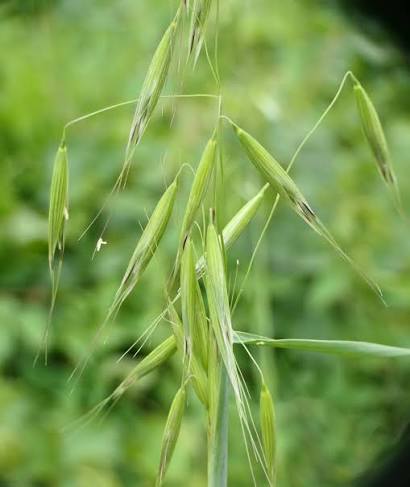
১. পাতার মরিচা বা ক্রাউন রাস্ট
কারণ: Puccinia coronata ছত্রাক।
লক্ষণ:
- পাতায় ছোট হলুদ, কমলা বা লালচে গুঁড়ার মতো ফুসকুড়ি;
- আক্রান্ত পাতা দ্রুত শুকিয়ে যাওয়া;
- বৃদ্ধি, ফলন ও খাদ্যমান কমে যাওয়া।
প্রতিকার:
- রোগসহিষ্ণু ও নির্ভরযোগ্য জাত ব্যবহার;
- আগাম বা সঠিক সময়ে বপন;
- আক্রান্ত ফসলের অবশিষ্টাংশ নষ্ট করা;
- অতিরিক্ত নাইট্রোজেন পরিহার;
- একই জমিতে বারবার ওট না লাগানো।
রোগের শুরুতেই ফসল কাটার বয়স হয়ে গেলে রাসায়নিক প্রয়োগের পরিবর্তে কেটে ব্যবহার করা অধিক নিরাপদ হতে পারে। University of Georgia—Oat Diseases
২. পাতার দাগ বা ব্লচ
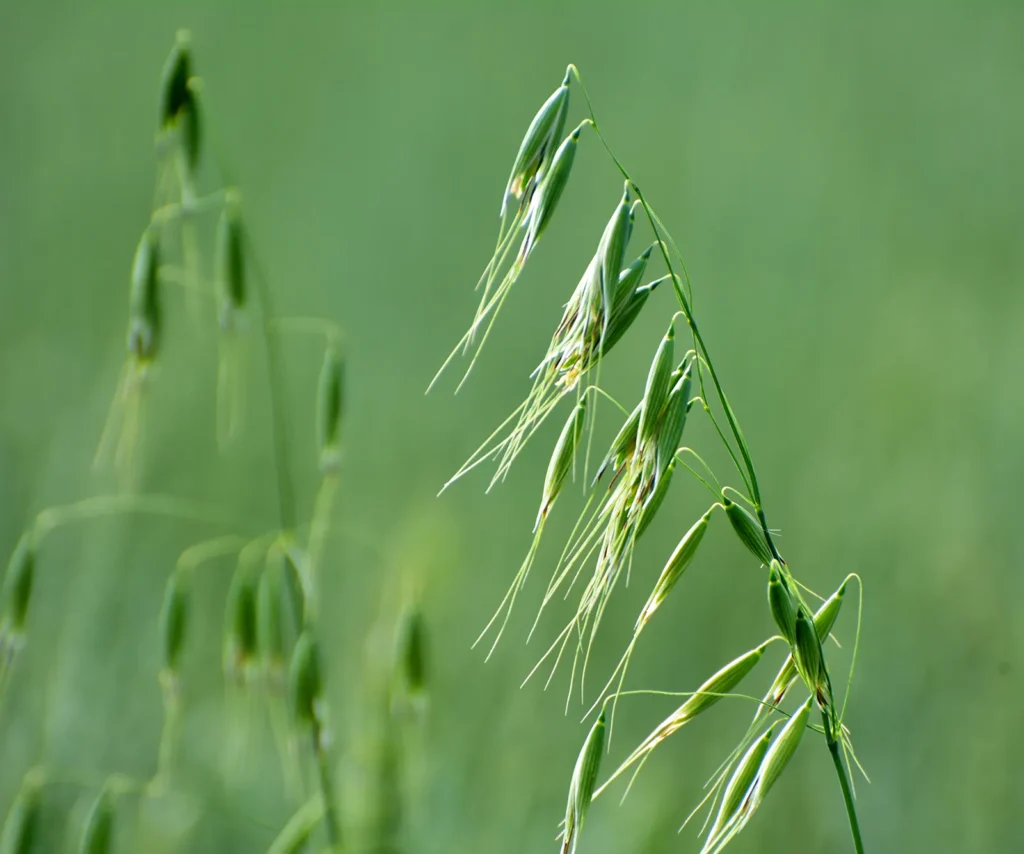
লক্ষণ:
- পাতায় লম্বাটে হলুদ বা বাদামি দাগ;
- দাগগুলো পরে পরস্পরের সঙ্গে মিশে যায়;
- পাতা শুকিয়ে যায়।
ব্যবস্থাপনা:
- রোগমুক্ত বীজ;
- ফসল পর্যায়ক্রম;
- জমিতে পানি নিষ্কাশন;
- ঘন বপন ও অতিরিক্ত ইউরিয়া পরিহার;
- আক্রান্ত খড় ও অবশিষ্টাংশ জমিতে ফেলে না রাখা।
৩. লুজ স্মাট বা ঝুরা কালি রোগ
এটি প্রধানত বীজবাহিত ছত্রাকজনিত রোগ।
লক্ষণ:
- শীষের দানার জায়গায় কালো গুঁড়ার স্তূপ;
- আক্রান্ত শীষে স্বাভাবিক বীজ হয় না।
প্রতিকার:
- প্রত্যয়িত ও রোগমুক্ত বীজ ব্যবহার;
- একই আক্রান্ত ফসল থেকে বীজ সংগ্রহ না করা;
- কৃষি কর্মকর্তার পরামর্শে ওটের জন্য অনুমোদিত বীজশোধনকারী ব্যবহার।
শুধু সাধারণ ছত্রাকনাশক ব্যবহার করলেই সব স্মাট রোগ নিয়ন্ত্রণ হয় না; কার্যকর উপাদান ও নিবন্ধিত ব্যবহার নিশ্চিত করা জরুরি। Pacific Northwest Plant Disease Handbook
৪. গোড়া ও শিকড় পচা
লক্ষণ:
- চারা হলুদ হয়ে যাওয়া;
- গোড়ায় বাদামি বা কালো পচন;
- গাছ সহজে উপড়ে আসা;
- জমির নিচু স্থানে গাছ মারা যাওয়া।
প্রতিকার:
- উঁচু ও পানি নিষ্কাশনযোগ্য জমি;
- অতিরিক্ত সেচ বন্ধ;
- রোগমুক্ত বীজ;
- ফসল পর্যায়ক্রম;
- আক্রান্ত গাছ ও মাটি অন্য জমিতে না নেওয়া।
৫. ফিউজারিয়াম হেড ব্লাইট
ফুল ফোটা অবস্থায় আর্দ্র ও তুলনামূলক উষ্ণ আবহাওয়ায় এ রোগ বাড়তে পারে।
লক্ষণ:
- শীষের কিছু অংশ হঠাৎ সাদা বা বিবর্ণ;
- দানায় গোলাপি বা কমলা ছত্রাক;
- দানা কুঁচকে যাওয়া।
সতর্কতা: ছত্রাক বা মাইকোটক্সিনে দূষিত ঘাস, হে কিংবা বীজ পশুকে খাওয়ানো উচিত নয়। পচা অংশ আলাদা করলেই পুরো খাদ্য নিরাপদ হয়ে যায়—এমন নিশ্চয়তা নেই।
৬. ভাইরাসজনিত মোজাইক
লক্ষণ:
- পাতায় হলুদ-সবুজ ছোপ;
- গাছ খাটো হওয়া;
- কুশি ও ফলন কমে যাওয়া।
ভাইরাসের সরাসরি কোনো “চিকিৎসা” নেই। আক্রান্ত গাছ সরানো, বাহক পোকা ও আগাছা নিয়ন্ত্রণ এবং সুস্থ বীজ ব্যবহারই প্রধান ব্যবস্থা। CABI—Avena sativa
৭. জাবপোকা ও অন্যান্য পোকা
জাবপোকা পাতার রস শোষণ করে এবং কোনো কোনো ভাইরাস ছড়াতে পারে।
সমন্বিত ব্যবস্থাপনা:
- নিয়মিত মাঠ পর্যবেক্ষণ;
- জমির চারপাশের পোষক আগাছা পরিষ্কার;
- উপকারী পোকা সংরক্ষণ;
- অতিরিক্ত নাইট্রোজেন পরিহার;
- মারাত্মক আক্রমণে স্থানীয় কৃষি কর্মকর্তার পরামর্শ।
ওট ঘাস খাওয়ানোর নিয়ম ও স্বাস্থ্যঝুঁকি
কাটা ওট ঘাস পরিষ্কার জায়গায় কিছুক্ষণ রেখে অতিরিক্ত পানি শুকিয়ে তারপর কুচি করে খাওয়ানো ভালো। নতুন খাদ্যে পশুকে ধীরে ধীরে অভ্যস্ত করতে হবে।
- একদিনে হঠাৎ বিপুল পরিমাণ কচি ওট দেওয়া যাবে না;
- ওটের সঙ্গে খড়, সাইলেজ বা অন্য আঁশযুক্ত খাদ্য মিশিয়ে দিতে হবে;
- পশুর বয়স, ওজন, দুধ উৎপাদন ও মোট রেশনের ওপর পরিমাণ নির্ধারণ করতে হবে;
- মাটি, কাদা, ছত্রাক বা পচা গন্ধযুক্ত ঘাস দেওয়া যাবে না;
- শুধু ওট ঘাসকে সম্পূর্ণ সুষম খাদ্যের বিকল্প ভাবা যাবে না।
নাইট্রেট বিষক্রিয়ার ঝুঁকি
অতিরিক্ত নাইট্রোজেন সার, দীর্ঘ খরা, মেঘলা আবহাওয়া বা প্রতিকূল অবস্থায় ওটের কাণ্ডে নাইট্রেট জমতে পারে। ঝুঁকিপূর্ণ জমির ঘাস খাওয়ানোর পর পশুর দ্রুত শ্বাস, দুর্বলতা, কাঁপুনি কিংবা মুখের ঝিল্লি বাদামি বা নীলচে হলে দ্রুত পশুচিকিৎসকের সহায়তা নিতে হবে। সন্দেহ হলে খাওয়ানোর আগে পরীক্ষাগারে নাইট্রেট পরীক্ষা করানো সবচেয়ে নিরাপদ।
ড. বায়েজিদ মোড়লের পরামর্শ
১. ওটকে শীতকালীন খাদ্য পরিকল্পনার অংশ করুন: নেপিয়ার কমে যাওয়ার সময় ওট যাতে পাওয়া যায়, সেভাবে অক্টোবর-নভেম্বরে বপন করুন।
২. প্রথম বছর ছোট প্লটে পরীক্ষা করুন: অজানা বীজ দিয়ে পুরো জমিতে চাষ না করে প্রথমে ৫–১০ শতাংশ জমিতে ফলন, রোগ এবং পশুর গ্রহণযোগ্যতা পরীক্ষা করুন।
৩. বীজের জাত ও উৎস লিখে রাখুন: শুধু “ওট ঘাসের বীজ” নামে কেনা ঝুঁকিপূর্ণ। রসিদ, জাতের নাম, লট নম্বর ও অঙ্কুরোদ্গম হার সংরক্ষণ করুন।
৪. মাটি পরীক্ষা করে সার দিন: বেশি ইউরিয়াকে বেশি ফলনের নিশ্চয়তা মনে করা ভুল। এতে উৎপাদন খরচ, রোগ, গাছ হেলে পড়া ও নাইট্রেটের ঝুঁকি বাড়ে।
৫. কাটার বয়সকে গুরুত্ব দিন: শুধু বেশি টন ঘাস নয়, প্রতি কেজি ঘাসের পুষ্টিমানও গুরুত্বপূর্ণ। দুধেল গাভীর জন্য অপেক্ষাকৃত কচি বা বুটিং পর্যায়ের ঘাস বেশি উপযোগী।
৬. ওটের সঙ্গে ডালজাতীয় পশুখাদ্য চাষ করুন: বারসিম, ভেচ বা মটরের উপযোগী জাতের সঙ্গে মিশ্র চাষ করলে প্রোটিন বাড়তে পারে এবং জমির ব্যবহার কার্যকর হয়।
৭. সারা বছরের খাদ্য বাজেট করুন: শীতকালে উদ্বৃত্ত ওট দিয়ে হে বা সাইলেজ তৈরি করলে বর্ষা ও দুর্যোগের সময় খাদ্যসংকট কমবে।
৮. রোগ দেখা দিলেই ওষুধ নয়, আগে রোগ শনাক্ত করুন: পুষ্টির ঘাটতি, পানি জমা, মরিচা এবং পাতার দাগ দেখতে কাছাকাছি হতে পারে। ভুল ওষুধে খরচ বাড়বে এবং পশুখাদ্যে অবশিষ্টাংশের ঝুঁকি তৈরি হবে।
৯. কীটনাশকের অপেক্ষাকাল মানুন: ওষুধ প্রয়োগের পর নির্ধারিত সময়ের আগে ঘাস কেটে পশুকে খাওয়ানো যাবে না।
১০. খামারের নিজের ফলন ও ব্যয় লিখুন: বীজ, সার, সেচ, শ্রম, মোট সবুজ ঘাস এবং প্রতি কেজি উৎপাদন খরচের হিসাব রাখলে ওট লাভজনক কি না সঠিকভাবে বোঝা যাবে।
শেষ কথা
বাংলাদেশে ওট ঘাস এখনও নেপিয়ার বা ভুট্টার মতো ব্যাপকভাবে চাষ না হলেও শীতকালীন সবুজ পশুখাদ্য হিসেবে এর যথেষ্ট সম্ভাবনা রয়েছে। দ্রুত বৃদ্ধি, ভালো গ্রহণযোগ্যতা, হে ও সাইলেজ তৈরির সুবিধা এবং ধানভিত্তিক ফসলচক্রে অন্তর্ভুক্তির সুযোগ—এগুলো ওটের বড় শক্তি।
তবে মানসম্মত বীজ, অঞ্চলভিত্তিক উপযোগী জাত, সঠিক সার ব্যবস্থাপনা এবং রোগ শনাক্তকরণের ঘাটতি দূর করা প্রয়োজন। সরকারি গবেষণা প্রতিষ্ঠান, প্রাণিসম্পদ বিভাগ, বিশ্ববিদ্যালয় ও খামারিদের সমন্বয়ে জাতভিত্তিক প্রদর্শনী ও বীজ উৎপাদন বাড়ানো গেলে ওট বাংলাদেশের শীতকালীন গোখাদ্যসংকট কমাতে গুরুত্বপূর্ণ ভূমিকা রাখতে পারে।
Oat Grass Cultivation in Bangladesh: History, Characteristics, Cultivation Methods, Diseases and Management
A Research-Based Report by Dr. Bayezid Moral
The shortage of livestock feed in Bangladesh—particularly during winter—is a major constraint on milk and meat production. At this time of year, the growth of natural grasses declines and dependence on rice straw increases. However, rice straw alone cannot meet the nutritional requirements of high-yielding dairy cows or cattle being raised for fattening. Oat grass can play an important role in addressing this seasonal shortage of green fodder.
The scientific name of oat is Avena sativa L. It is an annual cereal crop belonging to the grass family, Poaceae. Although oats are widely known as a human food crop in many countries, in Bangladesh, India, Pakistan and Nepal they are grown mainly as green fodder for cattle, buffaloes, goats and sheep.
Origin and History of Oat Grass
Researchers believe that oats initially grew as a weed or companion plant in wheat and barley fields. They were later selected and cultivated as a separate crop in the cooler regions of Europe and West Asia. Compared with wheat and barley, the domestication of oats as a crop is relatively recent.
Oats are now used as food grain, animal feed, hay, silage and a cover crop in Europe, North America, Australia, Russia and many parts of Asia. Regions with mild winters and adequate moisture are considered particularly suitable for fodder-oat production. FAO—Fodder Oats: A World Overview
History of Oat Grass Cultivation in Bangladesh
Reliable government records do not specify exactly when oats were first introduced into Bangladesh. It would therefore be scientifically inappropriate to identify any particular year as the beginning of oat cultivation in the country.
Nevertheless, Bangladesh Agricultural University (BAU), the Bangladesh Livestock Research Institute (BLRI), and the Central Cattle Breeding and Dairy Farm in Savar have conducted research and experimental cultivation of oats for many years. Bangladeshi researchers have studied oat yield, nitrogen fertilisation, harvesting age and nutritional value since at least the 1990s. A study comparing the biomass yield and nutritive value of maize and oat fodder in Bangladesh was published in 2001. In 2005, researchers investigated oat yield and nutritional value under different nitrogen and phosphorus levels and harvesting ages. Bangladesh Agricultural University publication list
During the 2019–20 Rabi season, BAU researchers evaluated two oat genotypes collected from BLRI and the Central Cattle Breeding and Dairy Farm. This demonstrates that oat germplasm has been maintained and used at field level by public institutions in Bangladesh. BAU Research Progress
Today, oats are grown as winter green fodder on dairy farms, government livestock farms, agricultural university farms and some commercial farms across the country. However, limited access to quality oat seed has prevented the crop from expanding as widely as Napier grass or fodder maize.
Major Characteristics of Oat Grass
1. A Cool-Season Annual Grass
Oat is primarily a Rabi-season crop. In Bangladesh, the weather from late October through February or March is comparatively suitable for oat production.
2. Propagated by Seed
Unlike Napier or Pakchong grass, oats do not require stem cuttings. They can be established by directly sowing seed, making it possible to cultivate a large area quickly.
3. Rapid Growth
When sown at the appropriate time and supplied with adequate fertiliser and irrigation, oats may be ready for the first harvest within approximately 50–70 days. Depending on the variety and management system, some varieties are suitable for a single cut, while others may be harvested two or more times.
4. Palatable and Tender
Young oat leaves and stems are soft, succulent and readily eaten by most livestock. Their useful fibre content helps support normal rumen function.
5. Good Nutritional Value
Oat grass generally provides:
- Readily digestible carbohydrates;
- A moderate amount of crude protein;
- Effective fibre;
- Calcium, phosphorus and other minerals;
- Carotene and precursors of various vitamins.
Depending on the variety, soil fertility and harvesting age, crude protein may account for approximately 8–14 percent or more of the dry matter. However, although delayed harvesting may increase total biomass, it usually lowers protein concentration and digestibility while increasing fibre.
6. Suitable for Hay and Silage
Oats can be fed directly as green fodder. Surplus production can also be preserved as hay or silage for use during periods of feed shortage. Growing oats in a mixture with leguminous fodder crops such as grass pea, field pea, vetch or berseem may increase the protein content and overall quality of the feed.
7. Potential for Saline Areas
Research at Bangladesh Agricultural University has identified oats as a potentially useful crop under drought, relatively low soil fertility and salinity stress. However, not all varieties are equally salt-tolerant. Suitable varieties for coastal areas should therefore be selected through local trials. Journal of Bangladesh Agricultural University
Oat Grass Cultivation Methods
1. Suitable Land and Soil
Oats can grow in soils ranging from sandy loam to clay loam. For the best results, the field should have:
- Fertile loam soil;
- Good drainage;
- Adequate sunlight;
- Access to irrigation;
- A soil pH of approximately 5.5–7.5.
Prolonged waterlogging can increase root rot, seedling mortality and fungal diseases.
2. Land Preparation
The land should be ploughed three to four times and levelled to produce a fine, friable seedbed. Coarse residues from the previous crop and perennial weeds should be removed.
Well-decomposed farmyard manure or compost should be incorporated into the soil before the final cultivation. Drainage channels should be prepared in heavy soils or fields where rainwater may accumulate.
3. Sowing Time
The generally suitable sowing periods in Bangladesh are:
- Northern and central regions: Late October to mid-November;
- Southern and relatively warmer regions: Early to late November;
- Sowing may continue into early December when necessary, although late sowing can reduce yield because the crop may not develop sufficiently before temperatures rise.
Rapid land preparation and sowing after Aman rice harvest make better use of the Rabi season. Researchers in Bangladesh have also investigated the potential for growing oats during the short transition period between transplanted Aman and Boro rice. BARC Agricultural Research Management Information System
4. Seed Selection and Seed Rate
Fodder-oat seed rates around the world generally range from 60 to 100 kg per hectare. Under Bangladeshi conditions, approximate rates—depending on germination percentage, sowing method and variety—are:
- Line sowing: 70–90 kg per hectare;
- Broadcasting: 90–100 kg per hectare;
- Approximately 10–14 kg per bigha, using the customary Bangladeshi bigha.
Before purchasing seed, farmers should verify the variety name, germination percentage, year of production and source. Processed oats imported for human consumption should not be used as seed.
5. Sowing Method
Line sowing is preferable because it makes weeding, fertiliser application, irrigation and disease monitoring easier.
- Row-to-row spacing: 20–25 cm;
- Sowing depth: 3–5 cm;
- After sowing, the seed should be lightly covered with soil using a ladder or levelling implement.
Excessively deep sowing may delay emergence and reduce germination.
6. Fertiliser Management
Fertiliser rates should be based on soil-test results, the previous crop, variety and expected yield. The following may be used only as broad indicative nutrient rates per hectare:
- Well-decomposed manure or compost: 5–10 tonnes;
- Nitrogen: 80–100 kg;
- Phosphorus: 40–60 kg;
- Potassium: 30–40 kg.
These figures refer to nutrient quantities—not the direct weights of urea, triple superphosphate (TSP) and muriate of potash (MOP). They should not be followed blindly without local soil testing.
As a general practice, manure, all the phosphorus and potassium, and half of the nitrogen should be applied during final land preparation. The remaining nitrogen may be applied after seedling establishment or following the first harvest. Light irrigation should be provided immediately after top-dressing.
Excessive urea application may:
- Produce soft plants that lodge easily;
- Increase disease incidence;
- Create a risk of nitrate accumulation in the fodder;
- Raise production costs.
7. Irrigation
If the soil does not contain sufficient moisture at sowing, light irrigation should be applied. Subsequent irrigation may be needed at intervals of approximately 15–25 days, depending on soil type and weather.
Critical stages include:
- Germination and seedling establishment;
- Tillering;
- The period following nitrogen top-dressing;
- The period before panicle emergence.
Water must not be allowed to remain standing in the field.
8. Weed Management
Weed competition is usually strongest within 20–30 days after sowing. In line-sown crops, weeds can be removed by hoeing. Quality seed, clean land and the correct seed rate also help suppress weeds.
Herbicides must be used with particular caution in fodder crops because the harvested plants are fed directly to livestock. Only products approved in Bangladesh should be used, strictly following the registered application rate and prescribed pre-harvest interval.
Harvesting Time and Yield
For high nutritional quality, oats should be harvested just before panicle emergence, at the boot stage. To balance yield and nutritional value, the crop may be harvested between panicle emergence and approximately 50 percent flowering.
If harvesting is delayed excessively:
- Stems become hard and fibrous;
- Protein content and digestibility decline;
- Voluntary intake by livestock may decrease;
- Hardened grain may increase feed wastage.
For varieties suitable for multiple cuts, a stubble height of approximately 8–10 cm should be retained at the first harvest. However, not all oat varieties regrow well, so the characteristics of the seed variety must be confirmed.
Green-fodder yield varies widely with variety, sowing time, irrigation, fertilisation and harvesting age. Under good management, approximately 30–60 tonnes of green fodder per hectare may be obtained, with higher yields possible under favourable conditions. This range is not a guarantee; farms should establish trial plots to determine realistic local performance.
Diseases and Management of Oat Grass
Because commercial oat cultivation remains limited in Bangladesh, a comprehensive region-specific disease inventory is not yet available. Nevertheless, globally important oat diseases may also occur in Bangladesh when environmental conditions are favourable.
1. Crown Rust or Leaf Rust
Cause: The fungus Puccinia coronata.
Symptoms:
- Small yellow, orange or reddish powdery pustules on leaves;
- Rapid drying of infected leaves;
- Reduced growth, yield and fodder quality.
Management:
- Use resistant and dependable varieties;
- Sow early or within the recommended window;
- Destroy infected crop residues;
- Avoid excessive nitrogen;
- Do not grow oats repeatedly in the same field.
If the disease appears when the crop has already reached harvestable age, harvesting may be safer than applying a chemical treatment. University of Georgia—Oat Diseases
2. Leaf Spot or Leaf Blotch
Symptoms:
- Elongated yellow or brown lesions on leaves;
- Lesions later merge;
- Leaves eventually dry out.
Management:
- Use disease-free seed;
- Practise crop rotation;
- Ensure field drainage;
- Avoid dense sowing and excessive urea;
- Do not leave infected straw or residues in the field.
3. Loose Smut
Loose smut is primarily a seed-borne fungal disease.
Symptoms:
- Black powdery masses replace the grain-bearing parts of the panicle;
- Infected panicles fail to produce normal seed.
Management:
- Use certified, disease-free seed;
- Do not collect seed from an infected crop;
- Use an oat-approved seed treatment only under the guidance of an agricultural officer.
General fungicides are not necessarily effective against every smut disease. The active ingredient and registered use must be verified. Pacific Northwest Plant Disease Handbook
4. Crown and Root Rot
Symptoms:
- Yellowing of seedlings;
- Brown or black decay at the plant base;
- Plants are easily pulled from the soil;
- Plants die in low-lying parts of the field.
Management:
- Select elevated, well-drained land;
- Stop excessive irrigation;
- Use disease-free seed;
- Practise crop rotation;
- Do not transfer infected plants or soil to another field.
5. Fusarium Head Blight
The disease may intensify when humid and relatively warm conditions occur during flowering.
Symptoms:
- Parts of the panicle suddenly become white or bleached;
- Pink or orange fungal growth appears on the grain;
- Grains become shrivelled.
Warning: Grass, hay or grain contaminated with mould or mycotoxins should not be fed to livestock. Removing visibly rotten portions does not guarantee that the remainder of the feed is safe.
6. Viral Mosaic Diseases
Symptoms:
- Yellow-green mottling on leaves;
- Stunted plants;
- Reduced tillering and yield.
There is no direct “cure” for a viral disease. The main measures are removing infected plants, controlling vector insects and weeds, and using healthy seed. CABI—Avena sativa
7. Aphids and Other Insect Pests
Aphids suck sap from leaves and may transmit certain viruses.
Integrated Management:
- Monitor the field regularly;
- Remove host weeds around the field;
- Conserve beneficial insects;
- Avoid excessive nitrogen;
- Seek advice from the local agricultural officer if the infestation becomes severe.
Feeding Oat Grass and Associated Health Risks
After harvesting, oat grass should be placed in a clean area for a short period to allow excess surface moisture to dry. It is preferable to chop it before feeding. Animals should be introduced to the new feed gradually.
- Do not suddenly feed a large quantity of young oats in a single day;
- Mix oats with straw, silage or another fibrous feed;
- Determine the amount according to the animal’s age, body weight, milk production and total ration;
- Do not feed grass contaminated with soil, mud, mould or a rotten smell;
- Oat grass alone should not be considered a substitute for a complete balanced ration.
Risk of Nitrate Poisoning
Excessive nitrogen fertilisation, prolonged drought, cloudy weather or other adverse growing conditions can cause nitrate to accumulate in oat stems. If an animal develops rapid breathing, weakness, tremors, or brownish or bluish mucous membranes after consuming fodder from a high-risk field, veterinary assistance should be sought immediately. Where nitrate accumulation is suspected, laboratory testing before feeding is the safest option.
Recommendations from Dr. Bayezid Moral
- Include oats in the winter fodder plan: Sow in October or November so that oats are available when Napier-grass production declines.
- Use a small trial plot in the first year: Instead of planting an entire field with unfamiliar seed, first evaluate yield, disease response and livestock acceptance on 5–10 decimals of land.
- Record the variety and source of seed: Buying a product labelled only as “oat grass seed” is risky. Retain the receipt, variety name, lot number and germination information.
- Test the soil before fertilising: More urea does not guarantee a higher yield. Excessive urea raises costs and increases the risks of disease, lodging and nitrate accumulation.
- Give priority to harvesting age: Total tonnes of grass are not the only consideration; nutritional value per kilogram also matters. Relatively young oats harvested around the boot stage are more suitable for dairy cows.
- Grow oats with leguminous fodder: Mixed cultivation with suitable varieties of berseem, vetch or field pea may increase protein content and improve land-use efficiency.
- Prepare a year-round feed budget: Preserving surplus winter oats as hay or silage can reduce feed shortages during the monsoon and other emergencies.
- Identify the problem before applying a pesticide: Nutrient deficiencies, waterlogging, rust and leaf spot may look similar. An incorrect treatment increases costs and may create a residue risk in animal feed.
- Observe pesticide withholding periods: Grass must not be harvested and fed before the prescribed interval following pesticide application has elapsed.
- Record farm-level yield and costs: Records of seed, fertiliser, irrigation, labour, total green-fodder yield and production cost per kilogram will show whether oat cultivation is genuinely profitable.
Conclusion
Although oat grass is not yet cultivated as extensively as Napier grass or fodder maize in Bangladesh, it has considerable potential as a cool-season green fodder crop. Its rapid growth, palatability, suitability for hay and silage, and potential inclusion in rice-based cropping systems are major advantages.
However, shortages of quality seed and locally suitable varieties, along with weaknesses in fertiliser management and disease identification, must be addressed. If public research institutions, the livestock department, universities and farmers work together to expand variety-specific field demonstrations and seed production, oats could make an important contribution to reducing Bangladesh’s winter livestock-feed shortage.