















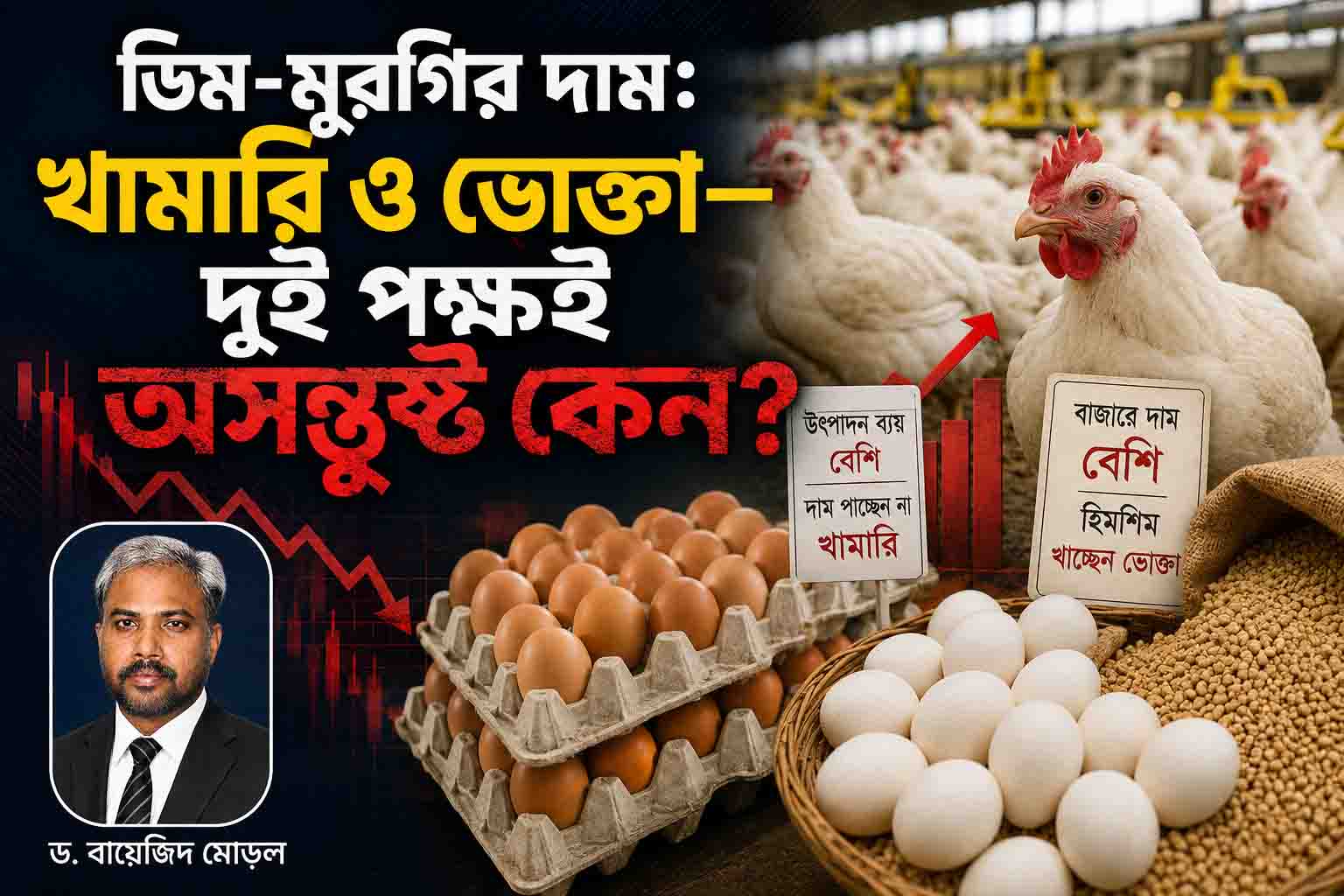
খামারিদের প্রত্যাশা ও প্রাপ্তির সমন্বয় হচ্ছে না কেন?
ড. বায়েজিদ মোড়লের গবেষণাধর্মী প্রতিবেদন।।
বাংলাদেশের পোল্ট্রি শিল্প দেশের অন্যতম গুরুত্বপূর্ণ কৃষিভিত্তিক শিল্প। ডিম ও মুরগির মাংস দেশের মানুষের প্রাণিজ আমিষের সহজলভ্য উৎসগুলোর অন্যতম। একই সঙ্গে উৎপাদন, হ্যাচারি, ফিড, ওষুধ, পরিবহন, বিপণন ও প্রক্রিয়াজাতকরণসহ পুরো মূল্যশৃঙ্খলে বিপুল মানুষের কর্মসংস্থান সৃষ্টি হয়েছে।
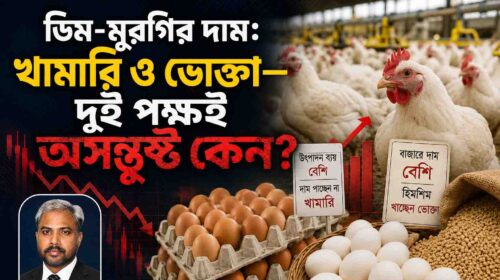
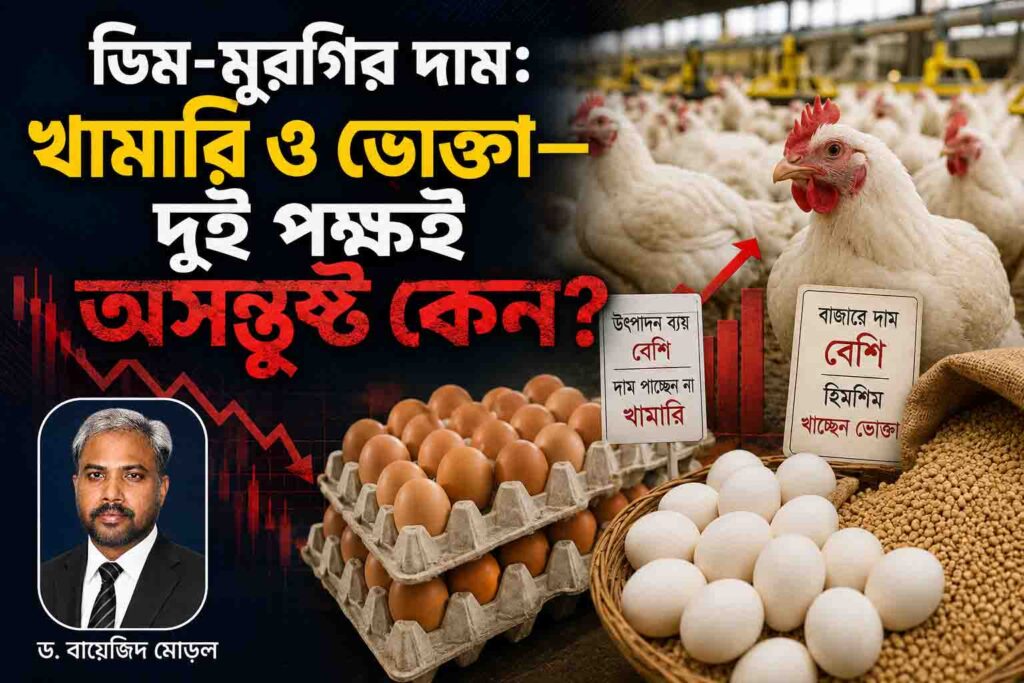
বাংলাদেশের পোল্ট্রি খাতে কর্মসংস্থানের সঠিক সংখ্যা নিয়ে বিভিন্ন সময়ে বিভিন্ন হিসাব পাওয়া যায়। শিল্পসংশ্লিষ্ট সূত্রে প্রায় ৬০ লাখ মানুষের প্রত্যক্ষ ও পরোক্ষ সম্পৃক্ততার কথা বলা হয়েছে; আবার ২০২৩ সালে প্রকাশিত একটি আন্তর্জাতিক গবেষণাপত্রে পূর্ববর্তী গবেষণা ও USDA-র তথ্য উদ্ধৃত করে প্রায় ৮০ লাখ মানুষের কর্মসংস্থানের কথা উল্লেখ করা হয়েছে। তাই নির্দিষ্ট একটি সংখ্যা ব্যবহারের পরিবর্তে বলা অধিক নিরাপদ যে, বাংলাদেশের পোল্ট্রি খাত প্রত্যক্ষ ও পরোক্ষভাবে কয়েক মিলিয়ন মানুষের জীবিকা ও কর্মসংস্থানের সঙ্গে যুক্ত। কিন্তু বাস্তবতা হলো – একদিকে ভোক্তা মনে করছেন ডিম ও মুরগির দাম এখনো বেশি, অন্যদিকে খামারিদের বড় একটি অংশ বলছেন, উৎপাদন ব্যয়ের সঙ্গে সামঞ্জস্যপূর্ণ দাম তারা পাচ্ছেন না। অর্থাৎ একই বাজারে উৎপাদক ও ভোক্তা – উভয় পক্ষই অসন্তুষ্ট।
এখন প্রশ্ন হলো – এই বৈপরীত্যের মূল কারণ কী?
বর্তমান বাজারের বাস্তবতা
বাংলাদেশের পোল্ট্রি খাত বর্তমানে একটি জটিল অর্থনৈতিক বাস্তবতার মধ্য দিয়ে যাচ্ছে। ডিম ও ব্রয়লারের সরবরাহ স্বাভাবিক থাকলেও বাজারদর, উৎপাদন ব্যয়, মৌসুমি চাহিদা এবং উৎপাদনের পরিমাণের ওঠানামার কারণে খামারিদের লাভজনকতা দ্রুত পরিবর্তিত হতে পারে।
বিশেষ করে ক্ষুদ্র ও মাঝারি খামারিরা বাচ্চা, খাদ্য, ওষুধ, ভ্যাকসিন এবং বাজারজাতকরণের জন্য বহুলাংশে উন্মুক্ত বাজারের ওপর নির্ভরশীল। ফলে কাঁচামাল বা উপকরণের দাম বাড়লে তারা তাৎক্ষণিকভাবে উৎপাদন ব্যয় কমাতে পারেন না।
অন্যদিকে খামার পর্যায়ে দাম কমে গেলেও তার সম্পূর্ণ সুবিধা সবসময় ভোক্তার কাছে পৌঁছায় না। উৎপাদক থেকে ভোক্তার মধ্যে সংগ্রাহক, ব্যবসায়ী, পাইকার, পরিবহনকারী ও খুচরা বিক্রেতাসহ একাধিক পর্যায় থাকায় মূল্য ব্যবধান তৈরি হতে পারে।
বাংলাদেশের পোল্ট্রির উৎপাদন ও বিতরণ নেটওয়ার্ক নিয়ে ২০২৩ সালে প্রকাশিত গবেষণাতেও বিভিন্ন মধ্যবর্তী অংশগ্রহণকারী ও বিপণন চ্যানেলের উপস্থিতি পাওয়া গেছে।
উৎপাদন ব্যয় যেভাবে প্রভাবিত হয়
পোল্ট্রি উৎপাদনের প্রধান ব্যয়গুলোর মধ্যে রয়েছে খাদ্য, ডে-ওল্ড চিক বা DOC, শ্রম, ওষুধ ও ভেটেরিনারি সেবা, বিদ্যুৎ ও জ্বালানি, লিটার, পরিবহন এবং অবকাঠামো।
এসব উপকরণের মূল্য পরিবর্তনের সঙ্গে ডিম ও মুরগির বাজারমূল্য সবসময় একই গতিতে পরিবর্তিত হয় না। এ কারণেই খামারি কখনো ভালো বাজার পেয়েও লাভ করতে পারেন, আবার বাজারদর আপাতদৃষ্টিতে ভালো থাকলেও উচ্চ উৎপাদন ব্যয়ের কারণে কাঙ্ক্ষিত মুনাফা পান না।
১. খাদ্যের মূল্য – সবচেয়ে গুরুত্বপূর্ণ ব্যয়
পোল্ট্রি উৎপাদনে সবচেয়ে বড় ব্যয় হলো খাদ্য। বাংলাদেশের ঢাকা, রাজশাহী, ময়মনসিংহ ও চট্টগ্রামের মোট ২১০টি ব্রয়লার খামারের ওপর পরিচালিত একটি গবেষণায় দেখা গেছে, মোট উৎপাদন ব্যয়ের ৭৪.৫২ শতাংশ ছিল খাদ্য ব্যয়। এই গবেষণাটি ২০১৯ সালের আগস্ট-সেপ্টেম্বরে সংগৃহীত খামার পর্যায়ের তথ্যের ভিত্তিতে করা এবং ২০২১ সালে Heliyon জার্নালে প্রকাশিত হয়। তাই বলা যায়, ব্রয়লার উৎপাদনের লাভ-লোকসানের ওপর খাদ্যমূল্যের প্রভাব অত্যন্ত গুরুত্বপূর্ণ।
পোল্ট্রি খাদ্যের প্রধান উপকরণের মধ্যে রয়েছে – ভুট্টা, সয়াবিন মিল, DDGS, রাইস পলিশ, গম ও গমের উপজাত, মিট অ্যান্ড বোন মিল, ফিশমিল, লাইমস্টোন, ডাইক্যালসিয়াম ফসফেট, লবণ, লাইসিন-মেথিওনিন-থ্রিওনিনসহ অ্যামিনো অ্যাসিড, ভিটামিন-মিনারেল প্রিমিক্স, এনজাইম ও অন্যান্য ফিড অ্যাডিটিভ। এসব উপাদানের কোনো কোনোটি আমদানিনির্ভর, আবার দেশীয়ভাবে উৎপাদিত পণ্যের দামও আন্তর্জাতিক বাজার, পরিবহন ব্যয় এবং বৈদেশিক মুদ্রার বিনিময় হারের পরিবর্তনের দ্বারা প্রভাবিত হতে পারে। ফলে ফিডের দাম বৃদ্ধি পেলে খামারির উৎপাদন ব্যয় দ্রুত বেড়ে যায়।
খাদ্যের অপচয়ও গুরুত্বপূর্ণ
শুধু খাদ্যের বাজারদর নয়, খামারের ব্যবস্থাপনাগত দুর্বলতার কারণেও খাদ্য ব্যয় বেড়ে যেতে পারে। অনুপযুক্ত ফিডার, ফিড ছড়িয়ে পড়া, ইঁদুর-পাখির আক্রমণ, আর্দ্রতায় খাদ্য নষ্ট হওয়া, দুর্বল সংরক্ষণ ব্যবস্থা এবং ভুল খাদ্য ব্যবস্থাপনা – সবই প্রকৃত উৎপাদন ব্যয় বাড়ায়। তবে খামারভেদে অপচয়ের পরিমাণ ব্যাপকভাবে পরিবর্তিত হতে পারে, তাই নির্ভরযোগ্য খামারভিত্তিক পরিমাপ ছাড়া নির্দিষ্ট শতকরা হার উল্লেখ না করাই শ্রেয়।
আমার মতে, বাংলাদেশের পোল্ট্রি শিল্পে লাভ-লোকসানের অন্যতম প্রধান নিয়ামক হচ্ছে খাদ্যের মূল্য ও Feed Conversion Efficiency। দেশীয় ভুট্টা ও অন্যান্য ফিড উপকরণের উৎপাদন বৃদ্ধি, কাঁচামালের বাজার স্থিতিশীল রাখা এবং বৈজ্ঞানিক খাদ্য ব্যবস্থাপনা নিশ্চিত করা গেলে উৎপাদন ব্যয় নিয়ন্ত্রণে গুরুত্বপূর্ণ অগ্রগতি সম্ভব।
২. বাচ্চার মূল্য
ব্রয়লার উৎপাদনের আরেকটি গুরুত্বপূর্ণ উপকরণ হলো ডে-ওল্ড চিক বা DOC। তবে DOC-এর ব্যয় নিয়ে অত্যধিক সাধারণীকরণ করা ঠিক নয়। ২০১৯ সালের ২১০টি ব্রয়লার খামারের ওপর পরিচালিত গবেষণায় মোট উৎপাদন ব্যয়ের গড়ে ৫.৭৬ শতাংশ DOC বাবদ ব্যয় হয়েছিল। অঞ্চলভেদে এ হার প্রায় ৩.৬৫ থেকে ৬.২২ শতাংশের মধ্যে ছিল। তবে বর্তমান বাজারে DOC-এর দাম অস্বাভাবিকভাবে বেড়ে গেলে একটি নির্দিষ্ট উৎপাদন চক্রে এর অংশ উল্লেখযোগ্যভাবে বাড়তে পারে। তাই বর্তমান বাজারের DOC ব্যয়ের হার নির্ধারণ করতে হলে সাম্প্রতিক খামারভিত্তিক Cost of Production Survey প্রয়োজন।
DOC-এর দাম মূলত প্যারেন্ট স্টকের উৎপাদন, হ্যাচিং এগের সরবরাহ, হ্যাচারির উৎপাদন পরিকল্পনা, মৌসুমি চাহিদা এবং খামারিদের নতুন flock বসানোর প্রবণতার সঙ্গে সম্পর্কিত।
৩. ওষুধ, ভ্যাকসিন ও স্বাস্থ্য ব্যবস্থাপনা
পোল্ট্রি খামারে রোগ প্রতিরোধ ও উৎপাদন স্বাভাবিক রাখতে ভ্যাকসিন, জীবাণুনাশক, ভিটামিন-মিনারেল, প্রোবায়োটিক এবং প্রয়োজন অনুযায়ী ভেটেরিনারি ওষুধ ব্যবহার করা হয়। এসব পণ্য ও তাদের কাঁচামালের কোনো অংশ আমদানিনির্ভর হওয়ায় আন্তর্জাতিক মূল্য, বিনিময় হার, পরিবহন ও সরবরাহব্যবস্থার পরিবর্তন খামারের ব্যয়ের ওপর প্রভাব ফেলতে পারে। তবে অপ্রয়োজনীয় ওষুধ ব্যবহার উৎপাদন ব্যয় বাড়ানোর পাশাপাশি অ্যান্টিমাইক্রোবিয়াল রেজিস্ট্যান্সের ঝুঁকিও তৈরি করে। তাই ওষুধ ব্যবহারে নিবন্ধিত পশুচিকিৎসকের পরামর্শ এবং বিজ্ঞানসম্মত রোগ প্রতিরোধ ব্যবস্থাপনাকে অগ্রাধিকার দেওয়া প্রয়োজন।
৪. বিদ্যুৎ, জ্বালানি ও পরিবহন
ব্রুডিং, আলো, বায়ু চলাচল, পানি সরবরাহ, কুলিং এবং খামারের অন্যান্য কার্যক্রমে বিদ্যুৎ প্রয়োজন। বিদ্যুৎ না থাকলে জেনারেটর বা বিকল্প ব্যবস্থার খরচ যুক্ত হয়। একই সঙ্গে ফিড, বাচ্চা, ডিম ও জীবন্ত মুরগি পরিবহনের খরচ বাড়লে তা সরাসরি উৎপাদন ও বিপণন ব্যয়ের সঙ্গে যুক্ত হয়।
৫. শ্রমিকের মজুরি
খামারে দক্ষ শ্রমিকের প্রয়োজন রয়েছে। শ্রমিকের মজুরি বৃদ্ধির পাশাপাশি দক্ষতার ঘাটতি থাকলে Feed Management, Biosecurity, Brooding এবং Disease Management দুর্বল হতে পারে। ফলে শুধু শ্রমের সরাসরি ব্যয় নয়, ব্যবস্থাপনাগত ভুলের কারণেও উৎপাদন খরচ বাড়তে পারে।
তাহলে ডিম ও ব্রয়লারের দাম কমে কেন?
উৎপাদন ব্যয় বাড়লেই যে বাজারমূল্য বাড়বে – পোল্ট্রি বাজারে এমন নিশ্চয়তা নেই। এর পেছনে রয়েছে কয়েকটি গুরুত্বপূর্ণ কারণ।
১. অতিরিক্ত সরবরাহ
বাজারে ডিম বা ব্রয়লারের দাম ভালো হলে নতুন করে অনেক খামারি উৎপাদনে উৎসাহিত হন। একই সময়ে বেশি সংখ্যক খামার উৎপাদনে এলে কিছু সময় পর বাজারে সরবরাহ বেড়ে যেতে পারে। চাহিদার তুলনায় সরবরাহ দ্রুত বেড়ে গেলে বাজারমূল্য কমে যায়।
২. উৎপাদন ও বাজার তথ্যের ঘাটতি
দেশে কত ব্রয়লার উৎপাদনে আছে, কত DOC placement হচ্ছে, কত layer flock উৎপাদনে আছে, কত ডিম বাজারে আসছে এবং আগামী কয়েক মাসে সম্ভাব্য চাহিদা কত – এসব বিষয়ে নিয়মিত, সমন্বিত ও সহজলভ্য Real-time Market Information System আরও শক্তিশালী হওয়া দরকার।
বিশ্বস্ত তথ্যের ঘাটতি থাকলে খামারিরা অনেক ক্ষেত্রেই আগের বাজারদর দেখে উৎপাদনের সিদ্ধান্ত নেন। ফলে কখনো সরবরাহ ঘাটতি, আবার কখনো অতিরিক্ত সরবরাহ তৈরি হতে পারে।
৩. দীর্ঘ বিপণন শৃঙ্খল
খামারি ও ভোক্তার মধ্যে একাধিক বিপণন স্তর থাকলে Farm-gate Price এবং Retail Price-এর মধ্যে ব্যবধান তৈরি হয়। বাংলাদেশের পোল্ট্রি সরবরাহব্যবস্থা নিয়ে গবেষণায় live bird market, dealer, middleman, slaughter point, supermarket ও অন্যান্য পক্ষের সমন্বয়ে জটিল Production and Distribution Network-এর উপস্থিতি পাওয়া গেছে। এ কারণে খামারি কম দামে বিক্রি করলেও সেই পুরো সুবিধা যে ভোক্তা পাবেন – এমন নিশ্চয়তা নেই। তাই কৃষক বা খামারি পর্যায় থেকে সংগঠিত সরাসরি বিপণন, সমবায়, ডিজিটাল মার্কেট এবং স্বচ্ছ দৈনিক মূল্যতথ্য ব্যবস্থার উন্নয়ন প্রয়োজন।
৪. বাজারে প্রভাবশালী ব্যবসায়ীদের ভূমিকা
পোল্ট্রি খাতে সিন্ডিকেট নিয়ে বিভিন্ন সময়ে অভিযোগ ওঠে। তবে কোনো নির্দিষ্ট ব্যক্তি বা প্রতিষ্ঠানকে প্রমাণ ছাড়া “সিন্ডিকেট” হিসেবে দায়ী করা উচিত নয়। বাজারে যদি অল্পসংখ্যক প্রতিষ্ঠানের হাতে উৎপাদনের গুরুত্বপূর্ণ উপকরণ বা বিপণন ব্যবস্থার বড় অংশ কেন্দ্রীভূত হয়, তাহলে প্রতিযোগিতার অবস্থা মূল্যায়ন করা জরুরি। এক্ষেত্রে বাংলাদেশ প্রতিযোগিতা কমিশন, ভোক্তা অধিকার সংরক্ষণ অধিদপ্তর এবং সংশ্লিষ্ট সরকারি সংস্থার নিয়মিত বাজার বিশ্লেষণ ও তথ্য প্রকাশ প্রয়োজন।
৫. উৎপাদন ব্যয় ও বাজারমূল্যের মধ্যে স্বয়ংক্রিয় সম্পর্ক নেই
ডিম ও ব্রয়লারের মূল্য মূলত বাজারের চাহিদা, সরবরাহ, উৎপাদন ব্যয়, মৌসুম, পরিবহন এবং বিপণন কাঠামোর সম্মিলিত প্রভাবে নির্ধারিত হয়। খামারির উৎপাদন ব্যয় বেড়ে গেলেও বাজারে সরবরাহ বেশি থাকলে তিনি সেই অতিরিক্ত ব্যয় বিক্রয়মূল্যের মাধ্যমে আদায় করতে নাও পারেন। এটাই পোল্ট্রি খামারের সবচেয়ে বড় ব্যবসায়িক ঝুঁকিগুলোর একটি।
খামারিদের প্রত্যাশা কী?
পোল্ট্রি খামারিদের প্রধান প্রত্যাশা হলো একটি পূর্বানুমানযোগ্য, প্রতিযোগিতামূলক ও ব্যবসাবান্ধব পরিবেশ।তারা চান – উৎপাদন ব্যয়ের সঙ্গে সামঞ্জস্যপূর্ণ বাজারদর, মানসম্মত বাচ্চা ও খাদ্য, কার্যকর রোগ নিয়ন্ত্রণ, সহজে ভেটেরিনারি সেবা, যৌক্তিক অর্থায়ন ব্যবস্থা, স্থিতিশীল বিদ্যুৎ ও জ্বালানি সুবিধা এবং বাজারের চাহিদা-সরবরাহ সম্পর্কে নির্ভরযোগ্য তথ্য।
খামারিরা বাস্তবে যা পাচ্ছেন
বাস্তবে ক্ষুদ্র ও মাঝারি খামারিদের সবচেয়ে বড় সমস্যা হচ্ছে Input Price এবং Output Price-এর মধ্যে অনিশ্চয়তা। ফিড বা DOC-এর দাম বাড়লে সেই খরচ খামারিকে তাৎক্ষণিকভাবে বহন করতে হয়। কিন্তু উৎপাদিত ডিম বা ব্রয়লারের দাম একই অনুপাতে বাড়বে – তার নিশ্চয়তা নেই। রোগব্যাধি, মৃত্যুহার, FCR খারাপ হওয়া, বিদ্যুৎ ও পরিবহন ব্যয় এবং বাজারের আকস্মিক দরপতন এই ঝুঁকিকে আরও বাড়িয়ে দেয়।
ক্ষুদ্র ও মাঝারি খামারিরাই তুলনামূলক বেশি ঝুঁকিতে
বড় সমন্বিত বা Integrated Poultry Company-এর নিজস্ব Feed Mill, Hatchery, Breeder Farm, Technical Service এবং Marketing Network থাকতে পারে। ফলে Value Chain-এর একাধিক ধাপ তাদের নিয়ন্ত্রণের মধ্যে থাকে। অন্যদিকে স্বাধীন ক্ষুদ্র খামারিকে অধিকাংশ Input বাজার থেকে কিনতে এবং Output বাজারে বিক্রি করতে হয়। ফলে বাজারের প্রতিকূল ওঠানামার প্রভাব তার ওপর তুলনামূলক দ্রুত পড়ে।
লাভ না হলে কী হয়?
দীর্ঘদিন উৎপাদন ব্যয়ের সঙ্গে সামঞ্জস্যপূর্ণ মূল্য না পেলে খামারি flock কমিয়ে দিতে পারেন, সাময়িকভাবে উৎপাদন বন্ধ করতে পারেন অথবা খামার ছেড়ে দিতে পারেন। এর ফলে কিছু সময় পর সামগ্রিক সরবরাহ কমতে পারে। সরবরাহ কমে গেলে এবং চাহিদা স্বাভাবিক থাকলে বাজারদর আবার বাড়তে পারে। দাম বাড়লে নতুন করে উৎপাদন বৃদ্ধি পায় এবং পরবর্তীতে অতিরিক্ত সরবরাহ সৃষ্টি হলে দাম আবার কমে যায়। অর্থাৎ পোল্ট্রি বাজারে একটি Boom-and-Bust Cycle তৈরি হওয়ার ঝুঁকি থাকে।
বর্তমান সরকারের কী করা উচিত?
বাংলাদেশের পোল্ট্রি শিল্পকে দীর্ঘমেয়াদে স্থিতিশীল করতে কয়েকটি উদ্যোগ বিশেষভাবে গুরুত্বপূর্ণ।
প্রথমত, একটি National Poultry Market Information System গড়ে তুলতে হবে, যেখানে নিয়মিতভাবে DOC placement, layer population, feed production, ডিম ও ব্রয়লার উৎপাদন, পাইকারি ও খুচরা মূল্য এবং সম্ভাব্য চাহিদার তথ্য থাকবে।
দ্বিতীয়ত, উৎপাদন ব্যয়ের একটি নিয়মিত ও স্বাধীন Cost of Production Index প্রকাশ করা প্রয়োজন।
তৃতীয়ত, ভুট্টা ও অন্যান্য সম্ভাব্য দেশীয় ফিড উপকরণের উৎপাদনশীলতা বাড়াতে গবেষণা ও নীতিগত সহায়তা প্রয়োজন।
চতুর্থত, খামারি থেকে ভোক্তার বিপণন শৃঙ্খল ছোট করতে Producer Cooperative, Collection Centre এবং Digital Marketing Platform গড়ে তোলা যেতে পারে।
পঞ্চমত, ক্ষুদ্র ও মাঝারি খামারিদের জন্য বাস্তবসম্মত অর্থায়ন, বীমা, Biosecurity Support এবং Veterinary Extension Service শক্তিশালী করতে হবে।
ষষ্ঠত, বাজারে প্রতিযোগিতা বজায় রাখতে hatchery, feed, egg এবং broiler market নিয়মিত পর্যবেক্ষণ করতে হবে।
বিশ্লেষণ
বাংলাদেশের পোল্ট্রি শিল্পের সমস্যা কেবল উৎপাদনের সমস্যা নয়। এর সঙ্গে উৎপাদন ব্যয়, বাজার তথ্য, উৎপাদন পরিকল্পনা, মূল্যশৃঙ্খল, অর্থায়ন, রোগ ব্যবস্থাপনা এবং বাজার প্রতিযোগিতা – সবকিছু জড়িত। খামারি উৎপাদন ব্যয়ের নিচে দীর্ঘদিন পণ্য বিক্রি করলে শিল্প টেকসই থাকবে না। আবার ভোক্তা যদি খামার পর্যায়ের তুলনায় অস্বাভাবিক বেশি দামে ডিম বা মুরগি কিনতে বাধ্য হন, তাহলে মূল্যশৃঙ্খলের কার্যকারিতা নিয়েও প্রশ্ন উঠবে। তাই শুধু “দাম বাড়ানো” কিংবা “দাম কমানো” – কোনোটিই একক সমাধান নয়। প্রয়োজন হচ্ছে উৎপাদন থেকে ভোক্তা পর্যন্ত পুরো Value Chain-এর তথ্যভিত্তিক ব্যবস্থাপনা।
শেষ কথা
ডিম ও ব্রয়লারের দাম কম থাকা মানেই ভোক্তার লাভ এবং খামারির ক্ষতি—এমন সরল সমীকরণ দিয়ে পোল্ট্রি শিল্পের সমস্যার ব্যাখ্যা করা সম্ভব নয়। প্রয়োজন উৎপাদন থেকে বাজার পর্যন্ত পুরো মূল্যশৃঙ্খল বৈজ্ঞানিকভাবে বিশ্লেষণ ও সংস্কার করা।
খামারি যদি যৌক্তিক মুনাফাসহ উৎপাদন চালিয়ে যেতে পারেন, তাহলে উৎপাদন স্থিতিশীল থাকবে। আর উৎপাদন স্থিতিশীল থাকলে দীর্ঘমেয়াদে ভোক্তাও সহনীয় দামে নিরাপদ প্রাণিজ আমিষ পাওয়ার সুযোগ পাবেন।
“খামারিকে বাঁচিয়ে রেখে ভোক্তাকে সুরক্ষা দেওয়াই হওয়া উচিত পোল্ট্রি নীতির মূল দর্শন; কারণ টেকসই উৎপাদন ছাড়া দীর্ঘমেয়াদে সাশ্রয়ী বাজার নিশ্চিত করা সম্ভব নয়।”
– ড. বায়েজিদ মোড়ল
কৃষি সাংবাদিক ও নির্বাহী সম্পাদক
AgricultureNews24.com
তথ্যসূত্র: প্রাণিসম্পদ অধিদপ্তর (DLS), বাংলাদেশ প্রাণিসম্পদ গবেষণা ইনস্টিটিউট (BLRI), বাংলাদেশ পরিসংখ্যান ব্যুরো (BBS), FAO, BPICC, FIAB ও WPSA-BB; Kamruzzaman et al. (2021), Heliyon এবং প্রাসঙ্গিক দেশি-বিদেশি peer-reviewed গবেষণা জার্নাল।
Why Is There a Gap Between Farmers’ Expectations and What They Actually Receive?
A Research-Based Report by Dr Bayezid Moral
Bangladesh’s poultry industry is one of the country’s most important agro-based industries. Eggs and chicken are among the most affordable sources of animal protein for the population. The industry has also created employment for a vast number of people throughout its value chain, including production, hatcheries, feed manufacturing, veterinary medicine, transportation, marketing and processing.
Different estimates have been reported regarding employment in Bangladesh’s poultry sector. Industry sources have stated that approximately six million people are directly or indirectly involved in the sector. Meanwhile, an international research paper published in 2023 cited previous studies and USDA data indicating employment of around eight million people. Therefore, rather than relying on one specific figure, it is safer to state that Bangladesh’s poultry sector supports the employment and livelihoods of several million people, both directly and indirectly.
The reality, however, is that consumers believe egg and chicken prices remain high, while a large proportion of poultry farmers say they are not receiving prices that correspond to their production costs. In other words, both producers and consumers are dissatisfied within the same market.
The question, therefore, is: What causes this apparent contradiction?
The Reality of the Current Market
Bangladesh’s poultry sector is currently passing through a complex economic situation. Even when the supply of eggs and broilers remains normal, farmers’ profitability can change rapidly because of fluctuations in market prices, production costs, seasonal demand and production volumes.
Small and medium-sized farmers, in particular, depend heavily on the open market for day-old chicks, feed, medicines, vaccines and marketing. Therefore, when the prices of raw materials or other inputs increase, they cannot immediately reduce their production costs.
Conversely, when farm-gate prices fall, consumers do not always receive the full benefit. The involvement of multiple intermediaries—including collectors, traders, wholesalers, transporters and retailers—between producers and consumers can create a significant price gap.
A study published in 2023 on Bangladesh’s poultry production and distribution network also identified the presence of multiple intermediaries and marketing channels.
Factors Affecting Production Costs
The principal costs of poultry production include feed, day-old chicks or DOCs, labour, medicines and veterinary services, electricity and fuel, litter, transportation and infrastructure.
The prices of eggs and chicken do not always change at the same rate as the prices of these inputs. Consequently, a farmer may sometimes earn a profit despite favourable market prices, while at other times apparently good market prices may still fail to generate the expected profit because of high production costs.
1. Feed Prices: The Most Significant Cost
Feed is the largest single cost in poultry production. A study involving 210 broiler farms in Dhaka, Rajshahi, Mymensingh and Chattogram found that feed accounted for 74.52 per cent of total production costs. The study was based on farm-level data collected in August and September 2019 and was published in the journal Heliyon in 2021. It therefore demonstrates that feed prices have a major influence on the profitability of broiler production.
The principal ingredients of poultry feed include maize, soybean meal, dried distillers’ grains with solubles or DDGS, rice polish, wheat and wheat by-products, meat and bone meal, fishmeal, limestone, dicalcium phosphate, salt, amino acids such as lysine, methionine and threonine, vitamin and mineral premixes, enzymes and other feed additives.
Some of these ingredients are import-dependent. Even the prices of locally produced ingredients can be affected by international markets, transportation expenses and fluctuations in foreign exchange rates. Therefore, an increase in feed prices rapidly raises farmers’ production costs.
Feed Wastage Is Also Important
Production expenses can increase not only because of feed prices but also because of poor farm management. Inappropriate feeders, feed spillage, infestation by rodents and birds, moisture damage, inadequate storage and improper feeding practices all increase the actual cost of production.
The extent of feed wastage, however, can vary considerably from one farm to another. It is therefore advisable not to cite a specific percentage without reliable farm-level measurements.
In my assessment, feed prices and feed conversion efficiency are among the most important determinants of profitability in Bangladesh’s poultry industry. Significant progress in controlling production costs could be achieved by increasing domestic production of maize and other feed ingredients, stabilising the raw-material market and ensuring scientific feed management.
2. Cost of Day-Old Chicks
Day-old chicks, or DOCs, are another important input in broiler production. However, excessive generalisation regarding DOC costs should be avoided.
The study involving 210 broiler farms in 2019 found that DOCs accounted for an average of 5.76 per cent of total production costs. Depending on the region, the proportion ranged from approximately 3.65 to 6.22 per cent.
However, when DOC prices rise abnormally in the current market, their share of expenditure during a particular production cycle may increase substantially. A recent farm-level cost-of-production survey would therefore be necessary to determine the current share of DOC expenses.
DOC prices are primarily associated with parent-stock production, the supply of hatching eggs, hatchery production planning, seasonal demand and farmers’ willingness to place new flocks.
3. Medicines, Vaccines and Health Management
Vaccines, disinfectants, vitamins and minerals, probiotics and, where necessary, veterinary medicines are used to prevent disease and maintain normal production on poultry farms.
As some of these products and their raw materials are imported, changes in international prices, exchange rates, transportation and supply systems may affect farm expenses.
Unnecessary use of medicines, however, not only raises production costs but also increases the risk of antimicrobial resistance. The use of medicines should therefore follow the advice of a registered veterinarian, while scientifically sound disease-prevention practices should receive the highest priority.
4. Electricity, Fuel and Transportation
Electricity is required for brooding, lighting, ventilation, water supply, cooling and other farm operations. During power outages, farmers incur additional expenses for generators or alternative energy arrangements.
At the same time, increases in the cost of transporting feed, chicks, eggs and live chickens directly affect both production and marketing expenses.
5. Labour Costs
Poultry farms require skilled workers. In addition to higher wages, a shortage of trained workers can weaken feed management, biosecurity, brooding and disease-management practices.
Production costs may therefore rise not only because of direct labour expenses but also as a consequence of management errors.
Why Do Egg and Broiler Prices Fall?
An increase in production costs does not necessarily result in higher market prices in the poultry industry.
Several important factors are responsible for this situation.
1. Oversupply
When egg or broiler prices become favourable, many farmers are encouraged to begin or expand production. If a large number of farms enter production at the same time, the market may face an increase in supply after a certain period.
When supply grows faster than demand, market prices decline.
2. Lack of Production and Market Data
Bangladesh needs a stronger, coordinated and easily accessible real-time market information system containing regular data on the number of broilers under production, DOC placements, layer populations, the volume of eggs entering the market and projected demand for the coming months.
Without reliable information, farmers often make production decisions based on previous market prices. This can create shortages at certain times and oversupply at others.
3. A Long Marketing Chain
The presence of multiple marketing stages between farmers and consumers creates a gap between farm-gate and retail prices.
Research on Bangladesh’s poultry supply system has identified a complex production and distribution network involving live-bird markets, dealers, middlemen, slaughter points, supermarkets and other participants.
Consequently, even when farmers sell at low prices, there is no guarantee that consumers will receive the full benefit. Organised direct marketing by farmers, producer cooperatives, digital markets and transparent daily price-information systems therefore need to be developed.
4. The Role of Influential Market Participants
Allegations of syndication in the poultry industry have been raised on various occasions. However, no individual or company should be labelled a “syndicate” without credible evidence.
When a substantial share of important production inputs or marketing channels is concentrated in the hands of a small number of companies, the state of market competition should be assessed.
Regular market analysis and public disclosure of information by the Bangladesh Competition Commission, the Directorate of National Consumer Rights Protection and other relevant government agencies are essential in this regard.
5. No Automatic Relationship Between Production Costs and Market Prices
Egg and broiler prices are determined by the combined effects of market demand, supply, production costs, seasonal conditions, transportation and the structure of the marketing system.
Even when a farmer’s production costs rise, oversupply in the market may prevent the farmer from recovering the additional expense through the selling price.
This is one of the greatest business risks facing poultry farmers.
What Do Farmers Expect?
The principal expectation of poultry farmers is a predictable, competitive and business-friendly environment.
They want market prices that correspond to production costs, quality chicks and feed, effective disease control, accessible veterinary services, reasonable financing arrangements, stable electricity and fuel supplies, and reliable information about market demand and supply.
What Are Farmers Actually Receiving?
In practice, the greatest problem facing small and medium-sized farmers is uncertainty between input prices and output prices.
When feed or DOC prices increase, farmers must immediately bear the additional cost. There is, however, no guarantee that the prices of the eggs or broilers they produce will rise proportionately.
Disease outbreaks, mortality, poor feed conversion ratios, electricity and transportation expenses, and sudden market-price declines further increase this risk.
Small and Medium-Sized Farmers Face Greater Risks
Large integrated poultry companies may have their own feed mills, hatcheries, breeder farms, technical services and marketing networks. Consequently, they can exercise control over multiple stages of the value chain.
Independent small-scale farmers, by contrast, must purchase most inputs from the market and sell their output in that same market. They are therefore affected more quickly and severely by unfavourable market fluctuations.
What Happens When Farming Is No Longer Profitable?
When farmers remain unable to obtain prices corresponding to their production costs for an extended period, they may reduce flock sizes, temporarily suspend production or leave the industry altogether.
This can eventually reduce overall supply. If demand remains stable while supply declines, market prices may rise again. Higher prices encourage renewed production, which can later create another oversupply and cause prices to fall once more.
The poultry market therefore faces the risk of developing a boom-and-bust cycle.
What Should the Current Government Do?
Several initiatives are particularly important for ensuring the long-term stability of Bangladesh’s poultry industry.
First, the government should establish a National Poultry Market Information System containing regularly updated data on DOC placements, layer populations, feed production, egg and broiler production, wholesale and retail prices, and projected demand.
Second, an independent and regularly updated Cost of Production Index should be published.
Third, research and policy support are needed to increase the productivity of maize and other potential domestically produced feed ingredients.
Fourth, producer cooperatives, collection centres and digital marketing platforms could be established to shorten the marketing chain between farmers and consumers.
Fifth, realistic financing, insurance, biosecurity support and veterinary extension services should be strengthened for small and medium-sized farmers.
Sixth, hatchery, feed, egg and broiler markets should be monitored regularly to maintain fair competition.
Analysis
The challenges confronting Bangladesh’s poultry industry are not limited to production. They involve production costs, market information, production planning, the value chain, financing, disease management and market competition.
The industry cannot remain sustainable if farmers are forced to sell below production cost for long periods. At the same time, if consumers are compelled to purchase eggs or chicken at prices disproportionately higher than farm-gate rates, questions must be raised about the efficiency of the value chain.
Therefore, neither simply “raising prices” nor “reducing prices” offers a complete solution. What is required is data-driven management of the entire value chain—from production to the consumer.
Conclusion
Low prices for eggs and broilers cannot be explained through the simplistic assumption that consumers benefit while farmers suffer.
The entire value chain—from production to the market—must be scientifically analysed and reformed.
If farmers can continue production with a reasonable profit, supply will remain stable. Stable production, in turn, will enable consumers to obtain safe animal protein at affordable prices over the long term.
“Protecting consumers while keeping farmers in business should be the central philosophy of poultry policy, because an affordable market cannot be sustained in the long term without sustainable production.”
— Dr Bayezid Moral
Agricultural Journalist and Executive Editor
AgricultureNews24.com
References
Department of Livestock Services (DLS), Bangladesh Livestock Research Institute (BLRI), Bangladesh Bureau of Statistics (BBS), FAO, BPICC, FIAB and WPSA-BB; Kamruzzaman et al. (2021), Heliyon; and relevant national and international peer-reviewed research journals.